TL;DR

Get everyday helpers delivered free with Prime
- Fast, free delivery on millions of items
- Prime Video, Amazon Music and more included
- Member-only deals all year
Effective noise protection depends on understanding noise levels, choosing the right type, and ensuring a proper fit. Ratings alone don’t guarantee protection—fit and comfort matter most for safety and ongoing use.
Imagine working on a noisy construction site or enjoying a loud concert. It’s not just about blocking sound; it’s about doing so safely, comfortably, and reliably. Noise protection isn’t a one-size-fits-all solution.
Today, you’ll learn how to pick the right ear protection for your environment, how ratings work, and why fit and comfort matter just as much as noise reduction ratings. Protecting your hearing is about more than choosing the loudest or the most expensive product—it’s about making smart, informed choices that keep you safe and comfortable.
Fit and proper insertion are more critical than the NRR rating itself.
Different environments call for different protection types—know your noise level and activity.
Comfort and consistent wear are key to maintaining effective hearing protection.
Always consider how your gear interacts with other safety equipment.
Regular inspection and replacement keep your protection reliable.
How to Choose Noise-Reducing Ear Protection
The best protector is not simply the one with the highest rating. Effective protection matches the noise, fits your ears, works with the rest of your equipment, and stays comfortable enough to wear for the entire exposure.
A correctly fitted lower-rated protector can outperform a poorly fitted higher-rated device.
Reduce harmful sound without unnecessarily blocking speech, alarms or changing equipment sounds.
Start with how loud—and how long
Loudness alone does not define risk. Duration and noise character matter too. Continuous machinery, intermittent tools, concerts and impulse sounds each create different protection needs.
NIOSH reference: recommended daily exposure time
Each 3 dB increase represents a doubling of sound energy and halves the recommended exposure time. Workplace regulations may use different limits and calculations.
Sound level
Measure or estimate the A-weighted level in dBA instead of judging by discomfort alone.
Exposure duration
Add up the full noisy period, including repeated short tasks across the day.
Noise type
Gunshots and explosions demand protection even when the exposure lasts only seconds.
NRR and SNR are starting points—not guarantees
Package ratings come from controlled laboratory tests. Real-world attenuation changes with ear anatomy, insertion, movement, wear, maintenance and how consistently the device stays in place.
Aim for the protection sweet spot
Match the protector to the task
Choose around the activity, frequency of use, required awareness and other protective equipment. A practical device worn correctly is more useful than a stronger device that is removed.
| Protection type | Best for | Protection potential | Key advantage | Watch for |
|---|---|---|---|---|
| Disposable foam plugs | High noise, portability and occasional use | ✓ Strong when fitted well | Lightweight, inexpensive and compatible with helmets or eyewear | ~ Technique-sensitive rolling, insertion and expansion are critical |
| Reusable premolded plugs | Frequent insertion and removal | ✓ Moderate to strong | Quick to insert, washable and available in multiple sizes | ~ Fit and hygiene seals deteriorate with dirt, age or damage |
| Banded earplugs | Intermittent noise and brief entries | ~ Usually lower | Fast on/off use and convenient neck storage | ~ Movement can shift the fit or transmit sound through the band |
| Passive earmuffs | Visible, repeatable protection | ✓ Consistent when sealed | Generally simple to fit and easy for others to verify | ~ Seal gaps from glasses, hair, hats, straps or helmet parts |
| Electronic protection | Communication and situational awareness | ✓ Controlled protection | Preserves important sounds while limiting hazardous noise | ~ Cost and power plus the same fundamental fit requirements |
For extremely loud environments, plugs and earmuffs may be combined as dual protection. Their ratings cannot simply be added; the second device contributes much less than its full standalone rating.
Fit is the game changer
Even small leaks allow sound to bypass the protector. Check the seal every time, test the full PPE ensemble and replace parts before wear or damage compromises performance.
Assess
Identify level, duration, impulse noise and communication needs.
Select
Choose a type and protection level suited to the real task.
Fit
Create a complete plug seal or an uninterrupted earmuff cushion seal.
Verify
Perform a seal check and use fit testing when available.
Maintain
Clean, inspect, store and replace according to instructions.
Roll, insert, hold
Compress the plug, reach over the head to open the ear canal, insert it deeply and hold while it expands. A large portion should not remain visible.
Protect the cushion seal
Center each cup over the ear and adjust the headband. Move hair, thick glasses and mask straps away from the sealing surface.
Test everything together
Wear the exact helmet, eyewear, respirator and face shield combination used on the job. Confirm that no item shifts or creates a gap.
Choose protection you will keep wearing
Comfort is a safety feature. Heat, pressure, irritation or communication difficulty encourages removal—and even short unprotected intervals can undermine the benefit of otherwise excellent equipment.
It reduces the measured exposure to an appropriate level for the environment.
The seal remains stable through movement, sweat and the full working posture.
Alarms, speech, vehicles and equipment changes remain perceptible when required.
Glasses, helmets, respirators and shields do not compromise the seal.
The device can be worn consistently and cleaned, inspected or replaced easily.
Start with how loud and how long — the basics of noise exposure
Knowing your noise level sets the foundation for choosing protection. For example, a jackhammer hitting 100 dBA for 15 minutes demands different gear than a leaf blower at 85 dBA for an hour.
Remember, the risk isn’t just loudness—it’s how long you’re exposed. OSHA limits workplace noise to 85 dBA over an 8-hour shift, with every 3 dB increase cutting allowable exposure time in half. Impulse noises like gunfire require even more care, often needing protection even if only for seconds.
Understanding these factors helps you balance protection with practicality. Overprotection can cause unnecessary discomfort or communication barriers, while underprotection exposes you to hearing damage. Tradeoffs often involve choosing between maximum noise reduction and situational awareness, so consider the context carefully.
As an affiliate, we earn on qualifying purchases.
What does NRR and SNR rating really tell you? Here’s the truth about ratings
Hearing protection products display a Noise Reduction Rating (NRR) in the U.S., and many international products show an SNR. These ratings come from lab tests, but they don’t guarantee the same reduction in real-world use.
In fact, a poorly fitted lower-rated earplug can outperform a high-rated one if it fits better. Don’t rely solely on the number—your fit and how you wear the product matter more than the rating on the package.
These ratings are based on ideal laboratory conditions, which often don’t reflect real-world scenarios where fit, movement, and user behavior significantly impact effectiveness. Misunderstanding these ratings can lead to overconfidence, which might leave your hearing unprotected. Therefore, always consider how well the protection fits your ears and how consistently you wear it. According to The Daily Adapt, always consider fit testing and workplace-specific calculations for accurate protection estimates.
comfortable ear protection for concerts
As an affiliate, we earn on qualifying purchases.
As an affiliate, we earn on qualifying purchases.
Picking the right level of protection — avoid gap-tooth protection or total isolation
Protection should reduce noise enough to keep your hearing safe without cutting you off from the world. Underprotection leaves you vulnerable to potential damage, especially in environments with sudden loud noises or warnings. Overprotection, like wearing excessive earmuffs, can isolate you so much that you miss critical alarms, speech, or safety signals, which could be dangerous.
For example, a factory worker needs enough reduction to shield against machinery noise but still needs to hear safety signals and colleagues. This balance is crucial because excessive isolation can reduce your awareness of hazards, increasing risk. Dual protection—wearing earplugs plus earmuffs—can be very effective, but it also introduces the challenge of ensuring both fit well together without creating gaps or discomfort. The tradeoff involves choosing protection levels that prevent damage while maintaining your ability to respond to your environment.
custom fit ear muffs for noise reduction
As an affiliate, we earn on qualifying purchases.
As an affiliate, we earn on qualifying purchases.
Compare the main types of ear protection — which suits your needs best?
Here’s a quick comparison of common options:
| Type | Best For | Advantages | Limitations |
|---|---|---|---|
| Disposable foam earplugs | High noise, occasional use | Strong protection, lightweight, cheap | Proper insertion needed, performance varies depending on fit and user technique, which can lead to inconsistent protection if not inserted correctly |
| Reusable premolded plugs | Frequent use, comfort | Easy to insert, washable, adjustable for different ear sizes | Fit varies among users, and improper cleaning can lead to hygiene issues, potentially reducing effectiveness over time |
| Banded earplugs | Intermittent noise | Quick to put on/off, portable and convenient | Less protection compared to other options, fit can shift during activity, reducing effectiveness, especially if not positioned correctly |
| Passive earmuffs | Repeated use, outer ear coverage | Simple to fit, effective for consistent use, easy to verify fit | Bulkier, may cause gaps if worn with glasses or helmets, which diminishes protection |
| Electronic protection | Communication + noise reduction | Allows you to hear important sounds clearly, maintains situational awareness | Costlier, fit still crucial, and some models may have limited battery life or performance in extreme conditions |
Choosing the right type involves considering your specific activity, environment, and how much protection you need versus how much situational awareness you require. Each type involves tradeoffs: higher protection often means less awareness, while easier-to-wear options might offer less noise reduction. Understanding these tradeoffs helps you select gear that best fits your needs while minimizing risks.
ear protection with high NRR rating
As an affiliate, we earn on qualifying purchases.
As an affiliate, we earn on qualifying purchases.
Get the fit right — it’s the game changer
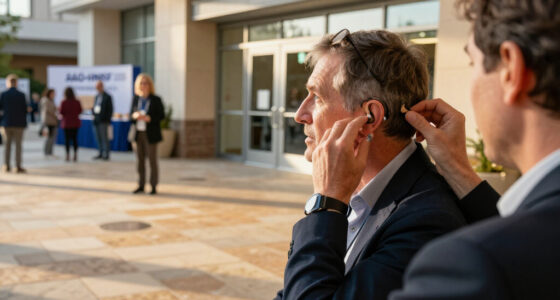
Perfect fit is what makes or breaks noise protection. For foam plugs, the key is rolling, inserting, and holding until they expand to fill your ear canal, creating a seal that prevents sound leakage. For earmuffs, adjusting the headband and cushions until they sit snugly around your ears ensures maximum attenuation. Proper fit reduces gaps that allow noise to bypass protection, which is critical because even small leaks significantly reduce effectiveness.
For example, a worker might find that a slightly smaller size of earplug creates a better seal without discomfort, or that a different shape of earmuff provides a tighter fit. A simple check—cover your ears and see if noise diminishes—can reveal obvious gaps. For the most accurate assessment, fit testing or personal attenuation ratings are available in some workplaces, providing objective data on how well your protection performs. Prioritizing fit minimizes the variability in protection and ensures your gear performs as intended.
Gear up with other protective equipment—make sure everything plays nice
Ear protection must work alongside safety glasses, helmets, respirators, and face shields. For example, bulky safety glasses can interfere with earmuff seals, reducing their effectiveness. Ensuring compatibility involves adjusting or choosing gear that fits comfortably together without gaps. For instance, selecting earmuffs with slimmer cups or adjustable headbands can help maintain a proper seal even when wearing other PPE.
Always check that your helmet-mounted earmuffs are approved for your helmet model. Mismatched or loose-fitting equipment can create gaps, allowing noise to bypass your protection. The key is to test the entire ensemble—if one piece shifts or doesn’t fit properly, it compromises the whole system. Proper coordination prevents accidental exposure and maximizes safety.
Comfort and consistency — the keys to real protection
If your ear protection isn’t comfortable, you’ll be tempted to remove it, especially during long shifts or extended use. Selecting products that fit your ear size, are gentle on your skin, and feel comfortable over time encourages consistent wear. For example, soft silicone plugs or low-profile foam tips often cause less soreness and discomfort, making it easier to keep protection in place.
Adjust straps and cushions to reduce pressure points and prevent soreness. Providing different options—such as different sizes or materials—allows users to find what fits best. Remember, effective hearing protection only works if it’s worn properly and consistently. Discomfort leads to removal, which negates the benefits of the protection. Prioritizing comfort and fit creates a habit of regular use, significantly reducing the risk of hearing damage over time.
Stay aware — pick protection that keeps you in the loop
In noisy environments, hearing alarms, speech, or warning signals can be critical for safety. Level-dependent earplugs or earmuffs, which automatically adjust their attenuation based on sound levels, allow you to hear important sounds while still protecting against damaging noise. For example, a construction worker may need to hear a colleague’s warning while blocking out machinery noise.
Some products include microphones or communication systems, making it easier to stay connected and respond quickly to hazards. However, it’s important to recognize that active noise-canceling headphones are not always certified hearing protectors—they may reduce noise but not meet safety standards. Choosing gear with proper certification and understanding its limitations ensures you maintain awareness without compromising safety.
Match protection to your activity — plan ahead
Different activities demand different protection strategies. For shooting, impulse noise protection with specialized filters effectively reduces sudden loud sounds without overly diminishing situational cues. For concerts, musician’s plugs are designed to preserve sound quality while reducing volume. Yard work often requires quick-fit earplugs or earmuffs for convenience and safety. For children, selecting size-appropriate, safe options ensures they are protected without discomfort.
For example, a cyclist might prefer low-profile plugs that seal well under a helmet, allowing awareness of traffic sounds, while a factory worker benefits from durable earmuffs that provide high protection and comfort during long shifts. Planning ahead ensures you have the right gear ready for each activity, minimizing the risk of under- or over-protection, and helping you stay safe and aware in diverse situations.
Inspect, clean, and replace — keep your gear effective
Regular inspection and maintenance of your ear protection are crucial for ongoing safety. Damaged, torn, or hardened plugs may not provide adequate noise reduction. Reusable products should be cleaned with mild soap and water, and cushions or headbands replaced when worn or damaged. For example, a reusable plug that is cleaned and maintained properly can last over a year, but neglecting maintenance can compromise its performance.
Damaged gear not only reduces protection but can also cause discomfort or health issues. When in doubt, replacing worn or damaged equipment ensures your protection remains effective. Proper maintenance prolongs the lifespan of your gear, maintains hygiene, and guarantees consistent performance, which is essential for ongoing safety in noisy environments.
Frequently Asked Questions
How much noise reduction do I really need?
The amount depends on your noise environment. For most occupational settings, reducing exposure to below 85 dBA over 8 hours is recommended. Use a combination of noise level, duration, and noise type to determine the right protection—sometimes, less is more if fit and comfort are better.
Is a higher NRR always better?
Not necessarily. Protection only works well if it fits correctly. A poorly fitted high-rated device can perform worse than a well-fitted lower-rated one. Focus on fit, comfort, and consistent use over just the rating number.
Can I subtract the NRR directly from the noise level?
No, it’s not that simple. NRR values are lab-based and tend to overestimate real-world protection. Use safety guidelines or fit testing data for more accurate protection estimates, especially in occupational settings.
Are earplugs better than earmuffs?
It depends. Earplugs are discreet and work well with PPE like helmets and glasses. Earmuffs are easier to fit and check but can be bulky. The best choice varies based on comfort, noise level, and activity, often even combining both for maximum protection.
When should I wear plugs and earmuffs together?
For extremely loud or sudden impulse noises, dual protection can offer extra safety. Typically, in environments with very high sound levels or high-powered firearms, wearing both provides the best shield. Consult safety guidelines or a specialist for specific situations.
Conclusion
Choosing noise-reducing ear protection isn’t just about buying the highest-rated product. It’s about finding a comfortable fit that you’ll wear consistently, tailored to your environment and needs. Think of it as a handshake — if it fits well and feels right, you’ll keep it in place and stay protected.
Remember, your hearing is a precious, irreplaceable sense. Invest in protection that’s smart, comfortable, and suited to your life—because your ears deserve it.
Halloween Picks
halloween
As an affiliate, we earn on qualifying purchases.