
TL;DR

Get everyday helpers delivered free with Prime
- Fast, free delivery on millions of items
- Prime Video, Amazon Music and more included
- Member-only deals all year
Picking a recumbent trike for fitness involves prioritizing comfort, correct fit, and terrain handling. A well-chosen model boosts motivation and supports long-term health goals, regardless of speed or cost.
Imagine riding a bike without the discomfort—no sore neck, aching wrists, or numb sit bones. That’s the power of a well-chosen recumbent trike. But with so many options, how do you find the one that fits your body, supports your fitness, and handles your local roads?
This guide breaks down the essentials—every detail you need to pick a model you’ll actually use. Because the best trike isn’t about the fastest or the most expensive. It’s about what keeps you pedaling, day after day.
Prioritize fit and comfort—spend time testing different models for a long ride to ensure it supports your body and goals.
Choose the layout—tadpole for speed and aerodynamics, delta for ease and comfort—based on your fitness needs.
Gear carefully—ensure low gears for hills and a wide range to maintain steady cadence during varied terrain.
Safety is non-negotiable—use proper foot retention, wear a helmet, and practice controlled turns to prevent tip-overs.
Invest in support—reliable dealer relationships, quality parts, and maintenance extend your riding pleasure and safety.
How to Choose a Recumbent Trike for Fitness
No sore neck. No aching wrists. No numb sit bones. A well-chosen recumbent trike removes the discomfort that derails training plans — and the best model isn’t the fastest or most expensive. It’s the one that keeps you pedaling, day after day.
Finding a Comfortable Fit for Long Rides
Comfort isn’t a luxury — it’s the foundation of sustainable exercise. Discomfort kills motivation, and motivation is what drives progress. Check these six fit essentials before you buy.
Boom & Seat Range
Boom or seat adjustment must accommodate your leg length — knees slightly bent at full extension, never locked or cramped.
Reach & Back Support
You should reach the controls without stretching, with the seat supporting your back and creating no pressure points.
Heel Strike Check
Confirm your foot cannot contact the ground or frame mid-stroke. Heel strike is a hidden cause of interrupted pedaling.
Ride 20–30 Minutes
Fit problems rarely appear immediately. Pain, numbness, and awkward posture only surface after time in the saddle.
Quick Adjustments
If several people share the trike, fast, wide-ranging adjustments keep everyone comfortable and riding regularly.
Longer, Frequent Workouts
A well-fitted trike encourages longer and more frequent sessions — the engine of endurance and consistent progress.
Tadpole or Delta: Which Fits Your Fitness Needs?
The wheel configuration shapes speed, stability, and accessibility — and therefore how often you’ll actually ride it.
Tadpole
- Lower and more stable during fast cornering
- Generally more aerodynamic — better for endurance mileage
- Sportier handling pushes cardiovascular training harder
- Preferred starting point for vigorous road workouts
- Trade-off: harder to enter, exit, and be seen in traffic
Delta
- Higher, more accessible seat and easier mounting
- Ideal for injury recovery or limited mobility
- Often a tighter turning circle
- Favors comfort, mobility, and utility over pure speed
- Trade-off: can feel less stable in aggressive corners
Speed and pushing limits → tadpole. Comfort and ease of access → delta (or a high-seat tadpole). Consistency beats spec sheets — the layout that keeps you riding is the right one.
How Recline Impacts Your Workout
Seat position isn’t just comfort — it directly changes pedaling efficiency, aerodynamic drag, visibility, and injury risk.
Breathable & Forgiving
Excellent ventilation keeps you cool on hot days — vital for maintaining training consistency through summer.
Firm Support & Power
Better support and efficient power transfer for hard efforts; can be padded for long-distance comfort, but runs warmer.
Gear for Terrain — You Can’t Stand on the Pedals
Recumbent riders can’t power over climbs out of the saddle. Low gearing, close steps, and safe habits carry your fitness plan up every hill.
Low Gears for Climbs
Maintain smooth cadence on hills without grinding your knees.
Closely Spaced Range
Fine-tune effort to regulate workout intensity precisely.
High Top Gear
Enough for fast riding and descents without spinning out.
Ride Ready
Foot retention, a helmet, and practiced controlled turns prevent tip-overs.
| Drivetrain Choice | Hilly Terrain | Mixed Terrain | Flat / Fast |
|---|---|---|---|
| Wide-range derailleur | ✓ Best | ✓ Great | ~ Fine |
| Internal-gear hub | ~ Good | ✓ Great | ✓ Great |
| Close-ratio road setup | ✗ Risky | ~ Limited | ✓ Best |
| Suspension + low gears | ✓ Best | ✓ Great | ✗ Overkill |
Fitness Facts, Answered
Straight answers to the questions every fitness rider asks before buying.
Is a recumbent trike good exercise?
Absolutely. It delivers a sustained aerobic workout that strengthens legs and improves cardiovascular health — with heart rate, effort, and duration tailored to your level.
Does it burn fewer calories than cycling?
Not necessarily. Calorie burn depends on effort, terrain, and intensity. Hills and resistance make a structured trike workout just as demanding as traditional cycling.
Can it help with weight loss?
Yes. Comfortable rides mean longer durations and higher frequency, enhancing calorie burn. Consistency plus a balanced diet is the winning formula.
Is a trike safer than a bicycle?
More stable at low speeds and during stops — but it can tip in aggressive turns or at high speed. Safety gear and controlled maneuvers are essential.
How to Find a Comfortable Fit for Long Rides
The first thing to consider when choosing a recumbent trike for fitness is how it fits your body. Comfort isn’t just a luxury—it’s the foundation of sustainable exercise. If your trike causes discomfort, your motivation to ride regularly drops, and so does your progress.
Check the seat and boom adjustments to match your leg length. Proper fit ensures your knees aren’t overextended or cramped, which can lead to joint strain or fatigue. Spending at least 20 minutes on a test ride helps reveal hidden discomforts—pain, numbness, or awkward postures that might not show up immediately but can diminish your ride quality over time.
For multiple users, quick adjustments are vital. A trike that’s easy to adapt ensures everyone stays comfortable, reducing the temptation to skip rides due to discomfort. Remember, a well-fitted trike encourages longer, more frequent workouts, which are crucial for building endurance and achieving fitness goals.
As an affiliate, we earn on qualifying purchases.
Tadpole or Delta: Which Layout Fits Your Fitness Needs?
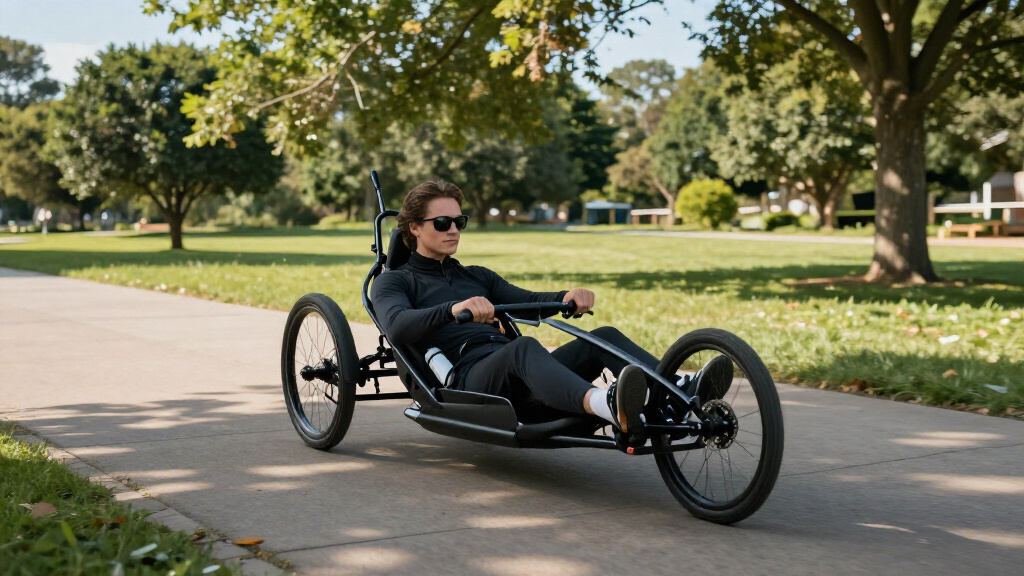
The layout of your recumbent trike influences not just speed and handling but also your overall riding experience and how it aligns with your fitness objectives. Tadpole trikes, with two wheels in front and one behind, tend to be more aerodynamic and stable at higher speeds. This stability allows you to push yourself harder during faster rides and longer distances, making them ideal if your goal is improving cardiovascular fitness or endurance.
Delta trikes, with one wheel in front and two in back, often offer a higher, more accessible seat and easier mounting, which can be beneficial if you’re recovering from injury or have mobility limitations. They might not be as aerodynamically efficient, but their stability and ease of use can encourage more frequent riding—crucial for establishing a consistent exercise routine.
Understanding these tradeoffs helps you choose a layout that balances your fitness ambitions with comfort and practicality. For instance, if your focus is on speed and pushing limits, a tadpole might serve you better. If comfort and ease of access are more important, a delta could keep you motivated to ride regularly.
As an affiliate, we earn on qualifying purchases.
How Seat Height and Recline Impact Your Workout
Seat height and recline angle aren’t just about comfort—they directly influence your pedaling efficiency, energy expenditure, and even injury risk. A low, reclined seat reduces your frontal area, cutting air resistance and potentially increasing speed, which can motivate you to push harder during workouts. However, this position might put more strain on your neck and lower back if not properly adjusted.
Conversely, a more upright seat improves visibility and reduces strain on your neck and shoulders, making it easier to maintain a comfortable posture during longer rides. This can be especially important for riders with neck or back issues, or those new to recumbent riding, as discomfort in these areas can lead to early fatigue or discouragement.
Mesh seats provide excellent breathability and flexibility, helping to keep you cool and comfortable on hot days, which is vital for maintaining consistency. Hard-shell seats, while firmer, offer better support and can be padded for long-distance comfort. The choice depends on your riding style, climate, and personal comfort preferences.
For example, a rider with neck issues might prioritize a more upright, adjustable seat for comfort, while a speed-focused rider might opt for a low, reclined position to maximize aerodynamics and velocity.
As an affiliate, we earn on qualifying purchases.
Frequently Asked Questions
Is a recumbent trike good exercise?
Absolutely. It offers a sustained aerobic workout that strengthens your legs and improves cardiovascular health. Heart rate, effort, and ride duration can all be tailored to your fitness level.
Does riding a trike burn fewer calories than cycling?
Not necessarily. Calorie burn depends on effort, terrain, and riding intensity. A well-structured trike workout—especially on hills or with resistance—can be just as demanding as traditional cycling, making it equally effective for calorie expenditure.
Can a recumbent trike help with weight loss?
Yes. Regular, comfortable rides allow for longer durations and higher frequency of exercise, which enhances calorie burn. Combining consistent riding with a balanced diet accelerates weight loss efforts, with the key being sustainability and enjoyment.
How should I get fitted for my recumbent trike?
A professional fitting considers your leg length, hip flexibility, and joint health. Ensuring your knees are slightly bent at full pedal extension reduces joint stress, while proper seat positioning prevents back or neck strain. A good fit also optimizes pedaling efficiency, making your workouts more effective and enjoyable.
Is a trike safer than a bicycle?
Recumbent trikes offer greater stability at low speeds and during stops, reducing the risk of tip-overs in these situations. However, during aggressive turns, hitting curbs, or at high speeds, they can tip if pushed beyond their limits. Wearing safety gear, practicing controlled maneuvers, and choosing appropriate riding environments are essential for safety. Awareness of these tradeoffs helps you ride confidently and minimize risks.
adult recumbent tricycle for exercise
As an affiliate, we earn on qualifying purchases.
As an affiliate, we earn on qualifying purchases.
Conclusion
Your perfect recumbent trike isn’t about the highest speed or the lowest price. It’s about finding a model that fits your body, matches your terrain, and encourages you to ride regularly. Comfort and confidence turn casual rides into lasting habits.
When you choose wisely, every pedal stroke becomes a step toward better health—an accessible, enjoyable journey you’re eager to repeat. So, measure, test, and listen to your body. Your next ride awaits.
Columbus Day / Indigenous Peoples' Day Picks
long weekend sales
As an affiliate, we earn on qualifying purchases.