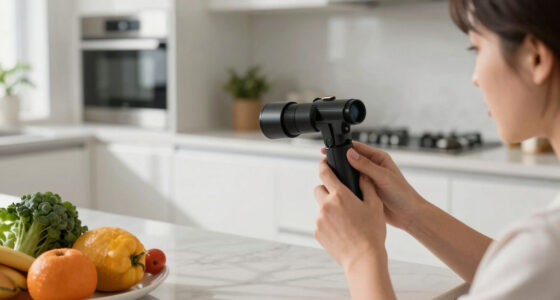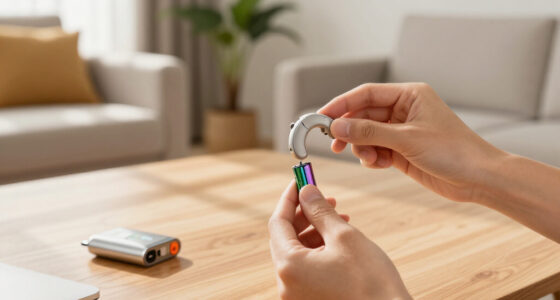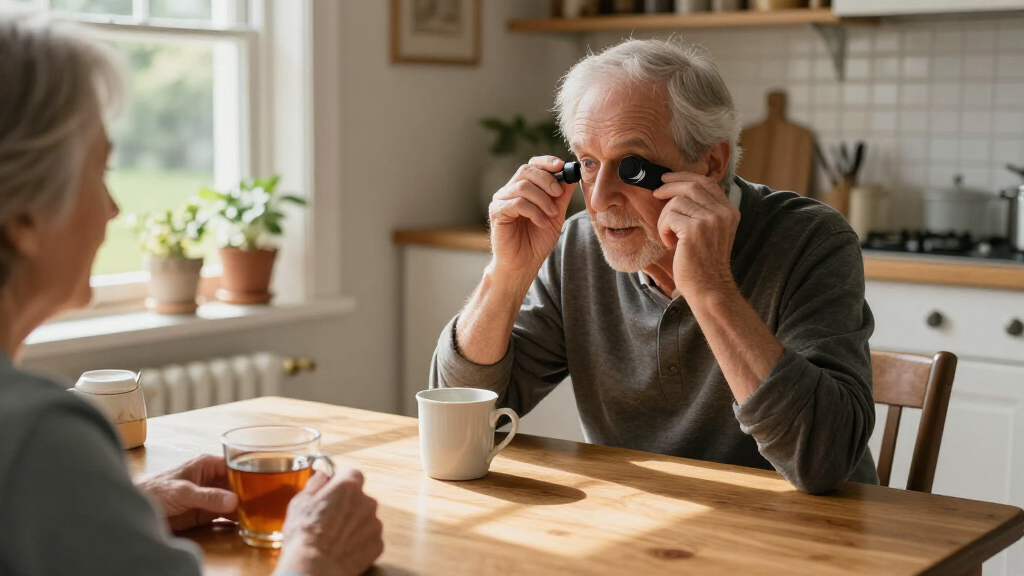

This guide helps an older adult or caregiver choose a personal sound amplification product (PSAP), fit it, and test it at home. You will learn how to check whether an amplifier suits the listening situation, adjust it without making sound uncomfortably loud, and recognize when a hearing evaluation is a better next step. It is for beginners; allow 1-2 hours to compare products and set one up, then several days for gradual practice.

Get everyday helpers delivered free — and shop member deals
- Fast, free delivery on millions of items
- Access to Prime Big Deal Days deals on October 6–7
- Prime Video, Amazon Music and more included
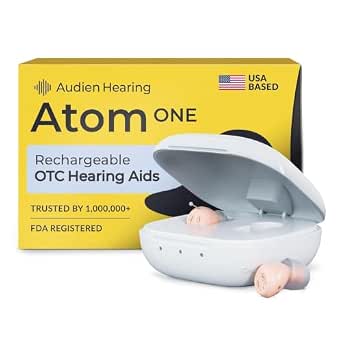
Audien Atom One OTC Hearing Aids
- ✔ Type: OTC hearing aid
- ✔ Fit: In-ear
- ✔ Intended hearing range: Mild to moderate hearing loss
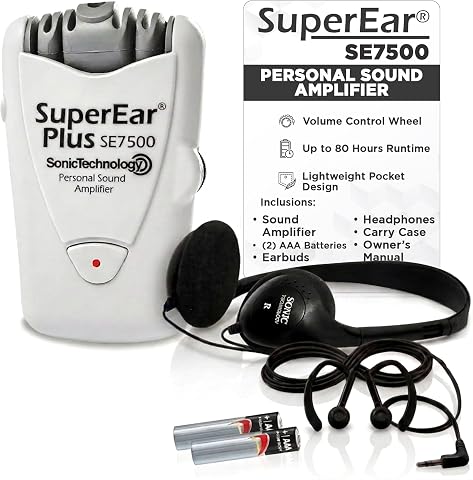
SuperEar SE7500 Personal Sound Amplifier for Seniors
- ✔ Type: Personal sound amplifier
- ✔ Sound gain: 50+ dB
- ✔ Power: Two AAA batteries included
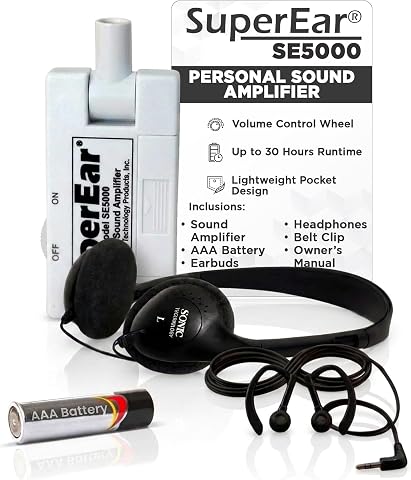
SuperEar SE5000 Hearing Amplifier
- ✔ Type: Personal sound amplifier
- ✔ Amplification level: 50+ dB
- ✔ Power: One AAA battery
Difficulty: Beginner | Time: 1-2 hours to compare and set up; allow several days to adjust
What You’ll Need
Tools & Materials:
- A phone, tablet, or computer with internet access to compare product specifications
- The amplifier’s user manual and any included ear tips or charging cable
- A quiet room and a familiar conversation partner or television program for testing
- A notebook or phone notes app to record settings and listening difficulties
Knowledge:
- Basic ability to read product instructions and adjust volume controls
- A willingness to stop using the device if it causes pain, dizziness, or sudden worsening of hearing
Hearing amplifiers are not the same as hearing aids. In the United States, PSAPs are intended to amplify sound for people with normal hearing in specific situations; they are not substitutes for hearing aids prescribed to treat hearing loss. Rules and product labels differ by country. A new or worsening hearing problem should be checked by a qualified hearing professional before relying on an amplifier.
Audien Atom One OTC Hearing Aids
The Audien Atom One is the most natural fit for seniors who want a device worn in the ear rather than a handheld amplifier connected to earbuds or headphones. It is described as an OTC hearing aid for adults with mild to moderate hearing loss, and its compact form is designed to be discreet. That makes it better suited to regular wear than either SuperEar, both of which are personal sound amplifiers intended to capture surrounding sound for activities such as television listening and conversation.Its main usability advantage is a pair of analog dials for volume and frequency adjustment. Buyers who prefer physical controls can make changes on the device without relying on an app or navigating tiny digital menus. The rechargeable battery is another meaningful distinction: USB-C charging and a stated 24-hour battery life avoid the routine AAA replacements required by the SuperEar models. A charging routine still needs to fit the wearer’s habits, and the stated charging time is about three hours.There are important limits. The Atom One is not presented for severe hearing loss, and its feature set does not include digital noise cancellation. Compared with the SuperEar SE7500, it offers a more wearable hearing-aid format but not the same stated maximum runtime or an included set of over-ear headphones. We would skip it if a user primarily wants amplified TV sound through headphones, or if they need more advanced sound processing than the supplied details establish.
Pros:
- Wearable in-ear format is more discreet than a handheld amplifier.
- Volume and frequency dials provide direct physical adjustments without an app.
- Rechargeable battery with USB-C charging and a stated 24-hour runtime.
- Small, medium, and large ear domes are included.
Cons:
- Specified for mild to moderate hearing loss, not severe loss.
- No digital noise-cancellation features are listed.
- Charging takes about three hours and requires a consistent charging routine.
Best for: Seniors seeking a discreet, rechargeable in-ear OTC hearing aid for mild to moderate hearing loss, with physical adjustment dials.
Not ideal for: People with severe hearing loss, those who want a handheld TV-listening amplifier, or buyers who require digital noise cancellation.
Bottom line: For seniors who want an everyday in-ear OTC option with simple dials, the Atom One is the strongest all-around fit, provided its hearing-loss scope and limited noise-processing features suit their needs.
“For seniors who want an everyday in-ear OTC option with simple dials, the Atom One is the strongest all-around fit, provided its hearing-loss scope and limited noise-processing features suit their needs.”
SuperEar SE7500 Personal Sound Amplifier for Seniors
For seniors who prefer a handheld listener, the SuperEar SE7500 stands out for its stated up to 80 hours of battery life, longer than the SE5000’s up to 30 hours. It includes two AAA batteries and has an automatic shut-off, helping reduce unnecessary battery drain. The adjustable wheel keeps operation straightforward, while the carry case with belt clip gives the user a way to keep the unit close while moving around.This is a situational sound amplifier, not an in-ear hearing aid like the Audien Atom One. It captures ambient sound for activities such as conversations and TV dialogue, then sends it to included earbuds or headphones. That distinction can make it useful for a person who wants a dedicated listening setup without wearing a device throughout the day. The package’s two listening styles also provide more flexibility than choosing earbuds alone.The tradeoff is that the SE7500 remains a handheld, battery-powered device. Users must manage AAA replacements, and the sound can include unwanted background noise in busy environments. Its stated 50+ dB gain does not mean it will suit severe hearing loss or guarantee clear speech in every setting. Compared with the SE5000, its headline advantage is endurance; the SE5000 may be the simpler match for someone prioritizing a particularly lightweight pocketable design and its tactile wheel. Neither SuperEar model connects directly or wirelessly to TV speakers.
Pros:
- Stated battery life of up to 80 hours, exceeding the SE5000’s stated runtime.
- Adjustable volume wheel offers a direct physical control.
- Includes earbuds, headphones, and a belt-clip carry case.
- Automatic shut-off is intended to help conserve battery power.
Cons:
- Requires two AAA batteries and periodic replacement.
- Ambient amplification may also pick up background noise.
- May not provide enough amplification for severe hearing loss.
Best for: Seniors who want a portable sound amplifier for TV dialogue or conversations and value long stated battery life with both earbuds and headphones included.
Not ideal for: People who want a discreet all-day in-ear hearing aid, dislike replacing batteries, or need sound isolation in noisy places.
Bottom line: The SE7500 is the better SuperEar choice for extended listening between battery changes, but it remains a handheld ambient amplifier rather than a wearable hearing aid or direct TV connection.
“The SE7500 is the better SuperEar choice for extended listening between battery changes, but it remains a handheld ambient amplifier rather than a wearable hearing aid or direct TV connection.”
SuperEar SE5000 Hearing Amplifier
The SuperEar SE5000 is a practical pick for seniors who want a compact handheld amplifier and a control they can locate by touch. Its tactile volume wheel and swivel microphone make it easier to direct and adjust the unit without depending on a phone or complex menu. The lightweight body can fit in a pocket, and the package includes both deluxe stereo headphones and discreet earbuds, so buyers can choose a listening style for different situations.Compared with the SE7500, the SE5000 gives up substantial stated battery life: up to 30 hours rather than up to 80. That difference makes the SE7500 more compelling for frequent, extended use, while the SE5000’s appeal is its pocketable design and accessory selection. Against the Audien Atom One, the SE5000 is not worn in the ear as a hearing aid; it is a handheld device that amplifies ambient sound. It may therefore suit occasional TV or conversation listening better than someone seeking a discreet device for everyday wear.Its limitations are central to the buying decision. It runs on a replaceable AAA battery, does not connect directly or wirelessly to TV speakers, and can amplify background sounds along with the sounds the user wants to hear. Buyers should not interpret the stated 50+ dB amplification as a guarantee of speech clarity or suitability for severe hearing loss. Choose it for simple controls and flexible included accessories, not for noise filtering or an integrated television connection.
Pros:
- Tactile volume wheel is simple to find and adjust.
- Lightweight handheld design is suited to pocket or belt-clip carry.
- Includes stereo headphones, discreet earbuds, and extension cables.
- Stated battery life is up to 30 hours.
Cons:
- Requires replacement of a single AAA battery.
- Does not connect directly or wirelessly to TV speakers.
- May amplify background noise along with desired sounds.
Best for: Seniors who want a lightweight handheld amplifier with a tactile wheel, multiple included listening accessories, and use for occasional TV or conversation listening.
Not ideal for: People seeking an in-ear OTC hearing aid, a direct wireless TV connection, or the longest battery life in this lineup.
Bottom line: The SE5000 makes the most sense for seniors who prioritize tactile controls and a compact, accessory-rich listening kit over the SE7500’s longer stated runtime.
“The SE5000 makes the most sense for seniors who prioritize tactile controls and a compact, accessory-rich listening kit over the SE7500’s longer stated runtime.”
As an Amazon Associate we earn from qualifying purchases.
Before You Start
Arrange a hearing evaluation before buying an amplifier if the user has not had hearing checked, particularly when speech is often unclear or hearing difficulty affects daily life. Get prompt medical advice for sudden hearing loss, especially in one ear, or hearing changes with ear pain, drainage, marked dizziness, or ringing that begins suddenly. Do not put an ear tip or other object into an ear that is painful, draining, or recently operated on.
Set a realistic goal: an amplifier can make nearby sounds louder, but it may also amplify background noise. It does not selectively restore speech understanding for every type of hearing loss. Do not buy based only on a high amplification number, a celebrity endorsement, or claims that a device cures hearing loss. Check the return period, warranty, battery or charging requirements, and whether the user can operate its controls.
Step-by-Step Instructions
Step 1: Identify the listening problem
Write down where hearing is difficult and what the user wants to hear more clearly. Note whether the problem occurs during one-to-one conversation, television, group meals, or outdoor activities, and whether it affects one ear or both. Record examples, such as hearing a speaker but missing words when the television is on.
Ask the user which situations matter most. This keeps the choice tied to a real need rather than general loudness. If the difficulty is persistent, worsening, or interfering with conversations, book a hearing evaluation instead of treating a consumer amplifier as a diagnosis.
Tip: Include whether the user already wears hearing aids, has earwax concerns, or has trouble handling small buttons and batteries.
Check: You have a short list of the situations the device should help with and any signs that call for professional evaluation.
Step 2: Compare suitable devices
Compare products sold as personal sound amplification products or hearing amplifiers, and read the intended-use statement. Look for clear instructions, comfortable replaceable ear tips or a suitable over-ear design, accessible volume controls, and a return policy that allows time to test the device. Check whether it is rechargeable or uses replaceable batteries and whether the user can manage that routine.
Review available controls for listening environments, balance, and feedback, but do not assume that more settings mean better results. Check device compatibility if it connects to a phone or television. Ask a hearing professional or pharmacist for help interpreting labels if the product’s purpose or claims are unclear.
Tip: Avoid products that promise to cure hearing loss, restore normal hearing, or work equally well for everyone.
Check: You can explain what the product is designed for, how it is powered, how it is controlled, and how it can be returned if it does not suit the user.
Step 3: Check fit and prepare the device
Read the manual before inserting or switching on the amplifier. Charge it or install the specified batteries, then inspect the device and ear tips for damage or dirt. Choose the tip size recommended by the manufacturer; it should sit comfortably without being forced deep into the ear. For an over-ear model, place it as directed and check that it does not press painfully on the skin.
Wash and dry your hands before handling the ear tips. If the user has limited dexterity, ask a caregiver to help with setup while letting the user practice the controls. Do not share ear tips unless they have been cleaned as directed.
Tip: A tip that is too large can hurt; one that is too small may not stay in place or may allow whistling. Never force a tip into the ear.
Check: The device is powered, undamaged, and seated comfortably according to its manual, with controls the user can reach.
Step 4: Start at a low setting
Turn the amplifier off or set its volume to the lowest level before placing it in or on the ear, following the manual. Switch it on, then raise the volume in small increments while another person speaks at a normal level from a comfortable distance. Stop increasing the volume as soon as speech is audible and comfortable.
Test one setting at a time. If the model offers programs, begin with its general or quiet-room setting before trying a setting intended for a particular environment. Do not turn the volume up to compensate for speech that remains unclear; louder sound can be uncomfortable or harmful and may not improve understanding.
Tip: If speech sounds sharp, distorted, or painfully loud, lower the volume or turn the device off. Do not keep testing through discomfort.
Check: A nearby speaker is audible at a comfortable level, without pain, sudden loud bursts, or persistent feedback.
Step 5: Test it in the target situation
Use the amplifier for a short, familiar activity that matches the user’s main goal, such as a one-to-one conversation in a quiet room. Ask the speaker to face the user, speak clearly, and use ordinary volume. Then try a second relevant setting, such as television at a normal level, if the first test is comfortable.
Record what improved and what did not: speech clarity, background noise, comfort, fit, and whether the user could operate the controls. Keep tests brief at first. Do not wear the amplifier while driving, crossing streets, or doing another activity that depends on hearing surrounding sounds unless the user can still hear those sounds safely.
Tip: A conversation partner can reduce background noise and get the user’s attention before speaking; these changes may help even without amplification.
Check: The user can describe a specific benefit or limitation in the target activity, and the device remains comfortable during the short test.
Step 6: Adjust gradually and keep a record
Repeat short listening sessions over several days, using the same comfortable starting setting. Change only one control at a time, and note the setting and situation. If a program improves television but makes a quiet conversation too loud, return to the previous setting and use the manual’s program instructions rather than raising overall volume.
Clean and store the amplifier as directed, and charge it or replace its batteries on the recommended schedule. Check the return deadline while testing. If the user cannot hear speech clearly, cannot wear the device comfortably, or needs higher volume each time, pause use and arrange a hearing evaluation.
Tip: Keep a simple log: date, setting, activity, comfort, and whether speech was easier to understand.
Check: The user has a repeatable comfortable setting, understands basic care, and can decide whether the amplifier helps enough to keep.
Common Mistakes to Avoid
- Buying an amplifier instead of getting an unexplained hearing problem checked. — Arrange a hearing evaluation for persistent, worsening, or one-sided difficulty. Seek prompt medical care for sudden hearing loss or symptoms such as pain or drainage.
- Turning the volume up until every sound is loud. — Start at the lowest setting and increase in small steps only until sound is comfortable. Stop if sound is painful, distorted, or startling.
- Choosing by maximum amplification or advertising claims alone. — Check the product’s intended use, controls, fit, power needs, warranty, and return terms. Treat cure or guaranteed-hearing claims with skepticism.
- Testing in a noisy or unfamiliar setting first. — Begin with a short test in a quiet room, then try the specific everyday situation the user wants to improve.
Troubleshooting
Problem: The amplifier whistles or squeals.
Solution: Lower the volume, reseat the device, and check the ear tip size and placement using the manual. Keep the microphone away from the ear tip if the design calls for that. If feedback continues, stop using it and contact the seller or manufacturer rather than forcing a tighter fit.
Problem: Speech is louder but still hard to understand.
Solution: Lower the volume if other sounds have become distracting. Test in a quieter room with the speaker facing the user. Persistent difficulty understanding speech calls for a hearing evaluation; an amplifier may not address the cause.
Problem: The device is uncomfortable or will not stay in place.
Solution: Remove it, check that the ear is not irritated, and confirm that the correct tip or placement method is being used. Try only manufacturer-approved tip sizes. Stop use for pain, swelling, or skin irritation and contact a hearing professional if it does not resolve.
Problem: There is no sound or the sound cuts out.
Solution: Check the charge or battery orientation, power switch, volume, and any connection settings in the manual. Inspect the microphone opening for debris and clean only as directed. Contact the manufacturer if these checks do not restore steady sound.
What Success Looks Like
The task is complete when the user has selected a product with clear intended use and workable return terms, can put it on comfortably and operate its controls, and has tested it at a low, comfortable setting in a relevant listening situation. The user should be able to state whether speech became easier to hear, what limitations remain, and how to clean and power the device. Stop and seek professional advice if there is pain, sudden hearing change, persistent difficulty understanding speech, or no comfortable useful setting.
Next Steps
Use the notes from several short sessions to decide whether to keep or return the amplifier within the seller’s deadline. Follow the manufacturer’s care instructions, keep the device dry, and check tips and batteries or charge routinely. Book a hearing evaluation if hearing difficulty continues, worsens, or affects safety and daily communication; bring the amplifier and listening log to the appointment. Ask a hearing professional about prescription hearing aids or other communication supports when a consumer amplifier is not enough.
Frequently Asked Questions
Are hearing amplifiers the same as hearing aids?
No. A consumer amplifier makes sound louder for particular situations and is not designed to diagnose or treat hearing loss. Hearing aids are medical devices intended for hearing loss and should be selected with appropriate professional guidance.
Can a senior use an amplifier without a hearing test?
A hearing test is a sensible first step when difficulty is persistent, worsening, or affecting daily life. Sudden hearing loss, especially in one ear, needs prompt medical evaluation rather than a trial of an amplifier.
How loud should the amplifier be?
Use the lowest setting that makes the target sound comfortably audible. Do not raise volume to overcome unclear speech, and stop if sound becomes painful, distorted, or startling.
Why does an amplifier whistle in the ear?
Whistling can happen when amplified sound leaks from the ear tip and returns to the microphone, or when the device is poorly seated. Lower the volume and follow the manual to reseat it; persistent feedback may require a different fit or device.
When should the user stop using the amplifier?
Stop if it causes pain, dizziness, irritation, or uncomfortable loudness. Seek prompt medical advice for sudden hearing loss, and arrange a hearing evaluation if speech remains difficult to understand or hearing continues to worsen.
Halloween Picks
halloween
As an affiliate, we earn on qualifying purchases.