

Adults comparing hearing amplifiers with prescription hearing aids are usually weighing a lower-cost way to make sounds louder against a more tailored response to hearing difficulty. The distinction is not simply basic versus advanced: an amplifier increases sound in selected situations, while a hearing aid is intended to help manage hearing loss and can be programmed around an individual’s hearing profile.

Get everyday helpers delivered free — and shop member deals
- Fast, free delivery on millions of items
- Access to Prime Big Deal Days deals on October 6–7
- Prime Video, Amazon Music and more included
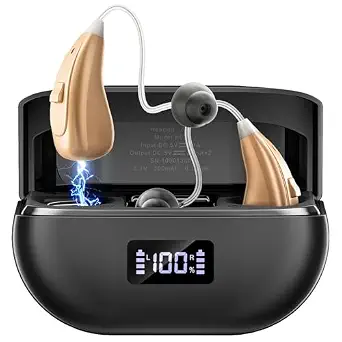
Rechargeable OTC Hearing Aids for Seniors with Noise Cancellation
- ✔ Fit: In-ear
- ✔ Audio processing: 16-channel
- ✔ Noise features: Adaptive noise cancellation and speech enhancement

Rechargeable Hearing Aids with 5-Level Volume Control
- ✔ Technology: 16-channel chip, noise reduction, and RIC
- ✔ Volume control: Five levels with volume memory
- ✔ Sound amplification: Up to 40 dB ± 5 dB
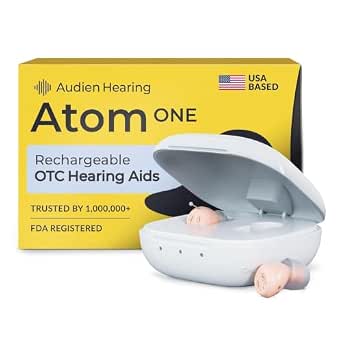
Audien Atom One OTC Hearing Aids
- ✔ Fit: In-ear; universal design fits either ear
- ✔ Controls: Analog volume and frequency dials
- ✔ Battery: Rechargeable lithium-ion
That difference affects more than sound quality. It shapes how well speech may come through in different environments, whether a device suits one-sided or changing hearing problems, and what kind of professional support is available. Hearing amplifiers can be a practical choice for adults who hear adequately in daily life but want extra volume for a particular activity. Hearing aids are generally the stronger choice for persistent trouble understanding speech, especially across several settings. The sections below compare fit, sound control, safety, convenience, support, and value so readers can choose based on the problem they need to solve.
At a Glance
| Criteria | Hearing amplifiers (personal sound amplification products) | Prescription hearing aids | Winner |
|---|---|---|---|
| Primary purpose | Amplifies environmental sound for specific listening situations; does not diagnose or treat hearing loss. | Designed to help people with hearing loss hear speech and other sounds. | B |
| Personalization | Usually offers general volume or tone controls; not tailored to a hearing test. | Can be programmed to match measured hearing needs, with adjustments over time. | B |
| Performance across settings | Can help make selected sounds louder, but may also amplify unwanted noise. | Often provides more targeted sound processing and settings for different environments. | B |
| Evaluation and safety | Typically bought without a hearing assessment; unexplained or sudden hearing changes still need medical attention. | A hearing professional can assess hearing and advise whether hearing aids are appropriate. | B |
| Cost and value | Usually costs less upfront; value depends on occasional, limited use. | Costs more upfront; added personalization and services may justify the expense for ongoing needs. | Depends |
| Ongoing support | Support varies by seller and model; fitting and follow-up may be limited. | May include fitting, follow-up adjustments, and troubleshooting, depending on provider and purchase route. | B |
| Convenience and access | Often sold directly to consumers and can be quick to try. | Requires more assessment and fitting steps, though access and rules vary by location. | A |
Rechargeable OTC Hearing Aids for Seniors with Noise Cancellation
This is our leading choice for adults who want noise management without app-based setup. Its 16-channel processing and adaptive noise cancellation are intended to clarify speech across different environments, while a button cycles through five volume levels. That simpler control scheme is less granular than the Atom One’s separate volume and frequency dials, but it may be easier to operate for someone who wants quick adjustments without managing multiple controls.The in-ear design weighs a stated 3 g per aid, and the package includes a charging case with an LED display. The manufacturer lists 25+ hours per charge and 100+ hours with the case, but does not specify the conditions behind those figures, so we would treat them as estimates rather than a promise of routine performance. Compared with the RIC-style model, this option also emphasizes noise reduction, but the RIC model specifically lists volume memory and several ear-tip sizes. The OTC model’s supplied description does not give comparable tip-size details, which makes fit harder to judge in advance.Its one-year warranty and FDA-registration detail provide useful product context, but neither establishes that it will suit an individual’s hearing needs. We would choose it over the Atom One when noise control is a priority, and over the RIC-style option when the adaptive feature and straightforward button operation are the bigger draw. Skip it if you need documented fit options or want adjustable frequency dials; those preferences point more clearly to the other products.
Pros:
- Adaptive noise cancellation and speech enhancement are designed to help distinguish speech in different environments.
- One-button operation and five volume levels keep routine adjustment simple.
- Charging case includes an LED display and has a stated total runtime of 100+ hours.
- Lightweight in-ear aids are listed at 3 g each.
Cons:
- The runtime figures are not accompanied by usage conditions, so real-world endurance is difficult to compare precisely.
- The provided fit information does not specify multiple ear-tip sizes.
Best for: Adults seeking in-ear amplification with adaptive noise cancellation, speech enhancement, and straightforward five-level button control.
Not ideal for: Buyers who want frequency adjustment, detailed ear-tip sizing information, or battery estimates tied to specified usage conditions.
Bottom line: We rank this first for its combination of adaptive noise control, simple operation, and a long stated case-supported runtime, while noting the limited fit detail.
“We rank this first for its combination of adaptive noise control, simple operation, and a long stated case-supported runtime, while noting the limited fit detail.”
Rechargeable Hearing Aids with 5-Level Volume Control
The RIC-style model is the strongest alternative for buyers who want noise reduction plus a control that remembers their last volume setting. Its five-level adjustment is similar in simplicity to the OTC model’s button control, but volume memory can spare the wearer from repeating a preferred adjustment after restarting the device. The listed 16-channel chip and noise-reduction technology are intended to help distinguish voices from background sound, though the supplied information does not describe specific listening programs or environmental modes.Its stated amplification is up to 40 dB ± 5 dB, and the battery claim reaches up to 25 hours per charge or up to 100 hours with the case. Those figures broadly match the OTC pick’s stated endurance, so the decision between them is less about headline runtime and more about adaptive cancellation versus volume memory and fit options. Four silicone tips are listed—one small, two medium, and one large—which gives buyers more explicit sizing information than the OTC description. Still, ear comfort varies, and the product notes that fit may differ by wearer.Compared with the Atom One, this model foregrounds voice-oriented noise reduction and a remembered setting rather than analog frequency adjustment. It makes the most sense for someone who wants a simple control routine and a choice of tip sizes. The tradeoff is that recharging is still needed after up to 25 hours, and the supplied details do not include a warranty or the guided setup noted for the Atom One. Choose another option if analog frequency dials or expert-guided setup matter more than volume memory.
Pros:
- Volume memory retains the last setting for a more consistent routine.
- Noise reduction and a 16-channel chip are intended to help separate voices from background sound.
- The case is stated to provide three to four full charges and includes an LED battery display.
- Multiple silicone tip sizes offer a clearer starting point for fit selection.
Cons:
- The aids still require recharging after up to 25 hours of use per charge.
- Comfort and fit may vary by wearer.
- The supplied details do not list a warranty or guided setup.
Best for: Adults who want five-level volume control with memory, stated noise reduction, and several silicone tip sizes to try.
Not ideal for: Buyers who need analog frequency adjustment, prefer a fully specified setup and support package, or expect never to recharge during extended use.
Bottom line: We place this second for its useful volume memory, noise reduction, and explicit tip assortment, just behind the OTC model’s adaptive noise-control emphasis.
“We place this second for its useful volume memory, noise reduction, and explicit tip assortment, just behind the OTC model’s adaptive noise-control emphasis.”
Audien Atom One OTC Hearing Aids
The Atom One takes a different path from the two noise-reduction-focused models: it prioritizes direct, app-free adjustment. Separate analog dials control volume and frequency, allowing a wearer to make changes at the device rather than relying on a phone or cycling through a single control. That can suit an adult who wants hands-on adjustment, although it also means more controls to learn than the five-level button setup on the OTC and RIC models.Three silicone dome sizes and expert-guided setup are practical advantages for a first-time buyer who is unsure about fit or getting started. The universal design fits either ear, and the rechargeable battery is rated for up to 24 hours, with a USB-C charging dock and an approximately three-hour charge time. Compared with the other two products, its runtime claim is slightly lower and it does not list noise control. That makes it a less compelling option for buyers specifically seeking background-noise management, but a reasonable fit for those who value manual frequency adjustment and setup support over that feature.The Atom One is described for adults with mild to moderate hearing loss; that is a product-positioning detail, not a diagnosis or guarantee of suitability. Its one-year warranty and included cleaning and maintenance accessories round out the package. We rank it third because its control and setup strengths are narrower than the adaptive cancellation or volume-memory features offered by the others—not because analog dials are inherently worse. Skip it if noise reduction is your deciding requirement or if you want a case-based extended runtime claim.
Pros:
- Separate analog volume and frequency dials allow direct, app-free adjustments.
- Three silicone dome sizes and expert-guided setup help support the initial fit and setup process.
- USB-C charging dock and rechargeable battery provide up to 24 hours of stated use.
- Includes a one-year warranty and cleaning and maintenance accessories.
Cons:
- Noise control is not listed, unlike the other two products in this comparison.
- The stated battery life is up to 24 hours, with no multi-charge case runtime given.
- The product is described for mild to moderate hearing loss, so it may not match every adult’s needs.
Best for: First-time adult buyers who prefer physical volume and frequency dials, multiple dome sizes, and expert-guided setup.
Not ideal for: Adults prioritizing noise control, a five-level button interface, or a charging case advertised for multiple additional charges.
Bottom line: We recommend the Atom One for buyers who value manual frequency controls and guided setup more than noise reduction or a longer case-supported runtime.
“We recommend the Atom One for buyers who value manual frequency controls and guided setup more than noise reduction or a longer case-supported runtime.”
As an Amazon Associate we earn from qualifying purchases.
Key Differences
The key divide is the job each device is meant to do. An amplifier raises sound, which may be useful when the goal is to hear a television or conversation in a specific setting. But louder sound is not automatically clearer speech: if hearing loss makes particular pitches difficult to detect, boosting everything can leave speech muddy while making background noise uncomfortable. A hearing aid can be adjusted to a person’s measured hearing needs, so it is usually better suited to ongoing communication difficulty.
The tradeoff is access and cost versus tailoring and support. Amplifiers tend to be easier to buy and less expensive, making them reasonable for limited, situational use. Hearing aids call for more investment and usually involve a hearing assessment and fitting, but that process can reveal whether the issue is hearing loss and give the wearer a route to adjustments. For persistent difficulty, the higher price is more defensible; for occasional extra volume, it may not be.
Neither label replaces medical advice. A sudden change in hearing, hearing loss in one ear, ear pain, drainage, dizziness, or a blocked feeling deserves prompt professional attention rather than an amplifier trial. A hearing assessment is also sensible when difficulty is recurring, worsening, or interfering with conversation. The right choice depends on whether the need is occasional sound boost or ongoing help with hearing loss.
Detailed Comparison
Primary purpose and fit (Prescription hearing aids wins — major)
Hearing amplifiers are intended to make environmental sounds louder for people who want help in particular situations; they are not a substitute for a hearing assessment or treatment. Hearing aids are intended for hearing loss and are selected or programmed to address the wearer’s needs. Hearing aids win by a major margin for persistent difficulty following conversation. Amplifiers can still fit someone who hears well in most circumstances but wants extra volume for a hobby or occasional listening.
Personalization and speech clarity (Prescription hearing aids wins — major)
Many amplifiers offer straightforward volume and sometimes tone adjustments, but they generally do not use a hearing test to shape sound for specific hearing gaps. Hearing aids can be adjusted based on an assessment, which can make speech easier to follow without simply turning up every sound. This is a major practical advantage for everyday conversations, though individual results depend on the device, fitting, and hearing needs. For a one-off volume boost, the extra tailoring may not matter enough to justify the cost.
Use across quiet and noisy settings (Prescription hearing aids wins — moderate)
An amplifier may help in a quiet room or a specific listening situation, but indiscriminately raising sound can also bring up traffic, room noise, or competing voices. Hearing aids often provide more control over sound processing and listening programs, which can be useful when moving between home, work, and social settings. Hearing aids win by a moderate margin for varied environments. Neither device guarantees easy listening in every noisy space, so expectations should remain realistic.
Assessment and safety (Prescription hearing aids wins — major)
Amplifiers can often be purchased directly, which is convenient, but buying one does not identify the cause of hearing difficulty. A hearing professional can evaluate whether hearing loss is present and whether a hearing aid or another response makes sense. Hearing aids win by a major margin when symptoms are persistent, worsening, or unusual. Do not use either device to put off care for sudden hearing changes, one-sided loss, pain, drainage, or dizziness.
Cost and value (major difference)
Hearing amplifiers usually have a lower upfront cost, which makes them attractive for occasional use or for trying a modest sound boost. Hearing aids cost more, but the extra expense can include assessment, fitting, programming, and follow-up, depending on the provider and purchase arrangement. There is no universal winner: an amplifier can be better value for a narrow, infrequent need, while a hearing aid is often better value when communication problems affect daily life. Paying more makes sense when personalization and support will be used.
Ongoing support and adjustments (Prescription hearing aids wins — moderate)
Amplifier support depends on the seller and product; some offer useful returns or help, while others provide little guidance beyond basic instructions. Hearing aids more often come with fitting and opportunities for adjustments, though services vary and should be confirmed before purchase. This is a moderate advantage for hearing aids: a device that feels uncomfortable or sounds wrong may need adjustment rather than abandonment. Buyers should ask what follow-up is included and what it costs.
Convenience and access (Hearing amplifiers (personal sound amplification products) wins — moderate)
Amplifiers are typically easier to buy, and users can try them without the same assessment and fitting steps. Hearing aids require more coordination and may involve appointments, though access rules vary by location and purchasing route. Amplifiers win by a moderate margin for speed and simplicity. That convenience is useful when the need is clearly occasional, but it should not become a reason to ignore recurring hearing problems.
Hearing amplifiers (personal sound amplification products): Pros and Cons
Pros:
- Lower upfront cost for many models.
- Easy to obtain and may suit a specific listening activity.
- Simple controls can make occasional use straightforward.
Cons:
- Does not diagnose or treat hearing loss.
- May amplify background noise along with speech.
- Usually lacks hearing-test-based fitting and may offer limited follow-up.
Prescription hearing aids: Pros and Cons
Pros:
- Can be programmed to match measured hearing needs.
- Generally better suited to ongoing speech and communication difficulty.
- May come with professional fitting, adjustments, and follow-up support.
Cons:
- Higher upfront cost than most amplifiers.
- Usually takes more time to assess, fit, and adjust.
- Results and included services vary; noisy environments can remain challenging.
Who Should Choose What
Choose Hearing amplifiers (personal sound amplification products) if:
- You hear adequately in most daily situations and want extra volume for a limited activity, such as watching television in a quiet room.
- You want a lower-cost, simple device for occasional use and understand it is not treatment for hearing loss.
- You have checked that the product offers a suitable return policy and basic controls for your needs.
Choose Prescription hearing aids if:
- You often ask people to repeat themselves or struggle to follow conversation in several settings.
- You want sound adjusted to a hearing assessment rather than a general volume boost.
- You value professional fitting and follow-up enough to pay more for ongoing help.
Skip both if: Hearing changed suddenly, is much worse in one ear, or comes with pain, drainage, dizziness, or a blocked sensation; seek prompt medical advice. If hearing difficulty is persistent and unexplained, arrange an assessment before relying on an amplifier.
Value for Money
Hearing amplifiers are the lower-cost choice, but lower price is good value only when the need is narrow and occasional. If an amplifier helps with one activity and does not create uncomfortable noise, the savings may matter more than advanced fitting. For daily communication problems, repeated purchases of general amplifiers can become a false economy if they do not address the hearing difficulty.
Paying more for hearing aids is most defensible when hearing loss affects conversations, work, or social life and the wearer will use professional fitting and adjustments. Before buying, ask what the price includes: assessment, programming, follow-up visits, repairs, trial periods, and returns can vary. The better value is the least expensive option that genuinely fits the need—not automatically the least expensive device or the one with the most features.
Final Verdict
For most adults with persistent trouble hearing speech, prescription hearing aids are the stronger choice because they can be fitted to measured hearing needs and are more suited to ongoing use. Choose an amplifier if your hearing is otherwise adequate and you only need an occasional boost in a specific, quiet situation. The biggest deciding factor is whether you need louder sound now and then or tailored help with recurring hearing loss. If you are unsure, start with a hearing assessment rather than guessing from a device label.
Frequently Asked Questions
Are hearing amplifiers the same as hearing aids?
No. Hearing amplifiers make sounds louder for selected situations. Hearing aids are intended for hearing loss and can be adjusted to the wearer’s hearing profile. An amplifier does not confirm why hearing is difficult or replace an evaluation.
Can a hearing amplifier help with conversations?
It may help in a quiet setting by making sound louder, but it can also raise background noise. If conversation is difficult in multiple settings, a hearing assessment and discussion of hearing aids are more suitable than relying on general amplification.
Are hearing aids worth paying more for?
Often, when hearing difficulty is ongoing and affects everyday communication. The extra cost may pay for individualized programming and follow-up, depending on the provider. For occasional sound boost, an amplifier may be adequate and better value.
Should I try an amplifier before seeing a hearing professional?
If the problem is recurring, worsening, or unexplained, arrange a hearing assessment instead of using an amplifier to delay care. Sudden hearing change, one-sided loss, pain, drainage, or dizziness calls for prompt medical attention.
Halloween Picks
halloween
As an affiliate, we earn on qualifying purchases.