
Seniors comparing personal hearing amplifiers with prescription hearing aids are usually weighing immediate affordability and simplicity against personalized treatment and professional support. The two products can look similar, but they are designed for different jobs: an amplifier raises sound generally, while a hearing aid is programmed to help with a measured pattern of hearing loss.

Get everyday helpers delivered free — and shop member deals
- Fast, free delivery on millions of items
- Access to Prime Big Deal Days deals on October 6–7
- Prime Video, Amazon Music and more included
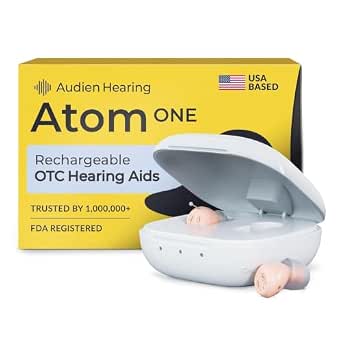
Audien Atom One OTC Hearing Aids
- ✔ Device type: OTC hearing aid
- ✔ Fit: In-ear
- ✔ Intended hearing range: Mild to moderate hearing loss
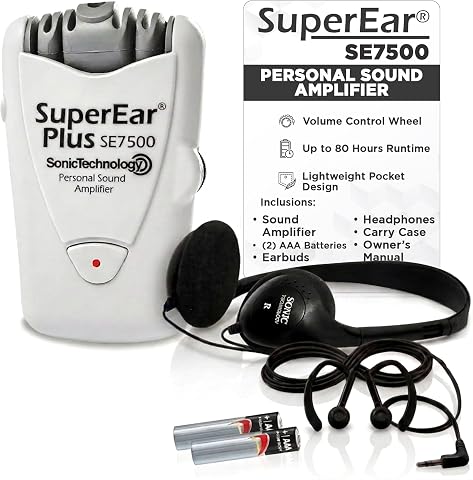
SuperEar SE7500 Personal Sound Amplifier for Seniors
- ✔ Device type: Personal sound amplifier
- ✔ Sound gain: 50+ dB
- ✔ Power source: Two AAA batteries, included
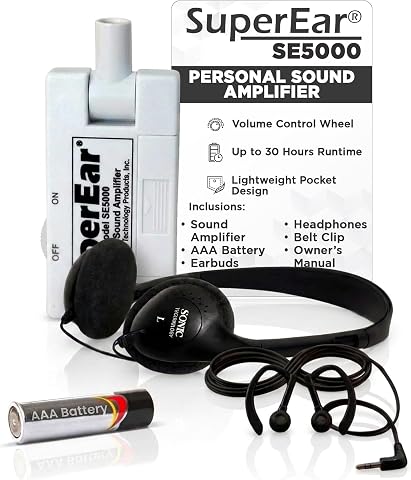
SuperEar SE5000 Hearing Amplifier
- ✔ Device type: Personal sound amplifier
- ✔ Amplification level: 50+ dB
- ✔ Power source: One AAA battery
That distinction matters most when hearing trouble is persistent, affects conversation in multiple settings, or may have a medical cause. A basic amplifier can be a reasonable, limited-use choice for someone who hears adequately in most situations but wants extra volume for a particular activity. It is not a substitute for a hearing evaluation. Prescription hearing aids cost more and take time to fit, but are the stronger choice for ongoing hearing difficulty. The sections below compare cost, sound processing, fit, support, convenience, safety, and value so readers can match the choice to their needs.
At a Glance
| Criteria | Personal hearing amplifiers | Prescription hearing aids | Winner |
|---|---|---|---|
| Purpose | Raises nearby sounds generally; does not treat hearing loss | Designed to compensate for diagnosed hearing loss | B |
| Personalization | Usually limited adjustment; does not use a hearing test to shape sound | Selected and programmed around hearing test results and user needs | B |
| Performance in noisy settings | Can amplify speech and background noise together | May offer directional microphones and other noise-management features | B |
| Upfront cost | Usually the lower-cost option | Usually costs more, with expenses varying by device and care package | A |
| Professional fitting and follow-up | Typically sold without clinical fitting or routine hearing care | Can include professional fitting, adjustment, and follow-up | B |
| Ease of use | Often simple to try, though controls and ear pieces vary | Requires fitting and learning, with features varying by model | A |
| Suitability for ongoing hearing loss | Limited; may not address the person’s specific hearing needs | Generally the more appropriate option when difficulty is persistent | B |
| Medical assessment | Does not diagnose the cause of hearing difficulty | Usually follows a hearing evaluation; sudden or unusual symptoms need prompt medical attention | B |
Audien Atom One OTC Hearing Aids
The Audien Atom One is the most direct fit for seniors looking for an in-ear OTC hearing aid rather than a handheld device that simply raises the level of nearby sound. It is described for adults with mild to moderate hearing loss, and its small in-ear design is intended for discreet everyday wear. That makes it a different proposition from both SuperEar models, which use an external microphone and headphones or earbuds for situational listening.Its controls are deliberately uncomplicated: analog dials adjust volume and frequency, so users do not have to navigate an app or small digital menus. Compared with the SE5000 and SE7500, this can be more convenient for someone who wants a device worn in the ear rather than holding or clipping a separate amplifier. The USB-C rechargeable battery is also a practical contrast with the SuperEar units’ AAA batteries, although charging still requires a regular routine and the stated charging time is about three hours.The main limitation is that “in-ear” does not mean universally suitable. The Atom One is intended for mild to moderate hearing loss, and the available description does not claim digital noise cancellation. Buyers who need help only with television dialogue or occasional conversations may prefer a SuperEar amplifier’s included headphones and earbuds. Those with more significant hearing needs, uncertain hearing changes, or difficulty getting a comfortable fit should seek professional guidance rather than assume this device will be adequate.
Pros:
- In-ear OTC hearing aid format for mild to moderate hearing loss
- Simple analog dials adjust volume and frequency without an app
- Rechargeable battery with USB-C charging and stated 24-hour battery life
- Small, discreet design with multiple ear dome sizes included
Cons:
- Not intended for severe hearing loss
- No digital noise cancellation features are specified
- Requires a charging routine, with charging taking about three hours
Best for: Older adults seeking a discreet, rechargeable in-ear OTC hearing aid for mild to moderate hearing loss who prefer physical controls over app-based adjustments.
Not ideal for: People with severe hearing loss, those who want a handheld amplifier for occasional TV or conversation use, or buyers who require confirmed advanced noise processing.
Bottom line: We rank the Atom One first for seniors who want a rechargeable, discreet OTC hearing aid, but it is not the right choice for every level or type of hearing difficulty.
“We rank the Atom One first for seniors who want a rechargeable, discreet OTC hearing aid, but it is not the right choice for every level or type of hearing difficulty.”
SuperEar SE7500 Personal Sound Amplifier for Seniors
For listeners who prefer a personal sound amplifier and want fewer battery changes, the SuperEar SE7500 is the stronger of the two SuperEar picks. Its stated runtime reaches up to 80 hours, substantially longer than the SE5000’s stated 30 hours, and the package includes both earbuds and headphones. A belt-clip carry case also helps keep the handheld unit accessible during indoor or outdoor activities.The SE7500 still works by amplifying ambient sound, rather than functioning as an in-ear OTC hearing aid like the Audien Atom One. That distinction makes it more appropriate for targeted listening—such as conversations or television—than for someone specifically seeking a discreet device worn throughout the day. Its adjustable volume wheel is a practical, tactile control, and the redesigned microphone is described as reducing carry noise. However, a microphone cannot isolate speech in every setting: in a noisy room, surrounding sounds may rise along with the voice the listener wants to hear.Its chief tradeoff is power. The SE7500 uses two AAA batteries, so its long runtime does not remove the need to keep replacements available. Compared with the SE5000, it prioritizes endurance and a carry case over a one-cell setup; compared with the Atom One, it avoids charging but is less like a conventional in-ear hearing aid. We would skip it if you need severe-loss support, sophisticated noise management, or direct wireless TV audio.
Pros:
- Stated battery life of up to 80 hours
- Includes lightweight earbuds, headphones, and a belt-clip carry case
- Adjustable volume wheel is straightforward to operate
- Microphone design is described as reducing carry noise
Cons:
- Uses two AAA batteries that must be replaced periodically
- Amplifies ambient sound, which can include unwanted background noise
- May not provide sufficient amplification for severe hearing loss
Best for: Seniors who want a portable personal amplifier for occasional listening and value a long stated runtime plus both headphone and earbud options.
Not ideal for: People seeking an in-ear OTC hearing aid, wireless television connection, or reliable speech isolation in very noisy environments.
Bottom line: The SE7500 is our preferred SuperEar for extended situational listening, provided the buyer accepts replaceable batteries and ambient-noise limitations.
“The SE7500 is our preferred SuperEar for extended situational listening, provided the buyer accepts replaceable batteries and ambient-noise limitations.”
SuperEar SE5000 Hearing Amplifier
The SuperEar SE5000 is the straightforward choice for seniors who want a portable amplifier with an easy-to-feel control. Its tactile volume wheel is easier to locate by touch than tiny buttons, while the swivel microphone lets the user direct the pickup toward a sound source. The handheld format can work well for occasional conversations, daily activities, or TV listening when used with the included headphones or earbuds.Compared with the SE7500, the SE5000 uses one AAA battery and has a shorter stated runtime of up to 30 hours, but it still offers two listening choices and a lightweight pocketable body. The SE7500 is the better fit when reducing battery changes is the priority; the SE5000 makes more sense when buyers value a simple one-battery arrangement and a tactile control. Both differ from the Audien Atom One because they amplify surrounding sound instead of sitting in the ear as an OTC hearing aid.That simplicity comes with important limits. The SE5000 does not connect directly or wirelessly to TV speakers; it listens through its microphone, which means room noise can come along with the television or conversation. AAA batteries also need eventual replacement. This is not the pick for someone seeking tailored hearing support, strong performance in noisy places, or a solution for severe hearing loss. We see it as a useful situational tool, not a replacement for an assessment of hearing needs.
Pros:
- Tactile volume wheel is simple to find and adjust
- Swivel microphone can be directed toward the sound source
- Lightweight handheld design fits in a pocket
- Includes stereo headphones, discreet earbuds, and extension accessories
Cons:
- Does not connect directly or wirelessly to TV speakers
- Uses a replaceable AAA battery
- Ambient sound amplification can include background noise
Best for: Seniors who want a light, handheld amplifier with a tactile volume wheel and the flexibility to use either included headphones or earbuds.
Not ideal for: People who need direct wireless TV audio, rechargeable power, advanced background-noise control, or an in-ear hearing aid for mild to moderate hearing loss.
Bottom line: The SE5000 is a practical, easy-control amplifier for occasional listening, but the SE7500 lasts longer and the Atom One is better suited to in-ear hearing support.
“The SE5000 is a practical, easy-control amplifier for occasional listening, but the SE7500 lasts longer and the Atom One is better suited to in-ear hearing support.”
As an Amazon Associate we earn from qualifying purchases.
Key Differences
The biggest difference is not simply sound quality or price; it is whether the device responds to an individual hearing profile. An amplifier makes sound louder, often across a broad range. That may help in a quiet, predictable situation, but it can also make unwanted noise louder. A prescription hearing aid is configured using hearing assessment results, with settings intended to help where that person has difficulty. The advantage is most meaningful for regular conversation, varied listening environments, and long-term use.
Amplifiers win on initial cost and often on simplicity: a buyer can try one without arranging a fitting. That lower commitment can be useful for occasional needs, but it comes with fewer safeguards and less tailored support. Hearing aids cost more and involve an adjustment period, yet the price may include professional fitting and follow-up, depending on the provider and package. For persistent hearing trouble, those services can make the extra expense worthwhile. For occasional extra volume, paying for a fully fitted device may not be necessary—but an amplifier should not delay a hearing evaluation when symptoms are ongoing or worsening.
Detailed Comparison
Purpose and appropriate use (Prescription hearing aids wins — major)
Prescription hearing aids win by a major margin for people with diagnosed hearing loss: they are intended to address that loss, whereas amplifiers simply raise sound. An amplifier can suit a limited situation, such as listening to a quiet speaker nearby, but it cannot be assumed to improve all speech or hearing needs. In practice, choose based on whether the issue is occasional extra volume or a persistent difficulty that warrants assessment.
Personalization (Prescription hearing aids wins — major)
Prescription hearing aids win; the gap is major. Their settings can be matched to hearing test results and adjusted as the user learns what works. Amplifiers generally provide broad volume control rather than individualized correction. This matters when a person struggles to hear certain pitches, voices, or situations more than others: making everything louder may not make speech clearer.
Speech in background noise (Prescription hearing aids wins — moderate)
Prescription hearing aids usually win by a moderate margin. Many models include directional microphones or noise-management features, though results depend on the device, settings, and environment. A basic amplifier may boost the speaker and competing sounds together. Neither option guarantees effortless conversation in a crowded restaurant, but a properly selected hearing aid is generally better suited to varied listening conditions.
Upfront cost and financial commitment (Personal hearing amplifiers wins — major)
Amplifiers win by a major margin on initial outlay. They are typically much less expensive and can be tried with less commitment. Hearing aid costs vary, and the quoted amount may or may not include fitting and follow-up. The practical tradeoff is that a low purchase price does not buy a diagnosis or individualized care. Compare total package costs rather than device prices alone.
Fitting, adjustment, and ongoing support (Prescription hearing aids wins — moderate)
Prescription hearing aids win by a moderate-to-major margin. Professional fitting can help set the devices appropriately, explain their controls, and make adjustments after real-world use. Amplifiers are often sold as ready-to-use products, so buyers may have to solve comfort or sound problems themselves. For an older adult who needs assistance operating a device, access to a knowledgeable provider can be as valuable as the hardware.
Convenience and learning curve (Personal hearing amplifiers wins — minor)
Amplifiers have a modest advantage in getting started. Many require fewer steps before a user can try them, though comfort, battery life, and controls vary by product. Hearing aids usually require an appointment or setup, followed by an adjustment period as the wearer adapts to amplified sounds. The easier first day is not necessarily the easier long-term experience: a poor fit or unsuitable sound can make either device frustrating.
Suitability for ongoing hearing difficulty (Prescription hearing aids wins — major)
Prescription hearing aids win by a major margin. Persistent trouble following conversation, frequently asking others to repeat themselves, or difficulty hearing across several settings is a reason to seek a hearing evaluation rather than relying on general amplification. A fitted hearing aid can be part of a plan based on the results. An amplifier may provide some extra loudness, but it can leave the core problem unresolved.
Safety and knowing when to seek care (Prescription hearing aids wins — major)
Prescription hearing care wins by a major margin because an evaluation can identify hearing patterns and prompt referral when needed. An amplifier does not establish why hearing has changed. Sudden hearing loss, a sudden change in one ear, pain, discharge, dizziness, or other concerning symptoms call for prompt medical attention rather than a device purchase. This is a difference in care pathway, not a claim that every hearing aid prevents medical problems.
Personal hearing amplifiers: Pros and Cons
Pros:
- Lower initial cost and less financial commitment
- Can be a straightforward way to add volume in a limited, quiet situation
- Often available without arranging a clinical fitting
Cons:
- Amplifies sound generally rather than addressing a measured hearing profile
- May raise background noise along with speech
- Does not diagnose hearing loss or provide professional adjustment
- Can encourage delay in seeking care if symptoms are persistent
Prescription hearing aids: Pros and Cons
Pros:
- Can be programmed to match hearing test results and individual needs
- Often better equipped for different listening environments
- Professional fitting and follow-up may help with comfort and adjustment
- More appropriate for persistent, diagnosed hearing loss
Cons:
- Higher upfront cost, with package inclusions varying
- Requires time for fitting, learning, and adjustment
- Performance and useful features vary by model and provider
- Not a replacement for medical care when symptoms are sudden or concerning
Who Should Choose What
Choose Personal hearing amplifiers if:
- You need occasional extra volume in a quiet, predictable setting and do not have ongoing or worsening hearing difficulty.
- You want a lower-cost, limited-use option while arranging a hearing evaluation, rather than treating the amplifier as a diagnosis or long-term substitute.
- You understand that more volume may also make surrounding noise louder.
Choose Prescription hearing aids if:
- A hearing professional has identified hearing loss and you want a device selected or programmed for your test results.
- Conversation is difficult in multiple settings or the problem is affecting everyday communication.
- You value fitting help, follow-up adjustments, and features intended to handle different listening environments.
Skip both if: Do not choose either device as a substitute for medical assessment if hearing loss appeared suddenly, is rapidly worsening, affects one ear unexpectedly, or comes with pain, discharge, or dizziness. Seek prompt care.
Value for Money
Amplifiers are better value only when the need is limited and the buyer understands their limits. Their lower price can make sense for occasional extra volume, but they offer no individualized correction, and a cheap device that does not make speech clearer may be poor value even at a low price. Avoid judging by amplification claims alone; comfort, usable controls, and a clear return policy matter.
For persistent hearing loss, paying more for prescription hearing aids is often worth it because the cost can cover more than the device: assessment, programming, fitting, and follow-up may be included. Ask the provider exactly what the quoted price covers, how adjustments are handled, and what happens if the device does not suit you. If the added services are not included, compare the full cost of care. The best value is the least expensive option that appropriately addresses the need—not automatically the least expensive product.
Final Verdict
For most seniors with ongoing hearing difficulty, prescription hearing aids are the better choice. Their core advantage is personalization backed by a hearing evaluation, and that matters more than a lower purchase price when conversation and daily communication are affected. Choose a personal amplifier only for occasional, limited use when a general volume boost is all that is needed and there are no warning signs. Do not use either device to postpone assessment of persistent symptoms, and seek prompt medical care for sudden changes or other concerning symptoms. The deciding question is simple: occasional extra loudness points toward an amplifier; a continuing hearing problem points toward an evaluation and, if appropriate, fitted hearing aids.
Frequently Asked Questions
Are hearing amplifiers the same as hearing aids?
No. A personal amplifier raises surrounding sound, while a prescription hearing aid is selected and adjusted to help with a diagnosed hearing loss. They may look alike, but they are not interchangeable in purpose.
Can a senior use an amplifier instead of getting a hearing test?
An amplifier should not replace an evaluation when hearing trouble is persistent, worsening, or interfering with daily life. A hearing professional can assess the pattern and advise whether a hearing aid or another response is appropriate.
Are hearing amplifiers ever a reasonable choice?
They may suit occasional extra volume in a quiet, predictable setting for someone without ongoing hearing difficulty. They are less suitable when the user needs clear conversation across different environments or is compensating for a suspected hearing loss.
Why do prescription hearing aids cost more?
The price may include individualized programming, fitting, and follow-up in addition to the device, though package details differ. Ask for an itemized explanation so you can compare total costs and support rather than device prices alone.
When should someone seek medical care rather than buy a device?
Sudden hearing loss or a sudden change in one ear needs prompt medical attention. Pain, discharge, dizziness, or rapidly worsening symptoms also call for professional care; do not try to solve these problems with an amplifier.
Halloween Picks
halloween
As an affiliate, we earn on qualifying purchases.