TL;DR
Open a free Amazon Business account
Business pricing, bulk buying and tax-exempt orders.
Create a free accountAs an affiliate, we earn on qualifying purchases.
Vibrating alarm clocks wake users through physical movement, making them ideal for deaf, hard-of-hearing, or heavy sleepers. Key features include adjustable strength, placement options, and backup power. Choosing the right device depends on your sleep habits and needs.
Adjust vibration strength and placement for your sleeping style—what works for one may not for another.
Test your alarm regularly to confirm it reliably wakes you, especially before important days.
Combine vibration with light or sound signals if you’re a very heavy sleeper or sharing a bed.
Choose a device with backup power to prevent missed alarms during outages.
Stay aware of new tech like smart wearables and adaptive systems that make waking easier and more personalized.
A Guide to Vibrating Alarm Clocks
Wake through movement instead of relying on sound. Vibrating alarms can give deaf and hard-of-hearing users, heavy sleepers, shift workers, travelers, and couples a more dependable—and more discreet—start to the day.
Three ways to turn an alarm into movement
Every design delivers a physical stimulus, but the transmission path changes the experience. The right choice depends on sleep depth, comfort, bed setup, travel needs, and whether another person should remain asleep.
Bed shaker
A wired or wireless puck sits beneath a pillow or approved mattress position. It usually provides the strongest, most direct wake-up for deep sleepers.
Wearable vibration
A watch, wristband, or ring vibrates against the skin. It is discreet and partner-friendly, but fit, charging, and nighttime comfort matter.
Built-in vibration
A compact clock or phone attachment vibrates on a bedside surface or beneath a pillow. Portability is strong, though force can vary by surface.
Reliability is a system, not a single setting
Strength gets attention, but placement, scheduling, controls, power protection, and signal combinations determine whether the alarm performs consistently.
Adjustable vibration
Match motor intensity to sleep depth. Excess force can feel startling or disturb a partner.
Secure placement
Clips, straps, or textured bases prevent a shaker from shifting away during the night.
Flexible alarm patterns
Multiple alarms, escalating pulses, day-by-day schedules, and accessible snooze controls add resilience.
True backup operation
Verify whether batteries run the shaker or merely retain time and settings during an outage.
Accessible controls
Large tactile buttons, high contrast, clear labels, and simple setup reduce avoidable mistakes.
Optional sound and light
Layer signals for extra assurance, while keeping each cue independently adjustable.
Which alarm matches your sleep style?
No design wins every category. A bed shaker generally leads on force, a wearable on discretion, and a compact vibrating clock on portability and simple travel setup.
| Decision factor | Wearable | Bed shaker | Built-in / compact |
|---|---|---|---|
| Heavy-sleeper strength | ~Moderate | ✓Strong | ~Variable |
| Partner discretion | ✓Excellent | ~Bed movement | ~Surface noise |
| Travel convenience | ✓Excellent | ✗Bulky | ✓Compact |
| Charging / power burden | ~Frequent | ✓Mains + backup | ~Model dependent |
| Multi-sensory alerts | ~Limited | ✓Light + sound | ~Often sound |
Dedicated bed shaker
Add an optional flashing alert for a strong multi-sensory system.
Silent wearable
Direct-to-skin vibration helps avoid waking a sleeping partner.
Battery-powered format
Favor durability, dark-room controls, compact size, and voltage compatibility.
Flexible scheduling
Look for multiple alarms and configurable day-by-day routines.
Build a wake-up routine you can trust
Fine-tuning matters more than buying the most powerful device. Begin conservatively, test in real sleeping conditions, and layer cues only when needed.
Choose the signal
Select vibration alone or combine it with light and sound.
Place it securely
Start under the pillow unless another position is approved.
Tune the strength
Increase intensity until it wakes you without excessive shock.
Test repeatedly
Run trials on ordinary days before relying on it for key events.
Check backup power
Confirm exactly what continues operating without mains power.
Frequently asked questions
Will vibration wake a heavy sleeper?
Often, yes. Use a powerful adjustable model close to the head or upper body. Very heavy sleepers may benefit from combining vibration with light or sound.
Is a bed shaker better than a vibrating watch?
A bed shaker is usually stronger; a wearable is usually more discreet. Choose according to sleep depth, charging tolerance, comfort, and partner disturbance.
Can the shaker go under a mattress?
Only when the manufacturer recommends it. Thick mattresses can absorb movement, so under-pillow placement commonly delivers a clearer signal.
Does battery backup always run the alarm?
No. Some batteries preserve only the clock settings. Verify that the shaker or wearable alert itself still operates during a power outage.
How Do Vibrating Alarm Clocks Wake You Up?
Vibrating alarm clocks work by delivering a physical jolt—often under your pillow or on your wrist—that’s strong enough to rouse you from sleep. Most models use one of three mechanisms: a bed shaker, a wearable device, or a built-in vibration system. Bed shakers are puck-shaped and can be placed under a pillow or mattress, providing a direct physical stimulus that can be very effective for deep sleepers. Wearables like wristbands vibrate directly against your skin, offering a discreet and personal wake-up call. Built-in systems typically attach to your phone or sit on your bedside table, vibrating on contact or through a surface. The choice among these depends on your sleeping environment and personal preference, as each has tradeoffs in terms of strength, comfort, and convenience.
Many systems pair vibration with flashing lights or loud sounds. You can usually toggle these signals separately or together, tailoring your wake-up experience. The key is finding the right combination—something that wakes you without startling or disturbing others. The underlying principle is that physical sensations are often more reliable than sound alone for certain individuals, especially in noisy environments or shared sleeping spaces. Understanding how each mechanism works helps you choose a device that aligns with your sleep depth and lifestyle, ensuring you wake reliably without unnecessary disturbance.

Alarm Clock with Bed Shaker, Vibrating Alarm Clock for Heavy Sleepers
- Adjustable Wake-Up Options: Sound, bed shaker, or both
- Vibration Support for Heavy Sleepers: Bed shaker enhances waking effectiveness
- Dual Alarm Settings: Set two independent alarms
As an affiliate, we earn on qualifying purchases.
As an affiliate, we earn on qualifying purchases.
What Features Make a Vibrating Alarm Clock Effective?
Choosing an effective vibrating alarm clock involves knowing which features actually matter and why. It’s not just about vibration strength but also about how those features interact to create a reliable and comfortable waking experience. For example, vibration strength and adjustability matter because heavy sleepers require a more powerful motor to ensure the wake-up, but overly strong vibrations can be startling or uncomfortable, especially if placed improperly. Adjustable settings allow you to customize the intensity, balancing effectiveness with comfort. Placement options—under pillow, mattress, or on the wrist—affect how well the vibration transmits to your body; for instance, under the pillow often provides a more direct and potent stimulus, but some may prefer wrist devices for discreetness. Alarm options like multiple alarms, snooze features, or escalating vibrations give flexibility, helping you avoid oversleeping or becoming habituated to a single pattern. Backup power, such as batteries, is critical because power outages can render your primary alarm useless, risking oversleeping during critical moments. Ease of use, including large tactile buttons and clear displays, is especially important for those with limited dexterity or vision, reducing setup errors and ensuring consistent operation. These features collectively influence whether your alarm reliably awakens you and how comfortable or disruptive that awakening is. Making tradeoffs—such as choosing between maximum strength and comfort—depends on your specific sleep depth and personal preferences, highlighting the importance of understanding each feature’s implications for your routine.
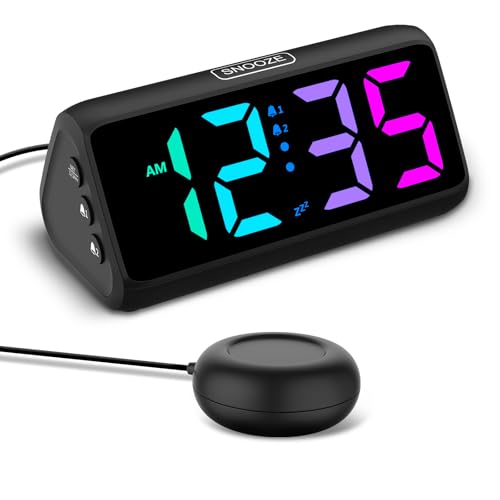
Netzu Loud Alarm Clock for Heavy Sleepers Black
- Multiple Alarm Modes: Ring only, vibration + ring, vibration only
- Loud Sound Output: Up to 115 decibels for loud alarms
- Customizable RGB Display: Personalize screen colors
As an affiliate, we earn on qualifying purchases.
As an affiliate, we earn on qualifying purchases.
Which Type of Vibrating Alarm Is Best for Your Sleep Style?
Not all vibrating alarms suit everyone equally. Your sleep habits, living situation, and personal preferences influence which type will work best for you. For instance, a deaf or hard-of-hearing sleeper might prioritize a bed shaker with flashing lights because it combines tactile and visual cues, providing a multi-sensory approach that compensates for hearing loss. Very heavy sleepers often require a powerful bed shaker with backup alarm features; this ensures they wake despite deep sleep cycles or noise distractions. A partner who wakes at a different time might prefer a wearable vibration device, which can be worn discreetly and won’t disturb others. Travelers or those with limited space benefit from battery-powered wearable or compact travel shakers that are portable and easy to set up in different environments. For individuals with limited vision, devices with tactile controls and large, easy-to-read displays help ensure proper setup and operation. Understanding these distinctions helps you match the device to your specific needs, maximizing reliability and comfort. For example, choosing a wearable for discreetness might sacrifice some strength compared to a bed shaker, but it offers privacy and flexibility. Conversely, a heavy sleeper might need a robust under-mattress shaker despite its less discreet profile. Recognizing the tradeoffs and how they align with your lifestyle ensures you select a device that genuinely enhances your waking routine.

Vibrating Alarm Clock with Bed Shaker for Heavy Sleepers, Weekday/Weekend
- Vibrating alarm with 3 modes: Includes bed shaker, buzzer, or both
- Adjustable vibration strength: 3-level customizable vibration intensity
- Large digital display: 7.5-inch clear, bold numbers
As an affiliate, we earn on qualifying purchases.
As an affiliate, we earn on qualifying purchases.
Frequently Asked Questions
Will a vibrating alarm wake a heavy sleeper?
Often yes, especially if the device is powerful and placed close to the head or upper body. Adjusting vibration intensity and pairing it with sound or light signals increases success.Is a bed shaker better than a vibrating watch?
It depends. A bed shaker is generally stronger and more dependable for deep sleepers because it transmits movement through the bed, ensuring a more direct stimulus. However, a wearable offers greater discretion and can be more comfortable for some users, especially if they prefer not to be jolted awake by a large device. The choice hinges on personal sleep depth, comfort, and whether disturbance to a partner is a concern. Both options have tradeoffs: bed shakers are typically more forceful but less discreet, while wearables are subtle but may require more precise placement to be effective. Understanding these differences helps you select a device that aligns with your sleep habits and lifestyle, ensuring reliable waking without unnecessary disturbance.Can I put the shaker under my mattress?
Only if the manufacturer specifically recommends it. Thick mattresses can absorb vibration, significantly reducing effectiveness because the force doesn’t transmit well to your body. Under-pillow placement usually provides a stronger wake-up because it places the shaker closer to your head. If you do opt for under-mattress placement, consider using a device designed for that purpose, which often has higher power and specific mounting options to ensure the vibration reaches you effectively. Tradeoffs include potential comfort issues or interference with bedding, so testing different placements is advisable. Ultimately, understanding how your mattress material and thickness affect vibration transmission helps you make an informed choice, ensuring your alarm remains reliable and comfortable.Will it wake my partner?
A wearable likely won’t disturb your partner since it vibrates directly against your skin and produces minimal movement. In contrast, a powerful bed shaker can transmit vibrations through the bed frame and mattress, potentially waking a partner, especially at higher settings. When choosing placement, consider the strength of the device and the sleeping habits of those sharing your bed. For example, a heavy sleeper partner might be disturbed by a strong shaker, so opting for a wearable or setting the shaker at a lower intensity could be more considerate. Conversely, if your partner is a light sleeper or also hard of hearing, a bed shaker might be necessary for both of you to wake reliably. Weighing these factors helps ensure that your wake-up routine is effective for you without unnecessarily disturbing others, balancing personal needs with shared sleep considerations.Are vibrating alarms suitable for deaf people?
Yes, they are often essential tools for deaf or hard-of-hearing individuals. When combined with flashing lights or visual alerts, vibrating alarms create a multi-sensory system that compensates for hearing loss, increasing reliability and safety. The effectiveness depends on selecting devices with strong, adjustable vibrations and visual cues, tailored to individual preferences. For example, some devices integrate flashing lights with vibrations, providing redundant signals that ensure waking regardless of sleep depth. This multi-modal approach minimizes the risk of missing an alarm and enhances independence. The tradeoff involves the need for proper setup and sometimes additional accessories, but the payoff is a more dependable and accessible wake-up system. Recognizing the importance of customizing alarms to individual sensory needs ensures that deaf users can wake confidently and safely every morning.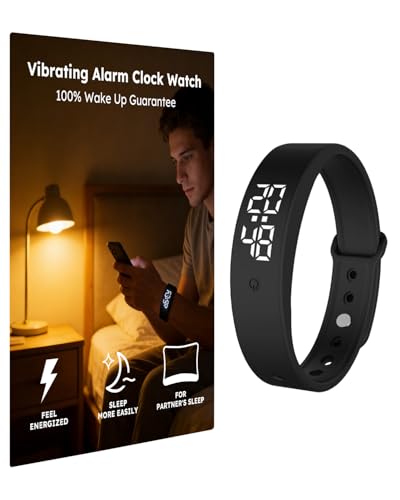
RITHEM Vibrating Alarm Clock Watch for Heavy Sleepers, Silent Wake Up Bracelet & Smart Wristband, Wearable Vibration Wrist Alarm, Non-Audible Sleep Wristband for Men & Women(Black)
- Powerful Vibration Alarm: Reliable wake-up for heavy sleepers
- Silent Operation: Vibrates without noise for undisturbed sleep
- Water-Resistant Design: IP68 rated for durability and safety
As an affiliate, we earn on qualifying purchases.
As an affiliate, we earn on qualifying purchases.
Conclusion
A good vibrating alarm clock is a simple, powerful tool for waking up on time—without disturbing your sleep or your partner. The key is selecting one with adjustable settings, reliable backup power, and placement that suits your routine. When you find your perfect match, mornings become less stressful and more confident.College move-in / dorm season Picks
dorm essentials
As an affiliate, we earn on qualifying purchases.