TL;DR
Open a free Amazon Business account
Business pricing, bulk buying and tax-exempt orders.
Create a free accountAs an affiliate, we earn on qualifying purchases.
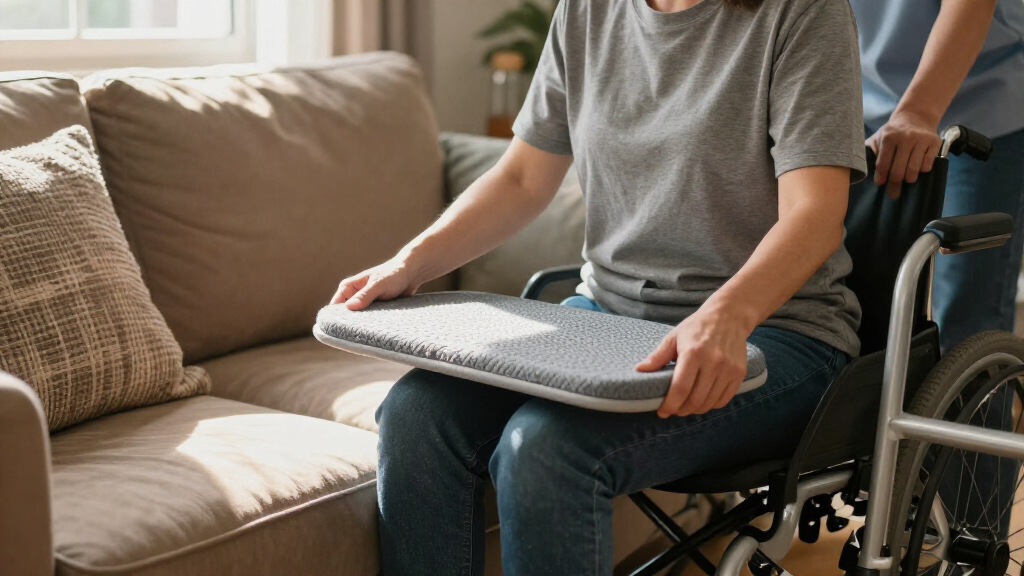
A padded transfer board bridges gaps during transfers, but selecting the right one requires evaluating size, padding, weight capacity, and safety features. Proper choice enhances safety and comfort.
When it’s time to move someone safely from a wheelchair to a bed, toilet, or car seat, a padded transfer board can be a game-changer. But with so many options, how do you pick the right one? It’s not just about size or padding—every detail matters for safety, comfort, and ease of use.
This guide walks you through the key factors to consider, from fitting the environment to understanding safety features. Whether you’re a caregiver or someone needing assistance, knowing what to look for makes all the difference in making transfers smoother and more secure.
Always measure your transfer setup carefully—length and width matter more than you think.
Padding improves comfort but can affect sliding; choose based on skin sensitivity and transfer technique.
Inspect your transfer board regularly for cracks, warping, or damage—safety depends on it.
Match the size and features of the board to the user’s strength, balance, and mobility level.
Stay updated on new designs that improve safety, hygiene, and ease of handling, but remember they complement proper sizing and technique.
How to Choose a Padded Transfer Board
A transfer board creates a bridge between seated surfaces. The right choice balances secure overlap, structural capacity, skin protection, sliding effort, user mobility, and the realities of the transfer environment.
The user should be able to remain seated and contribute to the transfer.
The rated capacity must exceed user weight, but it does not define ideal daily use.
Measure the real gap, surface heights, obstacles, storage space, and overlap.
Six factors that shape the right choice
No single specification determines safety. Review the user, board, surfaces, route, and caregiver support as one connected system.
Length & overlap
The board must bridge the gap and remain securely supported at both ends throughout the transfer.
Width & rigidity
Extra width adds sitting area, while adequate rigidity prevents excessive flexing under load.
Padding density
Padding cushions hard edges, but thick or soft foam may increase resistance and effort.
Cover material
Choose a smooth, durable, water-resistant surface with intact seams and clear cleaning instructions.
Shape & handling
Curves, notches, tapered edges, and handholds can help navigate wheels, armrests, and tight spaces.
Mobility & skin
Strength, balance, pain, sensation, fall history, and pressure risk all influence the final choice.
Build a stable bridge, not a tight fit
Measure in the actual transfer location. Include the gap, usable landing area, height difference, armrests, wheels, footrests, toilet fixtures, and vehicle contours.
A 20-inch gap may call for a 24-inch board to create overlap at both ends. Confirm the required overlap in the manufacturer’s instructions.
Padding and easy sliding are not the same
Padding distributes contact pressure and can reduce discomfort against hard edges. A hard, polished surface generally creates less resistance. Neither feature replaces sound technique or skin assessment.
| Feature | Best suited to | Primary benefit | Watch for | Decision signal |
|---|---|---|---|---|
| Padded surface | Pain, prominent bones, pressure sensitivity | ✓Improved cushioning | ~More sliding resistance | Prioritize comfort and skin tolerance |
| Firm, low-friction surface | Users able to reposition with control | ✓Lower transfer effort | ~Less edge cushioning | Prioritize smooth movement |
| Wide board | Limited trunk control or larger body size | ✓More sitting area | ~Bulk and portability | Prioritize stability |
| Curved or notched board | Transfers around wheels and fixtures | ✓Obstacle clearance | ~Positioning complexity | Prioritize environmental fit |
| Damaged or improvised board | No transfer situation | ✗No reliable benefit | ✗Failure and injury risk | Remove from use immediately |
A padded board should not be assumed to prevent pressure injuries. A therapist may recommend a compatible low-friction aid for specific users.
From assessment to movement
A transfer board bridges a gap; it does not lift or restrain the user. Each link in the setup must be secure before movement begins.
Assess
Confirm strength, balance, cognition, pain, skin condition, and assistance needs.
Stabilize
Lock wheelchair brakes and secure the destination surface.
Clear
Swing away footrests and armrests; protect fingers from wheels and openings.
Position
Keep surfaces close in height and verify secure overlap at both ends.
Transfer
Follow the trained technique and the manufacturer’s positioning instructions.
Choose around ability, not weight alone
The user’s movement pattern and clinical risks often matter as much as dimensions. Seek physical or occupational therapy input when balance, weakness, pain, cognition, skin integrity, or fall risk is a concern.
User assessment checklist
- Upper-body and arm strength
- Sitting balance and trunk control
- Ability to lean and follow instructions
- Leg function and weight-bearing restrictions
- Shoulder, wrist, hip, or back pain
- Skin sensation and pressure-injury risk
- Falls, spasticity, or involuntary movement
- Available caregiver assistance
Slim & rigid
May support quicker, lower-effort transfers when the surfaces are close and level.
Longer & wider
Offers more transfer area and stability, but requires additional handling space.
Smooth & padded
Can improve comfort when padding density, seams, and sliding friction are carefully evaluated.
Curved & handled
May improve positioning around obstacles; hand openings require careful finger protection.
The board’s rated capacity must exceed the user’s weight. Also follow the manufacturer’s daily-use guidance and confirm the board remains rigid and correctly supported.
Small defects can create major instability
Cleaning and inspection are part of safe selection. Confirm that the chosen product’s cover, construction, and care instructions fit home or facility infection-control requirements.
Do not use a compromised board
Stop if the board is cracked, warped, excessively flexible, wet, contaminated, or covered by torn, loose, wrinkled, or damaged upholstery. Never improvise a transfer board from ordinary wood or untested material.
How to Measure for the Perfect Transfer Board Fit
The first step in choosing a padded transfer board is measuring the setup. You want a board that overlaps both surfaces securely, providing a stable bridge without excess slack. Start by measuring the distance between the two surfaces—like the wheelchair and bed—plus a little extra to ensure full coverage.
Imagine transferring from a wheelchair to a hospital bed. If the gap is 20 inches, a 24-inch board gives you enough overlap on both ends. Measure the width of the wheelchair seat and the bed’s width to pick a board that offers stability without feeling bulky.
Remember, a board that’s too short risks slipping during transfer, while one that’s too long can be cumbersome and difficult to handle. Always measure in the actual environment where the transfer takes place, accounting for obstacles like armrests or footrests.
padded transfer board for wheelchair to bed
As an affiliate, we earn on qualifying purchases.
As an affiliate, we earn on qualifying purchases.
Why Size Matters: Length, Width, and Thickness Explained
Picking the right size isn’t just about fitting the gap. Length, width, and thickness all influence safety and comfort. A longer board, say 24 to 30 inches, provides more surface area, which is especially important for larger or less mobile individuals, as it offers increased stability and reduces the risk of slipping or falling during transfer. Shorter boards—around 16 inches—are suitable for close, level transfers but may offer less security for those with limited trunk control.
Width matters too. A wider board—at least 8 inches—stabilizes the transfer, especially if the person has limited trunk control, helping prevent tipping or sliding. Thicker padding, often 1 to 2 inches, cushions against hard edges and provides comfort, but can increase friction, making sliding more effortful. This tradeoff must be balanced based on user needs, as too much padding might hinder smooth transfers, while too little could compromise comfort or skin protection.
For example, a bariatric patient may need a 36-inch long, 10-inch wide, and 1.5-inch thick padded board to ensure safety and comfort during transfers, highlighting how size choices directly impact stability and user confidence.
transfer board with safety features
As an affiliate, we earn on qualifying purchases.
As an affiliate, we earn on qualifying purchases.
Padding and Cover Material: Comfort Meets Safety
Padding isn’t just about comfort; it plays a crucial role in protecting fragile skin and reducing pressure points during transfers. Foam padding offers a softer feel, which can help prevent skin breakdown, especially for people with sensitive skin or pressure injuries. However, softer padding can sometimes increase friction, making sliding more difficult and potentially complicating the transfer process. Conversely, firmer padding might reduce friction, facilitating easier movements, but could be less comfortable or less effective at pressure redistribution.
Cover material is equally vital. A smooth, durable, and waterproof surface like vinyl or wipe-clean fabrics not only enhances hygiene but also reduces the risk of skin irritation and tearing. Rough seams, exposed fasteners, or torn upholstery can create pressure points or skin shearing risks, especially for users with fragile skin or existing wounds. Choosing high-quality, well-constructed covers ensures the transfer remains safe, minimizes skin trauma, and simplifies cleaning and maintenance.
Imagine a person with sensitive skin using a padded board with a rough cover—discomfort and skin shearing risk increase, potentially leading to skin breakdown. Selecting the right cover material and padding density is a tradeoff that directly affects safety, hygiene, and user comfort, making it essential to consider these factors carefully.
medical transfer board with high weight capacity
As an affiliate, we earn on qualifying purchases.
As an affiliate, we earn on qualifying purchases.
Safety Features That Keep Transfers Secure
Safety isn’t just about the board’s size. Features like a stable, firm surface are key because they provide a reliable platform that minimizes movement during transfer. Both transfer surfaces should be as close in height as possible, with minimal gaps, to reduce the risk of slipping or falling, which can cause injuries or discomfort.
Locking wheelchair brakes, stabilizing both surfaces, and removing obstructions like footrests are crucial steps before starting. These precautions prevent unintended movement that could compromise safety. Also, inspect the board for signs of damage—dents, cracks, warping—since compromised structural integrity can lead to accidents. Regular inspection and maintenance are essential for ensuring ongoing safety during every transfer.
For example, a caregiver notices a slight warp in the board’s edge—using it could lead to instability or accidental slipping. Addressing such issues promptly by replacing or repairing the board prevents potential accidents, emphasizing that safety features are not just optional but fundamental to effective transfer procedures.
As an affiliate, we earn on qualifying purchases.
Matching the Board to the User’s Strength and Mobility
The best transfer board isn’t just about size; it’s about matching the user’s physical abilities to ensure safe and effective transfers. Someone with good arm strength and trunk control might manage a shorter, thinner board with ease, enabling quicker transfers with less effort. Conversely, a person with limited strength or balance might need a wider, padded, or longer board for added stability, which can help prevent falls or slips during transfer.
Assessing specific factors such as:
- Upper body strength
- Sitting balance
- Skin sensitivity
- History of falls
- Pressure injury risk
is critical because these influence the choice of features like padding, width, and length. For example, a person with spasticity or limited trunk control benefits from a padded, wider board with handles for better grip, which provides additional security. Meanwhile, someone with good mobility might prefer a slim, rigid board for quick, straightforward transfers. Understanding these tradeoffs ensures the chosen board supports safety, comfort, and independence tailored to each individual’s needs.
Latest Trends in Transfer Board Design
Newer transfer boards are lighter, stronger, and more adaptable, reflecting advances in materials and design. Composite plastics reduce weight without sacrificing capacity, making handling easier for caregivers and users alike. Curved and notched designs help navigate around wheelchair wheels or armrests, improving maneuverability and reducing transfer effort.
Features like antimicrobial covers, replaceable padded surfaces, and tapered edges are not just about hygiene—they improve the transfer experience by making cleaning easier, reducing infection risk, and providing smoother transitions. Some models include integrated handles or rollers, which facilitate easier handling and positioning, especially for caregivers managing multiple transfers daily.
For instance, a caregiver might prefer a lightweight, antimicrobial, notched board with tapered edges for quick, hygienic transfers in a busy healthcare setting. These innovations aim to make transfers safer, more comfortable, and less physically demanding, addressing both safety and user experience in modern design.
Matching Your Environment and Transfer Routine
Choosing the right padded transfer board depends heavily on where and how you’ll use it. For bathroom transfers, select waterproof, slip-resistant options designed for moisture exposure to prevent accidents caused by wet surfaces. For car transfers, look for models that fit vehicle seats and can handle uneven gaps, ensuring a secure and stable transfer in a confined space.
In a home setting, consider the space around the bed or wheelchair. Will you have enough room to maneuver a longer board? Is it easy to carry or store? These practical details influence safety and ease of use, especially for caregivers managing multiple transfers or limited storage options.
Imagine a caregiver trying to fit a bulky board into a tight bathroom corner—an ill-fitting choice makes the process stressful and unsafe. Proper assessment of your environment, including space, surfaces, and typical transfer scenarios, ensures you select a board that facilitates smooth, secure transfers, reducing risk and improving confidence.
Frequently Asked Questions
What size padded transfer board do I need?
Measure the gap between the surfaces you’re transferring between, and choose a board that overlaps both securely—typically, a few inches longer than the distance. Width should support stable sitting, usually around 8 inches or more, depending on the user’s size.
Is a padded board better than a wooden or rigid plastic board?
Padded boards are often more comfortable, especially for sensitive skin or pressure points. Rigid, smooth boards may slide more easily and require less effort, but comfort and skin protection are key considerations. Choose based on user needs and transfer technique.
Can a padded transfer board prevent pressure sores?
Not directly. Padding can help reduce localized discomfort, but pressure sore prevention also depends on skin care, positioning, and minimizing shear forces during transfers. Padding is part of a broader pressure management strategy.
Can one person use it independently?
Some users with good strength and technique may manage transfers alone after proper training. Others, especially those with limited mobility or balance issues, will need supervision or assistance. Always assess individual capability and safety first.
How often should it be replaced?
Inspect your transfer board regularly. Replace it if you notice cracks, warping, torn covers, or any damage that could compromise safety. No universal timeline exists—trust your eyes and hands to tell you when it’s time for a new board.
Conclusion
The right padded transfer board isn’t just about size—it’s about matching every detail to the user’s needs and environment. A well-chosen board turns a potentially stressful process into a safer, smoother experience. Remember, safety and comfort go hand in hand, so measure, inspect, and adapt as needed.
Finally, never forget: a confident, well-informed choice empowers both caregiver and individual. When in doubt, consult a professional—your safety and dignity depend on it.
Fall Picks
fall essentials
As an affiliate, we earn on qualifying purchases.