
TL;DR

Get everyday helpers delivered free with Prime
- Fast, free delivery on millions of items
- Prime Video, Amazon Music and more included
- Member-only deals all year
Transfer poles and stand assist devices are key tools for safe mobility. They support independence and reduce fall risk, especially when chosen and used correctly. Recent trends focus on safety, ease of use, and smart features.
Choose the right device based on user needs, space, and mobility level, consulting professionals as needed.
Regularly inspect and maintain transfer poles and stand assists to keep them safe and reliable.
Stay updated on new safety features and smart technology that enhance transfer security and confidence.
Practice proper technique, communicate clearly, and take your time during every transfer.
Remember: a well-chosen, maintained device combined with proper training reduces fall risk by up to 50%.
A Guide to Transfer Poles and Stand Assists
Transfer supports are more than safety aids: they can restore confidence, dignity and independence. The right device, professionally matched and correctly used, gives users reliable leverage while helping caregivers manage safer, smoother daily transfers.
Potential reduction in transfer-related fall risk when appropriate equipment, correct installation and regular training work together.
Choose between maximum installed stability and flexible, repositionable support.
Mobility, strength, balance, cognition, space and technique should guide selection.
Transfer poles and stand assists
Assess, measure and consult
Safety, confidence, access, dignity
Inspect, position, communicate, transfer
Two routes to steadier transfers
Both device types provide leverage and stability, but their mounting, rigidity and ideal use cases differ. Matching those differences to the user is the foundation of safe mobility.
Transfer poles
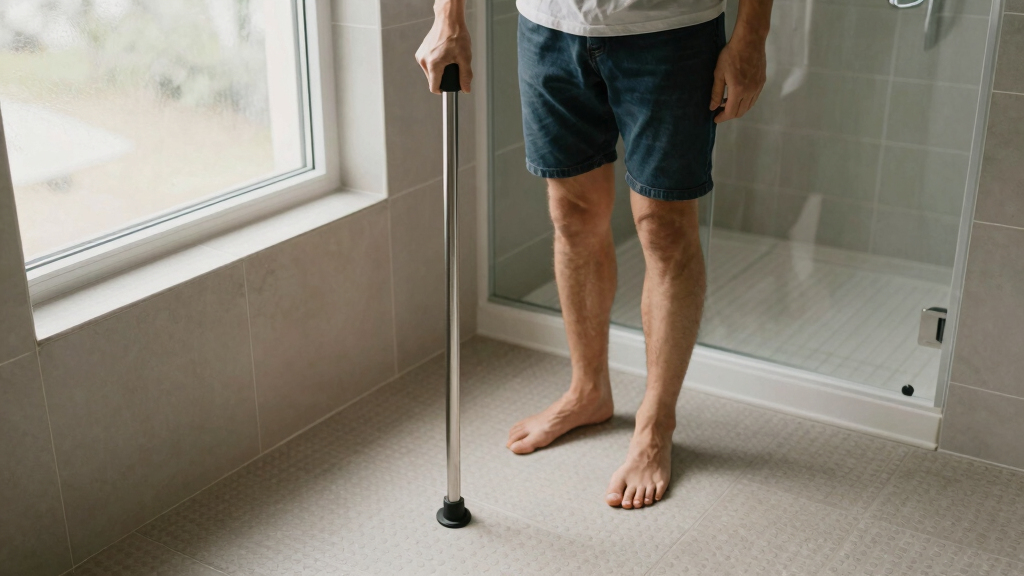
Securely mounted poles create a consistent handhold for moving between a bed, chair, toilet or standing position. They are especially useful when a person needs firm leverage in one permanent location.
- Maximum rigidity when correctly installed
- Well suited to significant weakness or poor balance
- Requires structural assessment and dedicated space
Stand assists
Free-standing frames provide handles and a stable base so a user can push or pull into standing. They suit people who can participate in the transfer and need moderate, repositionable support.
- Height-adjustable options support better fit
- Moves between rooms without permanent modification
- Safe use depends on base position and user technique
Pick the right support, not simply the closest one
A device that does not match the person or environment can introduce instability. Selection should connect clinical need, physical space and professional guidance.
Define the support level
Review leg and arm strength, balance, weight-bearing ability, cognition and fatigue. Severe weakness may call for a fixed pole; moderate balance limitations may suit a portable stand assist.
Map the full transfer path
Check floor area, ceiling or wall structure, furniture clearance and approach angles. The device must support movement without becoming an obstacle or trip hazard.
Confirm fit and technique
An occupational therapist, physical therapist or qualified clinician can identify risks, recommend equipment and verify installation, height and transfer technique.
A person recovering from hip surgery may need a pole installed at a precise height and angle, while someone with mild balance issues may benefit from a frame that can move between rooms. The diagnosis alone does not determine the device.
Transfer pole or stand assist?
Use this comparison as a conversation starter—not a substitute for individual assessment. Product specifications and safe-use requirements vary by model.
| Feature | Transfer poles | Stand assists |
|---|---|---|
| Mounting | ✓Wall or ceiling mounted. Offers a permanent, dependable support point but requires suitable structure and installation. | ~Free-standing. Avoids permanent modification but must be correctly positioned and stabilized before use. |
| Stability | ✓Very high when securely installed. Minimal movement makes it suitable for users who need firm leverage. | ~Design dependent. Base width, weight, flooring and placement affect wobble resistance. |
| Adjustability | ~Often fixed after installation, although some products provide limited handle or height adjustment. | ✓Commonly height adjustable for user stature, chair height and preferred transfer technique. |
| Portability | ✗Remains in one location, giving consistency but little flexibility when support is needed elsewhere. | ✓Can be repositioned or stored, provided the user or caregiver can move and reset it safely. |
| Best fit | ✓Permanent home modifications, rehabilitation spaces and users who require maximum fixed support. | ✓Temporary needs, smaller spaces and users requiring moderate support in multiple locations. |
| Watch point | ~Incorrect anchoring, unsuitable structure or poor placement can undermine the expected stability. | ~Narrow bases, uneven floors or rushed positioning can allow movement during the transfer. |
The support location is permanent and the user needs high rigidity, consistent placement and strong leverage.
The user can actively participate and needs adjustable, non-permanent support across different spaces.
Smarter materials, safer details
Recent development focuses on preventing slips, simplifying handling and making support more responsive to the individual user and caregiver.
Grip and stability
Anti-slip handles, wider bases and locking mechanisms aim to reduce unintended movement or collapse.
Lighter, still durable
Aluminum and high-strength plastics make portable equipment easier to manage without sacrificing strength.
Cleaner touchpoints
Antimicrobial coatings and easier-to-clean surfaces support infection-control routines in shared settings.
Sensors and alerts
Emerging models can monitor weight distribution or alert a caregiver when movement becomes unstable.
Where innovation is concentrated
A qualitative view of the themes most consistently emphasized in current transfer-support development.
The device is only one part of the system
Training, inspection and calm communication turn equipment into reliable support. Repeat the same checks before every transfer, even when the routine feels familiar.
Properly selected and installed equipment, reinforced by regular user training, may reduce fall risk during transfers by up to half. Individual outcomes vary with health, environment and technique.
Inspect before use
Check mounts, fasteners, locks, handles, base feet and contact surfaces for looseness, wear or contamination.
Set the environment
Clear clutter, stabilize furniture, secure footwear and position the device within a comfortable reach.
Communicate the sequence
Agree on each movement before it begins. Use clear cues so the user and caregiver move together.
Move without rushing
Pause if the user feels dizzy, weak, painful or unstable. Never force a transfer beyond current ability.
Maintain and reassess
Follow the manufacturer’s maintenance schedule and request a new assessment when health or mobility changes.
From assessment to independence
Safe transfers are produced by a connected chain. Weakness in any link—selection, installation, training or maintenance—can reduce the benefit of the device.
Understand ability and risk
Fit device to person and space
Install or position correctly
Practice a repeatable technique
Maintain safety and confidence
What Are Transfer Poles and Stand Assists? Here’s the Clear Definition
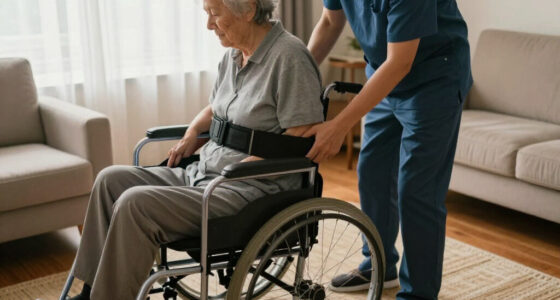
Transfer poles and stand assist devices are support tools designed to facilitate safe and confident movement during transfers. Transfer poles, often mounted to a wall or ceiling, serve as fixed support points that provide stability and leverage, especially for individuals with limited strength or balance. Stand assists, on the other hand, are portable frames that support users in pushing themselves into a standing position or maintaining stability during transfers. These devices matter because they directly impact safety—by providing reliable support, they reduce the likelihood of falls, which can cause serious injuries. The choice between them involves understanding the tradeoffs: wall-mounted poles offer maximum stability but are less flexible, while stand assists provide mobility but may offer less rigid support. Recognizing these differences helps tailor solutions to individual needs, environment constraints, and safety priorities, ultimately empowering users to transfer more confidently and independently.
As an affiliate, we earn on qualifying purchases.
How to Pick the Right Transfer Pole or Stand Assist in 3 Simple Steps
- Assess the user’s mobility level and specific needs—do they need full support or just a stable grip? Understanding this helps determine whether a fixed or portable device is better suited, considering factors like strength, balance, and cognitive ability. For example, a person with severe weakness might rely more on a sturdy wall-mounted pole, while someone with moderate balance issues might benefit from a portable stand assist that offers flexibility and ease of repositioning.
- Measure the space—ensure the device fits comfortably without obstructing movement or creating hazards. Proper measurement prevents choosing devices that are either too intrusive or insufficiently supportive, which could compromise safety or usability. Think beyond just dimensions—consider how the device integrates into daily routines and whether it allows smooth, unimpeded transfers.
- Consult a healthcare professional—get expert advice tailored to the individual’s health profile and environment. Professionals can assess specific risks, recommend appropriate device types, and advise on proper installation and use. This step is critical because a device that is poorly matched or improperly installed can negate safety benefits and even cause injuries. Investing in professional guidance ensures that the device provides maximum support, minimizes tradeoffs like instability or inconvenience, and aligns with long-term mobility goals.
As an affiliate, we earn on qualifying purchases.
Comparison Table: Transfer Poles vs. Stand Assists — Which Fits Your Needs?
| Feature | Transfer Poles | Stand Assists |
|---|---|---|
| Mounting | Wall or ceiling-mounted—provides maximum stability but requires installation and permanent space commitment. This makes them ideal for fixed environments like home modifications or rehab centers, where safety and support are priorities. However, the tradeoff is reduced flexibility, as they can’t be moved easily. | Free-standing and portable—these offer flexibility, allowing you to reposition or remove them as needed. They are suitable for small spaces or temporary needs but may offer less rigidity, which could impact safety if not properly stabilized. The choice depends on balancing convenience with stability. |
| Stability | Very stable when securely installed, providing dependable support that minimizes wobbling or collapse risks, essential for users with severe mobility issues. | Depends on base width, weight, and design—may wobble if not properly positioned. While generally stable for moderate support, they require careful placement to ensure safety. |
| Adjustability | Usually fixed height, though some models offer limited adjustment. This can be a tradeoff—fixed height devices are simpler and more stable but less customizable, whereas adjustable models offer tailored support at the cost of added complexity and potential points of failure. | Height adjustable—allowing customization to user’s height and transfer technique, which improves safety and comfort but may require more maintenance or adjustment over time. |
| Portability | Fixed, not portable—once installed, they stay in place, offering consistent support but limiting flexibility. This is suitable for permanent setups where safety is paramount. | Lightweight and easy to move—ideal for users who need support in multiple locations or want to avoid permanent modifications. However, they must be used correctly to ensure stability during each use. |
| Ideal for | Permanent home modifications, rehab settings, or environments where maximum stability and safety are necessary, especially for users with significant mobility impairments. | Temporary use, flexibility, or small spaces—best suited for users who need support in various locations or prefer non-invasive solutions, with the understanding that safety depends on proper placement and use. |
As an affiliate, we earn on qualifying purchases.
What’s New? The Latest Trends in Transfer Support Devices
Recent innovations make transfer devices safer and easier to use. Manufacturers now incorporate anti-slip grips, wider bases, and locking mechanisms to prevent accidental slips or collapses. Lightweight yet durable materials like aluminum and high-strength plastics cut down on weight, making devices more manageable.
Some models feature modular designs that can be customized for individual needs. Smart technology is emerging—sensors monitor weight distribution or alert caregivers if a user is at risk of falling. These advances mean safer, more reliable transfers at home or in care facilities.
For example, a new stand assist frame with built-in sensors can notify a caregiver if the user shifts unsteadily, helping prevent falls before they happen. These innovations reflect a shift toward more responsive and personalized safety solutions, which can be crucial for reducing injuries and giving users and caregivers greater peace of mind.
As an affiliate, we earn on qualifying purchases.
Frequently Asked Questions
How do I know if a transfer pole is installed correctly?
Proper installation is critical—mounting hardware must be secure and anchored into wall studs or ceiling joists. It’s best to have a professional install it, especially for wall-mounted poles, to guarantee safety and stability.
Can I use a transfer device if I have osteoporosis?
Transfer poles and stand assists can be safe for people with osteoporosis when used correctly. However, consult your healthcare provider first—certain movements or device types might pose risks, and they can recommend the safest options.
How often should I inspect my transfer device?
Inspect your device weekly for signs of wear, loose parts, or instability. After any rearrangement or impact, check immediately. Regular maintenance ensures safety during every transfer.
Are portable stand assists suitable for daily use?
Yes, portable stand assists are designed for frequent use and offer flexibility. Just ensure they are stable, properly adjusted, and used with correct technique for maximum safety.
What should I do if my device feels wobbly or unstable?
Stop using it immediately. Check for loose parts, damages, or improper assembly. If unsure, contact a professional for repair or replacement before resuming use.
Conclusion
A well-selected transfer pole or stand assist can become a trusted partner in maintaining independence. But remember—safety is a two-way street. Regular checks, proper technique, and ongoing education make every transfer safer and smoother. Think of these tools as your allies in dignity and confidence—tools that turn everyday challenges into manageable routines. Now, ask yourself: which device could make the biggest difference in your or your loved one’s daily life?Columbus Day / Indigenous Peoples' Day Picks
long weekend sales
As an affiliate, we earn on qualifying purchases.