
TL;DR

Get everyday helpers delivered free with Prime
- Fast, free delivery on millions of items
- Prime Video, Amazon Music and more included
- Member-only deals all year
Choosing an overbed table involves evaluating its size, mobility, material, and features. Recent innovations focus on hygiene, ease of use, and style, making it easier to find a table that fits your needs and your home aesthetic.
Always measure your bed and space before choosing an overbed table—size and height matter.
Prioritize tables with locking casters and stable bases for safety and ease of movement.
Opt for durable, easy-to-clean surfaces like laminate or antimicrobial-coated materials.
Features like tilting surfaces, cup holders, and storage improve convenience and independence.
Choose models with simple, intuitive adjustment mechanisms to avoid frustration.
How to Choose an Overbed Table
The right table turns a bedside surface into everyday freedom. Evaluate fit, mobility, materials, safety and adjustment before buying—then choose the features that genuinely support how you eat, read, work and relax.
Six details decide whether it fits your life
Start with the room and routine—not the product listing. Each choice affects comfort, stability and how often the table will actually be used.
Size & height
Measure the bed height, base clearance and approach space. Confirm the tabletop holds your largest everyday setup.
Target: 24″ wide × 16″ deepMobility
Choose smooth casters that move easily on your flooring. A lightweight frame reduces effort for users and caregivers.
Test: roll · turn · parkStability
A wide, low base and securely locking wheels reduce wobble, tipping and unintended movement during use.
Never use as a support railMaterials
Laminate, sealed plastic and antimicrobial-coated surfaces resist moisture and wipe clean quickly.
Favor rounded, sealed edgesUseful features
Tilt controls, cup holders, side trays and storage can keep essentials organized and comfortably within reach.
Secure every moving partEase of use
Levers, gas springs and one-touch controls require less force than stiff knobs or complicated mechanisms.
Try the controls before buyingFind the fit, then choose the features
A tabletop can be spacious and still fail if its base cannot slide beneath the bed. Record every critical dimension before comparing models.
28 to 45 inches
A broad height range supports upright meals, reclined reading and different mattress positions without forcing the neck, shoulders or wrists into awkward angles.
Choose a surface built for real life
Durability matters, but so do hygiene, weight and safety. Look for sealed construction, rounded edges and a finish that does not become dangerously slick when tilted.
| Material | Easy cleaning | Moisture resistance | Weight | Best use |
|---|---|---|---|---|
| Laminate | ✓ Excellent | ✓ Strong | ~ Moderate | Daily meals, work and shared care |
| Sealed plastic | ✓ Excellent | ✓ Strong | ✓ Light | Frequent moving and simple upkeep |
| Finished wood | ~ Varies | ~ Finish-dependent | ✗ Heavier | Home aesthetics and lighter use |
| Metal surface | ✓ Strong | ✓ Strong | ✗ Heavier | High-use or clinical environments |
Smarter, cleaner and more at home
Recent designs move beyond clinical utility, combining accessible controls with hygienic finishes and furniture-inspired styling.
Electronic lift
Push-button height and tilt controls reduce the strength and dexterity needed for frequent adjustments.
Antimicrobial finish
High-touch surfaces are easier to maintain in healthcare, shared living and everyday home settings.
Home-friendly style
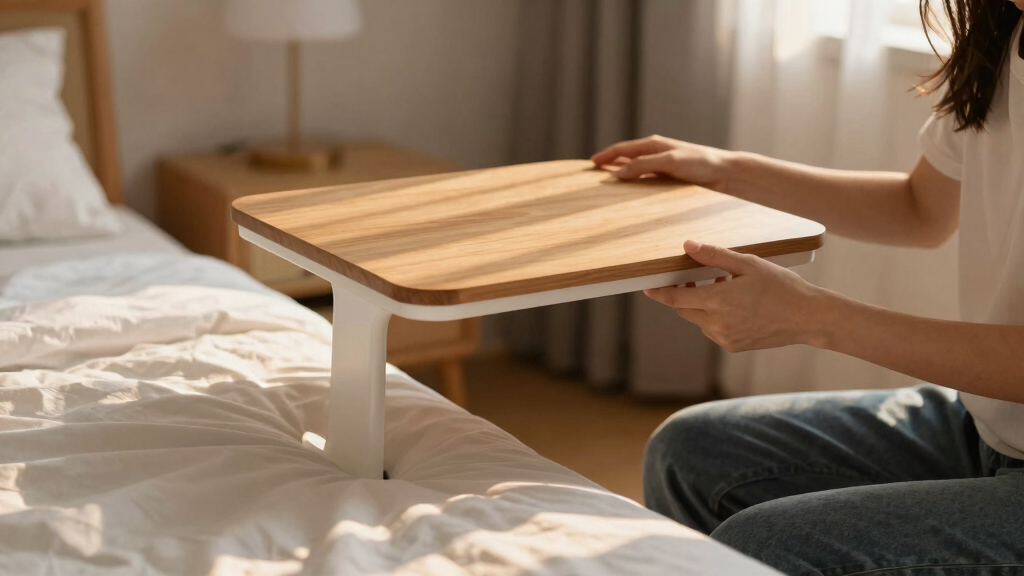
Slim frames, warmer finishes and cleaner silhouettes blend with bedrooms and living spaces.
Lighter mobility
Improved casters and lighter frames simplify repositioning; premium models may add battery power.
Choose independence, not feature overload.
The best overbed table is one the user can position, secure, clean and adjust with confidence. Prioritize a stable base, locking casters and intuitive controls; add tilt, storage or cup holders only when they improve the daily routine without compromising balance.
How to Pick the Perfect Size and Dimensions
Size matters. You want a surface large enough for your needs—whether that’s a plate, a laptop, or a stack of books. Measure your bed’s width and height first. An overbed table with an adjustable surface that can extend or tilt makes a big difference. For example, a table surface of at least 24 inches wide and 16 inches deep offers enough space for most meals or work tasks. Remember, the height range should match your bed height—ideally from 28 to 45 inches—to prevent strain and ensure comfort.
Pro tip: If you often switch between sitting and lying down, opt for a table with a broad height adjustment range and a surface that can tilt, giving you versatile use without sacrificing stability.
adjustable overbed table with tilting surface
As an affiliate, we earn on qualifying purchases.
As an affiliate, we earn on qualifying purchases.
Mobility and Stability: Moving Without Wobbling or Worry
Mobility is key. Look for tables with smooth-rolling casters that lock securely in place. Locking casters prevent unwanted movement when you’re eating, working, or reading. Consider how easily the table can be repositioned—lightweight tables with high-quality casters make this task less strenuous, especially for users with limited strength. The stability of the base—wide and low—also plays a crucial role; a sturdy base minimizes wobbling and accidental tipping, which is vital for safety during daily activities. If the table is too lightweight or unstable, it can cause frustration or even pose a hazard, especially if you lean on it or bump into it.
For example, a model with four locking casters and a sturdy, wide base offers both ease of movement and peace of mind, especially if you’re navigating a cluttered space or have limited strength.
mobility overbed table with locking casters
As an affiliate, we earn on qualifying purchases.
As an affiliate, we earn on qualifying purchases.
Choosing Materials That Last and Are Easy to Clean
Materials influence durability and hygiene. Common options include laminate, plastic, metal, and wood. Laminate surfaces are popular because they resist spills and stains, which means less time cleaning and fewer worries about damage. They also tend to be more resistant to scratches and moisture, making them ideal for daily use. Imagine a surface that wipes clean in seconds, with no sticky residue or lingering odors—this is crucial in maintaining a hygienic environment, especially if multiple people use the table. Antimicrobial coatings further enhance hygiene by reducing bacteria buildup on high-touch surfaces, which is especially important in healthcare or shared living settings. Metal frames with powder coating resist rust and wear, extending the table’s life and maintaining appearance over time. When choosing materials, consider how they balance durability, ease of cleaning, and aesthetic appeal, since these factors influence the table’s long-term usability and your peace of mind.
It’s essential to understand that the choice of materials can also affect the overall safety of the table. For example, metal edges that are poorly finished can cause injuries, while surfaces that are too slick might increase the risk of items slipping off, especially when tilting or adjusting. Balancing durability with safety features like rounded edges or non-slip surfaces is key to making a wise choice.
antimicrobial overbed table for elderly
As an affiliate, we earn on qualifying purchases.
As an affiliate, we earn on qualifying purchases.
Features That Make Your Life Easier and Safer
Features like tilting surfaces, built-in trays, or cup holders add convenience. An adjustable tilt lets you angle your book or tablet comfortably, reducing neck strain and enabling better ergonomic positioning. Built-in cup holders prevent spills during busy mornings or when you’re moving around, protecting your belongings and reducing mess. Storage compartments keep essentials close—glasses, remotes, or medications—organized and within reach, minimizing the need to get up frequently. These features are not just added luxuries—they directly impact your safety and independence. For instance, a table with a locking tilt mechanism and a small side drawer can serve as a mini workstation, helping you stay organized and reducing the risk of accidents caused by clutter or misplaced items. When selecting features, think about how they fit your daily routines and whether they enhance your safety and convenience.
It’s also important to consider how these features might impact the overall stability of the table. For example, a tilting surface that isn’t well-secured can accidentally shift or cause items to fall, increasing the risk of injury or mess. Similarly, added features like trays or storage should be securely attached and designed to prevent tipping or spilling, especially when the table is moved or adjusted. Prioritizing safety in feature selection ensures that added convenience does not come at the expense of stability or safety.
compact overbed table for small spaces
As an affiliate, we earn on qualifying purchases.
As an affiliate, we earn on qualifying purchases.
Ease of Use: How to Find a User-Friendly Overbed Table
Choose a table that adjusts height easily—look for models with a lever or crank handle rather than complex mechanisms. A lightweight design makes it simple to reposition or carry, reducing strain on caregivers and users alike. Imagine adjusting the height with a gentle squeeze of a lever, no fuss or frustration. The ease of adjustment can be a game-changer, especially for those with limited strength or dexterity. Some tables feature one-touch or pneumatic height adjustments, which allow for quick, smooth changes without requiring significant force. This not only saves time but also minimizes the risk of injury or frustration when trying to change positions. Prioritizing simple, intuitive mechanisms ensures that the table remains accessible and safe for all users, promoting independence and reducing reliance on assistance.
It’s worth noting that the design of adjustment mechanisms can greatly influence how often and how easily you use the table. Models with complicated or stiff mechanisms can discourage regular use, potentially leading to less independence. Conversely, user-friendly features such as one-touch buttons, gas springs, or quick-release levers promote frequent adjustments with minimal effort, which is especially beneficial for elderly or mobility-impaired users. When evaluating options, consider trying out the adjustment process in person to ensure it feels natural and effortless for your specific needs.
What’s New? Recent Innovations in Overbed Table Design
Modern overbed tables are smarter and sleeker. Electronic height adjustment buttons make changes seamless—perfect for those with limited strength or dexterity, eliminating the need for manual cranking. Some models feature antimicrobial surfaces, reducing bacteria and germs on high-touch areas, which is increasingly important in shared or healthcare environments. Others blend into home decor with stylish frames and neutral tones, making them suitable beyond medical use. Lightweight, portable designs with battery-powered adjustments are also gaining popularity, providing greater flexibility to move and customize the table height without needing a power outlet nearby. These innovations aim to enhance safety, hygiene, and aesthetic appeal, making overbed tables more versatile and user-friendly than ever before.
Additionally, the integration of smart technology—such as remote-controlled height adjustments or app connectivity—is opening new possibilities for convenience and customization. These features can allow users or caregivers to adjust the table effortlessly from a distance, reducing physical effort and streamlining daily routines. The evolution of materials, like lightweight composites or sleek metal finishes, also contributes to easier handling and better integration into modern homes. Keeping abreast of these innovations can help you select a table that not only meets your current needs but also adapts to future requirements, ensuring long-term satisfaction and usability.
Frequently Asked Questions
How do I know what size overbed table fits my bed?
Measure your bed’s height and width first. Look for a table with adjustable height—ideally from 28 to 45 inches—and a surface large enough for your needs, typically at least 24 inches wide and 16 inches deep.Are overbed tables easy to move around?
Most models feature smooth-rolling casters, with locking options for stability. Check product specs for caster quality and locking mechanisms to ensure safe, easy mobility.What materials should I consider for durability and hygiene?
Laminate or antimicrobial-coated surfaces are best for cleanliness and longevity. Metal frames with powder coating resist rust and wear, making them suitable for daily use.Can I use an overbed table for other purposes?
Absolutely. They work well as workstations, craft tables, or device supports. Look for models with tilting surfaces and storage options to maximize versatility.What’s the price range for quality overbed tables?
Basic models start around $50, while feature-rich, high-end options can cost several hundred dollars. Consider your needs and budget when choosing.Conclusion
Picking the right overbed table isn’t just about size—think about how you’ll move it, clean it, and use it daily. A well-chosen table becomes a trusted helper, supporting your independence and comfort. When you focus on the details—mobility, materials, features—you turn a simple piece of furniture into a true extension of your home and lifestyle.Columbus Day / Indigenous Peoples' Day Picks
long weekend sales
As an affiliate, we earn on qualifying purchases.