
TL;DR

Get everyday helpers delivered free with Prime
- Fast, free delivery on millions of items
- Prime Video, Amazon Music and more included
- Member-only deals all year
A firm cushion can make standing easier by adding height and stability, but must resist compression and fit the chair and user. Proper choice reduces effort and improves safety—careful selection is key.
Imagine standing up from your favorite chair, only to feel like you’re pushing through molasses. It’s frustrating, sometimes painful—especially if you’re dealing with arthritis, limited strength, or joint stiffness. The right firm cushion can change that, making your daily routines smoother and safer.
This guide walks you through what to look for when choosing a cushion designed to make standing easier. Whether you’re caring for an aging loved one or managing your own mobility, understanding these essentials helps you pick the best support for your needs.
A firm, high-density foam cushion can significantly reduce the effort needed to stand, especially for those with joint stiffness or weakness.
Choosing the right thickness—typically 5–10 cm (2–4 inches)—depends on your leg length and chair height, ensuring your feet stay flat on the ground.
Avoid cushions that are too soft, too thick, or slip during use—stability and proper support are essential for safety and effectiveness.
Regularly check and maintain your cushion to ensure it keeps its supportive shape and safe features over time.
If standing difficulty worsens or safety concerns arise, consult a seating or mobility professional for personalized advice.
Choosing a Firm Cushion for Easier Standing
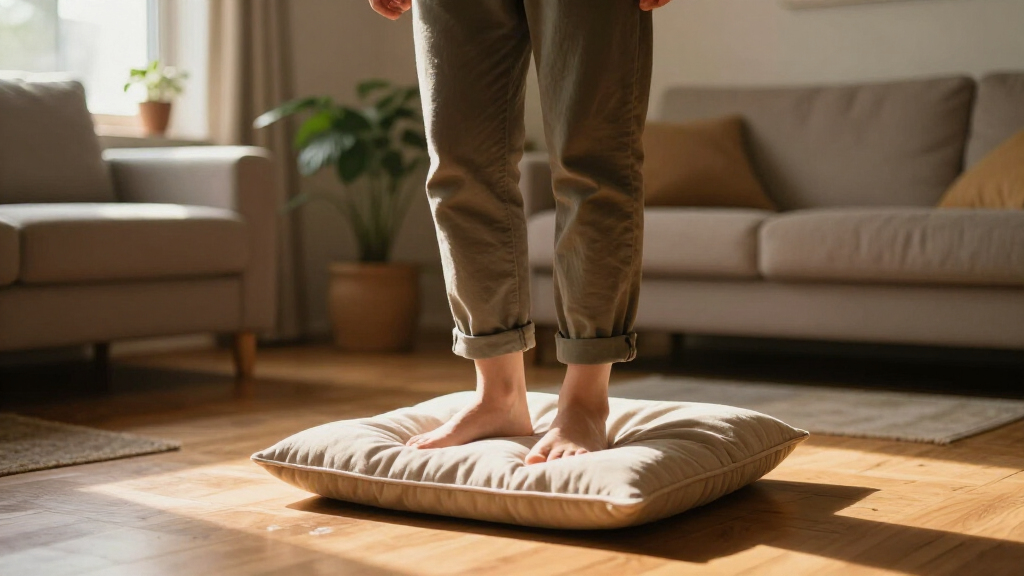
A firm cushion can make standing easier by adding height and stability—but it must resist compression and fit both the chair and the user. This guide walks through what to look for, from foam density to safe thickness, so daily routines become smoother and safer.
Why a firm cushion can cut your standing effort in half
When you sit, your hips and knees bend—more if the seat is too low. Raising the seat with a firm cushion reduces that bend, easing the muscular push needed to stand. But height alone isn’t a one-size-fits-all fix: too much elevation can destabilize posture and raise fall risk. The key is balance.
What makes a cushion firm enough to help you stand
Firmness is about resistance—your cushion shouldn’t sink when you sit. High-density foam keeps the hips and pelvis stable, while plush memory foam can hollow out over time, gradually increasing standing effort.
High-Density Foam
Offers consistent support without sagging, keeping its shape and firmness after months of daily use—fewer replacements, consistent safety.
Plush Memory Foam
Feels cozy initially, but tends to sag or form a deep hollow around the body—reducing lift and increasing effort required to stand over time.
Support Core + Comfort Layer
Newer designs pair a firm support core with a thin comfort layer, using high-resilience, temperature-stable foams for reliable shape recovery.
Flat cushions vs. wedge cushions — which is better?
Most users benefit from a flat, firm cushion for straightforward elevation. Wedges can aid pelvic tilt and forward lean, but demand careful matching to the chair and the user.
| Criterion | Flat Cushion | Wedge Cushion |
|---|---|---|
| Stability | ✓ Simple, stable, easy to position | ~ Can destabilize if too steep |
| Posture | ✓ Supports upright posture | ✓ Positions hips above knees |
| Standing aid | ✓ Ideal general elevation | ✓ Encourages forward lean |
| Pelvic tilt control | ✗ Limited adjustment | ✓ Adjustable via angle |
| Sliding risk | ✓ Low with non-slip base | ✗ May slide if poorly fitted |
| Best for | ✓ Most users seeking simple lift | ~ Specific tilt & positioning needs |
How to pick the right cushion
Follow this sequence to balance height, firmness, and stability—then reassess whenever your mobility or health changes.
Measure
Check seat height and leg length to determine the extra height you need.
Check density
Choose at least 2.5 PCF high-density foam for lasting support.
Select thickness
Raise hips to a comfortable level—usually 5–10 cm (2–4 inches).
Secure it
Ensure a non-slip bottom and secure fastening straps if needed.
Test the fit
Feet stay flat; armrests within comfortable reach.
Maintain
Replace if it compresses, shifts, or your needs change.
⚠ Safety Note — When to Seek Professional Advice
A cushion does not treat the cause of increasing difficulty standing. New or worsening weakness, pain, dizziness, falls, or loss of function warrants professional assessment. For major mobility limitations, a properly fitted chair, chair riser, transfer aid, or powered lift chair may be safer than a portable cushion.
What to watch out for when choosing your cushion
Not every cushion labeled “supportive” actually helps with standing. Screen for these common pitfalls before buying.
Too-Low-Density Foam
Compresses under your weight, reducing effective lift, increasing effort, and creating an unstable transfer surface.
Excessive Thickness
Prevents feet from touching the ground, leading to instability, sliding, and a higher risk of falls.
Slippery Bases
Bases that slide during transfers risk loss of balance. Never place loose cushions on rocking, swiveling, or wheeled chairs.
Chair Incompatibility
Measure first—an ill-fitting cushion offers poor support. It should never extend beyond the chair seat.
Deep-Hollow Foam
Plush memory foam that forms a deep depression makes pushing up out of the seat harder, not easier.
Pressure Management
Very hard cushions can concentrate pressure. Long sitters or those with fragile skin may need a pressure-redistributing clinical cushion.
Why a firm cushion can cut your standing effort in half
When you sit, your hips and knees bend to a certain degree—more if the seat is too low. Raising the seat with a firm cushion reduces that bend, easing the muscular effort needed to push yourself up. Think of it like giving your legs a little boost, so they don’t have to work as hard.
For example, someone with arthritis might find standing from a standard chair a challenge. A cushion adding just 5 cm (2 inches) can significantly lower joint strain, making the movement feel less like a workout and more like a natural motion.
Research shows that increasing seat height by a small amount can cut the required knee flexion by nearly 10 degrees, which reduces muscle effort and fatigue—especially useful for older adults or those with joint pain.
However, it’s important to recognize that simply increasing height isn’t a one-size-fits-all solution. Too much elevation can cause instability or alter your posture negatively, leading to discomfort or increased risk of falls. The key is finding a balance that relieves effort without compromising safety or comfort. This understanding helps you appreciate why selecting the right size and firmness is critical for effective support.
high-density foam firm cushion for mobility
As an affiliate, we earn on qualifying purchases.
As an affiliate, we earn on qualifying purchases.
What makes a cushion firm enough to help you stand
Firmness is about resistance—your cushion shouldn’t sink too much when you sit. A good rule of thumb: it should resist compression enough to keep your hips and pelvis stable. If it’s too soft, your pelvis sinks, and you’ll feel like you’re sitting on a trampoline, making standing harder.
High-density foam is the gold standard here. It offers consistent support without sagging over time. For instance, a cushion with a density of 2.5 pounds per cubic foot (PCF) or higher tends to maintain its shape and firmness after months of use.
Beyond just resisting compression, the support material’s durability ensures that the cushion continues to provide reliable assistance over time. This means fewer replacements and consistent safety, which is especially important for those relying on the cushion daily. Conversely, softer memory foams may feel cozy initially but tend to sag or hollow out with use, reducing their effectiveness and potentially increasing the effort required to stand over time. Understanding the tradeoff between softness and support helps you choose a cushion that will serve you well in the long run.
As an affiliate, we earn on qualifying purchases.
How thickness influences support and safety
Choosing the right thickness isn’t just about adding height. It’s about balance. Many people start with 5–10 cm (2–4 inches), enough to lift the hips comfortably without making the feet dangle or slide forward.
For example, a person with a 45 cm (17.5 inch) inseam and a standard chair height of 45 cm (17.5 inches) might find a 7 cm (3 inch) cushion ideal. It raises the seat to about 52 cm (20.5 inches), allowing feet to rest flat on the floor and knees to be slightly higher than hips.
Too thick, and the feet won’t reach the ground, risking instability and falls. Too thin, and the lift may be negligible. The goal: a modest increase that supports the feet and maintains proper posture during standing.
It’s also important to consider how the cushion’s thickness interacts with your body proportions. For taller individuals, a thicker cushion might be necessary to achieve the desired height, but too much can compromise stability. Conversely, shorter users may need a thinner cushion to avoid over-elevation. Balancing these factors ensures that the cushion provides support without creating new risks or discomforts.
As an affiliate, we earn on qualifying purchases.
Comparison: Flat cushions vs. wedge cushions — which is better?
| Type of Cushion | Advantages | Disadvantages |
|---|---|---|
| Flat Cushions | Simple, stable, easy to position, supports upright posture, ideal for general elevation | Limited pelvic tilt adjustment, may not promote forward movement |
| Wedge Cushions | Position hips higher than knees, encourages forward lean, aids in standing for some users | Can cause sliding if poorly fitted, may destabilize if too steep or poorly supported |
Most users benefit from a flat, firm cushion for straightforward elevation. Wedge cushions can help if pelvic tilt or positioning encourages easier standing, but they often require careful matching to the chair and user. The choice depends on individual anatomy and mobility patterns; some may find wedges better for encouraging a natural forward lean, which can facilitate standing, while others prefer the simplicity and stability of flat cushions. Evaluating your specific needs and trying different types can help determine what offers the best support and confidence during transitions.
As an affiliate, we earn on qualifying purchases.
How to pick the right cushion step-by-step
- Measure your seat height and your leg length to determine how much extra height you need.
- Choose a cushion with a density of at least 2.5 PCF for lasting support.
- Select a thickness that raises your hips to a comfortable level—usually 5–10 cm (2–4 inches).
- Ensure the cushion has a non-slip bottom and secure straps if needed.
- Test it on your chair, making sure your feet stay flat and you can reach armrests comfortably.
- Replace if it compresses or shifts over time, or if your needs change.
Remember that selecting the right cushion involves balancing height, firmness, and stability. A cushion that is too high or too soft may introduce new challenges, such as instability or discomfort. Regularly reassess your needs and comfort levels, especially if your mobility or health changes, to ensure continued safety and effectiveness.
What to watch out for when choosing your cushion
Not every cushion labeled ‘supportive’ actually helps with standing. Watch for these pitfalls:
- Too soft or low-density foam that compresses under your weight, reducing support and increasing effort.
- Excessive thickness that prevents your feet from touching the ground, leading to instability or falls.
- Unstable or slippery bases that slide during transfers, risking loss of balance.
- Incompatible chair shapes or sizes—measure first to ensure proper fit and support.
- Overly plush memory foam that forms a deep hollow when sat upon, making standing more effortful and unstable.
Always test your cushion in your chair before committing. If you feel unstable or your feet don’t reach the floor, it’s time to re-evaluate. Recognizing these issues early prevents potential falls and discomfort, ensuring your support system remains reliable and safe.
Caring for your cushion so it lasts and keeps supporting
Good maintenance extends your cushion’s life. Remove and wash the cover regularly to prevent dust and skin oils from breaking down materials. Check support foam for sagging or cracks—replace when support diminishes.
For example, a cushion with a removable, washable cover can stay fresh without losing support. Avoid exposing it to direct sunlight or moisture, which can degrade foam and fabric over time.
Proper care ensures safety, comfort, and the cushion’s ability to reduce your standing effort for months or even years.
When to ask a professional for help
If you find yourself repeatedly struggling, feeling unsteady, or experiencing new pain, it’s time to consult an expert. Occupational or physical therapists can assess your seating and standing mechanics, then recommend tailored solutions.
They can also help determine if a different chair, a transfer aid, or a custom cushion would serve you better than a generic one. Safety first: when in doubt, get a professional opinion to prevent falls or injuries.
Frequently Asked Questions
How firm should the cushion be?
The cushion should resist compression enough to keep your pelvis stable without causing discomfort or pressure points. A high-density foam of at least 2.5 PCF usually hits the sweet spot for most users.
What thickness is best for making standing easier?
Typically, 5–10 cm (2–4 inches) provides enough lift without compromising foot contact. The exact height depends on your leg length and chair height—measure first for best results.
Can I stack cushions for more lift?
Generally, stacking cushions isn’t recommended. They can shift, tilt, or slide during transfers, creating instability. Opt for a single, properly sized cushion instead.
Is memory foam suitable for standing support?
Memory foam can be cozy but often compresses too much under body weight, making standing harder. High-density support foam or firm cores tend to support better.
When should I see a professional?
If you experience increasing difficulty, instability, or pain, consulting an occupational or physical therapist can provide personalized solutions that improve safety and ease of standing.
Conclusion
A well-chosen firm cushion can be a game-changer, transforming a struggle into a smooth, confident movement. Think of it as giving your legs a gentle boost, so you rise with less effort and more stability.
Remember: safety and proper fit come first. When in doubt, a professional’s eye can help you fine-tune the support you need to stand comfortably and confidently every day.
Halloween Picks
halloween
As an affiliate, we earn on qualifying purchases.