
TL;DR

Get everyday helpers delivered free with Prime
- Fast, free delivery on millions of items
- Prime Video, Amazon Music and more included
- Member-only deals all year
Bed rails and assist bars can enhance safety and independence, but improper use or installation poses risks. Knowing how to select and maintain them is key to avoiding injury.
Choose a bed rail that matches the user’s mobility and safety needs, considering features like adjustable height and safety gaps.
Always follow manufacturer instructions for installation, and perform regular inspections for wear and proper fit.
Modern safety features include smart alerts and rounded edges, reducing entrapment and fall risks.
Bed rails are part of a layered safety strategy—combine with alarms, mats, or supervision for better protection.
Stay informed about regulations and respect the user’s dignity and preferences when using safety devices.
Bed Rails and Assist Bars: A Safety Guide
A well-chosen support can make nighttime movement steadier and more confident. The same device can become hazardous when it is incompatible, loose, or poorly matched to the user. Selection, installation, inspection, and dignity all belong in the safety plan.
Different supports solve different problems
Start with the movement the person needs help completing—not with the largest or most restrictive product. Bed construction, mattress fit, strength, balance, cognition, and transfer habits all affect suitability.
Fixed rail
Permanently secured to the bed frame for firm support. Compatibility and attachment strength are essential.
Adjustable rail
Changes height or position and may fold away. Locking parts must engage fully before every use.
Half rail
Covers part of the bedside, offering a handhold while preserving a clearer route for transfers.
Assist bar
Helps a user sit up, reposition, or stand. It may attach to a wall or a compatible bed frame.
Choose by movement, risk, and cognition
A rail is not automatically safer. Someone who rolls unintentionally may need a different solution from someone who needs leverage to sit up. A person who is confused or likely to climb over a barrier needs careful professional assessment.
| Device | Repositioning | Bed-edge support | Easy access | Key caution |
|---|---|---|---|---|
| Assist bar | ✓ | ~ | ✓ | Requires secure mounting |
| Half rail | ✓ | ✓ | ✓ | Check all mattress gaps |
| Full rail | ~ | ✓ | ✗ | Climbing and entrapment risk |
| Portable rail | ✓ | ~ | ✓ | Recheck straps and fit |
Safety is a continuous process
Follow the manufacturer’s instructions exactly, secure the device to the specified structure, and reassess it after mattress changes, cleaning, relocation, or repeated use.
Assess
Review mobility, strength, cognition, transfer habits, and fall history.
Match
Confirm the rail is approved for the exact bed, frame, base, and mattress.
Secure
Use every specified strap, bracket, fastener, and locking mechanism.
Measure
Check openings and compression points with the mattress under normal use.
Monitor
Watch real-world use and stop if climbing, trapping, or unsafe movement occurs.
Routine safety checklist
Inspection priority
Priority levels are a practical inspection guide, not incident-rate statistics. Any looseness, hazardous opening, or damaged component requires immediate action.
One device should not carry the whole plan
Combine the least restrictive suitable support with environmental changes and responsive care. If one measure is bypassed or fails, another layer can still reduce harm.
Support
Use a compatible assist bar or low-profile rail when it directly helps the person’s movement.
Environment
Consider a lower bed, clear floor route, appropriate lighting, non-slip surfaces, or a floor mat.
Response
Add an alarm, call system, scheduled assistance, or supervision when the assessment supports it.
Modern features target real-world failure points
Newer products aim to reduce user error and improve caregiver awareness. Technology can add useful signals, but it does not replace compatibility checks, secure installation, or human assessment.
Adjustable height
Allows a closer match to mattress depth and user reach when every locking point is fully engaged.
Exit and climbing alerts
Can notify a caregiver when movement suggests an unsafe attempt to leave the bed.
Rounded, low-profile forms
Smoother edges, narrower openings, and non-slip grips may reduce contact and entrapment hazards.
Remote monitoring
Connected systems can share alerts, but response plans and reliable connectivity remain essential.
Dignity is part of safety
Discuss preferences whenever possible and choose the least restrictive effective option. Reassess if the device limits movement, causes distress, or changes how the person transfers. Cognitive impairment, agitation, or repeated climbing may make a rail unsuitable.
Rules for bed rails vary by location and care setting. Follow applicable regulations, product instructions, facility policies, and professional guidance—especially for children, older adults, and people with cognitive or mobility impairments.
How to Pick the Perfect Bed Rail or Assist Bar for Your Needs
Choosing the right device starts with understanding your specific needs. For instance, if a loved one has trouble sitting up, an assist bar mounted on the wall might be best. If they tend to roll out of bed, a sturdy bed rail with a secure attachment is crucial.
Consider these factors:
- Mobility level and strength
- Bed type and size
- Safety features like gaps and entrapment zones
- Ease of use and installation
For example, a caregiver installed a low-profile, adjustable rail on a standard twin bed for an elderly parent. It provided just enough support without feeling bulky, and the narrow gaps made it safer.
As an affiliate, we earn on qualifying purchases.
Understanding Safety Standards and Common Hazards
Bed rails must meet safety standards set by organizations like the FDA or local safety authorities. These standards are not arbitrary; they are based on extensive research into injury patterns and risk factors. For example, the requirement that gaps be less than 3 inches is rooted in the understanding that larger gaps significantly increase the risk of entrapment, which can lead to suffocation or strangulation—particularly dangerous for children, the elderly, or individuals with cognitive impairments. Recognizing these standards helps caregivers make informed choices that directly impact safety outcomes.
One common hazard is entrapment—where a person’s head or limbs get caught between the rail and mattress, risking suffocation or injury. For example, a 78-year-old with dementia tried to climb over an old, loose rail and fell, highlighting the importance of proper installation and regular checks. Understanding these hazards emphasizes why compliance with safety standards isn’t just bureaucratic red tape but a crucial step in risk mitigation. It also illustrates the importance of proper maintenance—wear and tear can create gaps or loosen attachments that previously met safety criteria, turning a once-safe device into a hazard.
Always inspect your device for wear and tear, and ensure it’s compatible with your bed to reduce risks.
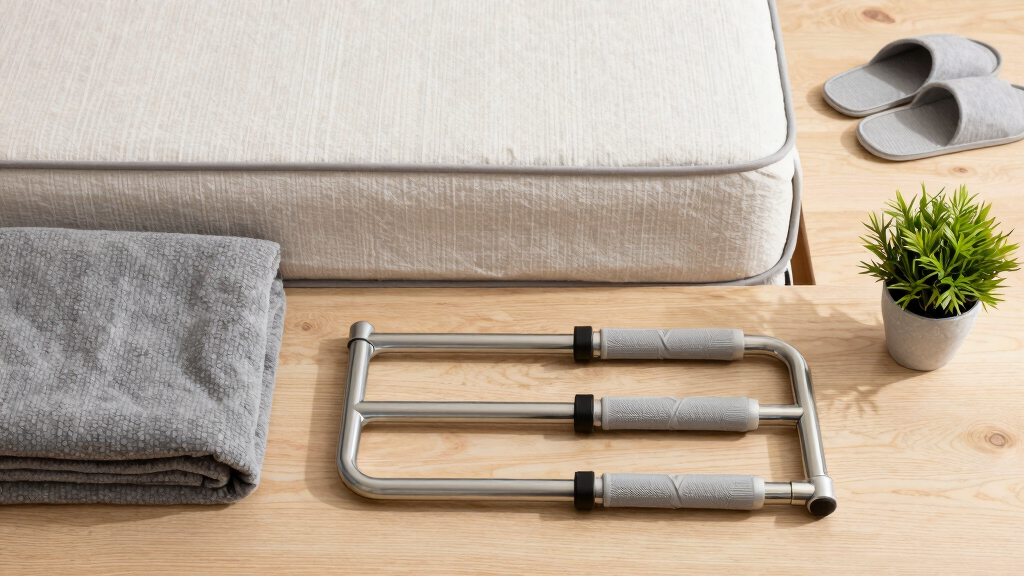
bed assist bars with safety features
As an affiliate, we earn on qualifying purchases.
As an affiliate, we earn on qualifying purchases.
What’s New? Modern Bed Rails and Assist Bars That Boost Safety
Recent innovations focus on safety and convenience. Smart bed rails now feature adjustable heights, noise alerts if someone tries to climb over, and remote monitoring for caregivers. For example, one smart rail emits a gentle alarm if the user attempts to exit the bed improperly, reducing fall risks. These technological features are designed to address common user errors, such as climbing over rails or attempting unsafe movements, which traditional rails alone cannot prevent.
Design improvements include rounded edges, narrower gaps, and non-slip grips. These updates aim to prevent entrapment and make daily use more comfortable. For some users, the ease of folding away or detaching for cleaning or repositioning can mean the difference between consistent use and neglect. These features reflect a deeper understanding that safety devices need to be both effective and user-friendly to ensure ongoing compliance and protection.
Regulatory bodies are increasing safety standards, pushing manufacturers to produce smarter, safer devices. This ongoing evolution demonstrates a commitment to reducing injury risks while maintaining user independence.
As an affiliate, we earn on qualifying purchases.
How to Ensure Safe Use and Proper Installation
Proper installation is key. Always follow the manufacturer’s instructions carefully. For example, securing the rail tightly to the bed frame with the right tools prevents loosening or detachment. Improper installation can lead to the device failing at critical moments, increasing fall risk or causing injury.
Regularly check for signs of wear, loose fittings, or gaps. If you notice any issues, replace or repair immediately. For instance, a caregiver discovered a rail had loosened after a few months, and tightening it prevented a fall. Routine checks are essential because even high-quality devices can degrade over time due to daily use, environmental factors, or improper handling. Maintaining a proactive approach ensures the device continues to serve its protective purpose effectively.
If unsure, consider professional installation to ensure safety and compliance with standards.
As an affiliate, we earn on qualifying purchases.
Alternatives and Complementary Safety Measures
Bed rails aren’t the only solution. Floor mats, bed alarms, and caregiver supervision can work together or stand alone, depending on the situation. For example, a person with mild mobility issues might use a bed alarm that alerts a caregiver if they try to get up unaided. Using multiple safety measures creates a layered defense, which is especially important when individual devices might have limitations or potential failure points.
Sometimes, combining low-profile rails with floor mats offers a layered safety approach. The rationale is that even if one measure fails or is bypassed, others remain to prevent falls or injuries. This comprehensive approach recognizes that safety isn’t achieved through a single device but through thoughtful combination and monitoring, tailored to each individual’s needs and risks.
How to Keep Your Bed Rail Safe Over Time
Safety isn’t a one-time setup. Regular maintenance is essential. Check for loose fittings, cracks, or corrosion every few months. For example, a family found their rail was slightly loose during routine cleaning, which could have led to a fall. Recognizing early signs of deterioration allows for timely repairs that prevent accidents and extend the device’s lifespan.
Keep a checklist: tighten bolts, inspect gaps, and verify compatibility with your mattress. Replacing worn or damaged parts immediately is critical because small issues can escalate into serious hazards if left unaddressed. Investing a few minutes regularly in maintenance not only preserves the integrity of the safety device but also provides peace of mind that it will perform effectively when needed most.
Routine maintenance is a cost-effective way to ensure ongoing safety and avoid costly emergency interventions.
Legal and Ethical Considerations When Using Bed Rails
In some areas, laws regulate the sale and use of bed rails, especially for vulnerable populations like seniors or those with cognitive impairments. These regulations are designed to protect individuals from unnecessary harm, but they also require caregivers to stay informed and compliant. Non-compliance can lead to legal repercussions and jeopardize the safety of the user.
Ethically, it’s vital to consider the user’s dignity and preferences. For example, a person with dementia might resist a bed rail, which could cause distress or agitation. In such cases, forcing compliance might do more harm than good. Instead, exploring alternative safety measures or involving the individual in decision-making respects their autonomy and can lead to more effective safety strategies.
Consult healthcare providers or safety experts to navigate these considerations properly, ensuring both legal compliance and respect for individual rights.
Frequently Asked Questions
Are bed rails safe for all users?
No, they aren’t suitable for everyone. People with cognitive impairments might try to climb over and fall. Always get a professional assessment to see if a bed rail is right for your situation.
How do I pick the safest bed rail for my bed?
Look for models that meet safety standards, have narrow gaps, and are compatible with your bed type. Consider your mobility needs and whether the user might try to climb over it.
Can bed rails cause injuries?
Yes, if improperly installed or used, they can cause entrapment or falls. Regular inspections and correct installation are essential to prevent these hazards.
Are there safer alternatives to traditional bed rails?
Yes, options include bed alarms, floor mats, and caregiver supervision. Combining these measures often offers the best safety without restricting independence.
How do I ensure the bed rail stays safe over time?
Perform routine checks for loose parts, cracks, or corrosion. Tighten fittings and replace worn components immediately to maintain safety and functionality.
Conclusion
A well-chosen, properly installed bed rail can be a lifeline—offering both safety and independence. But it’s not a set-it-and-forget-it device. Regular checks, proper use, and understanding its limits are what truly protect. Think of your safety measures as a team effort—each piece working together to keep you secure and confident in your home.Halloween Picks
halloween
As an affiliate, we earn on qualifying purchases.