
TL;DR
Anti-tip wheels prevent wheelchairs from tipping backward during uneven surfaces or ramps. Proper adjustment and maintenance are key, and recent innovations add visibility, comfort, and even smart alerts for enhanced safety.
Ever watched someone roll up a steep ramp in a wheelchair and wonder how they stay balanced? That’s often thanks to anti-tip wheels. These small, often overlooked wheels act like safety nets, catching the wheelchair if it begins to tip backward. But they’re more than just safety accessories—they’re a key part of confident, independent mobility.
In this guide, you’ll learn what anti-tip wheels do, the latest innovations making them smarter and easier to use, and practical tips so you can keep them working their best. Whether you’re a user, caregiver, or just curious, understanding these tiny wheels can make a big difference in safety and peace of mind.
Anti-tip wheels are small, caster-like devices attached to the rear or front of a wheelchair to prevent backward tipping.
Proper adjustment—so they just contact the ground when tilted—is essential for safety and maneuverability.
Recent innovations add visibility, shock absorption, and even smart sensors, making anti-tip wheels more effective and user-friendly.
Regular inspection and maintenance are key to keeping anti-tip wheels reliable and safe.
Not all wheelchairs need anti-tip wheels—consult with a professional to see if they’re right for your lifestyle and terrain.
Understanding Wheelchair Anti-Tip Wheels
Small wheels, major protection. Anti-tip devices act as a safety stop when a wheelchair begins to rotate backward—helping users navigate ramps, uneven surfaces, changing loads, and everyday movement with greater confidence.
Limits dangerous backward rotation before a full tip occurs.
Usually mounted behind the main wheels; some designs use front devices.
Inspect more often after impacts, transport, adjustments, or rough-terrain use.
User, chair geometry, seating setup, terrain, and daily routine all matter.
How a tiny wheel changes the stability equation
When the wheelchair’s center of gravity shifts rearward, anti-tip wheels meet the ground and create a second support point. Correct setup adds protection without interfering with ordinary movement.
Protection must coexist with maneuverability
A lower or longer anti-tip position generally engages sooner, but it can catch on curbs, thresholds, or steep transitions. A higher or shorter position preserves clearance, yet may allow more backward rotation before contact.
Reclined seating, tall back systems, or heavy rear-mounted equipment can change balance.
Ramps, slopes, thresholds, and curb approaches increase backward-tip potential.
Backpacks, oxygen systems, batteries, and seating changes can alter chair geometry.

DeaHea 12 Pack Wheelchair Anti Tippers Wheel Replacement Tip Prevention Wheelchair Rear Anti-Tip Devices Stabilizer Safety Wheels for Medical Cruiser III X4 K3 K4 Transport Wheelchairs
Package Contents: 12 x Side Rear Wheel for Wheelchair(3 Szies)
As an affiliate, we earn on qualifying purchases.
As an affiliate, we earn on qualifying purchases.
Three configurations, three different priorities
There is no universal “best” design. The right device balances reliable engagement, transport needs, terrain clearance, maintenance, and the user’s ability to operate it safely.
| Type | How it works | Stability | Transport | Customization | Best fit |
|---|---|---|---|---|---|
| Fixed | Solidly mounted in a consistent operating position. | ✓Consistent | ✗More bulk | ✗Limited | Everyday use where simple, dependable protection is the priority. |
| Removable / foldable | Detaches or folds away for storage, transfers, or transport. | ~Depends on correct reattachment | ✓ Excellent | ~Moderate | Travel, compact storage, or situations requiring temporary clearance. |
| Adjustable | Height or angle can be tuned, often without tools. | ✓Fine-tunable | ~Varies | ✓ Excellent | Changing terrain, seating configurations, or individualized setup needs. |
Status symbols indicate general design tendencies, not a product rating. Compatibility and performance vary by wheelchair model and installation.

DMI Wheelchair Seat Belt and Safety Harness, Easy Install, 45 Inches long and 1.75 Inches Thick, Adjusts to 41 Inches, Black (Pack of 1)
ENSURE SAFETY AND SECURITY by preventing falling and slipping out of wheelchairs for elderly, epileptic or those with…
As an affiliate, we earn on qualifying purchases.
As an affiliate, we earn on qualifying purchases.
From passive bumpers to responsive safety systems
Modern designs are improving visibility, comfort, adjustability, weight, and awareness—while retaining the anti-tip wheel’s fundamental mechanical role.
Reflectors & LED lighting
High-visibility surfaces and integrated lights make the rear profile easier to notice in dim environments.
Shock absorption
Compliant materials or damped mechanisms reduce abrupt contact and help soften jolts over uneven ground.
Tool-free adjustment
Quick height and angle changes let users or caregivers adapt clearance and engagement more efficiently.
Smart sensing
Prototype systems monitor tilt or obstacles, issue alerts, and may automatically deploy added protection.
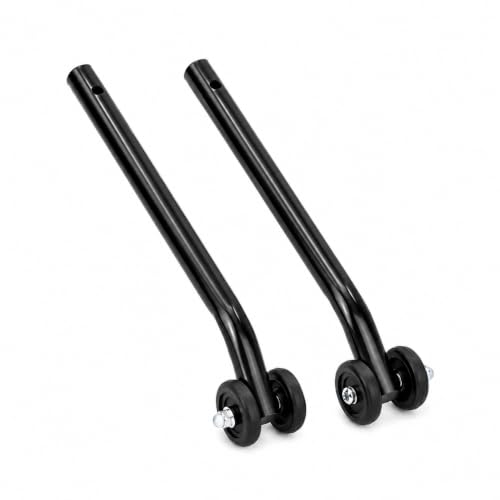
VOCIC Anti-Tip Wheels for U32 and U12 Wheelchairs, Rear Anti-Tipper Replacement Accessories, Compatible Only with VOCIC U32 and U12 Lightweight Wheelchairs
【Compatible Only with VOCIC U32 and U12】These anti-tip wheels are specially designed for VOCIC U32 and U12 wheelchairs….
As an affiliate, we earn on qualifying purchases.
As an affiliate, we earn on qualifying purchases.
A five-step maintenance loop
Inspection is most useful when it is consistent. Check again after transport, a collision, a seating change, or any event that may have shifted the anti-tip assembly.
Look for damage
Check wheels, tubes, brackets, pins, and hardware for cracks, bends, wear, or corrosion.
Test attachment
Confirm there is no unexpected wobble, looseness, missing pin, or incomplete latch engagement.
Set contact height
Position the device to engage during a safe backward tilt without restricting normal rolling.
Remove debris
Clear mud, hair, grit, and dirt that can restrict rotation or obscure reflectors and lights.
Perform a safe test
With appropriate assistance, confirm smooth ground contact and normal everyday clearance.
The anti-tip wheel should contact the ground at an appropriate safe angle—not drag during ordinary use and not engage so late that the chair becomes unstable. Exact setup must follow the wheelchair and anti-tip manufacturer’s instructions.
DeaHea 12 Pack Wheelchair Anti Tippers Wheel Replacement Tip Prevention Wheelchair Rear Anti-Tip Devices Stabilizer Safety Wheels for Medical Cruiser III X4 K3 K4 Transport Wheelchairs
Package Contents: 12 x Side Rear Wheel for Wheelchair(3 Szies)
As an affiliate, we earn on qualifying purchases.
As an affiliate, we earn on qualifying purchases.
When anti-tip wheels matter most
Need is personal. A mobility professional can evaluate the user’s movement, chair configuration, environment, skills, and goals before recommending installation or removal.
Stronger reasons to use them
- Frequent ramps or slopes create recurring rearward weight shift.
- Uneven paths and thresholds introduce sudden changes in wheel position.
- High or reclined seating can move the center of gravity upward or backward.
- Rear-mounted loads such as backpacks or equipment affect balance.
- Limited trunk control may reduce the user’s ability to correct a sudden shift.
Questions before changing them
- Does the device clear everyday obstacles without catching or dragging?
- Can it be operated reliably after folding, removal, or transport?
- Has seating or equipment changed since the last professional setup?
- Is the chair used off-road where a terrain-specific design may be necessary?
- Has a trained professional reviewed the fit for the user and wheelchair?
Anti-tip wheels create a backup contact point that limits backward rotation.
They should engage during a safe tilt without obstructing normal movement.
Reflectors, LEDs, shock absorption, composites, and sensors expand capability.
Inspect attachment, condition, cleanliness, adjustment, and operation regularly.
Not every wheelchair needs the same anti-tip setup—or an anti-tip device at all.
Consult a mobility specialist and follow the manufacturer’s instructions.
Safety note: This infographic provides general education, not individualized clinical or equipment advice. Do not remove, disable, or modify wheelchair safety components without guidance from a qualified professional and the applicable manufacturer documentation.
What Are Anti-Tip Wheels and Why Do You Need Them?
Anti-tip wheels are small, caster-like wheels attached to the back or sometimes front of a wheelchair. Their job is simple but critical: prevent the wheelchair from tipping over backwards, especially when climbing ramps or navigating uneven terrain.
Imagine pushing a wheelchair up a steep hill. Without anti-tips, the risk of tipping backward increases dramatically. These wheels act as a safety backup—like the bumpers on a bowling alley—catching the chair before it falls. They’re especially important if you have a high or rearward center of gravity, or if you often go over obstacles.
Choosing to use anti-tip wheels is a tradeoff: while they significantly enhance safety on tricky terrains, they can sometimes limit maneuverability or add bulk to the wheelchair. Understanding when and why to use them helps balance safety with ease of movement, ensuring that users are protected without sacrificing agility.
For example, a person with a heavy backpack or a tall, reclined seat might rely heavily on anti-tip wheels for safety on daily outings. Conversely, if the terrain is mostly flat, some users might choose to disable or remove them to improve navigation.
The Different Types of Anti-Tip Devices and How They Work
Anti-tip wheels come in a few varieties, each suited for different needs. Here’s a quick comparison:
| Type | Design & Features | Best For |
|---|---|---|
| Fixed Anti-Tip Wheels | Solidly mounted, no adjustment, simple to maintain | Everyday use, where stability is a priority |
| Removable/Foldable Anti-Tip Wheels | Can be easily detached or folded for transport | Travelers or those with limited storage space |
| Adjustable Anti-Tip Devices | Allow height or angle adjustments without tools | Customizable setups for different terrains or user preferences |
Each type offers a different balance between convenience, safety, and adaptability. Fixed anti-tips provide consistent protection but lack flexibility, which might be a concern if terrain or user needs change frequently. Removable or foldable options offer portability but require careful reattachment to ensure safety. Adjustable anti-tip devices are particularly valuable because they enable fine-tuning, allowing users to optimize performance based on specific environments or personal comfort. This flexibility can mean the difference between a safe, stable ride and one hindered by improperly set anti-tips, highlighting the importance of choosing the right type for your lifestyle and terrain.
Latest Tech That’s Making Anti-Tip Wheels Safer and Smarter
Recent innovations are turning anti-tip wheels into more than just bumper guards. Some now include reflective surfaces and LED lights for better visibility at night or in dim settings. Imagine rolling through a park at dusk—your anti-tip wheels glow softly, alerting pedestrians and vehicles to your presence.
Newer designs also feature shock absorption, which is crucial because rough terrains can cause sudden jolts that might destabilize the wheelchair or discomfort the user. By integrating shock-absorbing materials or mechanisms, these anti-tips help smooth out uneven rides, reducing the risk of unexpected tipping or jarring impacts that could compromise safety or comfort.
Additionally, adjustable heights with tool-free mechanisms are a significant advancement. They allow users or caregivers to quickly adapt the anti-tip position for different terrains or personal preferences without needing special tools, making safety adjustments more accessible and less time-consuming.
Perhaps most exciting are emerging smart anti-tip systems. These integrate sensors that constantly monitor the wheelchair’s tilt angle and proximity to obstacles. When a dangerous tilt or obstacle is detected, the system can alert the user via a smartphone app or even deploy the anti-tip automatically. This proactive approach can prevent accidents before they happen, providing an extra layer of security especially for users navigating unpredictable environments. While still in development, these technologies promise to make wheelchair safety more intuitive and responsive than ever before.
How to Check and Maintain Your Anti-Tip Wheels for Safety
Proper adjustment and regular maintenance keep anti-tip wheels effective. Here’s a simple checklist:
- Inspect for cracks, wear, or damage at least once a month. Damaged anti-tips can fail unexpectedly, risking safety. Recognizing early signs of deterioration allows for timely repairs or replacements, preventing accidents.
- Ensure the wheels are firmly attached—no wobbling or looseness. Loose attachments can cause the anti-tips to disengage or wobble during use, reducing their effectiveness and potentially causing instability.
- Adjust the height so they just touch the ground when the wheelchair tilts back at a safe angle, about 15-20 degrees. Incorrect height can either hinder normal maneuvering or fail to prevent tipping. Properly set anti-tips act as a safety stop without impeding everyday movement.
- Clean off dirt, mud, or debris that may hinder movement or visibility. Accumulated grime can obscure reflective surfaces or lights, reducing visibility, or cause mechanical issues like sticking or jamming.
- Test the wheels by gently tilting the wheelchair backward—see if the anti-tips contact the ground smoothly without hindering normal use. Regular testing ensures they engage correctly during actual use, confirming safety before venturing out.
For example, a caregiver might do this during routine wheelchair checks, ensuring safety every week before outings. Keeping anti-tips in optimal condition is essential because even minor issues can compromise safety, especially on uneven terrains or steep inclines. When in doubt, consulting a mobility specialist or manufacturer’s guidelines can help prevent potential failures and ensure your anti-tips provide reliable protection.
When Are Anti-Tip Wheels Really Necessary?
Anti-tip wheels are most essential when the user’s wheelchair has a high or rearward center of gravity or when navigating steep inclines. If your wheelchair tips easily or you frequently go over uneven terrain, anti-tips are a must-have safety feature.
Understanding the necessity of anti-tip wheels involves evaluating the risks associated with your specific environment and usage patterns. For example, if your daily routes include steep ramps, uneven sidewalks, or outdoor trails, the likelihood of tipping backward increases, making anti-tip wheels a critical safety addition. Conversely, if your typical terrain is flat and predictable, the added bulk and potential maneuvering limitations of anti-tips might outweigh their benefits.
Deciding when they are necessary involves considering both the physical design of your wheelchair and your lifestyle. High or reclined seat configurations shift the center of gravity higher, increasing the risk of backward falls. If you have concerns about stability, consulting a mobility professional can help you assess whether anti-tip wheels will significantly improve safety for your specific needs. Balancing these factors ensures you don’t over-rely on safety features where they aren’t needed while reinforcing safety where the risks are greatest.
Frequently Asked Questions
Why do some wheelchairs have anti-tip wheels while others do not?
Anti-tip wheels are most needed for wheelchairs with high or rearward centers of gravity, or when navigating slopes and uneven terrain. If a wheelchair is designed for mostly flat, predictable surfaces, anti-tips might not be necessary.
How do I know if my anti-tip wheels are properly installed and adjusted?
They should be securely attached with no wobble. Adjust the height so that they just touch the ground when the wheelchair tilts backward at about 15-20 degrees. Regularly test by tilting the chair slightly to ensure they engage correctly without hindering movement.
Can anti-tip wheels be removed or folded away?
Yes, many models are designed for easy removal or folding for travel or storage. Check your specific model’s instructions or consult your wheelchair provider for best practices.
Are anti-tip wheels suitable for all terrains?
They work well on ramps, smooth outdoor surfaces, and uneven pavements. For very rough or off-road conditions, specialized anti-tips or larger caster wheels might be necessary.
What maintenance do anti-tip wheels need?
Inspect regularly for cracks, wear, or dirt buildup. Keep them clean, ensure they are tightly attached, and adjust height as needed. Regular checks keep safety features ready for your next outing.
Conclusion
Anti-tip wheels might be small, but their impact on safety is enormous. Properly adjusted and maintained, they give you the confidence to tackle ramps, uneven surfaces, and busy streets with less worry. Think of them as your wheelchair’s safety net—there when you need it most.
Next time you see someone confidently gliding over a curb or up a hill, remember—those tiny wheels play a big role in making it possible. Keep yours in top shape, and your independence will stay secure, no matter what the terrain throws at you.