
TL;DR

Get everyday helpers delivered free with Prime
- Fast, free delivery on millions of items
- Prime Video, Amazon Music and more included
- Member-only deals all year
To keep your mobility scooter working well, always store it in a dry, cool place, charge after each use or weekly, and follow manufacturer guidelines. Good habits extend battery life and prevent damage.
Imagine your mobility scooter sitting idle for weeks, batteries drained and components vulnerable to damage. Or picture plugging in a charger and wondering if you’re doing it right. Proper storage and charging aren’t just routine; they’re vital to keeping your scooter reliable and safe.
In this guide, you’ll discover practical, straightforward tips to make sure your scooter stays in top shape. From where to store it to how to charge it correctly, you’ll learn how small habits can make a big difference in your independence and peace of mind.
Always use the manufacturer’s charger and follow guidelines to prevent battery damage.
Store your scooter indoors in a dry, cool place to avoid weather-related harm.
Recharge the battery after each use or weekly if unused, and disconnect for long-term storage.
Regularly inspect and maintain batteries to extend their lifespan and ensure safety.
Choosing lithium-ion batteries can save time and last longer, but costs are higher upfront.
The secrets to charging your scooter the right way
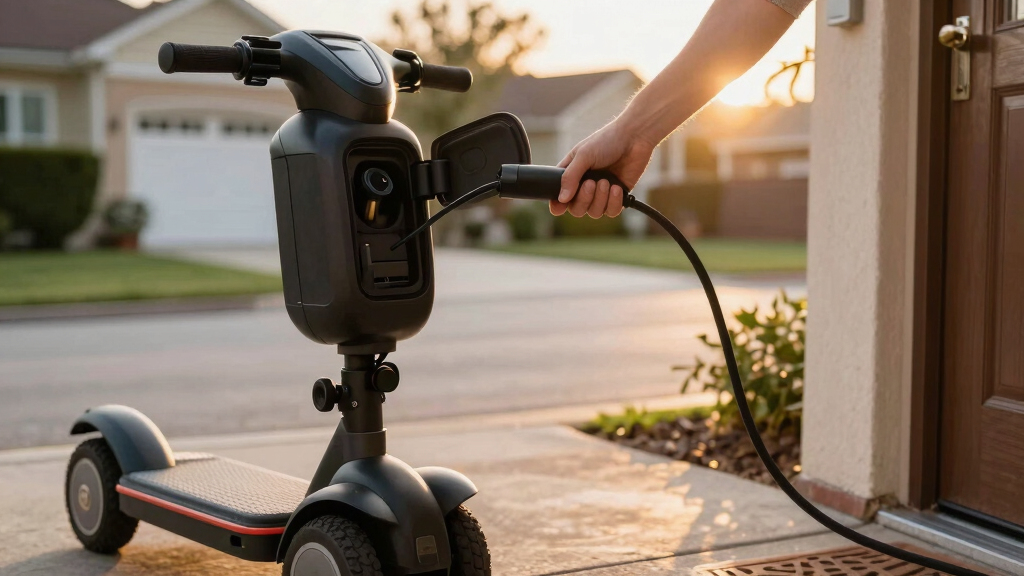
Charging your mobility scooter correctly starts with understanding its power needs. Always use the charger provided by the manufacturer—no shortcuts, no third-party adapters. These chargers are designed to match your battery type—be it lead-acid or lithium-ion—ensuring safe, efficient power transfer.
Charge after each use if possible, or at least once a week if you’re not riding regularly. Avoid overcharging by disconnecting once the indicator shows full power. Modern chargers often have automatic shut-off features, but it’s good to check your model’s specs.
Picture this: you’re leaving your scooter plugged in overnight. With newer batteries, this isn’t usually a problem, but for older models, overcharging can shorten lifespan. Keep the charging area dry, well-ventilated, and free of flammable materials—safety first.
Why it matters: Proper charging practices prevent unnecessary wear on your battery, which is the most expensive component of your scooter. Overcharging can lead to overheating and battery degradation, reducing your scooter’s range and reliability over time. Conversely, undercharging or inconsistent charging can cause sulfation in lead-acid batteries, diminishing capacity and lifespan. Understanding these nuances helps you balance convenience with longevity, saving money and hassle in the long run.
As an affiliate, we earn on qualifying purchases.
How to care for your scooter’s battery for years of reliable use
Battery health is the heartbeat of your scooter. Most use sealed lead-acid or lithium-ion cells, each with unique needs. Regularly check for corrosion on terminals—greenish or white buildup—especially if your scooter sits unused for a while.
For long-term health, keep batteries fully charged before storing. If you plan to store your scooter for months, disconnect the battery if possible, and recharge every 4-6 weeks to prevent sulfation in lead-acid types.
Imagine your scooter’s battery as a car engine—neglect leads to poor performance. Proper maintenance includes cleaning terminals, inspecting for leaks or damage, and replacing batteries following the manufacturer’s schedule, usually every 1-3 years.
Why it matters: The way you care for your batteries directly impacts your scooter’s performance and safety. Corrosion, leaks, or neglect can lead to sudden failures or even hazardous situations. Regular inspections and maintenance ensure that your battery remains reliable, avoiding unexpected breakdowns and costly replacements. Additionally, understanding the lifespan and maintenance schedule helps you budget and plan for replacements, ensuring your scooter remains a dependable mobility aid for years to come.
As an affiliate, we earn on qualifying purchases.
Where and how to store your scooter for maximum longevity
Storing your scooter indoors in a dry, cool space protects it from weather, dust, and accidental damage. Think of it like putting a delicate piece of art in a climate-controlled gallery—storage conditions matter.
Ideal temperatures fall between 50°F and 77°F (10°C to 25°C). Extreme cold can freeze batteries, causing internal damage or capacity loss, while excessive heat accelerates chemical degradation, shortening battery life. If you’re storing long-term, fully charge the battery, disconnect it, and recharge every few weeks.
For example, your garage shelf, tucked away from direct sunlight and moisture, keeps your scooter ready for action. Use a cover to prevent dust accumulation, and secure it so it won’t tip or be tampered with.
Why it matters: Proper storage conditions prevent unnecessary wear and tear, corrosion, and damage to both the physical components and the battery. Maintaining an optimal environment reduces the risk of costly repairs and extends the overall lifespan of your scooter. For instance, storing in a temperature-controlled space avoids the risk of freezing or overheating, which can irreparably harm your battery and electronics. Regularly recharging the battery during storage ensures it remains at an optimal state of charge, preventing capacity loss.
As an affiliate, we earn on qualifying purchases.
Quick comparison: Lead-acid vs. Lithium-ion batteries
| Feature | Lead-Acid | Lithium-Ion |
|---|---|---|
| Weight | Heavier, about 10-15 kg | Lightweight, around 5-8 kg |
| Charging Time | 4-8 hours | 2-4 hours |
| Lifespan | 1-2 years with good care | 3-5 years, longer with proper maintenance |
| Cost | Lower upfront | Higher initially |
| Maintenance | Periodic checks, watering | Minimal, just keep charged |
As an affiliate, we earn on qualifying purchases.
Safety tips you can’t ignore when storing and charging
Safety is about preventing accidents. Always use the correct charger—never force a different one onto your scooter. Keep the charging area dry, ventilated, and away from flammable things like paper or cloth.
When storing long-term, disconnect the battery to prevent electrical discharges. Secure your scooter on a stable surface—think of it like parking your bike on a kickstand—so it won’t tip over or get stolen.
Remember, a small spark or overheating can lead to bigger problems. Regular inspection and safe practices keep you and your home protected.
Why it matters: Neglecting safety measures can lead to fires, electrical shocks, or damage to your scooter and home. Proper precautions, like using the right charger, storing away from flammable materials, and disconnecting batteries during extended periods, significantly reduce these risks, ensuring peace of mind and safety for you and your household.
Your step-by-step guide to storing and charging your scooter
- Charge the battery fully before long-term storage.
- Clean the scooter and check for damage.
- Disconnect the battery (if removable).
- Store in a dry, temperature-controlled space.
- Recharge the battery every 4-6 weeks during storage.
Following these steps keeps your scooter healthy and ready whenever you need it. Think of it as a routine—like watering plants or charging your phone overnight.
Frequently Asked Questions
How often should I charge my mobility scooter?
Charge it after each use if possible, or at least once a week if you’re not riding regularly. Regular charging keeps the battery in good shape and ready to go.
Can I leave my scooter plugged in overnight?
Yes, most modern chargers and batteries are designed to prevent overcharging. Still, always follow your manufacturer’s instructions for safety and best results.
What’s the best way to store my scooter long-term?
Store it indoors in a dry, temperature-controlled space. Fully charge the battery before storing, disconnect it if possible, and recharge every 4-6 weeks to maintain health.
How do I tell if my battery needs replacing?
If your scooter’s range drops significantly, or it takes longer to charge and can’t hold a full charge, it’s probably time for a new battery. Regular checks help catch issues early.
Are lithium-ion batteries better than lead-acid?
Generally, yes. Lithium-ion batteries are lighter, last longer, and charge faster. But they also come with a higher initial price, so consider your needs and budget.
Conclusion
Proper storage and charging aren’t just about maintaining your scooter—they’re about preserving your independence. A little care today keeps your mobility smooth and reliable tomorrow.
Think of your scooter as a trusted partner. Treat it well, and it will be ready to support your adventures, big or small, whenever you need it.
Columbus Day / Indigenous Peoples' Day Picks
long weekend sales
As an affiliate, we earn on qualifying purchases.