
TL;DR

Get everyday helpers delivered free with Prime
- Fast, free delivery on millions of items
- Prime Video, Amazon Music and more included
- Member-only deals all year
Choosing an all-terrain wheelchair involves matching terrain type, user strength, and features like suspension and tire size. Modern designs now include lightweight frames, smart tech, and powerful motors, making outdoor adventures more accessible than ever.
Prioritize large, rugged wheels and a durable, lightweight frame for rough terrain.
Invest in advanced suspension systems to turn bumpy rides into smooth outings.
Decide between manual and power based on strength, distance, and outdoor plans.
Choose pneumatic tires for better shock absorption on loose surfaces, but consider solid tires for low-maintenance needs.
Stay updated on smart features and modular designs to enhance outdoor accessibility and safety.
Choosing a Wheelchair for Outdoor and All-Terrain Use
TL;DR: Match terrain, user strength, and key features such as suspension, tire size, frame weight, and power support. The right all-terrain wheelchair turns dirt trails, gravel paths, grass, snow, and sand from barriers into realistic routes.
Typical manual all-terrain chairs weigh 44-88 lbs, depending on materials, tires, and folding hardware.
Basic manual models start lower; advanced powered chairs rise with batteries, motors, and smart systems.
Research-backed buyer insight: shock absorption and traction improve stability, confidence, and ride length outdoors.
Gravel, trails, grass, sand, snow, and uneven outdoor routes.
Reduces fatigue, jolts, joint strain, and tipping risk.
Better cushioning and grip, with more maintenance.
Manual suits active users; power extends distance and independence.
What makes a chair outdoor-ready?
Outdoor wheelchairs need traction, stability, shock control, and a frame that can survive repeated vibration without becoming too heavy to transport.
Large, rugged tires
Big wheels help roll over dirt, grass, roots, gravel, and sand. Durable front casters matter too, because small weak casters can catch on obstacles.
Strong but light build
Aluminum, titanium, and carbon composites improve maneuverability while keeping the structure durable enough for uneven ground.
Adjustable support
Armrests, footrests, seating, anti-tip wheels, and belts should match the user, the route, and the expected distance outdoors.
Suspension turns rough ground into usable ground.
Independent wheel suspension and multi-link systems let each wheel respond to bumps and dips, which improves comfort, control, and confidence on longer outings.
Pneumatic vs. solid tires
Pneumatic tires are usually best for sand, snow, mud, and rocky paths. Solid tires suit users who value low maintenance and puncture resistance.
| Tire type | Comfort | Grip | Maintenance | Best use |
|---|---|---|---|---|
| ✓Pneumatic air-filled | ✓Excellent shock absorption over loose or uneven surfaces. | ✓Better traction on sand, snow, mud, gravel, and trails. | ~Needs air checks and can puncture. | Adventure routes where comfort and grip matter most. |
| ~Solid | ✗Bumpier ride with less cushioning over long distances. | ~Reliable on firm ground but weaker on loose surfaces. | ✓Puncture-proof and nearly maintenance-free. | Urban outdoor use, packed paths, and high-puncture environments. |
Match the wheelchair to the route.
Start with the terrain, then match propulsion, tire type, suspension, transport, and maintenance to how the chair will actually be used.
Map terrain
List surfaces: gravel, roots, sand, grass, snow, slopes, curbs, and trail length.
Assess strength
Choose manual, power assist, or powered drive based on arms, shoulders, distance, and fatigue.
Pick tires
Prioritize pneumatic tires for grip and cushioning, or solid tires for low-maintenance routes.
Check stability
Look for suspension, anti-tip support, seat belt options, and a safe weight capacity.
Test transport
Confirm folding, disassembly, vehicle fit, battery rules, and storage needs before buying.
Choose the effort profile.
Manual wheelchairs are lighter and simpler, but require sustained upper-body effort. Power all-terrain chairs are heavier and costlier, but can make distance and hills realistic.
Manual all-terrain
Best for active users with good arm and shoulder mobility who want a lighter chair that is easier to transport.
- Lower weight and simpler maintenance.
- Better for shorter routes and users who prefer direct control.
- Can become exhausting on hills, soft ground, or long trails.
Power all-terrain
Best for longer adventures, limited upper-body strength, steep routes, and users who want greater independence outdoors.
- Robust motors, batteries, and specialized tires extend range.
- Less physical strain across rough or sloped ground.
- Heavier, more expensive, and requires charging.
Outdoor effort spectrum
From obstacle to feature choice
Use this chain to translate outdoor challenges into practical buying priorities.
What Makes a Wheelchair Suitable for Rough Terrain? You Need Rugged Wheels and a Strong Frame
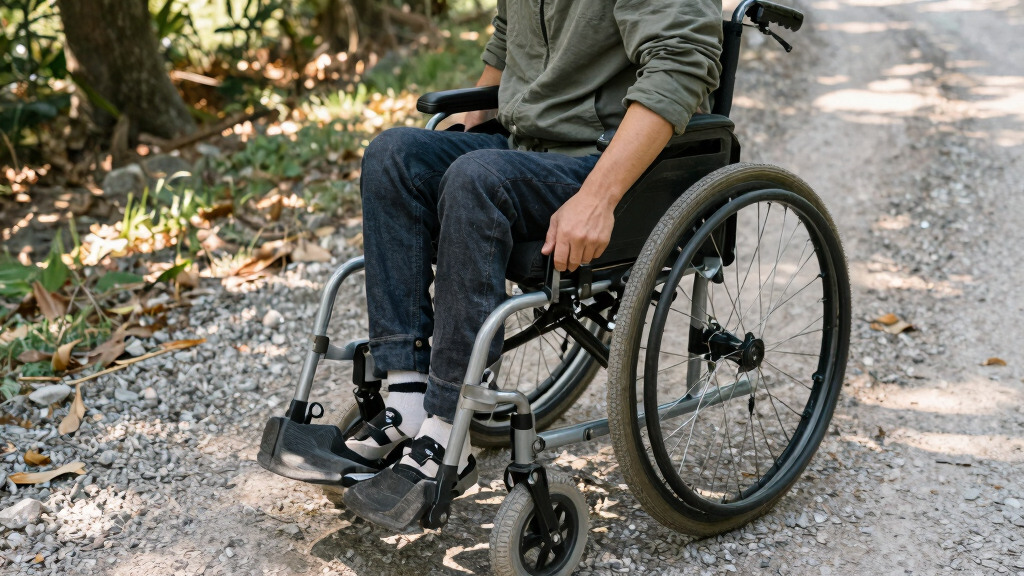
When choosing a wheelchair for outdoor adventures, large, rugged wheels are non-negotiable. Think of them as the tires on a mountain bike — designed to grip uneven surfaces like dirt, gravel, or sand. These wheels provide stability and traction, which are crucial for preventing slips and falls on unpredictable terrains. A sturdy frame, often made from lightweight aluminum or titanium, offers durability without excessive weight, allowing for easier maneuverability and transport. Imagine gliding over roots and rocks without the jarring bumps of a city street. This resilience reduces the risk of mechanical failure and enhances safety. A foldable design adds convenience, making transport just as effortless as riding, and allowing for easier storage in vehicles or closets. The tradeoff is that rugged wheels and strong frames can add weight and cost, but the safety and reliability benefits are essential for outdoor use.
all-terrain wheelchair with pneumatic tires
As an affiliate, we earn on qualifying purchases.
As an affiliate, we earn on qualifying purchases.
How Suspension Systems Turn Bumpy Rides into Smooth Adventures
Suspension is the critical component that directly influences comfort and safety during outdoor excursions. Modern all-terrain wheelchairs employ sophisticated suspension systems, such as independent wheel suspension or multi-link setups, that absorb shocks from rocks, roots, and uneven surfaces. Think of suspension as the wheelchair’s shock absorbers — much like a car’s suspension system that smoothens rough roads. By dampening the impact transmitted to your body, suspension reduces fatigue, prevents joint strain, and minimizes the risk of tipping or losing control. For example, a multi-link suspension allows each wheel to move independently, adapting to sudden bumps and dips, which maintains stability. The implications are significant: better suspension translates to longer, more comfortable outdoor trips, increased safety, and greater confidence in navigating challenging terrains. The tradeoff is that advanced suspension systems can add weight and complexity, but the enhanced ride quality often outweighs these considerations for serious outdoor users.
As an affiliate, we earn on qualifying purchases.
Tire Choices: Pneumatic vs. Solid — Which Is Better for Your Outdoor Adventures?
| Tire Type | Pros | Cons |
|---|---|---|
| Pneumatic (air-filled) | Excellent shock absorption, which significantly reduces jolts and vibrations, leading to a smoother ride over loose or uneven surfaces. They also provide better grip and traction on surfaces like sand, snow, or mud, enabling safer navigation. | Require regular maintenance such as checking air pressure, and are prone to punctures, which can leave you stranded. They are generally heavier, impacting the overall weight of the wheelchair and maneuverability. |
| Solid | Maintenance-free, highly durable, and lighter, making them easier to handle and transport. They eliminate the risk of punctures, ensuring consistent performance. | Bumpy ride due to less shock absorption, which can cause discomfort over long distances or rough terrains. They typically offer less grip on loose or uneven surfaces, which may compromise safety in certain outdoor conditions. |
For outdoor adventures on challenging terrains like sand, snow, or rocky paths, pneumatic tires are generally preferred because their cushioning and grip enhance safety and comfort. However, if your priority is low maintenance, solid tires are a practical choice, especially in environments where puncture risk is high. The tradeoff involves balancing ride comfort with convenience and durability, which ultimately depends on your specific outdoor activities and preferences.
As an affiliate, we earn on qualifying purchases.
Manual or Power? Which Wheelchair Matches Your Outdoor Lifestyle?
Manual wheelchairs rely on your upper body strength, making them suitable for users with good arm and shoulder mobility. Imagine pushing across a rocky trail — exhausting without power assist. They are lightweight and easier to transport but require consistent effort, which can be taxing over long distances or steep inclines. Power wheelchairs equipped with all-terrain capabilities include motors, larger batteries, and specialized tires, transforming difficult terrains into manageable routes. They provide independence and reduce physical strain, allowing users to venture further and tackle more diverse environments. The tradeoff is that powered models are heavier, more expensive, and require charging and maintenance. Deciding between manual and power depends on your strength, outdoor plans, and willingness to handle additional weight and upkeep. For someone with limited upper body strength or planning extensive outdoor excursions, a power wheelchair can be a game-changer, while manual options suit active users with good mobility and a preference for simplicity.
- Assess your upper body strength
- Consider how often and far you plan to go outdoors
- Balance weight and portability needs
As an affiliate, we earn on qualifying purchases.
Latest Trends: Smart Tech, Lightweight Frames, and Modular Designs
Modern all-terrain wheelchairs are increasingly incorporating innovative features that enhance safety, convenience, and adaptability. Smart technology such as GPS tracking, terrain sensors, and connectivity to smartphones enables users to navigate unfamiliar environments with confidence. For instance, GPS can help you plan routes or alert you to obstacles ahead, reducing the risk of accidents. Advances in materials like carbon fiber composites make frames lighter, which reduces fatigue and makes transportation easier, especially for users with limited strength. Modular designs allow customization of components such as tires, suspension, or seating, enabling users to tailor their wheelchair to specific outdoor activities or changing needs. These innovations not only improve performance but also open new possibilities for outdoor exploration, making mobility more seamless and personalized. The tradeoff may include higher costs and the need for regular updates or maintenance, but the benefits of smarter, lighter, and adaptable wheelchairs are transforming outdoor accessibility.
Key Facts Every Outdoor Wheelchair Buyer Should Know
- All-terrain wheelchairs handle surfaces like gravel, snow, sand, and uneven trails with ease, making them suitable for diverse outdoor environments.
- Manual models weigh between 20-40 kg (44-88 lbs), depending on materials and features. This weight affects portability and ease of use, especially when climbing stairs or transferring into vehicles.
- Power versions can weigh over 100 kg, but their motors and batteries offer independence over rugged terrain, reducing physical effort and expanding outdoor possibilities.
- Proper maintenance of tires and suspension, including regular checks and cleaning, is crucial for safety, longevity, and optimal performance. Neglecting maintenance can lead to mechanical failures or safety hazards.
Choosing the right model depends on your outdoor demands, strength, and budget. A well-maintained wheelchair not only ensures safety but also enhances your outdoor experience, enabling you to enjoy nature with confidence for years to come.
Questions People Usually Ask About All-Terrain Wheelchairs
- What’s the best wheelchair for outdoor adventures? It depends on your terrain, strength, and preferences — both manual and powered options work. Consider how much effort you’re willing to put in and the level of independence you desire. A well-chosen model tailored to your outdoor environment can significantly enhance your experience and safety.
- How much do they cost? Basic manual models start around $1,500, but more advanced powered models with high-performance features can exceed $20,000. Budget considerations should include not only purchase price but also maintenance and accessories.
- Can they handle snow and sand? Yes — especially with large pneumatic tires and powerful motors designed for challenging conditions. Properly equipped, they can navigate snow-covered paths and sandy beaches, opening up more outdoor options.
- Are they hard to maneuver? Powered models require less physical effort, making them easier to control, especially over rough terrain. Manual models demand strength and skill, but with proper training, they can be quite maneuverable. Choosing between the two depends on your physical capacity and outdoor plans.
- What maintenance do they need? Regular tire checks, suspension inspections, and cleaning are vital to keep the wheelchair functioning safely and efficiently. Proper maintenance extends the lifespan of components and ensures reliable performance during outdoor trips.
Frequently Asked Questions
Can I take my all-terrain wheelchair on a plane?
Many models fold or disassemble, making transport easier. Always check airline policies and specific wheelchair dimensions before traveling. Proper planning ensures your outdoor adventures continue beyond your driveway.
How often should I check and maintain the tires?
Inspect tire pressure and condition before each major outing. Regular maintenance prolongs tire life, improves safety, and ensures smooth rides on challenging surfaces.
Are there safety features I should look for?
Yes, anti-tip wheels, seat belts, and stability features are essential for rough terrains. These additions help prevent accidents and give you peace of mind during outdoor trips.
Conclusion
Picking a wheelchair for outdoor adventures is about matching your terrain, strength, and lifestyle with the right features. Modern innovations make outdoor mobility more accessible and enjoyable than ever. Your perfect ride is out there — it’s just about finding it.Columbus Day / Indigenous Peoples' Day Picks
long weekend sales
As an affiliate, we earn on qualifying purchases.