
TL;DR
Open a free Amazon Business account
Business pricing, bulk buying and tax-exempt orders.
Create a free accountAs an affiliate, we earn on qualifying purchases.
Adjustable beds are designed for home comfort with features like head/foot adjustment, while hospital beds focus on safety and medical needs, often with advanced features. Recent innovations include smart tech and enhanced safety, making both options more adaptable to individual needs.
Ever wonder if that fancy adjustable bed at home matches the features of a hospital bed? The truth is, they serve very different roles, though they both aim to improve comfort and safety. Understanding what each offers can help you make smarter choices, whether for yourself or a loved one.
This guide breaks down the core differences, latest trends, and key features of adjustable beds versus hospital beds. You’ll learn which option suits your needs best—whether you’re seeking a cozy upgrade or medical-grade support.
Adjustable beds enhance sleep comfort with features like head/foot elevation and massage, suitable for everyday use at home.
Hospital beds are essential for safety and medical needs, offering height adjustability, side rails, and compatibility with medical devices.
Recent advances include smart tech, pressure redistribution, and eco-friendly materials, making beds more adaptable and safer.
Cost varies widely: adjustable beds typically cost $700-$3,000, while hospital beds start around $2,000 and can exceed $10,000.
Choose based on your primary goal: comfort and sleep quality or safety and medical support.
Adjustable Bed vs Hospital Bed: Understanding Options
Both beds change position, but their priorities are fundamentally different. Adjustable beds optimize everyday comfort and sleep; hospital beds add the height control, safeguards, access, and equipment compatibility required for medical care.
Similar movement. Different mission.
An adjustable frame is primarily a lifestyle and sleep product. A hospital bed is a medical platform engineered around patient protection, caregiver ergonomics, mobility, and clinical accessories.
Adjustable bed
A motorized home frame that raises the head, feet, or both. It supports personalized sleep posture without the full clinical infrastructure of a medical bed.
- Head and foot elevation for customized positioning
- Optional massage, zero-gravity presets, and under-bed lighting
- May ease reflux symptoms, back discomfort, and leg pressure
- Designed to resemble conventional bedroom furniture
Hospital bed
A specialized care bed with whole-bed height adjustment and safety hardware. It helps protect the patient while improving access for caregivers and medical procedures.
- Deck-height control for transfers and caregiver access
- Side rails, low positioning, locks, and emergency functions
- Attachment points for monitors, IV poles, and mobility aids
- Often paired with pressure-redistribution mattresses
How the options stack up
Feature overlap can be misleading. The most important distinctions are bed-height control, fall protection, medical integration, mattress requirements, and the intensity of care.
| Decision factor | Adjustable bed | Hospital bed |
|---|---|---|
| Primary purpose | Comfort, posture, sleep quality | Safety, treatment, mobility support |
| Head and foot elevation | ✓Standard | ✓Standard |
| Whole-bed height control | ✗Usually absent | ✓Core feature |
| Integrated side rails | ~Limited or add-on | ✓Medical-grade options |
| Massage and lighting | ✓Widely available | ✗Not the priority |
| Medical-device integration | ✗Minimal | ✓Designed for it |
| Special mattress | ~Flexible mattress required | ✓Often medical or pressure-relief |
| Typical setting | Bedroom | Hospital, care facility, or home care |
Beds are getting smarter—and safer
Innovation is narrowing some functional gaps, but it does not erase the distinction between a comfort product and a regulated medical support system.
Connected controls
Smartphone apps, sleep tracking, saved positions, and automatic adjustments make home frames more responsive.
Active safety
Fall sensors, improved rail designs, pressure alerts, and ultra-low positions help protect vulnerable users.
Adaptive surfaces
Pressure redistribution, customizable firmness, and hypoallergenic materials support longer, safer use.
Choose from the need outward
Avoid shopping by feature count alone. Trace the decision from the user’s daily need through risk, required functions, and the final bed category.
Define the goal
Better sleep, pain relief, recovery support, fall prevention, or intensive care?
Map mobility
Consider transfers, repositioning, balance, caregiver help, and time spent in bed.
Specify safety
Decide whether height control, rails, pressure relief, locks, or device mounts are essential.
Comfort or care
Choose an adjustable bed for lifestyle needs or a hospital bed for medical-grade support.
What to confirm before buying
The right frame must work with the room, mattress, user, caregiver, and care plan—not merely offer an appealing list of controls.
What separates the two?
Adjustable beds focus on sleep and convenience. Hospital beds prioritize safety, transfers, caregiver access, and medical support.
Can a hospital bed be used at home?
Yes. Home-care models are common, especially for recovery, chronic illness, reduced mobility, or long-term care.
Do special mattresses matter?
Adjustable frames need flexible, compatible mattresses. Hospital beds often require medical-grade or pressure-relief surfaces.
Are adjustable beds safe?
Generally, yes—when correctly assembled and equipped with sturdy frames, control locks, suitable mattresses, and safe clearances.
What should medical buyers verify?
Check applicable FDA and ASTM requirements, weight capacity, rail compatibility, emergency controls, and service support.
Will insurance pay?
Coverage varies. Medical necessity, a prescription, supplier eligibility, and plan rules may determine whether a hospital bed qualifies.
Comfort points to adjustable. Care needs point to hospital.
If the goal is better sleep, relaxation, or position-based relief, start with an adjustable bed. If fall risk, mobility, medical equipment, or caregiver access is central, evaluate a hospital bed with a healthcare professional.
What Exactly Is an Adjustable Bed—and Why Should You Care?
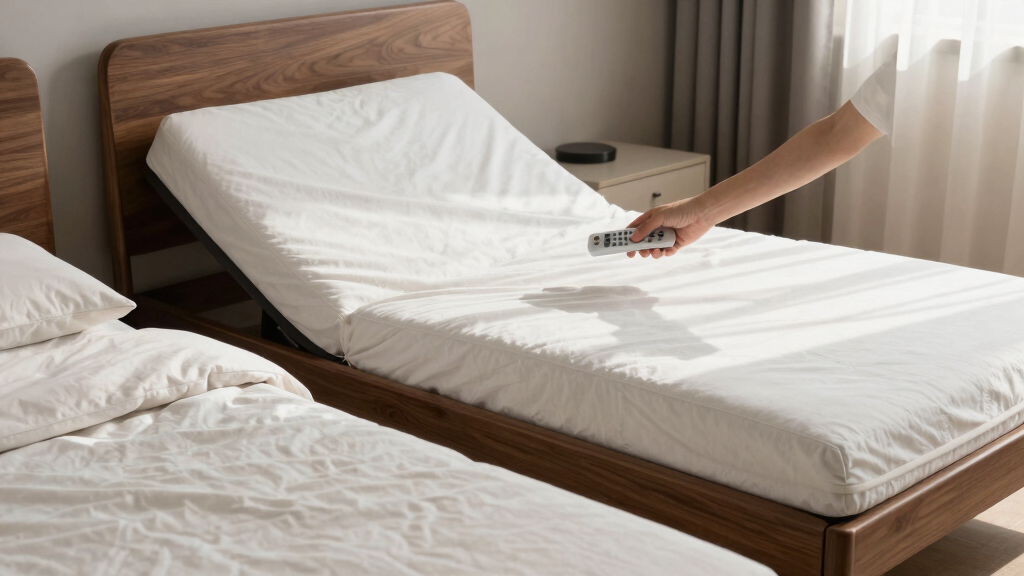
An adjustable bed is a motorized frame designed for home use, letting you raise or lower the head and/or foot of the bed with a remote. Imagine lying back with your head elevated for reading or watching TV, or elevating your legs after a long day. These beds focus on comfort, pain relief, and better sleep posture.
Understanding why adjustable beds matter is crucial because they directly impact your sleep quality and daily comfort. For example, if you suffer from conditions like acid reflux or sleep apnea, the ability to elevate your upper body can reduce symptoms and improve rest. However, there are tradeoffs—such as higher costs and the need for reliable power sources. Choosing an adjustable bed means balancing these benefits against potential limitations, like maintenance or the need for compatible mattresses. This makes it essential to consider your specific health needs and lifestyle when selecting one.

Pipishell Twin XL Adjustable Bed Frame, Electric Bed Base with Head & Foot Incline, USB-A & USB-C Ports, LED Under-Bed Lighting, 4 Leg Height Options, and Easy 3-Step Assembly
- Adjustable Head & Foot Elevation: Raise head up to 65° and feet up to 45°
- Built-in USB Charging Ports: USB-A and USB-C ports on both sides
- LED Under-Bed Lighting: Soft night light for convenience
As an affiliate, we earn on qualifying purchases.
As an affiliate, we earn on qualifying purchases.
Hospital Beds: The Medical Powerhouse with Safety Built In
A hospital bed is a specialized medical device designed for patient safety, mobility assistance, and compatibility with medical equipment. It’s built to be sturdy, with features like adjustable height, side rails, and the ability to lower to a fall-safe level.
Understanding why hospital beds are vital helps clarify their role in healthcare. They aren’t just for comfort—they’re a critical safety tool that prevents falls, facilitates caregiver access, and supports medical procedures. For instance, adjustable height allows caregivers to assist patients without strain, while side rails prevent accidental falls. Features like Trendelenburg positioning can aid in specific treatments or surgeries, and attachment points for IVs or monitors integrate seamlessly into patient care. The tradeoff is that hospital beds often come with higher costs and require specialized mattresses and maintenance, which can impact home use. Recognizing these factors helps determine if a hospital bed is necessary for your situation or if a less intensive option suffices.

AireMed Bed Assist Rails (Set of 2) – Fits Some Metal Hospital Beds – for Repositioning & Getting in and Out of Bed Safely – Hospital Bed Rail, Safety Assist Medical Rail for Seniors & Elderly (Ivory)
- PLEASE READ THIS and watch the video before…
- Check with the Nursing Home or Facility to…
- Crafted from durable 1″ steel construction with an…
As an affiliate, we earn on qualifying purchases.
As an affiliate, we earn on qualifying purchases.
Adjustable Bed vs Hospital Bed: Here’s How They Stack Up
| Feature | Adjustable Bed |
|---|---|
| Primary Use | Home comfort and pain management |
| Design Focus | Comfort, convenience, sleep improvement |
| Features | Head/foot elevation, massage, lighting |
| Cost Range | $700 – $3,000+ |
| Feature | Hospital Bed |
|---|---|
| Primary Use | Medical safety, patient care |
| Design Focus | Safety, medical functionality |
| Features | Height adjustability, side rails, mobility aids |
| Cost Range | $2,000 – $10,000+ |

Marsail NS1 Twin XL Adjustable Bed Base with Massage- Smart Dual Motor Bed Frame with Wireless Remote, 3-Min Assembly, Zero Gravity, Under Bed Lighting, 4 USB Ports
- Smart Preset Positions: Five one-touch modes including Sleep and Anti-Snore
- Vibration Massage: Three-speed full-body massage waves for relaxation
- Dual-Zone Adjustment: Independent or synchronized adjustment for split king
As an affiliate, we earn on qualifying purchases.
As an affiliate, we earn on qualifying purchases.
Latest Trends Making Beds Smarter and Safer
Smart beds are revolutionizing both home and medical settings. For example, sleep tracking, automatic adjustments, and remote controls via smartphones make these beds more versatile. Hospitals are adding pressure redistribution surfaces, fall prevention rails, and safety sensors to protect vulnerable patients.
Understanding these trends reveals how beds are evolving to meet safety and comfort needs. Smart tech can detect changes in sleep patterns or pressure points, alert caregivers to emergencies, and adjust firmness or position automatically. Safety features like fall sensors and pressure alarms are critical for reducing injury risks in vulnerable populations. Eco-friendly materials and customizable firmness are also trending, giving users more comfort options. The rise of home healthcare means hospital-style beds are now more accessible for personal use, especially for aging populations or those with chronic conditions.

Drive Medical Med-Aire Low Air Loss Mattress Replacement System
- Pressure Relief Support: Minimizes air loss with alternating pressure
- Individual Air Cell Design: 20 replaceable 8-inch bladders for stability
- Built-in Pillow Feature: Enhanced head stability and comfort
As an affiliate, we earn on qualifying purchases.
As an affiliate, we earn on qualifying purchases.
Key Facts You Need to Know Before You Buy
Adjustable beds can significantly improve sleep quality and help reduce back or joint pain. According to recent studies, 60% of users report better sleep after switching to adjustable frames. The ability to customize positions allows for targeted relief, which can be especially beneficial for those with chronic pain or mobility issues. However, it’s important to recognize that not all adjustable beds are equal—some may lack durability or smoothness in movement, impacting long-term comfort. On the other hand, hospital beds are crucial for patients with mobility issues, post-surgical recovery, or chronic illnesses, ensuring safety and support. They often include features like side rails and easy-to-clean surfaces that are essential for medical environments. The key is understanding that while adjustable beds enhance comfort, hospital beds prioritize safety and support, with each serving distinct but sometimes overlapping needs.
The global market for adjustable beds continues to grow, driven by aging populations and innovative tech. Safety standards for hospital beds, like those set by FDA and ASTM, keep users protected, especially critical for long-term medical use. Being aware of these standards helps consumers make informed decisions, ensuring they choose beds that meet safety requirements and suit their specific health circumstances.
Your Top Questions Answered: Which Bed Fits Your Needs?
- What’s the main difference? Adjustable beds focus on comfort and sleep, while hospital beds prioritize safety and medical support.
- Can I use a hospital bed at home? Yes, many are designed for home use, especially for long-term care.
- Are adjustable beds safe for long-term use? When equipped with safety features, they are generally safe and can improve sleep health.
- Do hospital beds require special mattresses? Yes, typically pressure-relief or medical-grade mattresses are recommended.
- Which one is more expensive? Hospital beds tend to be pricier, often starting around $2,000, while adjustable beds range from $700 to $3,000+.
Frequently Asked Questions
What’s the main difference between an adjustable bed and a hospital bed?
Adjustable beds are designed mainly for home comfort, allowing you to change positions for better sleep and relief. Hospital beds focus on safety, safety rails, and support for medical needs, often with more robust features.Can a hospital bed be used at home?
Yes, many hospital beds are now available for home use, especially for those with mobility issues or recovering from surgery. They offer safety features but tend to be more expensive and bulky.Are adjustable beds safe for long-term use?
When equipped with safety locks, sturdy frames, and appropriate mattresses, adjustable beds are generally safe and can improve sleep health over time.Do hospital beds require special mattresses?
Yes, pressure-relief or medical-grade mattresses are often recommended to prevent discomfort and skin issues for long-term users.How should I decide which bed is right for me?
Consider your main goal: if comfort and better sleep are your priorities, an adjustable bed is ideal. If safety and medical support are essential, a hospital bed is the better choice.Conclusion
Choosing between an adjustable bed and a hospital bed hinges on your specific needs—whether it’s better sleep or essential safety. Remember, the right bed can transform your daily comfort or recovery experience. Think about what matters most, and don’t be afraid to ask your healthcare provider for guidance.
In the end, a bed isn’t just a place to sleep—it’s a foundation for your well-being. Picture yourself waking up feeling refreshed, supported, and ready to face the day. That’s the goal, whatever your choice.
Pool season Picks
robotic pool cleaners
As an affiliate, we earn on qualifying purchases.