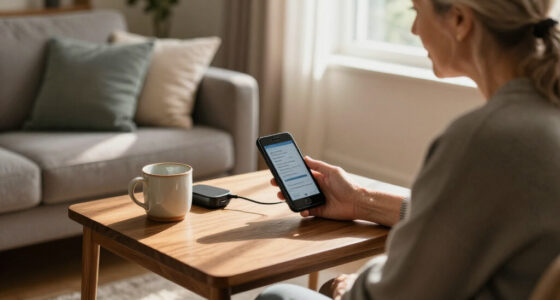

Assistive listening devices for adults help improve hearing clarity and reduce background noise, making conversations and media more accessible. The best overall pick, the Venucast AuraPlex M3 Auracast System, offers versatile multi-user connectivity, ideal for social environments. For those seeking simplicity, the SuperEar Plus SE7500 provides powerful amplification with minimal hassle. However, choosing the right device involves balancing features like sound quality, ease of use, and cost. Continue reading for a detailed breakdown of the top options and what each one offers.

Get everyday helpers delivered free with Prime
- Fast, free delivery on millions of items
- Prime Video, Amazon Music and more included
- Member-only deals all year
Key Takeaways
- The top-ranked Venucast AuraPlex system excels in multi-user environments, making it ideal for social settings.
- Personal amplifiers like the SuperEar Plus and Williams Sound Pocketalker provide straightforward solutions for individual use, with tradeoffs in connectivity.
- Features such as noise cancellation and rechargeable batteries were common differentiators among higher-end models.
- Budget-friendly options like the Reizen Loud Ear deliver basic amplification but lack advanced features.
- Ease of use, especially for seniors unfamiliar with technology, remains a key factor influencing the best picks.
| Venucast AuraPlex M3 Auracast Assistive Listening System |  | Best Overall Auracast System for Medium Venues | Model: AuraPlex M3 | Includes: 1 transmitter, 3 receivers | Technology: Bluetooth LE Audio (Auracast) | VIEW LATEST PRICE | See Our Full Breakdown |
| SuperEar Plus SE7500 Personal Sound Amplifier for Seniors |  | Best Budget-Friendly Amplifier for Everyday Use | Model: SE7500 | Sound Gain: Up to 50+ dB | Battery Life: Up to 80 hours | VIEW LATEST PRICE | See Our Full Breakdown |
| Reizen Loud Ear 110dB Gain Personal Amplifier |  | Best for High Sensitivity and Long-Range Listening | Sensitivity: 120dB | Microphone: Built-in | Earphone Type: Dual | VIEW LATEST PRICE | See Our Full Breakdown |
| Convo Hearing Amplifier for Seniors with Remote Microphone and Noise Cancelling |  | Best for TV Listening and Remote Sound Pickup | VIEW LATEST PRICE | See Our Full Breakdown | |||
| Williams Sound Pocketalker 2.0 Hearing Amplifier |  | Best Simple Amplifier for Ease of Use | VIEW LATEST PRICE | See Our Full Breakdown | |||
| Williams Sound PockeTalker Ultra DUO Sound Amplifier with Headphone & Earbud |  | Best Battery Life | Power Source: 2 AAA alkaline batteries | Battery Life: Up to 100 hours | Audio Sensitivity: 110 dB | VIEW LATEST PRICE | See Our Full Breakdown |
| Williams Sound Pocketalker Ultra Hearing Amplifier with Accessories |  | Best Accessory Bundle | Amplification: Up to 40 dB | Batteries Included: 20 AAA batteries | Microphone Extension Cord: 12 ft | VIEW LATEST PRICE | See Our Full Breakdown |
| Domino Pro Personal Amplifier & Listening System with Neckloop and Earbuds |  | Best Premium | Microphones: Omnidirectional and directional | Noise Reduction: 10-band noise reduction with adaptive feedback cancellation | Connectivity: Wireless transmitter and receiver | VIEW LATEST PRICE | See Our Full Breakdown |
| SuperEar SE5000 Hearing Amplifier for Seniors, Sound Amplifier, Headphones |  | Best Budget Pick | Amplification Range: Up to 50+ dB | Battery Life: Up to 30 hours | Microphone: Swivel microphone | VIEW LATEST PRICE | See Our Full Breakdown |
| Joanbro Personal Sound Amplifier for Seniors – 50dB Gain, Noise Cancelling, 3 Microphone Types, Tone & Volume Control, with Headphones & Earbud | 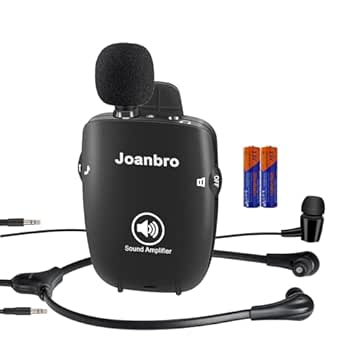 | Best for Versatile Listening Scenarios | Gain: 50 dB additional (108 dB total) | Power Source: 2 AAA batteries (included) | Battery Life: 40 hours of moderate use | VIEW LATEST PRICE | See Our Full Breakdown |
| ConvoAssist Personal Sound Amplifier with Dual Wireless Microphones and Rechargeable Case |  | Best Overall for Ease and Customization | Designed By: Board-certified ENT physician | Microphones: 2 wireless clip-on microphones | Range: Up to 100 feet | VIEW LATEST PRICE | See Our Full Breakdown |
| Retekess TT119 Assistive Listening System, Church Translation (1TX 10RX) |  | Best for Large Venues and Multilingual Settings | Connectivity Technology: Auxiliary, FM, Wireless | Connector Type: 3.5 mm Jack | Special Features: Desktop FM transmitter, Recordable, Long Range, Stereo | VIEW LATEST PRICE | See Our Full Breakdown |
More Details on Our Top Picks
Venucast AuraPlex M3 Auracast Assistive Listening System
This Auracast system stands out for its comprehensive package, including one transmitter and three receivers, making it ideal for venues like churches and classrooms where multiple attendees need clear audio. Compared with traditional FM systems, it leverages Bluetooth LE Audio technology, offering a simpler setup and better integration with modern devices. Its support for select Auracast-enabled hearing aids provides a streamlined experience for users, but the system’s compatibility is limited to certain hearing aid models, which may exclude some users. The impressive 100m line-of-sight range is suitable for venues up to approximately 300 people, but outdoor or heavily obstructed spaces could hinder performance. Overall, this pick makes sense for organizations seeking a flexible, future-proof solution without requiring users to carry bulky equipment.
Pros:- Complete system with transmitter and three receivers simplifies setup
- Utilizes Bluetooth LE Audio for stable, wireless connection
- Supports BYOD — users can connect with their own Auracast-compatible devices
Cons:- Limited to select Auracast-enabled hearing aids, reducing compatibility for some users
- Range may be affected by obstacles, not suitable for outdoor or heavily obstructed environments
Best for: Organizations or venues seeking a modern, easy-to-use assistive listening system for medium-sized spaces with tech-savvy attendees.
Not ideal for: Large outdoor events or stadiums where Bluetooth range may be insufficient or obstructed, and for venues with attendees using non-Auracast hearing aids.
- Model:AuraPlex M3
- Includes:1 transmitter, 3 receivers
- Technology:Bluetooth LE Audio (Auracast)
- Range:Up to 100m / 328ft line-of-sight
- Venue Capacity:Up to ~300 people
- Compatible Hearing Aids:ReSound Nexia, Jabra Enhance Pro 20/30, Beltone Serene, Starkey Edge AI, Oticon Intent, Philips HearLink 9050
Our verdict“This system is ideal for venues wanting a modern, flexible solution that works with current Bluetooth-enabled hearing aids in medium-sized spaces.”
SuperEar Plus SE7500 Personal Sound Amplifier for Seniors
The SuperEar Plus SE7500 is a straightforward personal amplifier that provides up to 50+ dB of sound gain, making it suitable for conversations, TV listening, and outdoor environments. Unlike more advanced hearing aids, it offers a simple, portable design with adjustable volume and noise reduction, making it accessible for seniors who want an easy-to-operate device. While it offers impressive amplification, it lacks the fine tuning and medical validation of a hearing aid, which could be a drawback for users with more severe hearing loss. Its long battery life and included accessories make it a practical choice for everyday use, but the amplification may not be sufficient for those with profound hearing impairments. Overall, this device is well-suited for those seeking a basic, affordable solution without complex features.
Pros:- High sound gain up to 50+ dB enhances hearing in various settings
- Long battery life (up to 80 hours) with auto shut-off
- Complete package with headphones, earbuds, and carry case
Cons:- Not a certified hearing aid, limiting its effectiveness for severe loss
- Design may feel bulky or conspicuous for some users
Best for: Seniors or adults with mild to moderate hearing difficulties needing an affordable, easy-to-use personal amplifier for daily activities.
Not ideal for: Users with severe or profound hearing loss, or those requiring medical-grade hearing aids with advanced features.
- Model:SE7500
- Sound Gain:Up to 50+ dB
- Battery Life:Up to 80 hours
- Batteries:2x AAA (included)
- Includes:Earbuds, headphones, carry case
- Features:Adjustable volume, noise minimization, auto shut-off
Our verdict“This amplifier offers an excellent balance of affordability and ease of use for seniors with mild to moderate hearing needs.”
Reizen Loud Ear 110dB Gain Personal Amplifier
The Reizen Loud Ear amplifier excels in situations requiring high sensitivity, amplifying sounds up to 120dB and capable of picking up audio from as far as 100 feet away. Compared to the SuperEar Plus, it offers higher maximum gain and increased range, making it ideal for outdoor listening or active environments. However, its bulky design and lack of advanced noise reduction features make it less suitable for indoor or noisy settings. This device is primarily intended for personal use and may not serve users with severe hearing loss or those needing discreet devices. Its simplicity and power make it a good choice for users who need to hear distant sounds clearly, but it’s not a substitute for professional hearing aids.
Pros:- Exceptional sensitivity with 120dB gain for distant sounds
- Long-distance pickup up to 100 feet
- Includes batteries and dual earphones for immediate use
Cons:- Bulky and less discreet for daily indoor wear
- Limited to personal use, not a medical hearing device
Best for: Individuals who need to amplify distant sounds in outdoor or large open spaces, especially those with mild to moderate hearing challenges.
Not ideal for: Users with severe hearing loss or those seeking discreet, everyday hearing assistance for indoor environments.
- Sensitivity:120dB
- Microphone:Built-in
- Earphone Type:Dual
- Battery:2 AAA batteries
- Distance:Up to 100 feet
Our verdict“This amplifier is best suited for active outdoor users needing to hear distant sounds clearly, accepting its bulk for power and range.”
Convo Hearing Amplifier for Seniors with Remote Microphone and Noise Cancelling
The Convo hearing amplifier distinguishes itself through its remote microphone and noise-canceling features, making it a solid choice for TV listening and social situations. Its ability to switch between local and remote microphone modes, with a range of 98 feet, outperforms many personal amplifiers like the Williams Sound Pocketalker 2.0, especially in dynamic environments. The ultra-low latency of 16 ms ensures synchronization between audio and video, enhancing TV and media experience. The device’s multiple volume and tone controls add customization, but its complexity might be overwhelming for some seniors preferring simple plug-and-play devices. It’s a versatile option for those who want to improve TV clarity and participate in conversations at a distance, though it may require a learning curve for optimal use.
Pros:- Remote microphone with 98 ft range improves distant listening
- Ultra-low latency (16 ms) synchronizes audio with video
- Multiple volume and tone controls for personalized settings
Cons:- More complex setup may be challenging for some seniors
- Not as portable or discreet as smaller personal amplifiers
Best for: Seniors or adults seeking an advanced, versatile device for TV and social environments with remote listening capability.
Not ideal for: Users who prefer ultra-simple devices with minimal controls, or those with severe hearing loss needing medical-grade solutions.
Our verdict“This device is well-suited for seniors who want enhanced TV and social listening with the flexibility of remote microphone support.”
Williams Sound Pocketalker 2.0 Hearing Amplifier
The Williams Sound Pocketalker 2.0 is designed with simplicity at its core, offering clear amplified sound for seniors needing basic assistance. Its straightforward design prioritizes ease of operation, making it accessible for users uncomfortable with complex controls. Unlike the Convo device, it lacks remote microphone support or extensive customization options but provides reliable amplification suitable for casual or indoor use. The limited technical details, particularly regarding battery life and range, suggest it’s a basic tool rather than a high-performance system. This makes it a reliable choice for those who want an uncomplicated device for daily conversations or TV listening without fuss.
Pros:- Very simple operation, ideal for seniors
- Provides clear, amplified sound
- Designed specifically for elderly users
Cons:- Limited technical specifications and features
- No information on battery life or range, potentially limiting usability
Best for: Elderly users or adults looking for an uncomplicated, plug-and-play hearing amplifier for indoor and casual use.
Not ideal for: Active users needing remote microphone features or advanced noise management in noisy environments.
Our verdict“This amplifier suits seniors who want straightforward, reliable sound enhancement without extra features or complexity.”
Williams Sound PockeTalker Ultra DUO Sound Amplifier with Headphone & Earbud
The standout feature here is up to 100 hours of runtime on two AAA batteries — roughly triple what the Joanbro or SuperEar SE5000 deliver. For adults who want a device they can leave in a pocket for weeks without thinking about power, this option makes the most sense. The removable microphone and belt clip let you point the pickup toward a speaker or a TV, which the Joanbro also offers via its three-mic system, but the PockeTalker does it with less setup fuss. The tradeoff is honest: there is no noise reduction, so busy restaurants will be a struggle compared with the Domino Pro’s 10-band processing. Compared with the newer Williams Sound Pocketalker 2.0, this DUO bundle leans on proven simplicity rather than refinement.
Pros:- Exceptional 100-hour battery life
- Removable microphone adds placement flexibility
- Works with or without hearing aids
- Backed by a 5-year warranty
Cons:- No noise reduction or cancellation of any kind
- Batteries not included in the box
- In-ear-only fit may not suit users who prefer over-ear headphones
Best for: Adults who use their amplifier daily and want the longest possible battery life with minimal maintenance
Not ideal for: Buyers who listen mainly in noisy environments — the absence of noise reduction makes crowded rooms frustrating
- Power Source:2 AAA alkaline batteries
- Battery Life:Up to 100 hours
- Audio Sensitivity:110 dB
- Style:Neck-worn with belt clip
- Controls:External volume and tone dials
- Microphone:Removable
- Warranty:5 years
Our verdict“Choose this if long battery life and a trusted, simple design matter more to you than noise filtering.”
Williams Sound Pocketalker Ultra Hearing Amplifier with Accessories
This version of the Pocketalker Ultra earns its place through sheer completeness: 20 AAA batteries, headphones, a mini earbud, a neck lanyard, and a 12-foot microphone extension cord all come in the box. That extension cord is the quiet star — it lets you place the microphone near a TV or a dinner-table speaker, something the SuperEar SE5000 requires add-on cables to achieve. With up to 40 dB of amplification, it sits between the Joanbro’s 50 dB gain and the more modest SuperEar Plus SE7500, which keeps it comfortable for conversational listening without overwhelming the user. The real limitation is philosophical rather than practical: this is amplification, not medical-grade correction, so anyone with severe hearing loss should be steered toward an audiologist instead. Compared with the PockeTalker DUO, you give up some battery headroom for a far richer kit.
Pros:- Generous bundle with 20 AAA batteries included
- 12-foot microphone extension cord ideal for TV
- Simple adjustable volume and tone controls
- Lightweight ergonomic design that’s easy for seniors to handle
Cons:- Only 40 dB amplification — less gain than the Joanbro or SuperEar SE5000
- Battery-operated with no rechargeable option
- Not suitable as a substitute for medical hearing aids
Best for: First-time buyers who want everything included on day one — batteries, headphones, and a long mic cord for TV listening
Not ideal for: Adults with severe or medically diagnosed hearing loss who need a proper hearing aid, not an amplifier
- Amplification:Up to 40 dB
- Batteries Included:20 AAA batteries
- Microphone Extension Cord:12 ft
- Includes:Headphones, mini earbud, neck lanyard, microfiber cloth, user manual
- Controls:Adjustable volume and tone
- Warranty:5 years
Our verdict“The most complete out-of-the-box package here, best for buyers who don’t want to purchase a single accessory separately.”
Domino Pro Personal Amplifier & Listening System with Neckloop and Earbuds
This is the most sophisticated device in the lineup, and it’s priced accordingly. Where every other pick here is a single wired unit, the Domino Pro splits into a wireless transmitter and receiver, letting you place the mic near the sound source and move freely — a genuine advantage over the cord-bound Joanbro. Its 10-band noise reduction and adaptive feedback cancellation put it a class above the PockeTalker DUO, which has no noise control at all. The telecoil-compatible neck loop is a rare feature: hearing aid wearers with a T-coil setting can stream sound directly through their aids, something only the ConvoAssist in this roundup approaches. The tradeoffs are cost and complexity — pairing and setup demand more patience than a one-dial amplifier, and the 2-year warranty is shorter than Williams Sound’s 5 years.
Pros:- Wireless transmitter/receiver system with 10-band noise reduction
- Telecoil neck loop streams directly to compatible hearing aids
- Complete kit with rechargeable batteries, charger, and travel case
- Directional and omnidirectional microphone modes for different environments
Cons:- Higher price than basic amplifiers in this roundup
- Transmitter pairing and setup add complexity
- Only a 2-year warranty versus 5 years on Williams Sound models
Best for: Hearing aid wearers with telecoil and adults who frequent restaurants, meetings, and other noisy group settings
Not ideal for: Budget-conscious buyers or anyone who wants a grab-and-go single device — the two-piece setup adds cost and steps
- Microphones:Omnidirectional and directional
- Noise Reduction:10-band noise reduction with adaptive feedback cancellation
- Connectivity:Wireless transmitter and receiver
- Hearing Aid Support:Telecoil-compatible neck loop
- Power:Rechargeable batteries with charger and power adaptor
- Includes:Transmitter, receiver, earbuds, neck loop, clip mic, audio cable, travel case
- Warranty:2 years
Our verdict“The premium pick for adults who need real noise filtering and wireless freedom — if the price fits your budget.”
SuperEar SE5000 Hearing Amplifier for Seniors, Sound Amplifier, Headphones
For shoppers who want to try personal amplification without a large investment, the SE5000 is the most accessible entry point in this batch. Its 50+ dB amplification range actually exceeds the Williams Sound Pocketalker Ultra’s 40 dB, so raw loudness isn’t sacrificed at the lower price. The swivel microphone can be aimed toward a conversation partner, and the belt clip makes it genuinely portable around the house or on walks. What you give up is sophistication: unlike the Domino Pro, there’s no noise reduction, and unlike the Joanbro, there’s no interchangeable mic system — just the one built-in swivel. Wired stereo headphones tether you to the unit, and battery life tops out at 30 hours, the shortest run time among these picks.
Pros:- Affordable entry point for trying personal amplification
- 50+ dB amplification, more gain than the Pocketalker Ultra
- Swivel microphone can be aimed at the sound source
- Lightweight with belt clip for portability
Cons:- No wireless connectivity of any kind
- Only 30 hours of battery life on disposables
- Single fixed microphone with no scenario-specific options
Best for: Budget-conscious seniors wanting an affordable first amplifier for conversations and TV at home
Not ideal for: Tech-comfortable users or noisy-environment listeners — no wireless, no noise cancellation, and the shortest battery life here
- Amplification Range:Up to 50+ dB
- Battery Life:Up to 30 hours
- Microphone:Swivel microphone
- Includes:Amplifier, stereo headphones, earbuds, AAA battery, belt clip
- Compatibility:Disposable earpad covers and extension cables
- Use Case:Indoor and outdoor ambient sound amplification
Our verdict“A sensible low-cost starting point that prioritizes loudness and simplicity over features.”
Joanbro Personal Sound Amplifier for Seniors – 50dB Gain, Noise Cancelling, 3 Microphone Types, Tone & Volume Control, with Headphones & Earbud
The Joanbro’s differentiator is its three interchangeable microphones: one for close daily conversation, one for group settings, and a 19-foot cable version for TV watching from across the room. No other wired device here matches that flexibility — the SuperEar SE5000 offers a single fixed mic, and the Pocketalker Ultra DUO includes just one removable option. With 50 dB of additional gain (108 dB total) plus noise cancellation and automatic gain control, it beats the Pocketalker Ultra’s 40 dB while adding background-noise filtering the PockeTalker DUO lacks entirely. The tactile button controls are a thoughtful touch for users with low vision. Real drawbacks exist: the fully corded design means you’re physically tethered, unlike the wireless Domino Pro, and careless volume adjustment can produce harsh feedback.
Pros:- Three interchangeable microphones for daily, group, and TV listening
- 50 dB gain with noise cancellation and automatic gain control
- Tactile tone and volume buttons for easy operation
- Complete kit including batteries, earbud, anti-drop headphones, and extension cables
Cons:- Fully corded — less convenient than wireless systems like the Domino Pro
- Volume needs careful tuning to avoid feedback whine
- Not appropriate for significant hearing loss
Best for: Seniors who listen in varied settings — one-on-one chats, meetings, and TV — and want one device to cover all three
Not ideal for: Users who want wireless freedom or have significant diagnosed hearing loss requiring medical-grade amplification
- Gain:50 dB additional (108 dB total)
- Power Source:2 AAA batteries (included)
- Battery Life:40 hours of moderate use
- Special Features:Noise cancellation, automatic gain control
- Microphones:3 interchangeable types for daily, group, and TV use
- Extension Cable:6.6 ft / 2 m
- TV Microphone Cable:19 ft / 6 m
Our verdict“The most adaptable wired amplifier in the lineup for adults whose listening situations change throughout the day.”
ConvoAssist Personal Sound Amplifier with Dual Wireless Microphones and Rechargeable Case
The ConvoAssist stands out by offering a straightforward, plug-and-play experience designed specifically for clarity in conversations and TV listening. Compared to the SuperEar Plus SE7500, which emphasizes raw amplification, ConvoAssist focuses on speech intelligibility through professional design, making it more suitable for those with mild to moderate hearing challenges. Its automatic pairing, no app needed, and long battery life with a portable magnetic case make it highly convenient. However, it’s not a medical device, so users with severe hearing loss might find it insufficient. The dual microphones allow following multiple speakers, but the requirement for wearing clip-on microphones can be cumbersome for some users.
Pros:- Designed by a board-certified ENT physician for improved speech clarity
- No apps or complex pairing—plug-and-play setup
- Includes two microphones for multi-speaker environments
- Long 8-hour battery life with portable magnetic charging case
Cons:- Not suitable for profound hearing loss — it’s a sound amplifier, not a medical device
- Requires wearing clip-on microphones, which might be inconvenient for some
Best for: Adults seeking a simple, effective personal amplifier for conversations and TV, especially those who prefer wireless ease.
Not ideal for: Individuals with significant hearing loss needing medical-grade hearing aids or those uncomfortable with wearing microphones.
- Designed By:Board-certified ENT physician
- Microphones:2 wireless clip-on microphones
- Range:Up to 100 feet
- Battery Life:Up to 8 hours per charge
- Charging:Magnetic portable case with additional recharges
- Earbuds:Includes wired earbuds with multiple ear tip sizes
Our verdict“This device makes the most sense for adults who want an easy-to-use, portable personal sound amplifier for casual listening and conversations.”
Retekess TT119 Assistive Listening System, Church Translation (1TX 10RX)
The Retekess TT119 excels in delivering long-range, clear audio across large spaces like churches or conference halls. It outperforms portable personal amplifiers like the Williams Sound Pocketalker 2.0 in coverage, supporting distances up to 300 meters and multiple channels for simultaneous interpretation. Its simple one-click mute and recording features make it practical for event settings, and its support for 17 channels enhances multilingual communication. The tradeoff involves its bulkier size and reliance on external power sources, along with the need for AA batteries. It’s less suited for everyday personal use but ideal for organized gatherings.
Pros:- Supports long-range transmission up to 300 meters
- Multiple channels (17) for simultaneous language interpretation
- Easy to operate with one-click mute and recording functions
- Supports various audio sources via auxiliary, FM, and wireless connections
Cons:- Requires external recording device for capturing audio
- Bulkier, less portable than personal amplifiers
- Uses AA batteries, requiring replacements over time
Best for: Organizations hosting large, multilingual events or religious services needing reliable long-distance audio transmission.
Not ideal for: Individuals seeking portable, personal listening devices for daily conversations or TV listening, due to its size and setup complexity.
- Connectivity Technology:Auxiliary, FM, Wireless
- Connector Type:3.5 mm Jack
- Special Features:Desktop FM transmitter, Recordable, Long Range, Stereo
- Number of Channels:17
- Power Source:Corded Electric
- Item Dimensions:17.91 x 12.2 x 10.63 inches
Our verdict“This system is best suited for large venues and organized events that need dependable, long-range audio coverage, not for everyday personal use.”
How We Picked
Our evaluation focused on performance, usability, build quality, and value. We prioritized devices that effectively amplify speech and reduce background noise, while remaining intuitive for adults of varying tech comfort levels. Connectivity options, battery life, and portability also played critical roles. Products were ranked based on how well they balanced these factors, with a preference for models that offered reliable performance in real-world situations. We excluded options that lacked user-friendly features or had poor sound quality to ensure practical recommendations.Factors to Consider When Choosing Assistive Listening Devices For Adults
When selecting an assistive listening device for adults, understanding key factors can help you find a model that fits your needs and lifestyle. Different environments, hearing levels, and tech comfort influence which features are most important. Considering these factors carefully can prevent costly mistakes and ensure lasting satisfaction with your choice.Sound Quality and Amplification
Clear sound and adequate amplification are fundamental. Look for devices with adjustable gain controls and noise reduction features to customize hearing in noisy settings. Higher quality models tend to provide more natural sound, helping avoid the common pitfall of overly artificial amplification that can cause discomfort or distortion.
Ease of Use and Controls
For many adults, especially seniors, intuitive operation is critical. Devices with simple interfaces, minimal buttons, and straightforward controls reduce frustration. Wireless connectivity and remote controls can add convenience but might complicate use for some users, so weigh these features against ease of operation.
Battery Life and Charging
Long-lasting batteries or rechargeable options prevent interruptions during daily use. Consider how often you’ll need to recharge or replace batteries—models with quick charging or extended battery life are preferable for active users. Avoid devices with limited runtime that require frequent interruptions for power recharging.
Portability and Discreetness
Compact, lightweight devices are easier to carry and less noticeable, which can boost user confidence. However, smaller units might have fewer features or longer recharge times. Balance portability with functionality based on how and where you’ll use the device most often.
Connectivity and Compatibility
Many modern devices support Bluetooth or wireless connections to TVs, smartphones, or microphones. These features can significantly enhance usability but may add complexity or cost. Ensure compatibility with your existing devices and consider whether you prefer wired or wireless options for your environment.
Frequently Asked Questions
Can assistive listening devices fully replace hearing aids?
Assistive listening devices are designed to augment hearing but typically do not replace hearing aids, especially for severe hearing loss. They can be very effective for specific situations like watching TV or in small groups, but for comprehensive hearing correction, hearing aids or cochlear implants may still be necessary. These devices often serve as supplementary tools, improving clarity in particular contexts without addressing all types of hearing loss.
Are wireless models more reliable than wired ones?
Wireless assistive listening devices offer greater flexibility and ease of use, especially in dynamic environments where movement is common. However, they depend on batteries and wireless signals, which can sometimes introduce connectivity issues or interference. Wired options tend to be more straightforward and less prone to technical glitches but sacrifice portability and convenience. Your choice depends on your lifestyle and environment.
What is the typical cost range for quality assistive listening devices?
Prices vary widely based on features, with basic personal amplifiers starting around $50 to $100, while more sophisticated systems with multiple receivers and advanced noise reduction can cost $300 or more. Investing more generally yields better sound quality, durability, and additional features like Bluetooth connectivity. Consider your specific needs and how often you’ll use the device when evaluating whether to spend more.
How important is battery life for daily use?
Battery life is a critical factor, especially for daily or extended use. Devices with short battery life can be inconvenient, requiring frequent recharging or battery replacements. Rechargeable units with long runtime simplify daily use and reduce ongoing costs. Always check the estimated battery life and recharge time before making a purchase to ensure it fits your routine.
Are there any common mistakes to avoid when choosing an assistive listening device?
One common mistake is selecting a device based solely on price without considering usability or fit for your specific hearing needs. Another is overlooking compatibility with your existing equipment, like TVs or smartphones. Failing to test sound quality in real-world scenarios can lead to dissatisfaction. Prioritizing features that suit your environment and comfort level can prevent these pitfalls and result in a more satisfying purchase.
Conclusion
The best overall choice for most adults is the Venucast AuraPlex M3 Auracast System due to its versatile multi-user setup and reliable performance. For those on a budget or seeking simplicity, the SuperEar Plus SE7500 offers straightforward amplification with excellent value. If you prefer premium features and advanced connectivity, models like the ConvoAssist or the Retekess TT119 excel. Beginners or less tech-savvy users should prioritize devices with intuitive controls, while those with specific needs like TV listening or group settings should choose products tailored for those environments.Columbus Day / Indigenous Peoples' Day Picks
long weekend sales
As an affiliate, we earn on qualifying purchases.