TL;DR

Get everyday helpers delivered free with Prime
- Fast, free delivery on millions of items
- Prime Video, Amazon Music and more included
- Member-only deals all year
A headline reports research exploring virtual reality to help wheelchair users manage falls. No article body was available, so the researchers, study methods, findings and next steps cannot be confirmed.
A report headline describes virtual reality research intended to help wheelchair users manage falls, but details of the project and its results are not available. The researchers, study design, participants and any evidence of benefit therefore remain unconfirmed.
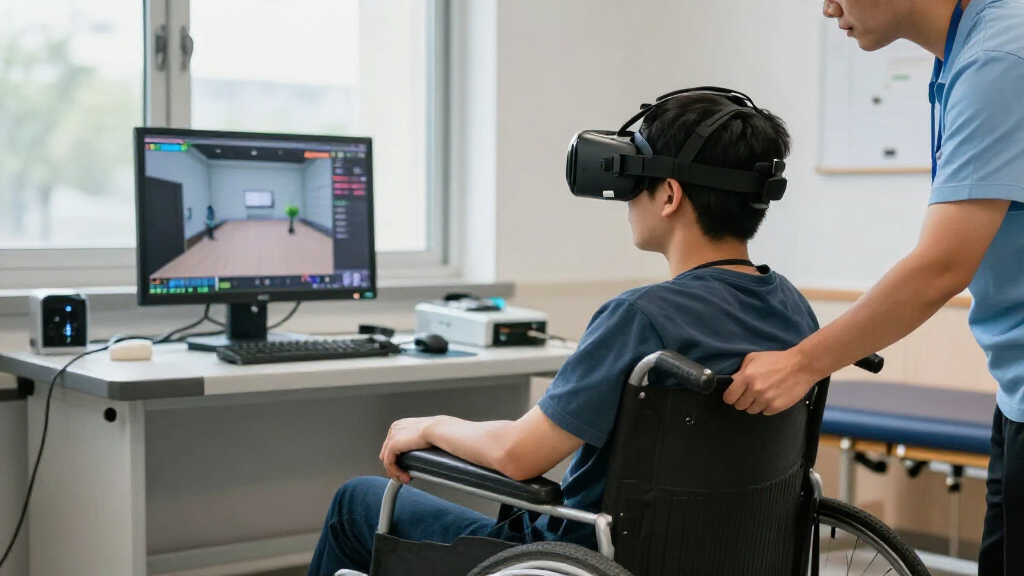
The reported development is a research effort linking virtual reality (VR) with fall management for people who use wheelchairs. The headline identifies the subject and intended area of support, but does not establish whether the work involves training, a simulated response to a fall, prevention strategies or another approach.
No information is available about where the research took place, who conducted it, how many people took part or whether it has been published. There are also no reported results, measurements or comparisons. It would be premature to say that VR has been shown to make falls safer or less frequent for wheelchair users.
The available information does not say whether the project is a proposed study, a trial in progress or completed research. It also does not identify a device, software platform, clinical partner or timetable. These gaps mean the headline should be treated as a report of a research topic, not evidence that a tested tool is ready for use.
Research brief · Mobility & safety
Virtual Reality Research to Help Wheelchair Users Manage Falls
A report headline points to research linking virtual reality with fall management. The study details and results are not available, so its methods, status and potential benefits remain unconfirmed.
What is established
The headline identifies a research topic: virtual reality and fall management for wheelchair users.
What is unknown
Who conducted the work, what was tested, and whether any findings are available.
01 / The available picture
A topic, without the study record
The supplied report contains no article body. The headline alone cannot establish the project’s design, participants, setting or outcomes.
Known
Research connects VR and falls
The headline describes research intended to help wheelchair users manage falls.
Unconfirmed
Approach and goals
It is not clear whether the work concerns prevention, practice, response after a fall, or another form of support.
Unavailable
Evidence and timing
No methods, results, publication details or timetable are included in the available report.
02 / Why the distinction matters
Fall prevention is not fall management
These goals describe different needs and call for different measures. The headline does not say which one researchers are addressing.
Interpret with care
“A possible use of VR is not a confirmed description of this project.”
A simulated setting might offer a controlled place to practise, but that is only one possible interpretation of the topic.
03 / Research details to look for
What would clarify the report?
A study record or full article could establish what happened and whether the work supports any practical conclusions.
Identify the team
Researchers, institution and study location.
Describe the study
Aims, methods, participants and VR approach.
Report outcomes
Measures, comparisons, limitations and findings.
Confirm its status
Whether planned, underway, completed or published.
04 / Reader questions
What can be answered now?
The report supports a narrow description of the topic, with key research questions still open.
What is the research about?
The headline describes VR research intended to help wheelchair users manage falls. No further project details are provided.
Have results been reported?
No findings are included. The work’s status and any evidence of benefit cannot be confirmed.
How might VR be used?
The report does not specify an approach, such as training, simulation or prevention.
Who conducted the work?
The research team and institution are not identified in the available information.
05 / Takeaway
Awaiting verifiable details
Until a full report or study record is available, this should be treated as a research topic rather than evidence that a tested tool is ready for use.
Next useful source
Full report or study record
Look for the research aims, team, methods and current status.
If results exist
Review the evidence
Check participant numbers, outcome measures, limitations and publication status.
Until then
Keep conclusions open
Safety, accessibility, effectiveness and suitability remain unknown.
Potential Support During Falls
Falls can pose practical safety concerns for wheelchair users, and a research approach focused on how to manage them could be relevant to people who use wheelchairs, caregivers and rehabilitation professionals. If a VR program is being studied as a way to practise responses in a simulated setting, it could offer a controlled environment for learning. However, that possibility is an interpretation of the topic, not a confirmed description of this particular research.
The distinction between fall prevention and fall management matters. A project might focus on reducing risk, responding after a fall, or helping people rehearse a particular skill; those are different aims and would require different evidence. The available headline does not specify which outcome the researchers are targeting.
For readers, the immediate significance is that the topic has been identified as an area of research, while its practical value is still unknown. Without reported methods and findings, there is no basis to judge whether the approach is safe, accessible, effective or suitable for people with different mobility needs.
Popular right now

Vitamix 5200 Professional-Grade Blender, 64 oz. Container, Black

KitchenAid Classic Series 4.5 Quart Tilt-Head Stand Mixer (K45SS), Onyx Black

Breville BES870XL Barista Express Espresso Machine, Brushed Stainless Steel
As an affiliate, we earn on qualifying purchases.
What the Headline Establishes
The only confirmed detail is the subject named in the headline: virtual reality research connected to helping wheelchair users manage falls. The supplied report contains no article body, so it does not provide the background needed to place the work in a research timeline or describe earlier studies.
That limitation also prevents reliable identification of what “manage falls” means in this case. It could refer to preparation, a response during or after an incident, or another aspect of safety, but none of those interpretations is confirmed. No claim about the project’s aims beyond the headline should be treated as established.
There is likewise no information on whether wheelchair users helped design the work, what accessibility features were considered, or whether the research involved a VR headset or another form of simulation. Those details would help readers understand how the project relates to daily life, but they cannot be supplied from the available report.
Study Details Still Missing
The central uncertainty is what the researchers actually tested. The report provides no names, institution, location, publication, study protocol or description of participants. It is not clear whether any wheelchair users took part or whether the work is still at the planning stage.
There are also no findings to assess. The available information does not say whether researchers measured confidence, skills, fall-related outcomes, usability or adverse effects, nor whether they compared VR with another form of instruction. No conclusions about effectiveness or safety can be drawn.
Because the study status and timing are missing, it is also unknown when further results might appear. No direct quote or researcher statement is available, so none is included here.
Awaiting Research Information
The next useful step is access to the full report or a study record that identifies the research team, aims, methods and current status. If the project has produced results, readers would need details on participant numbers, measures, limitations and whether the findings have been reviewed or published.
Until those details are available, the development can be described only as research reported under a headline about VR and fall management for wheelchair users. Whether it leads to a practical tool, and what evidence might support its use, remain open questions.
Source: rss
Key Questions
What is the reported research about?
The headline describes virtual reality research intended to help wheelchair users manage falls. It does not provide further details about the research.
Have the researchers reported results?
No findings are included in the available report. It is not possible to confirm whether the work is ongoing or complete, or whether it has shown any benefit.
How might virtual reality be used in the project?
The report does not explain the VR approach. It does not say whether the project involves training, simulation, prevention or another form of support.
Who conducted the research?
The research team and institution are not identified in the available information.
Source: news.google.com