TL;DR

Get everyday helpers delivered free — and shop member deals
- Fast, free delivery on millions of items
- Access to Prime Big Deal Days deals on October 6–7
- Prime Video, Amazon Music and more included
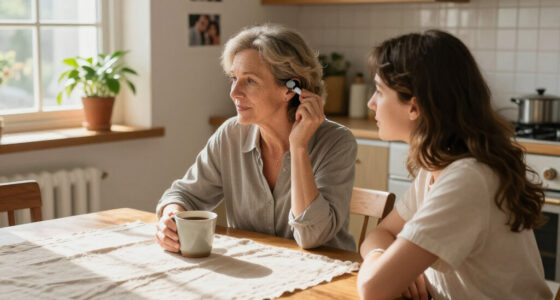
A 2025 study of 567 older adults in rural South Africa found that hearing loss was associated with more than twice the odds of dementia, according to geriatrician Brent Tipping. The study does not establish cause and effect or show that treating hearing loss prevents dementia, but it adds to calls to identify sensory problems as part of older adults’ care.
A 2025 study of 567 older adults in rural South Africa found that participants with hearing loss had more than twice the odds of dementia, according to geriatrician Brent Tipping, a co-author of the research. The finding, revisited in a Medical Xpress report published Oct. 6, 2026, highlights hearing and vision as issues to address in older people’s care, but does not prove hearing loss causes dementia or that treating it prevents the condition.
The study examined the relationship between hearing, vision and dementia among older adults in Agincourt, Mpumalanga. Participants were part of HAALSI, the Health and Aging in Africa: A Longitudinal Study of an INDEPTH Community in South Africa. The research was published in the journal Alzheimer’s & Dementia in 2025.
Tipping also points to visual impairment, affecting both near and distance vision, as a factor associated with dementia risk in the report. The study’s results are associations, not evidence that sensory impairment directly produces dementia. Nor does the report establish that hearing aids or other treatment can prevent it.
The report places sensory health alongside other areas that can be addressed over a lifetime, including management of blood pressure, cholesterol and diabetes, physical activity and limiting excessive alcohol use. Tipping says clinicians reviewing a patient’s confusion or daytime difficulties may also examine whether sleeping medication is contributing. Persistent or worsening memory changes can have multiple explanations and need assessment rather than assumption.
Hearing Care as Part of Dementia Risk
The finding matters because hearing problems can be missed or treated as a separate quality-of-life concern, while the study suggests they may also be relevant when considering brain health and dementia risk. That makes questions about hearing and vision useful within broader health conversations with older adults. The research does not, however, establish that restoring hearing changes a person’s dementia risk.
The report also connects prevention to social conditions and care capacity. The Lancet Commission estimates that addressing 14 modifiable risk factors could prevent or delay around 45% of dementia cases worldwide. That estimate covers multiple factors; it is not a claim about hearing loss alone. Unequal access to quality education is another concern highlighted in the report, particularly in South Africa.
When dementia develops, its effects extend beyond the person diagnosed. Family members may take over driving, meals and medication, and can face substantial demands as care needs grow. Identifying health and support needs earlier may help guide planning, although the report does not quantify how hearing interventions would affect dementia outcomes or caregiver burden.
As an affiliate, we earn on qualifying purchases.
The South African Study
The research by Muqi Guo and colleagues drew on 567 older adults in Agincourt, a rural area of Mpumalanga, and the HAALSI population study. Its subject was the relationship between sensory impairment and dementia risk in that community. The Medical Xpress report describes the work as pointing to the importance of hearing and vision interventions for overall brain health, while explicitly noting that it does not establish direct causation or prevention through treatment.
The wider report describes dementia prevention as a lifelong effort, rather than a single intervention begun late in life. Tipping says learning can continue through activities a person enjoys; crosswords and sudoku are not necessary. He also uses the image of an overloaded plate to explain how responsibilities, anxiety and poor sleep can affect attention, while stressing that forgetfulness can have more than one explanation.
Specialist access is a constraint in South Africa. Tipping says there are only two funded training positions nationally for geriatric medicine. Wits describes its Division of Geriatric Medicine as the largest training and service-delivery center for the specialty in sub-Saharan Africa. The report says specialist assessment can take time because clinicians consider coexisting conditions, daily functioning and support at home.
“The patients have layers of complexity.”
— Dr. Brent Tipping
As an affiliate, we earn on qualifying purchases.
What the Study Cannot Establish
The reported association does not show whether hearing loss contributes to dementia, dementia-related changes affect hearing or other factors influence both. The supplied report does not give a detailed account of the study design, follow-up period or the comparison group behind the statement that dementia odds more than doubled. Those details are needed to interpret the estimate fully.
It is also not known from this study whether hearing aids or other interventions reduce dementia risk, or what effect visual treatment might have on cognitive outcomes. The report offers no intervention trial results or individual-level prediction. The finding should not be read as a diagnosis or as proof that a person with hearing loss will develop dementia.
visual impairment aids for elderly
As an affiliate, we earn on qualifying purchases.
As an affiliate, we earn on qualifying purchases.
How Clinicians May Apply the Finding
The report does not announce a new clinical guideline or a scheduled follow-up study. For now, its immediate implication is to keep hearing and vision in view when assessing older adults’ health, alongside other risk factors and changes in memory or daily functioning. Questions about sensory difficulties can be raised with a qualified health professional, who can assess them in the context of an individual’s needs.
Further research would be needed to establish how the association varies across populations and whether treating sensory impairment affects dementia outcomes. The source provides no timetable for such studies. In South Africa, the report also points to limited geriatric training capacity and the need for services that can assess older people and support their families.
dementia prevention hearing devices
As an affiliate, we earn on qualifying purchases.
As an affiliate, we earn on qualifying purchases.
Key Questions
Does hearing loss cause dementia?
The study does not establish cause and effect. It found an association between hearing loss and higher dementia odds among 567 older adults in rural South Africa.
Did the research show that hearing aids prevent dementia?
No. The report does not provide evidence that hearing aids or other hearing treatments prevent dementia. It says the findings point to the relevance of hearing and vision interventions for brain health, but the prevention question remains unresolved.
Who took part in the study?
The researchers examined hearing, vision and dementia among 567 older adults in Agincourt, Mpumalanga, drawn from the HAALSI study. The findings appeared in Alzheimer’s & Dementia in 2025.
What other factors does the report mention?
The report discusses managing blood pressure, cholesterol, diabetes and weight, staying active, avoiding excessive drinking, sleep and lifelong learning. These are broader considerations; the study did not test them as a combined prevention program.
Source: rss
Halloween Picks
halloween
As an affiliate, we earn on qualifying purchases.