
TL;DR

Get everyday helpers delivered free with Prime
- Fast, free delivery on millions of items
- Prime Video, Amazon Music and more included
- Member-only deals all year
Assistive listening devices (ALDs) are electronic tools that boost hearing clarity in noisy or large spaces. Recent advances include wireless tech and smartphone integration, making them more discreet and user-friendly. Choosing the right ALD depends on your environment and hearing needs.
Imagine sitting in a busy restaurant or a crowded lecture hall, struggling to catch every word. That frustration is exactly what assistive listening devices aim to fix. These smart gadgets turn up the volume on speech, cut through background noise, and help you stay connected. Whether you wear hearing aids or not, understanding how these devices work can open up a world of clearer conversations and fuller participation.
In this guide, you’ll learn what types of ALDs exist, what recent tech breakthroughs have made them better, and how to choose one that fits your lifestyle. Clearer hearing isn’t just about technology — it’s about reclaiming independence and dignity in everyday moments.
Choose ALDs based on your typical environment — whether it’s a noisy restaurant, classroom, or theater.
Wireless and Bluetooth features are now standard, making streaming from your devices seamless and discreet.
Proper fitting and training maximize the benefits of ALDs, so consider consulting an audiologist.
ALDs complement hearing aids and cochlear implants but are not a replacement.
Recent tech improvements focus on miniaturization, noise reduction, and seamless integration, boosting usability.
What Are Assistive Listening Devices and Why Do They Matter?
Assistive listening devices (ALDs) are electronic tools designed to boost sound quality for people with hearing challenges. Think of them as amplifiers for specific situations — like a personal megaphone for your ears. They deliver clearer speech, drown out distracting noises, and help you catch every word in busy environments.
For example, if you’re at a family gathering and the TV is loud but your hearing isn’t as sharp, an ALD can stream sound directly to your ears, making conversations easier. They serve as supplements to hearing aids or cochlear implants, filling in gaps and reducing listening fatigue.
Understanding how ALDs fit into your hearing toolkit can mean the difference between missing out and fully participating.
assistive listening device wireless Bluetooth
As an affiliate, we earn on qualifying purchases.
As an affiliate, we earn on qualifying purchases.
The Different Types of Assistive Listening Devices — Which One Fits Your Life?
There’s no one-size-fits-all with ALDs. The right device depends on where and how you need to hear better. Here’s a quick rundown of common types:
| Type | Best For | How It Works |
|---|---|---|
| Personal Amplifiers | One-on-one conversations, small groups | Portable devices that amplify sound directly into earphones or earbuds |
| FM Systems | Classrooms, large venues | Radio waves transmit sound from a microphone to a receiver worn by the user |
| Infrared Systems | Theaters, private rooms | Infrared light beams carry sound, suitable where privacy is needed |
| Loop (Induction) Systems | Public venues, hearing aid users | Magnetic fields transmit sound to hearing aids equipped with telecoils (T-coils) |
| Bluetooth Devices | Streaming from smartphones, TVs | Wireless connection for direct audio streaming |
For instance, if you frequently attend large meetings, an FM system might be ideal. Meanwhile, Bluetooth-enabled devices work great for streaming TV audio directly to your hearing aids or earbuds, minimizing background noise.
Choosing the right type hinges on your environment, hearing needs, and lifestyle.
As an affiliate, we earn on qualifying purchases.
What’s New? Latest Tech That Makes ALDs Smarter and Smaller
Modern ALDs are shrinking and becoming more connected. Wireless tech, especially Bluetooth, is now standard, making streaming from your phone or TV effortless. Imagine hearing a lecture and just tapping your phone to switch between sources — that’s today’s reality.
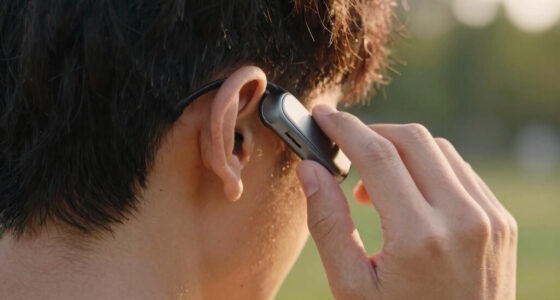
Miniature devices now fit discreetly behind ears or clip onto clothing. They’re less bulky, more comfortable, and difficult to notice. Plus, new noise reduction algorithms and directional microphones sharpen speech and cut out clutter. This means clearer conversations even in bustling places like cafes or shopping malls.
Most importantly, many ALDs now sync directly with hearing aids and cochlear implants, creating a seamless listening experience. This integration allows the device to automatically adjust to your needs, reducing manual fiddling and frustration.
As an affiliate, we earn on qualifying purchases.
How to Pick the Perfect ALD — 4 Simple Steps
- Assess your typical listening environments: Are you in noisy restaurants, large classrooms, or quiet meetings?
- Identify your hearing needs: Do you need help with speech clarity, or do you want to stream media directly?
- Check compatibility: Do you wear hearing aids with T-coils or Bluetooth? Does the device connect easily with your phone or TV?
- Try before you buy: Test different models, ask for demonstrations, and see how comfortable and intuitive they feel.
For example, if you frequently visit noisy cafes, a Bluetooth-enabled personal amplifier with noise reduction might serve you best. If you’re in a classroom, an FM system used with your hearing aids can make all the difference.
Making an informed choice means matching the device to your environment, hearing needs, and daily habits.
infrared assistive listening system
As an affiliate, we earn on qualifying purchases.
As an affiliate, we earn on qualifying purchases.
The Real Benefits — Why ALDs Can Change Your Life
Imagine catching every word in a busy restaurant or hearing your grandchild’s laughter across the room. That’s what ALDs can do for you. They turn a sometimes frustrating experience into a moment of connection and joy.
Many users report feeling less exhausted after social gatherings, because they don’t strain to hear. They participate more confidently in conversations, work meetings, and family events. ALDs don’t just improve hearing — they rebuild independence and dignity.
With recent advances, these devices are more discreet, easier to operate, and more connected than ever. That means more comfort and less fuss, making better hearing part of your everyday life.
Frequently Asked Questions
What is the main difference between hearing aids and assistive listening devices?
Hearing aids amplify all sounds for your entire ear, helping with overall hearing. ALDs, on the other hand, focus on specific environments or situations, boosting speech clarity or streaming audio directly to your ears.
How do I know which ALD is right for me?
Start by considering where you most struggle — noisy restaurants, large classrooms, or watching TV. Consult with an audiologist who can recommend devices tailored to your hearing loss, lifestyle, and existing equipment like hearing aids or cochlear implants.
Are assistive listening devices covered by insurance?
Coverage depends on your country and insurance plan. Many programs and health plans offer subsidies or partial coverage, especially if prescribed or recommended by a healthcare professional. Check with local providers or agencies for specifics.
Can I use ALDs if I already have hearing aids?
Yes. Many ALDs are compatible with hearing aids equipped with telecoils (T-coils) or Bluetooth. This integration can create a more seamless listening experience, especially in public venues or while streaming media.
Are ALDs easy to operate?
Most modern ALDs are designed for user-friendliness, with simple controls and clear instructions. Many users find minimal training sufficient, but consulting an audiologist can help you learn how to get the most out of your device.
Conclusion
Assistive listening devices aren’t just gadgets; they’re keys to reconnecting with the world around you. Picking the right one can turn everyday challenges into moments of clarity and confidence. Remember, better hearing starts with understanding your options and choosing what fits your life best.
Picture yourself in a lively café, effortlessly catching every word. That’s the power of a well-chosen ALD — a small device with a big impact. So, take the time to explore your options. Your voice and presence matter more than ever.
Halloween Picks
halloween
As an affiliate, we earn on qualifying purchases.