
The best amplified phones for hearing loss depend on whether you need louder sound, speech captions, or simple controls. My best overall pick is the Panasonic KX-TGM450S, which pairs a 50 dB volume boost with Slow Talk and a visual ringer. For captioned calls, the Hamilton CapTel 840i displays spoken words as text, while the VTech CareLine SN5127/SN5107 offers a practical two-handset setup for shared spaces. The main tradeoffs are corded stability versus cordless freedom, added features versus ease of use, and amplification versus captioning. Read on for the full breakdown and advice on choosing the right style for your hearing and calling habits.

Get everyday helpers delivered free with Prime
- Fast, free delivery on millions of items
- Prime Video, Amazon Music and more included
- Member-only deals all year
Key Takeaways
- Amplification and captioning solve different problems: Panasonic‘s KX-TGM450S emphasizes louder, slower audio; Hamilton CapTel models add text for calls that remain hard to understand.
- The Panasonic KX-TGM450S stands apart on call adjustments: its 50 dB boost and Slow Talk give users more ways to manage incoming speech than a basic amplified handset.
- Combo phones trade a simpler setup for more flexibility: the Clarity E814CC and VTech SN5147 pair corded and cordless options, while single-handset models keep the setup more straightforward.
- Household layout affects the best pick: the VTech CareLine two-handset system suits more than one calling location; a corded model with photo speed dial can suit someone who wants a fixed, familiar phone.
- Not every buyer needs a full phone system: the Clarity P300 is a simpler amplification-focused choice, while captioning models add text-based support for calls that volume alone may not clarify.
| VTech CareLine SN5127 and SN5107 Two-Handset Amplified Cordless Senior Phone System | 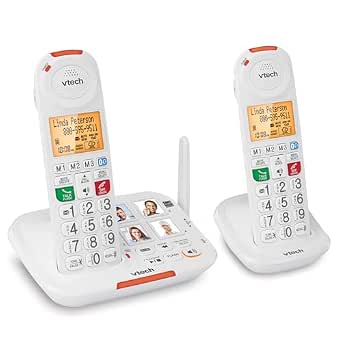 | Best for Two-Room Coverage | Telephone type: Cordless | Handsets: 2 | Audio booster: Up to 50 dB | VIEW LATEST PRICE | See Our Full Breakdown |
| Hamilton CapTel 840i Large Button Captioned Telephone |  | Best for Following Conversations with Captions | Phone type: Corded | Volume boost: Up to 40 dB | Caption options: Automatic and assisted with live operator | VIEW LATEST PRICE | See Our Full Breakdown |
| Clarity E814CC Amplified Corded/Cordless Combo Phone with Answering Machine |  | Best Corded-and-Cordless Combination | Phone setup: Corded and cordless combination | Dialer: Dual keypad | Answering system: Digital; up to 18 minutes of recording | VIEW LATEST PRICE | See Our Full Breakdown |
| Clarity Phone D712 DECT 6.0 Cordless Landline Phone with Answering Machine |  | Best for Hearing-Aid Compatibility | Phone type: DECT 6.0 cordless landline | Sound boost: 30 dB | Hearing aid compatibility: T-Coil compatible | VIEW LATEST PRICE | See Our Full Breakdown |
| VTech SN5147 Amplified Corded/Cordless Senior Phone |  | Best for Power-Outage Resilience | Phone setup: Corded base with 1 cordless handset | Audio boost: Up to 50 dB | Ringer volume: Up to 90 dB | VIEW LATEST PRICE | See Our Full Breakdown |
| Amplified Corded Landline Phone for Seniors with Photo Speed Dial, Large Buttons, and Speakerphone |  | Best for Photo Speed Dial | Power source: Corded electric | Line operation: Single-line | Maximum handset gain: 80 dB | VIEW LATEST PRICE | See Our Full Breakdown |
| Clarity D704 Amplified Cordless Phone with Caller ID Display |  | Best Simple Cordless Pick | Model: D704 | Telephone type: Cordless | Maximum amplification: 40 dB | VIEW LATEST PRICE | See Our Full Breakdown |
| Clarity 53714 DECT 6.0 Amplified Cordless Phone with Digital Answering System |  | Best for Tone Choice and Voicemail | Model: 53714 | Phone type: Cordless | Technology: DECT 6.0 | VIEW LATEST PRICE | See Our Full Breakdown |
| Hamilton CapTel 2400iSPNBT Large Touch Screen Captioned Telephone |  | Best for Reading Captions | Volume gain: Up to 40 dB | Captioning: Real-time captions | Caption options: Auto or assisted | VIEW LATEST PRICE | See Our Full Breakdown |
| Clarity XLC3.4+ Amplified Cordless Landline Phone for Seniors |  | Best for Stronger Amplification and Room-to-Room Use | Maximum sound amplification: Up to 50 dB | Maximum ringer volume: 95 dB | Power source: Battery powered | VIEW LATEST PRICE | See Our Full Breakdown |
| Panasonic Amplified Cordless Phone with Slow Talk, 50 dB Volume Boost, and Visual Ringer (KX-TGM450S, Silver) |  | Best for Strong Amplification and Alerting | Model: KX-TGM450S | Color: Silver | Caller volume boost: Up to 50 dB | VIEW LATEST PRICE | See Our Full Breakdown |
| Clarity P300 Landline Phone with Sound Amplification and Adjustable Ringer |  | Best Simple Corded Pick | Amplification: Up to 26 dB | Ringer control: Adjustable pitch and volume | Button size: Large | VIEW LATEST PRICE | See Our Full Breakdown |
More Details on Our Top Picks
VTech CareLine SN5127 and SN5107 Two-Handset Amplified Cordless Senior Phone System
I’d choose the VTech CareLine SN5127 and SN5107 when hearing support needs to be available in more than one room. Its two cordless handsets, up to 50 dB of audio boost, and ringer rated up to 90 dB make it more flexible around the home than the single-cordless-handset VTech SN5147. Four photo speed-dial keys can also make calling familiar contacts simpler for someone who struggles with small labels or remembering numbers. The digital answering system adds slow message playback and voice-guided setup, while call blocking can store up to 1,000 numbers.
The tradeoff is that this is a single-line system, and unwanted numbers must be added to the block list rather than filtered automatically. Choose the SN5147 instead if a corded base that can work during power outages matters more than having two cordless handsets.
Pros:- Two cordless handsets provide more flexible placement than the single-cordless-handset VTech SN5147.
- Audio boost up to 50 dB and ringer volume up to 90 dB support louder calls and alerts.
- Four photo speed-dial keys can simplify calling familiar contacts.
- Answering system offers up to 22 minutes of recording, slow message playback, and voice-guided setup.
Cons:- Supports single-line operation only.
- Call blocking requires numbers to be added to the block list.
- Cordless handsets do not provide the corded-base power-outage operation offered by the VTech SN5147.
Best for: Households that want amplified calling and a handset available in two rooms, with photo dialing for a few frequent contacts.
Not ideal for: People who need multiple phone lines or want call blocking to identify and reject unwanted callers without manually adding numbers.
- Telephone type:Cordless
- Handsets:2
- Audio booster:Up to 50 dB
- Ringer volume:Up to 90 dB
- Answering system:Digital; up to 22 minutes of recording
- Call blocking:Up to 1,000 numbers
- Photo speed-dial keys:4
- Conference calling:3-way
Our verdict“Choose this VTech if two cordless handsets and strong amplification matter more than a corded base or multi-line support.”
Hamilton CapTel 840i Large Button Captioned Telephone
The Hamilton CapTel 840i takes a different approach to hearing loss than phones that rely mainly on louder audio: it displays real-time captions for incoming and outgoing calls. That can help callers who still miss words even with amplification follow the conversation, and adjustable caption size gives them a way to improve readability. Its volume boost reaches 40 dB, below the 50 dB offered by the VTech CareLine SN5127 and SN5107, but the on-screen text is the defining advantage here. Captioned voicemail extends that help to recorded messages.
This is a corded phone that requires high-speed internet and US-resident registration, so it is less straightforward to set up than the cordless VTech system. Its 18-minute answering capacity is also shorter than the VTech’s 22 minutes, and its larger body is less suited to a compact desk. I’d pick it for caption support, not for portability or maximum amplification.
Pros:- Displays real-time captions for incoming and outgoing calls.
- Caption settings include automatic and assisted options, with a live operator available for assisted captions.
- Volume boost up to 40 dB adds audio support alongside on-screen text.
- Built-in answering machine displays captioned voicemail.
Cons:- Requires high-speed internet and registration by a US resident.
- The answering machine records up to 18 minutes, less than the VTech CareLine system’s 22 minutes.
- Its corded design and 7.5 x 9 x 6.5-inch dimensions limit placement flexibility.
Best for: US callers who need written captions to follow live telephone conversations and can connect the phone to high-speed internet.
Not ideal for: People without high-speed internet, callers outside the United States, or anyone seeking a cordless handset or a compact phone.
- Phone type:Corded
- Volume boost:Up to 40 dB
- Caption options:Automatic and assisted with live operator
- Answering system:Digital; up to 18 minutes of recording
- Multiline operation:Yes
- Conference calling:Yes
- Dimensions:7.5 x 9 x 6.5 inches
- Weight:2 pounds
Our verdict“Choose the CapTel 840i if captions are more useful to you than a cordless design or the higher audio boost of the VTech CareLine.”
Clarity E814CC Amplified Corded/Cordless Combo Phone with Answering Machine
The Clarity E814CC suits buyers who want a corded phone option alongside cordless convenience, rather than a system built around cordless handsets alone. That mixed setup gives it a useful middle ground: compared with the cordless Clarity D712, it adds a corded handset, while its dual keypad provides dialing controls across the combination. The product is described as amplified for users with hearing loss, although the supplied specifications do not state a decibel boost, so I would not choose it over models with a clearly stated amplification level if that figure is a priority.
It includes an 18-minute digital answering machine and a stated seven-day standby time. The tradeoffs are the two AAA batteries required for the cordless unit and a plastic enclosure that may feel less substantial than other materials. Its supplied data also gives no exact amplification level, making it harder to compare directly with the Clarity D712’s 30 dB boost.
Pros:- Combines corded and cordless phone functionality in one system.
- Dual keypad offers dialing controls for the combination setup.
- Digital answering machine records up to 18 minutes.
- Listed standby time is up to seven days.
Cons:- The provided product data does not specify the amplification level, limiting direct comparison with the Clarity D712’s 30 dB boost.
- The cordless unit requires two AAA batteries.
- Plastic enclosure may feel less substantial than a metal-bodied phone.
Best for: Households that want both corded and cordless calling in one system and value a long stated standby time.
Not ideal for: Buyers who need a published amplification figure to match their hearing needs or want a system that does not rely on replaceable AAA batteries for its cordless unit.
- Phone setup:Corded and cordless combination
- Dialer:Dual keypad
- Answering system:Digital; up to 18 minutes of recording
- Multiline operation:Yes
- Phone standby time:Up to 7 days
- Talk time:Up to 10 hours
- Batteries required:2 AAA batteries
- Dimensions:7.5 x 8.9 x 5.3 inches
Our verdict“Pick the E814CC if you want corded and cordless calling together, but choose a model with a stated boost level if amplification strength is your main deciding factor.”
Clarity Phone D712 DECT 6.0 Cordless Landline Phone with Answering Machine
The Clarity D712 is a straightforward choice for someone who wants a cordless landline phone with a clearly stated 30 dB sound boost and T-Coil hearing aid compatibility. That compatibility may matter more than extra handsets for people whose hearing aids work with telecoil settings. Compared with the louder VTech CareLine system, the D712 specifies a lower amplification figure, but it supports expansion to five handsets total, which can extend access around the home as needs change.
Large buttons and a bright visual ringer address visibility and incoming-call awareness as well as sound. The answering machine holds up to 30 minutes, more than the VTech’s 22-minute capacity. The main catch is that the base package includes no extra handsets, so whole-home coverage requires separate compatible additions. I’d skip it if the top priority is the strongest stated boost or a ready-to-use multi-room set.
Pros:- 30 dB sound boost provides a stated amplification level.
- T-Coil compatibility supports use with compatible hearing aids.
- Bright visual ringer and large buttons add non-audio cues and easier dialing.
- Answering machine records up to 30 minutes, more than the VTech CareLine system’s 22 minutes.
Cons:- Only one handset is included; additional handsets must be purchased separately.
- Its 30 dB boost is lower than the up-to-50 dB figure listed for the VTech CareLine and VTech SN5147.
- Expansion is limited to four extra handsets.
Best for: Cordless-phone users with T-Coil-compatible hearing aids who want a visual ringer and the option to add handsets later.
Not ideal for: People who need a higher stated boost than 30 dB or want multiple handsets included without buying additions.
- Phone type:DECT 6.0 cordless landline
- Sound boost:30 dB
- Hearing aid compatibility:T-Coil compatible
- Answering machine:Up to 30 minutes
- Handset expansion:Up to 4 extra handsets
- Material:Plastic
- Dimensions:4 x 7.5 x 5 inches
- Weight:1.3 pounds
Our verdict“Choose the D712 for T-Coil compatibility and expandable cordless coverage, not for the highest stated amplification or a multi-handset starter set.”
VTech SN5147 Amplified Corded/Cordless Senior Phone
The VTech SN5147 stands out for buyers who want a corded base that can work during power outages, paired with one cordless handset for everyday mobility. Its up to 50 dB audio boost and ringer up to 90 dB put its stated amplification level alongside the VTech CareLine SN5127 and SN5107, while a flashing visual indicator gives another cue when a call arrives. Large buttons, a backlit display, and four photo speed-dial slots make it more accessible than a basic landline phone.
Compared with the two-handset CareLine system, the SN5147 includes only one cordless handset, but it adds the corded-base backup feature. Call blocking stores up to 1,000 numbers, and the answering machine records up to 22 minutes. Expansion is possible with SN5307 handsets, though that compatibility requirement narrows the choice of additions. Choose it for outage resilience, not a ready-made multi-room setup.
Pros:- Corded base works during power outages.
- Audio boost reaches up to 50 dB, with an adjustable ringer up to 90 dB.
- Flashing visual indicator, large buttons, and backlit display support multiple ways to notice and manage calls.
- Includes four photo speed-dial slots, call blocking for up to 1,000 numbers, and a 22-minute answering machine.
Cons:- Only one cordless handset is included, unlike the two-handset VTech CareLine system.
- Expansion requires compatible SN5307 handsets.
- The listed call-blocking capacity does not mean unwanted numbers are blocked automatically.
Best for: People who want strong amplification and a corded base that remains usable during power outages, with one cordless handset for added reach.
Not ideal for: Households that need two cordless handsets immediately or want to expand using handsets beyond the compatible SN5307 model.
- Phone setup:Corded base with 1 cordless handset
- Audio boost:Up to 50 dB
- Ringer volume:Up to 90 dB
- Visual alert:Flashing visual indicator
- Answering machine:Digital; up to 22 minutes of recording
- Call blocking:Up to 1,000 numbers
- Photo speed-dial slots:4
- Expansion:Up to 4 handsets with compatible SN5307 handsets
Our verdict“Choose the SN5147 if corded-base operation during power outages matters more than having two cordless handsets out of the box.”
Amplified Corded Landline Phone for Seniors with Photo Speed Dial, Large Buttons, and Speakerphone
For someone who benefits from a direct visual cue at dialing time, this corded phone’s three photo speed-dial buttons make familiar contacts easier to reach than on the Clarity D704, which relies on a standard keypad. It also pairs up to 80 dB of handset gain with a ringer rated up to 100 dB, hearing aid compatibility, and a flashing call indicator—useful options for hearing calls as well as noticing them. The speakerphone offers another way to take a call without holding the handset. Compared with cordless picks such as the Clarity XLC3.4+, this model stays attached to its base, so it suits a fixed calling spot rather than moving between rooms. Its key limit is explicit: it is not designed for profound hearing loss, and programming the photo memories may take repeated setup steps.
Pros:- Three photo speed-dial buttons and large buttons simplify calling familiar contacts.
- Adjustable handset volume with up to 80 dB gain and hearing aid compatibility.
- Up to 100 dB ringer plus a flashing call indicator gives more than one way to notice incoming calls.
- Speakerphone supports hands-free conversations.
Cons:- Not intended for users with profound hearing loss.
- Corded handset limits mobility during calls.
- Photo speed-dial programming may require repeating setup steps.
Best for: People who make calls from one location and want photo buttons, large controls, and strong adjustable volume for routine hearing loss.
Not ideal for: People with profound hearing loss or anyone who needs a handset they can carry around the home.
- Power source:Corded electric
- Line operation:Single-line
- Maximum handset gain:80 dB
- Maximum ringer volume:100 dB
- Photo speed-dial buttons:3
- Two-touch number memories:10
- Compatible devices:PSTN
- Dimensions:7 x 3.4 x 7.9 inches
Our verdict“Choose this fixed-location phone if photo dialing and multiple call alerts matter more than cordless convenience.”
Clarity D704 Amplified Cordless Phone with Caller ID Display
The Clarity D704 is a straightforward choice for someone who wants to move around during calls without stepping up to the stronger amplification of the Clarity XLC3.4+. Its up to 40 dB amplification and adjustable tone control let users tailor incoming sound, while DECT 6.0 wireless technology supports cordless calling. The easy-to-read Caller ID display helps identify incoming calls, and a handset speakerphone adds a hands-free option. Compared with the Clarity 53714, the D704 shares the 40 dB amplification level but is presented as a simpler cordless option; the 53714 specifically adds four tone settings and a digital answering system. This model’s limits are its single-line operation and dependence on two AAA batteries. Buyers seeking more pronounced amplification or additional auditory guidance may prefer a different model.
Pros:- Up to 40 dB incoming sound amplification.
- Adjustable tone control helps tailor speech sound.
- Cordless handset with DECT 6.0 technology.
- Caller ID display and handset speakerphone support easier call handling.
Cons:- Single-line operation does not suit households needing multiple lines.
- Requires two AAA batteries.
- Offers less maximum amplification than the Clarity XLC3.4+.
Best for: Callers with mild to moderate hearing difficulty who want a basic cordless handset, adjustable tone, and a readable Caller ID display.
Not ideal for: People who need stronger amplification, multiple phone lines, or the Clarity 53714’s stated four tone settings and digital answering system.
- Model:D704
- Telephone type:Cordless
- Maximum amplification:40 dB
- Wireless technology:DECT 6.0
- Caller ID:Yes
- Answering system:Digital
- Batteries:2 AAA batteries required
- Dimensions:7.5 x 5 x 4 inches
Our verdict“Pick the D704 for uncomplicated cordless calling and tone adjustment, not for the strongest amplification in this group.”
Clarity 53714 DECT 6.0 Amplified Cordless Phone with Digital Answering System
The Clarity 53714 fits buyers who want a cordless amplified phone with more control over how incoming voices sound. Its 40 dB amplification matches the Clarity D704, but its four tone settings give users distinct sound profiles to try rather than relying only on the D704’s adjustable tone control. The digital answering system is another practical difference: callers can leave messages for later playback, reducing pressure to catch every call live. It is listed as compatible with both VoIP services and PSTN networks, which gives it broader service options than a model described only for a standard single-line setup. Still, it remains a single-line phone, and its 40 dB ceiling is below the Clarity XLC3.4+’s 50 dB. Choose it for tone flexibility and message storage, not maximum amplification.
Pros:- Up to 40 dB amplification with four tone settings.
- Digital answering system stores messages for later listening.
- Listed as compatible with VoIP services and PSTN networks.
- Includes rechargeable batteries, a belt clip, and a handset.
Cons:- Single-line operation limits use in multi-line households.
- Maximum amplification is lower than the Clarity XLC3.4+.
- Tone settings can adjust sound but do not provide captions.
Best for: Cordless-phone users who want several tone profiles to try, a digital answering system, and compatibility with VoIP or PSTN service.
Not ideal for: People who need amplification above 40 dB, multiple-line support, or captioned conversations like those on the Hamilton CapTel 2400iSPNBT.
- Model:53714
- Phone type:Cordless
- Technology:DECT 6.0
- Maximum sound amplification:40 dB
- Tone settings:4
- Answering system:Digital
- Compatible services:VoIP services, PSTN networks, DECT devices
- Included batteries:2 rechargeable batteries
Our verdict“Choose the 53714 over the D704 if four tone profiles and a digital answering system matter more than stronger amplification.”
Hamilton CapTel 2400iSPNBT Large Touch Screen Captioned Telephone
When hearing amplified speech alone is not enough, the Hamilton CapTel 2400iSPNBT adds a second way to follow the conversation: real-time captions on a large touchscreen. That makes it a different kind of solution from the Clarity D704, which amplifies calls but does not display spoken dialogue as text. It also provides up to 40 dB volume gain, hearing aid compatibility, customizable caption settings, and captioned voicemail for reviewing messages. Auto and assisted captioning options offer different ways to generate captions. The tradeoff is a more involved setup: high-speed internet is required, telephone service may also be needed, and registration is limited to eligible US residents with hearing loss. Compared with ordinary amplified phones, this is better suited to readers who want visual support, but it brings more setup and eligibility requirements.
Pros:- Displays real-time captions on a large touchscreen while the caller speaks.
- Up to 40 dB amplification and hearing aid compatibility.
- Captioned voicemail makes messages easier to review.
- Customizable caption settings and auto or assisted captioning options.
Cons:- Requires high-speed internet, and telephone service may also be required.
- Registration is limited to eligible US residents with hearing loss.
- Touchscreen and caption options may take time to learn.
Best for: Eligible US residents with hearing loss who can use high-speed internet and want to read captions while listening to calls and voicemail.
Not ideal for: People without reliable high-speed internet, those outside the stated US eligibility, or callers seeking a simple plug-in amplified phone without registration.
- Volume gain:Up to 40 dB
- Captioning:Real-time captions
- Caption options:Auto or assisted
- Voicemail:Captioned voicemail
- Compatibility:Hearing aid compatible
- Internet requirement:High-speed internet; Wi-Fi capable
- Telephone service:Required in some cases
- Eligibility:US residents with hearing loss; registration required
Our verdict“Choose the CapTel 2400iSPNBT if reading captions is more useful to you than relying on amplified sound alone.”
Clarity XLC3.4+ Amplified Cordless Landline Phone for Seniors
The Clarity XLC3.4+ is the stronger cordless choice among the Clarity models here: its up to 50 dB amplification exceeds the 40 dB offered by the D704 and 53714. A 95 dB ringer with visual alerts also gives callers more than one cue that the phone is ringing. Talking Caller ID and a talking keypad can help people who have both hearing and vision difficulties, while expandable handsets make it more practical for use in several rooms than the corded photo-dial phone. Those additions make it a more feature-rich pick, but the listed power details deserve attention: it requires six AAA batteries and provides about 10 hours of talk time. The source data does not specify handset count or battery replacement intervals, so buyers should check the exact package and power arrangement before choosing it.
Pros:- Up to 50 dB sound amplification, more than the Clarity D704 and 53714.
- 95 dB ringer paired with a visual alert.
- Talking Caller ID and talking keypad support users with low vision.
- Expandable with up to three additional handsets for use in multiple rooms.
Cons:- Requires six AAA batteries, creating an ongoing power-management task.
- Listed talk time is about 10 hours.
- Does not provide real-time captions like the Hamilton CapTel 2400iSPNBT.
Best for: People who need more amplification than 40 dB, want spoken keypad or Caller ID cues, and plan to place handsets in multiple rooms.
Not ideal for: Callers who prefer a corded phone, want to avoid battery upkeep, or need a captioned call display such as the Hamilton CapTel 2400iSPNBT.
- Maximum sound amplification:Up to 50 dB
- Maximum ringer volume:95 dB
- Power source:Battery powered
- Batteries:6 AAA batteries required
- Phone talk time:10 hours
- Conference call capability:3-way
- Multiline operation:Multi-line
- Expandable handset compatibility:Clarity XLC7BT, XLC7HS, and XLCgo handsets
Our verdict“Choose the XLC3.4+ for stronger cordless amplification and spoken or visual alerts if its battery requirements suit your setup.”
Panasonic Amplified Cordless Phone with Slow Talk, 50 dB Volume Boost, and Visual Ringer (KX-TGM450S, Silver)
The Panasonic KX-TGM450S is the stronger fit for callers who need more than a louder handset: volume boost up to 50 dB, Slow Talk, and noise reduction address both loudness and speech clarity. Its ringer reaches up to 112 dB, while the illuminated visual ringer offers another way to notice incoming calls. Compared with the simpler, corded Clarity P300, Panasonic adds cordless use, talking Caller ID, and call blocking for up to 250 numbers. The tradeoff is a landline-only system with more features to manage, and its listed 1.8-inch display may feel small to people who want a larger screen. Expansion to six handsets can help cover a home, though extra handsets are not specified as included.
Pros:- Caller volume boost reaches up to 50 dB, with Slow Talk and noise reduction to support clearer listening.
- Ringer volume reaches up to 112 dB, and an illuminated visual ringer adds a non-audio alert.
- Expandable to six handsets for call access in multiple rooms.
- Talking Caller ID, speakerphone, and capacity to block up to 250 numbers add useful call-management options.
Cons:- Works with a landline rather than a cellular connection.
- The listed 1.8-inch display may be small for users who need larger on-screen text.
- Its broader feature set may be more involved than a basic corded phone such as the Clarity P300.
Best for: Landline users who need strong incoming-volume amplification, visual call alerts, and the option to place handsets in several rooms.
Not ideal for: People who need captioned calls, a large display, or a mobile-phone solution; this is a landline system with a 1.8-inch screen.
- Model:KX-TGM450S
- Color:Silver
- Caller volume boost:Up to 50 dB
- Ringer volume:Up to 112 dB
- Display:1.8-inch LCD
- Expandable handsets:Up to 6
- Call block capacity:250 numbers
- Battery:Ni-MH rechargeable; 2 AAA batteries required
Our verdict“Choose the Panasonic if strong amplification, multiple call alerts, and expandable cordless coverage matter more than a larger display or a simpler setup.”
Clarity P300 Landline Phone with Sound Amplification and Adjustable Ringer
The Clarity P300 suits buyers who want a straightforward corded phone with hearing-focused controls rather than a feature-heavy cordless system. It amplifies incoming sound up to 26 dB and lets users adjust ringer pitch and volume, which can make call alerts easier to notice or distinguish. Large buttons and a simple layout favor people who prefer direct controls. Compared with the Panasonic KX-TGM450S, the P300 has less listed amplification and lacks cordless handsets, Slow Talk, and the Panasonic’s visual ringer; its appeal is a simpler corded setup, not broader call management. The standard phone-jack connection and included 25-foot line cord suit a fixed location, but limit portability. Its amplification may also fall short for people with severe hearing loss.
Pros:- Amplifies incoming sound up to 26 dB for clearer conversations.
- Adjustable ringer pitch and volume allow users to tailor incoming-call alerts.
- Large buttons and a simple design support direct, uncomplicated operation.
- Includes a 25-foot line cord and user guide.
Cons:- Requires a standard phone jack and has no wireless handset option.
- Up to 26 dB amplification may not meet the needs of people with severe hearing loss.
- The corded design limits where the phone can be used compared with the cordless Panasonic KX-TGM450S.
Best for: People with mild to moderate hearing loss who want large buttons, adjustable ringer alerts, and a simple phone for a fixed landline location.
Not ideal for: Callers who need stronger amplification, cordless mobility around the home, or visual call alerts; the P300 is corded and offers up to 26 dB amplification.
- Amplification:Up to 26 dB
- Ringer control:Adjustable pitch and volume
- Button size:Large
- Connection:Standard phone jack; corded
- Included accessories:25-foot line cord and user guide
Our verdict“Pick the Clarity P300 for a simple, fixed-location landline with adjustable alerts, but choose the Panasonic KX-TGM450S if you need stronger amplification and cordless coverage.”
How We Picked
I compared these phones by how directly they address common hearing-related call problems: low incoming volume, fast speech, difficulty distinguishing words, and missed calls when the ringer is hard to hear. I also weighed practical factors such as control visibility, corded and cordless choices, answering features, handset count, and how much setup a typical household may need. A feature mattered most when it offered a clear benefit for a specific listening need, not just because it appeared on a spec sheet.
The ranking favors adaptable phones that help with more than one everyday barrier, then distinguishes them by intended buyer. Captioned models rank as specialized options rather than universal winners because text can help comprehension but brings different service and setup requirements. Simpler amplified phones remain useful for buyers who want fewer steps, while combo systems earn consideration for flexibility but may be more involved than a basic corded phone. I also account for tradeoffs: amplification does not guarantee speech clarity, cordless convenience depends on charging, and extra controls can be harder for some users to manage.
Factors to Consider When Choosing Amplified Phones For Hearing Loss
Before choosing a model, I would start with the specific reason phone calls are difficult. A stronger ringer addresses missed calls, while higher handset volume addresses quiet speech; neither automatically fixes unclear words or fast conversation. These broader checks can help you avoid paying for features that do not match the problem.
Match the feature to the listening problem
Separate hearing the phone ring from understanding the caller once you answer. A visual ringer or adjustable alert can help when calls go unnoticed, but it will not improve the other person’s speech. If the caller sounds loud enough yet words still run together, consider whether Slow Talk or captioning may help more than additional volume. Some buyers benefit from both louder audio and text support, while others find one intervention sufficient. Avoid choosing solely by the largest amplification figure; usable clarity and comfortable listening matter too. When possible, identify which part of a real call causes trouble before comparing feature lists.
Choose corded, cordless, or a combination
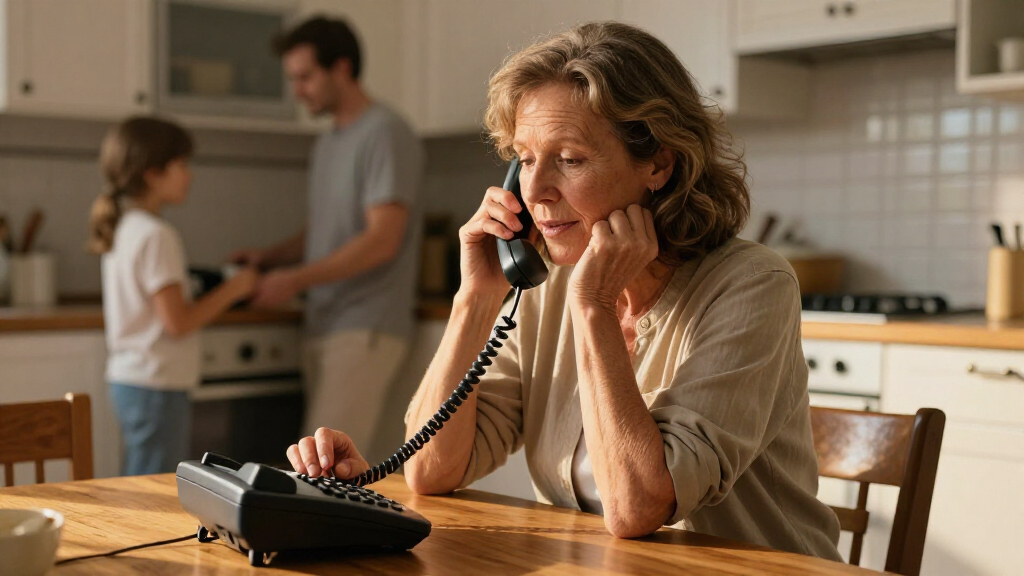
A corded phone stays in one familiar place and does not depend on a handset battery, which can suit a user who mainly calls from a chair or desk. A cordless handset offers room to move, but it needs a consistent charging routine and a place where it will be easy to find. Combo systems can cover both situations, though the extra handset and functions may make the setup less simple. A common mistake is choosing portability when the phone will almost always be used in one location. Another is buying a single handset for a household where the user regularly takes calls in several rooms. Think about actual calling habits and who will maintain the equipment.
Decide whether captioning fits your calls and setup
Captioned phones display text for spoken conversation, which may help when amplified audio alone is not clear enough. They are a different kind of solution from conventional amplified phones, not simply a louder model with an extra screen. Check what connection, internet access, service, or account requirements apply to the specific model before buying; requirements can vary. A screen may also add steps for someone who prefers familiar buttons and a handset. Consider whether the person will read captions comfortably while listening and speaking. If that feels cumbersome, a phone focused on audio controls may be easier to use day to day.
Prioritize controls the user can operate independently
Large, clearly differentiated buttons, easy-to-read displays, and direct volume controls can matter as much as amplification strength. Photo speed dial may reduce number-entry errors for a short list of frequent contacts, but it is less useful if the user needs to call many numbers. Menus and multiple handsets can add convenience for some households and confusion for others. Check whether the person can adjust volume during a call, identify caller information, and return the handset to its base without help. If a relative will set up the phone, remember that ongoing changes should still be manageable by the person using it. A simpler interface is often the better choice when independence is the main goal.
Balance amplification with comfort and sound quality
More volume is not automatically better: very loud sound may be uncomfortable, and louder speech can still be difficult to distinguish. Look for controls that allow the listener to adjust sound to a comfortable level rather than relying on a single setting. Features such as tone adjustment or speech pacing may address clarity needs that a volume boost cannot. Consider who else uses the phone, since settings that suit one person may not suit another. If the user relies on a hearing aid, check compatibility and any guidance from the hearing care professional instead of assuming every handset will work equally well. The goal is understandable conversation at a tolerable listening level.
Factor in maintenance and the whole household
A phone is only helpful if it remains charged, connected, and easy to locate. Cordless models need a reliable charging spot; captioned devices may involve additional connection or service steps; and multi-handset systems add more pieces to keep track of. Decide who will handle setup, troubleshoot missed calls, and replace or charge batteries when needed. If several people use the same phone, check whether the settings can be adjusted without making calls uncomfortable for everyone else. Household routines can favor a simpler corded model even when a feature-rich system looks more capable. Choosing around maintenance capacity can prevent an advanced phone from becoming an unused one.
Frequently Asked Questions
Should I choose a captioned phone or a louder amplified phone?
I would base this choice on what remains difficult after the caller’s voice is made louder. If speech is audible but words are still hard to follow, captions may provide another way to understand the conversation. If the main issue is low volume or missed calls, an amplified phone with suitable ringer and handset controls may be the more direct fit. Captioned models can involve extra connection or service requirements, so check those before purchase. Some users may benefit from both approaches, but they do not serve exactly the same purpose.
Does a higher amplification level mean I will understand calls better?
Not necessarily. Greater volume can make a quiet caller easier to hear, but it cannot by itself correct fast speech, poor call quality, or difficulty distinguishing similar sounds. Features that alter speech pace or provide captions may address some of those problems more directly. Comfort matters too: the loudest setting may be unpleasant or unsuitable for extended calls. I would treat amplification figures as one comparison point, then look at controls that match the listener’s actual difficulty.
Is a cordless amplified phone a good choice for someone who forgets to charge devices?
A cordless model gives freedom to answer calls away from a fixed base, but its usefulness depends on returning the handset to its charger and keeping it ready. If charging is likely to be missed, a corded phone may be the lower-maintenance option. A corded/cordless combo can provide a fixed handset alongside a portable one, though it adds equipment to manage. Think about where calls are taken most often and whether a family member can help with charging. The best fit is the one that will be ready when the phone rings.
Are photo speed-dial buttons worth choosing over a phone with more features?
Photo speed dial can be useful when the user calls a small, familiar group and has trouble remembering or entering numbers. It offers less benefit to someone who regularly calls new contacts or already uses saved contacts comfortably. Extra amplification, captioning, or handset flexibility may matter more if hearing and call access are the main barriers. Consider which task causes the most difficulty: placing calls or understanding them. A feature that supports frequent use is usually more valuable than a longer feature list.
What should I check before buying a captioned phone for someone else?
Check the model’s connection and service requirements, the size and readability of its text display, and whether the user can manage its controls independently. Ask whether they are comfortable reading while listening and speaking, since captions add a visual task to a call. Confirm that the phone can be set up in the location where it will be used and that someone can help if the connection needs attention. Also consider whether a conventional amplified phone would be easier to use consistently. A captioned phone makes the most sense when its text support addresses a real comprehension need and its setup suits the household.
Conclusion
For the broadest combination of hearing-focused controls, I recommend the Panasonic KX-TGM450S as best overall, especially for buyers who want stronger volume, slower speech, and a visual alert in one phone. For best value among simpler choices, the Clarity P300 suits someone who wants amplification and an adjustable ringer without building a larger phone system. I would steer a beginner toward a straightforward corded option with controls they can learn easily, such as the photo speed-dial landline, if its fixed placement suits their routine. For a premium, caption-focused need, compare the Hamilton CapTel 840i and 2400iSPNBT against the user’s comfort with screens and their service and connection requirements. Choose the VTech CareLine when multiple handsets matter, or a combo model such as the Clarity E814CC when both fixed and portable use are priorities; those added options make less sense for someone who wants the simplest possible phone.
Evergreen bestsellers Picks
bestsellers
As an affiliate, we earn on qualifying purchases.