
TL;DR
Listen free for 30 days with Audible
Thousands of audiobooks and originals — cancel anytime.
Start your free trialAs an affiliate, we earn on qualifying purchases.
Modular ramp systems offer flexible, easy-to-install accessibility solutions suitable for a variety of spaces. Recent innovations focus on safety, aesthetics, and sustainability, making them a smart choice for inclusive design.
Modular ramp systems offer unmatched flexibility, allowing customization for almost any space or height.
Latest designs focus on safety features like anti-slip coatings, integrated lighting, and eco-friendly materials.
Proper measurement and understanding of local standards are essential for choosing a compliant and safe ramp.
Reusability makes modular systems cost-effective and adaptable for changing needs.
Investing in quality materials and professional installation extends the lifespan and safety of your ramp.
Why Modular Ramps Are a Game-Changer for Accessibility
Modular ramps are a breakthrough because they combine flexibility with ease of use. Unlike permanent structures, they can be tailored to any space, big or small. This adaptability is crucial because it allows for accessible solutions in diverse environments, from temporary setups during renovations to permanent installations in public buildings. Their ability to be installed quickly means less disruption and faster compliance with accessibility laws, which is essential for businesses and institutions aiming to meet legal standards and serve all community members effectively.
They’re built to meet safety standards, with slip-resistant surfaces and proper slope ratios. Plus, their lightweight design means they can be installed by a single person in just a few hours, saving time and money. This ease of installation reduces barriers for owners and operators, encouraging more widespread adoption of accessible features.
Imagine a small business installing a ramp for a new wheelchair user — they can choose a modular system that fits perfectly without altering the building’s structure, then remove or reconfigure it later. This flexibility supports ongoing accessibility improvements and allows spaces to adapt as needs evolve, fostering an inclusive environment that can grow with the community.
As an affiliate, we earn on qualifying purchases.
What Makes a Modular Ramp System Truly Flexible?
A modular ramp’s secret lies in its design. Prefabricated sections connect seamlessly, allowing you to customize length, height, and layout. This modularity means that users can craft a ramp that precisely fits their space, avoiding the compromises often associated with fixed, one-size-fits-all solutions. The ability to reconfigure the system later means that as a building’s needs change—such as adding a new entrance or accommodating different users—the ramp can adapt without costly reconstruction.
For example, a school renovating its entrance might need a ramp that curves around a corner. Modular systems enable this with minimal fuss, unlike traditional custom-built ramps that require extensive construction, which can be disruptive and expensive. This flexibility ensures that accessibility solutions are sustainable over time, reducing the need for frequent replacements or costly alterations.
Here’s a quick look at what makes them adaptable:
- Multiple height options that can be combined to reach various elevations
- Configurable angles and landings that allow for complex layouts, including turns and curves
- Easy reconfiguration, enabling spaces to evolve and meet new accessibility standards or user needs without complete overhaul
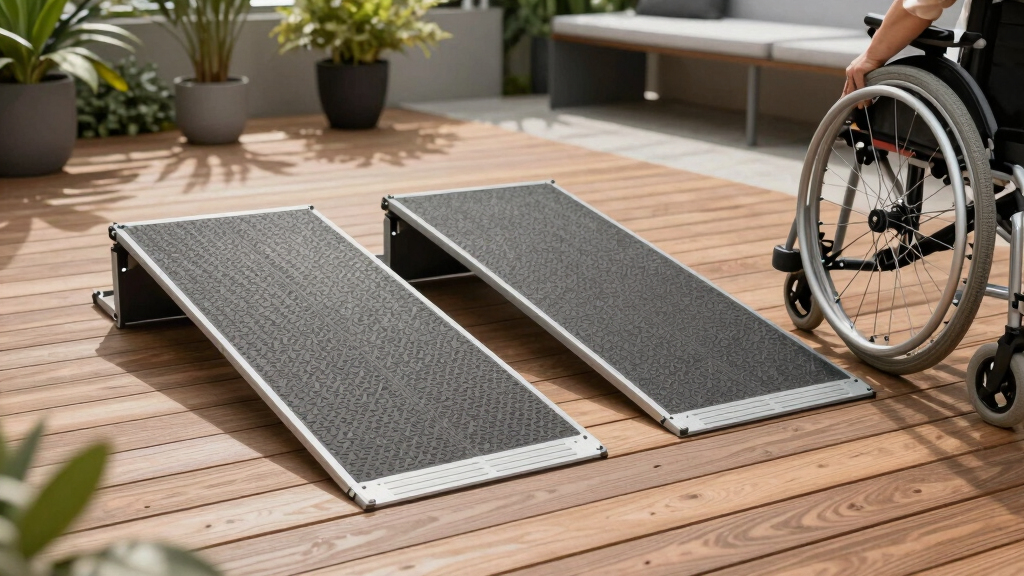
adjustable outdoor ramp for accessibility
As an affiliate, we earn on qualifying purchases.
As an affiliate, we earn on qualifying purchases.
How to Pick the Right Modular Ramp for Your Space
Choosing the perfect modular ramp starts with understanding your space and needs. Follow these steps:
- Measure the total height difference and available space to ensure the ramp will fit comfortably without obstructing other areas.
- Decide on the preferred slope ratio (most ADA-compliant ramps use 1:12), as this impacts safety, comfort, and the space required.
- Choose materials based on environment — aluminum for outdoors due to its corrosion resistance, steel or composite for high traffic areas requiring durability and strength.
- Check for safety features like slip-resistant surfaces, sturdy handrails, and edge protection to prevent falls and accidents.
- Verify that the system can be expanded or reconfigured later, which is vital for accommodating future needs or changes in the environment.
For instance, a homeowner might measure a 24-inch step outside and opt for an aluminum ramp with a gentle 1:12 slope, ensuring safety and durability. This process helps prevent costly mistakes, ensures compliance, and results in a safer, more accessible environment tailored to specific needs.
As an affiliate, we earn on qualifying purchases.
Latest Innovations in Modular Ramp Design
Modular ramp technology is advancing fast, blending safety, aesthetics, and sustainability. For example, some systems now feature anti-slip coatings that resist ice and rain, reducing fall risks and increasing safety during adverse weather conditions. Others integrate lighting for better visibility at night, which not only enhances safety but also adds an aesthetic touch that can complement building design.
Designers focus on making ramps look like part of the building rather than an afterthought. You can now choose colors, finishes, and even decorative railings that match your home’s style, creating a seamless, attractive appearance that boosts curb appeal while maintaining function.
Recent innovations include:
- Smart features like sensors that detect obstacles, alert users, or automatically activate lighting for added safety
- Eco-friendly materials that are recyclable, reducing environmental impact and promoting sustainability
- Lightweight composites that are easy to move and install, making temporary or mobile ramps more practical and accessible
As an affiliate, we earn on qualifying purchases.
Cost, Maintenance, and Longevity of Modular Systems
Expect to pay between a few hundred to several thousand dollars for a modular ramp, depending on size, material, and added features. Aluminum systems tend to be more affordable and weather-resistant, lasting over 20 years with minimal upkeep. This longevity is crucial because it ensures that the investment remains functional and safe over time, reducing the need for frequent replacements and associated costs.
Maintenance involves regular cleaning to remove dirt and debris, inspecting for corrosion or damage, and ensuring slip-resistant surfaces stay effective. For example, a community center might schedule biannual checks to keep their outdoor ramps safe and functional, preventing issues before they become costly repairs. Proper maintenance preserves safety features and extends the lifespan, making the system more cost-effective in the long run.
Choosing quality materials like aluminum or treated steel and opting for professional installation can significantly extend the lifespan and reduce long-term costs, ensuring the system remains reliable and safe for years to come.
Can You Remove and Reuse Modular Ramps Elsewhere?
Yes, reusability is one of the biggest perks of modular ramp systems. Designed to be disassembled easily, they can be moved to a new location or stored when not needed. This flexibility is particularly valuable for temporary events, seasonal use, or evolving spaces where permanent modifications aren’t feasible or desirable.
Imagine a community event needing temporary access; a modular ramp can be set up at the entrance, then taken down and reused for future events. This not only saves money but also reduces environmental waste by avoiding unnecessary demolition or disposal of permanent structures. Reusing ramps also allows organizations to adapt quickly to changing accessibility needs without significant additional investments.
Many systems feature quick-connect components that don’t require specialized tools, making reinstallation straightforward and accessible for non-professionals. This ease of reuse enhances the overall value, making modular ramps a sustainable and practical choice for diverse scenarios.
What Are the Common Pitfalls to Watch Out For?
Not all modular ramps are created equal. Some systems may not meet local safety standards or lack adequate slip resistance, which can lead to serious safety hazards. Cheaply made options might wobble, crack under weight, or degrade quickly, compromising safety and durability. These issues can result in costly repairs or replacements, and more critically, pose risks to users.
Always verify the manufacturer’s credentials, check independent reviews, and ensure the product complies with local building codes and safety standards. Additionally, consider the installation site—uneven ground, tight corners, or unstable surfaces may require additional groundwork or custom solutions to ensure stability and safety. Overlooking these factors can lead to unsafe conditions, increased costs, and the need for future modifications, which negate the initial convenience and cost savings.
Being cautious and thorough during selection and installation is essential to avoid these pitfalls. Prioritize quality, safety features, and professional guidance to ensure your modular ramp is reliable, safe, and truly beneficial for users.
Frequently Asked Questions
Are modular ramps compliant with ADA standards?
Most modular ramps are designed to meet ADA requirements, including slope ratios and safety features. Always check the specifications and consult with professionals to ensure compliance for your specific project.How much do modular ramp systems cost?
Prices range widely, from a few hundred dollars for small, simple systems to over $5,000 for larger, feature-rich setups. Installation costs vary based on complexity and location.Can modular ramps be installed on uneven surfaces?
Many systems are adaptable, but some may need additional groundwork or leveling. Discuss your site conditions with the supplier to ensure stability and safety.Are modular ramps suitable for outdoor use?
Yes, especially those made from weather-resistant materials like aluminum or treated steel. Proper maintenance can extend their lifespan outdoors.How long does installation typically take?
Installation can often be completed within a few hours to a day, depending on the ramp’s size and complexity. Quick assembly features make setup faster.Conclusion
A well-chosen modular ramp doesn’t just improve access — it transforms spaces into welcoming environments. Think of it as a bridge that welcomes everyone, no matter their mobility. When you select the right system, you’re not just meeting standards; you’re fostering independence and dignity for all.Labor Day sales Picks
labor day deals
As an affiliate, we earn on qualifying purchases.