
TL;DR

Get everyday helpers delivered free with Prime
- Fast, free delivery on millions of items
- Prime Video, Amazon Music and more included
- Member-only deals all year
Slip-resistant socks improve traction on smooth floors, but selecting the right pair depends on activity, fit, material, and the surfaces you’ll face. Proper choices can boost safety and confidence in daily life.
Prioritize full-coverage, flexible grips beneath the heel, ball, and toes for maximum traction.
A snug, comfortable fit prevents socks from slipping or bunching, maintaining safety during movement.
Material choices like polyester blends and moisture-wicking fabrics help keep feet dry and reduce slipping risks.
Use slip-resistant socks as part of a broader fall prevention plan, especially for high-risk individuals.
Replace socks when grips show signs of wear to sustain their effectiveness.
How to Choose Slip-Resistant Socks
Grip socks turn slick kitchen tile and polished hallways into steady ground. But the right pair depends on activity, fit, material, and the surfaces you face — this guide breaks down every decision point.
What Makes a Sock Truly Slip-Resistant?
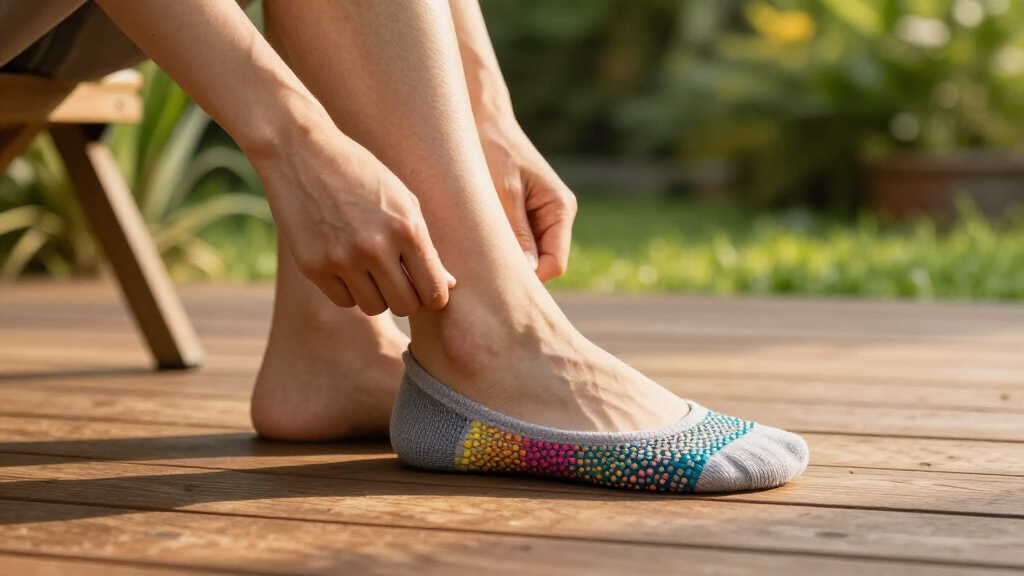
Not all grips are created equal. The best soles use silicone, rubber, PVC, or thermoplastic patterns that stay flexible and slightly raised — never flat, hard, or decorative. Traction also varies by surface: dry tile behaves differently than dusty or oily floors. Always test new socks on the actual floor where you’ll wear them.
Silicone / Rubber / PVC
Flexible, slightly raised textures grip smooth indoor floors. Hard or flat grips are decorative, not functional.
Full-Sole Web
A web of tiny sticky bumps across the whole sole delivers consistent traction in more foot positions than a few dots.
Surface Dependency
Wet, greasy, dusty, uneven, or carpeted surfaces reduce performance — grip socks are built for smooth, dry, indoor floors.
Where Grip Matters Most on the Sole
Grips beneath the heel, ball of the foot, toes, and outer edges keep traction through walking, turning, and weight shifts. Targeted zones provide stability where your foot exerts the most pressure. Double-sided grips help if socks rotate — but correct sizing remains essential.
Relative importance of grip zones for fall prevention during dynamic movement
Fit Is a Safety Feature, Not a Comfort Bonus
A loose sock slides even when its sole grips the floor; a tight sock impairs circulation and proprioception — your body’s sense of position. Measure your foot and check it against the manufacturer’s chart. For older adults, avoid cuffs that leave deep marks and look for stretch openings or pull tabs that make dressing easier.
Circulation Risk
Numbness and reduced proprioception cause awkward gait and hesitation. Compression grip socks can be hard to put on — choose compression only when medically appropriate.
Bunching Hazard
Twisting, bunching, and sliding defeat grip zones entirely — creating tripping points exactly where you need stability most.
Match the Sock to the Activity
Different situations call for different socks — from elder care at home to trampoline parks where only venue-approved pairs pass inspection.
| Use Case | Grip Priority | Fit & Features | Watch Out For |
|---|---|---|---|
| Home & Elder Care | ✓ Full-sole | Nonbinding cuff, warmth, easy dressing | Tight cuffs leaving marks |
| Hospitals & Recovery | ✓ Broad zones | Highly visible, comfortable | Facility policies; outside pairs |
| Yoga · Pilates · Barre | ✓ Heel + toes | Lightweight, close-fitting | Toe socks tricky to don |
| Trampoline Parks | ~ Venue-approved only | Durable, flexible | ✗ Outside socks rejected |
| Children | ✓ Durable grips | Secure cuffs, breathable fabric | Wrong size as feet grow |
| Cold Environments | ~ Full-sole | Thicker, insulated material | Bulk reducing stability |
Choose Fabric That Keeps Feet Dry
Moisture between sock and floor undermines grip. People prone to sweating should prioritize breathable, moisture-wicking construction over pure softness.
Soft but Thirsty
Comfortable and familiar, but cotton retains moisture — a slipping risk during long wear.
Fast-Drying Winners
Dry faster and resist wear. The best everyday choice for moisture control and grip durability.
Specialists
Merino regulates temperature but costs more; elastane/spandex improves fit and shape retention.
The Maintenance Chain
Grip material degrades with heat and abrasion. Follow this chain to keep your socks working — and know when to retire them.
Read the Label
High heat hardens grips and damages elastic.
Wash Inside Out
Protects grip surfaces from abrasion.
Air / Low Dry
Low-temperature drying when permitted.
Inspect Grips
Smooth, cracked, peeling, or detached = replace.
Part of a Plan — Never the Whole Plan
Slip-resistant socks improve traction but do not eliminate fall risk. For people at high risk of falling, socks should be one layer of a broader prevention strategy:
What Makes a Sock Truly Slip-Resistant? Here’s How Grip Matters
Slip-resistant socks are designed with textured materials on the sole that help you grip smooth indoor floors. But not all grips are created equal. The best socks feature silicone, rubber, or PVC patterns that stay flexible and slightly raised—never flat or hard. They should cover the entire sole for consistent traction—think of a web of tiny, sticky bumps that hold your foot in place.
For example, full-coverage grips under the heel, ball of the foot, and toes give you better stability than just small dots. The floor type makes a difference, too. A sock that grips well on a dry tile might slip on a dusty, oily surface. Always test new socks on the actual floor where you’ll wear them, especially if spills or dust are common.
Understanding why grip placement matters is crucial: targeted grip zones provide stability where your foot exerts the most pressure, reducing the risk of slips during quick movements or sudden turns. Conversely, inadequate grip coverage can create weak points, increasing fall risk. Therefore, selecting socks with comprehensive, well-placed grips is a strategic choice for safety—especially in environments prone to hazards.
Deep interpretation: Proper grip placement isn’t just about preventing slips—it’s about understanding how your foot interacts with the ground during movement. Well-placed grips can compensate for minor surface irregularities and dynamic shifts in weight, which are common in real-life situations. Conversely, poorly placed or insufficient grip zones can lead to a false sense of security, causing users to rely on the sock’s grip when it’s not effective, increasing the likelihood of falls. The tradeoff involves balancing grip coverage with comfort and flexibility; overly aggressive grips might cause discomfort or restrict movement, so choosing the right pattern tailored to your typical activities is essential for optimal safety.
As an affiliate, we earn on qualifying purchases.
How to Find the Perfect Fit for Slip-Resistant Socks
Fit is everything. Socks should hug your foot snugly without twisting or bunching. A loose sock can slide around inside your shoe or on the floor, defeating the grip’s purpose. Measure your foot carefully, comparing it to the manufacturer’s sizing chart—what’s listed as your size might not be accurate for non-standard feet.
For older adults or those with limited mobility, avoid socks with tight cuffs that leave marks or cut off circulation. Look for socks with stretch openings or pull tabs—these can make dressing easier and improve fit. Remember, a well-fitting sock stays in place and provides steady traction without feeling tight or uncomfortable.
Choosing a sock that fits properly also influences safety: a sock that is too tight can impair circulation, leading to numbness or discomfort, which might cause awkward gait or hesitation. Conversely, overly loose socks can bunch up or slip, creating tripping hazards. The goal is a secure, comfortable fit that allows natural movement and maintains the integrity of the grip, ensuring that safety isn’t compromised by poor fit.
Deep interpretation: A proper fit isn’t merely about comfort; it’s a fundamental safety feature. Socks that are too tight can cause numbness and reduce proprioception—the body’s ability to sense its position—which increases the risk of missteps. On the other hand, loose socks compromise the effectiveness of grip zones, allowing bunching or slipping that can lead to falls. The tradeoff involves finding a balance: a snug fit that supports natural gait without constricting blood flow. Selecting the right fit enhances the sock’s ability to work as intended, ensuring that the grip zones stay in contact with the floor and that movement remains steady and confident.
As an affiliate, we earn on qualifying purchases.
Matching Your Socks to Your Activities and Surfaces
Different situations call for different socks. For home or elder care, prioritize full-sole grip, warmth, and nonbinding cuffs. Hospital socks should be visible and comfortable, with broad grip zones. For yoga or Pilates, lightweight socks with grips under toes, heels, and ball of the foot work best. If you’re bouncing at a trampoline park, always use socks approved by the venue—outside pairs may not pass inspection.
Children need secure fit, durability, and breathable fabrics. In cold environments, thicker, insulated socks are tempting—just ensure they don’t become bulky or unstable, which could cause slips. Matching gear to the activity keeps you safe and comfortable.
Deep interpretation: Tailoring socks to specific activities isn’t just about comfort—it’s about optimizing safety and performance. For example, full-coverage grip socks in elder care prevent slips during transfers, but if the grip zones are too rigid or the sock too tight, it may restrict movement or cause discomfort, indirectly increasing risk. In high-impact activities like trampoline jumping, the right sock must balance durability with flexibility; overly bulky socks can impair motion and grip, leading to slips or falls. Recognizing these nuances allows you to select socks that support your safety goals, reduce hazards from environmental factors, and improve overall activity safety. The tradeoff involves balancing protection with mobility—an overly protective sock can hinder movement, while too little grip or insulation increases fall risk. Understanding the specific demands of each activity ensures that your choice enhances safety without compromising comfort or agility.
moisture-wicking slip-resistant socks
As an affiliate, we earn on qualifying purchases.
As an affiliate, we earn on qualifying purchases.
Where to Place the Grip for Maximum Safety
The best slip-resistant socks have grips beneath the heel, ball of the foot, toes, and sometimes the outer edges. This placement ensures you maintain traction during all kinds of movements—walking, turning, or shifting weight. Double-sided grips can help if socks tend to rotate or slide, but proper sizing is still key.
For yoga or Pilates, toe socks with grips on each toe can improve individual toe contact, offering better balance. But they can be tricky to put on—so choose what fits your skill level and comfort. Remember, the grip placement must match your activity for maximum safety.
Deep interpretation: Proper grip placement isn’t just about preventing slips—it’s about understanding the biomechanics of movement. When grips are strategically positioned under high-pressure zones like the heel and forefoot, they enhance stability during dynamic shifts and sudden stops. For activities requiring fine balance, such as yoga, individual toe grips can improve proprioception—a sense of where each foot is in space—leading to better control. However, if grip zones are misplaced or insufficient, the risk of slipping increases, especially during quick or unpredictable movements. The tradeoff involves balancing grip coverage with flexibility; overly aggressive grips may cause discomfort or restrict natural motion, while insufficient zones leave weak points. Matching grip zones to the specific demands of your activity ensures optimal safety, confidence, and mobility.
As an affiliate, we earn on qualifying purchases.
Material and Moisture Control: Keep Feet Dry and Happy
Choosing the right material impacts both traction and comfort. Cotton blends feel soft but tend to hold moisture—bad news if you sweat a lot. Polyester and nylon blends dry faster and resist wear longer. Merino wool manages temperature well but costs more and may be overkill for some uses.
People prone to sweating should look for moisture-wicking fabrics that keep feet dry. Elastane or spandex improves fit and shape retention, helping socks stay snug no matter how much you move. Staying dry reduces the risk of slipping and skin irritation.
Deep interpretation: Material choice directly influences foot health and safety. Natural fibers like cotton are comfortable but absorb moisture, creating a damp environment that promotes skin irritation and increases slipperiness, especially during vigorous activity. Synthetic fibers, with their moisture-wicking properties, help maintain a dry surface, reducing the risk of slips and fungal infections. Merino wool offers temperature regulation, but its higher cost and potential over-engineering mean it’s best suited for extreme conditions. The tradeoff involves balancing comfort, durability, and safety—choosing materials that keep feet dry and supported without sacrificing flexibility or breathability. Proper material selection ensures that the sock maintains its grip efficacy over time and under different environmental conditions, contributing to overall safety.
Comfort Counts: How Construction Affects Your Grip Socks
Comfort isn’t just a bonus—it’s essential for safety. Flat or seamless toes prevent irritation, especially during long wear. Cushioned soles add comfort, but too much padding can reduce your floor feel, making slips easier. Check for smooth seams, no bulky grips, or raised edges that might cause pressure points or discomfort.
If you have sensitive skin, inspect the inside fabric and grip attachments carefully. Soft, irritation-free materials help you stay confident and steady on your feet.
Deep interpretation: The construction quality of your socks influences how well they perform under real-world conditions. Flat or seamless toes reduce pressure points that could cause discomfort or distraction, which might lead to instability. Cushioned soles enhance shock absorption, but excessive padding can diminish tactile feedback from the floor, decreasing proprioception and increasing fall risk. Reinforced grip zones that are securely attached prevent peeling or detachment over time, maintaining consistent traction. Conversely, poorly constructed socks with loose seams or weak grip attachments can cause discomfort or grip failure, undermining safety. Investing in high-quality, well-designed socks ensures that their safety features—fit, grip, comfort—remain reliable over extended use, supporting your confidence and stability during daily activities.
Putting on Slip-Resistant Socks: Make it Easy for Everyone
Ease of wear matters, especially for those with arthritis or limited flexibility. Look for socks with stretchy openings, pull tabs, or slip-on designs. Compression grip socks can be more difficult to put on, so choose them only if medically appropriate. Properly fitting socks stay in place and don’t bunch or slip during movement.
Test new socks on a dry, clean floor before depending on them. A quick trial run helps you see if they stay in place and provide the traction you need.
Deep interpretation: Simplifying the process of putting on slip-resistant socks isn’t just about convenience; it directly impacts safety and compliance. Socks with stretch openings or pull tabs reduce the struggle of dressing, preventing improper fits that compromise grip effectiveness. For individuals with limited dexterity, ease of donning encourages consistent use, which is vital for ongoing safety. Testing socks in a controlled environment before regular use helps identify issues like slippage or inadequate grip, allowing adjustments before real-world hazards are encountered. The tradeoff involves balancing ease of dressing with secure fit; overly loose or poorly designed socks might slip or bunch, negating safety benefits. Making the application process straightforward promotes regular use and ensures the safety features—fit and grip—are functioning as intended, supporting long-term mobility and confidence.
Caring for Your Grip Socks to Keep Them Safe and Effective
Follow the care label’s instructions—high heat can weaken grip patterns and elastic. Washing inside out protects the textured surface, prolonging traction. Air drying or low-temperature drying helps maintain the sock’s shape and grip longevity. Replace socks when the grips are cracked, peeling, or worn smooth—usually after several months of regular use.
Deep interpretation: Proper maintenance of your slip-resistant socks is essential to preserve their safety features over time. High heat from dryers or washing can degrade the textured grip patterns and elastic fibers, reducing traction and fit. Washing inside out minimizes abrasion on the textured surface, helping maintain effective grip zones. Air drying or using low-temperature settings prevents elastic deterioration, ensuring the sock remains snug and supportive. Recognizing signs of wear—such as cracks, peeling, or smoothness—is critical because compromised grips significantly diminish safety, increasing fall risk. Regular inspection and timely replacement are investments in ongoing safety, especially in environments where slips could lead to injury. Consistent care maximizes the functional lifespan of your socks, ensuring their safety benefits are sustained through continual use.
Safety First: Limits and When to Seek Professional Advice
Slip-resistant socks improve traction but don’t eliminate all fall risks. They perform poorly on wet, greasy, dusty, or uneven surfaces. For people at high fall risk—like seniors or those with balance issues—socks should be part of a broader safety plan. This might include supportive footwear, good lighting, handrails, and regular check-ins with a healthcare professional.
If you have diabetes, neuropathy, or foot wounds, consult a specialist before choosing grip socks. Proper fit, nonbinding cuffs, and skin checks are especially important for these conditions.
Deep interpretation: Recognizing the limitations of slip-resistant socks underscores the importance of a comprehensive fall prevention strategy. While they significantly reduce slips on certain surfaces, they are not a universal solution. Environments with wet, oily, or uneven floors still pose risks that require additional measures—such as proper footwear, environmental modifications, and medical oversight. For individuals with specific health concerns like diabetes or neuropathy, the importance of proper fit and skin integrity becomes even more critical, as poor circulation or wounds can complicate fall risk. Relying solely on grip socks without addressing broader safety factors can create a false sense of security, leading to potential injuries. A holistic approach—combining appropriate footwear, environmental safety, medical advice, and the correct use of slip-resistant socks—best mitigates fall hazards and promotes long-term safety.
What You Need to Know Before Buying Slip-Resistant Socks
Choosing the right socks isn’t just about grip pattern or material. Consider activity, floor type, fit, ease of putting on, and durability. Look for clear sizing and care instructions. Test new socks on a dry, safe surface before regular use. Remember, a good fit and proper grip placement matter more than fancy labels or materials.
Deep interpretation: Making an informed purchase involves understanding how different features influence safety and comfort. For example, a sock with an elaborate grip pattern might be impressive, but if it doesn’t align with your typical surfaces or movement patterns, it may not provide the expected safety benefits. Similarly, a snug fit tailored to your activity reduces the risk of slipping or bunching, which can compromise grip zones. Recognizing the importance of proper sizing and testing helps prevent purchasing choices that might look appealing but fail to deliver safety or comfort. Investing in quality and understanding your specific needs ensures your socks will perform effectively, reducing fall risk over the long term. The tradeoff is selecting features that match real-world use rather than marketing claims, leading to better safety outcomes.
Frequently Asked Questions
Are grip socks safer than walking barefoot?
In many cases, grip socks offer better traction and warmth than walking barefoot on smooth floors. However, barefoot grip can work for some, especially on dry, textured surfaces. It depends on your balance and the floor’s condition—grip socks tend to be safer for most indoor surfaces.
Are slip-resistant socks safer than slippers?
Not always. Well-fitting slippers with slip-resistant soles often provide more support and stability. Loose slippers or backless designs can be hazardous. The best choice depends on fit, activity, and the flooring—slip-resistant socks are a helpful addition but shouldn’t replace supportive footwear when more stability is needed.
Do grip socks prevent falls?
They can reduce slips on certain surfaces, but they’re just one part of a fall prevention plan. Factors like balance, vision, medication, and obstacles also matter. No sock alone can prevent every fall, but they boost safety when combined with other measures.
Which grip pattern works best?
Coverage beneath the heel, forefoot, and toes works best. Patterns that are broad and flexible—like multidirectional tread—maximize grip. Effectiveness also depends on material quality and how well the pattern contacts the floor.
Can I wear grip socks inside shoes?
It’s possible, but raised grips can catch on insoles or make shoes feel tighter. Most people find moisture-wicking, regular socks better for inside footwear. Grip socks are mainly designed for direct contact with smooth floors for safety.
Conclusion
Slip-resistant socks are a simple step toward safer, more confident movement on smooth floors. But the key isn’t just the grip pattern—it’s how well the sock fits and supports your activity. Choosing the right pair means paying attention to details that keep you steady and independent every day. Your feet carry you—make sure they stay sure-footed.Columbus Day / Indigenous Peoples' Day Picks
long weekend sales
As an affiliate, we earn on qualifying purchases.