
TL;DR
The right cane fits your height, feels comfortable in your hand, and suits your terrain. Proper fit reduces fall risk and boosts confidence, especially with new adjustable and tech features.
Measure your height carefully — a difference of just 1 inch can affect your balance and safety.
Choose a handle that fits your hand comfortably, considering your grip strength and any joint issues.
Lighter materials like aluminum or carbon fiber reduce fatigue and make daily use easier.
Inspect and replace tips regularly to prevent slips and falls.
Modern options like adjustable and smart canes offer added convenience, safety, and personalization.
How to Measure Your Cane Height So It Supports You Correctly
The first step in choosing a cane that fits you is getting the height right. When standing upright with your arms relaxed at your sides, measure from the floor to your wrist crease. This measurement ensures that your cane will support your body properly, aligning your posture and reducing strain. Why is this so important? An improperly adjusted cane forces your body into awkward positions, which can lead to muscle fatigue, joint pain, or even falls. For example, if your cane is too long, you might lean heavily on it, throwing off your balance. If it’s too short, you’ll have to hunch or reach awkwardly, which can cause discomfort or instability. Many adjustable canes feature a simple twist or click mechanism to set this precisely, but it’s critical to double-check that the cane’s length promotes a slight bend in your elbow—about 15-20 degrees—so you can maintain a natural, comfortable posture while walking.

REHAND Walking Cane – Foldable, Adjustable, Collapsible Walking Canes for Men & Women, Heavy Duty All Terrain Tip, with Travel Bag | Walking Sticks for Seniors & Adults (Natural Black)
Up To 8 Adjustable Height: Rehand adjustable cane fits for people from 5'(152cm) to 6'5''(195cm). 8 adjustable height…
As an affiliate, we earn on qualifying purchases.
As an affiliate, we earn on qualifying purchases.
Choosing the Right Handle for Comfort and Grip
The handle of your cane isn’t just a grip point; it’s a critical interface that impacts how comfortably and securely you can use your support. Handles come in various shapes—T-shaped, ergonomic, molded, cushioned—and each offers different benefits. The choice matters because a handle that doesn’t fit your hand well can cause discomfort, fatigue, or even pain over time. For instance, if you have arthritis or limited grip strength, a handle with ergonomic contours and soft, cushioned materials can distribute pressure more evenly, reducing joint pain and preventing slips. Conversely, a narrow or hard handle might cause you to grip tightly, leading to hand fatigue or cramping. The ideal handle feels natural, minimizes pressure points, and provides a secure grip—even if your hands are sweaty or tired. Think of it as choosing a comfortable shoe: the right fit enhances your confidence and reduces the risk of dropping or losing control of your cane during movement.

Asterom Carbon Fiber Cane – Lightweight, Ergonomic, Adjustable – Walking Canes for Men & Women, Carbon Walking Cane, Cool Walking Sticks for Seniors (Derby)
STYLISH CANE FROM THE RED CARPET TO YOUR HOME! Our canes for men and women can be seen…
As an affiliate, we earn on qualifying purchases.
As an affiliate, we earn on qualifying purchases.
Materials and Weight — Why Lighter Is Usually Better
The material of your cane directly influences how manageable it is in daily life. Heavier canes, often made of steel or dense alloys, might feel sturdy but can become a burden with extended use. Carrying a heavy cane can tire your arm quickly, leading to fatigue, reduced stability, and even muscle strain—especially if you need to use it for long periods or on uneven terrain. Lighter materials like aluminum or carbon fiber are designed to provide strength without the weight, making your cane easier to handle, lift, and maneuver. For example, a cane weighing less than a pound can significantly reduce wrist fatigue, allowing you to walk longer distances without discomfort. Additionally, lightweight canes are easier to carry, store, and adjust, which is crucial if you’re frequently on the move or traveling. But it’s important to balance weight with durability—some ultra-lightweight materials may be less resilient, so choose a reputable product that offers both weight savings and strength. Ultimately, selecting a lightweight cane enhances your independence by making every step less taxing and more secure.

Medline Offset Folding Cane, 4-Point Base With Cushioned Gel Handle, Supports Up To 350 lbs, Blue
Freestanding lightweight aluminum cane folds easily for travel, allowing it to fit in a suitcase or carry-on luggage
As an affiliate, we earn on qualifying purchases.
As an affiliate, we earn on qualifying purchases.
Safety First: Tips for Choosing a Stable Tip and Base
The tip of your cane is your primary contact with the ground, and its quality can make or break your safety. Rubber tips are common because they provide good grip on smooth surfaces, helping prevent slips. But the terrain you encounter daily might require different features. For outdoor or uneven surfaces like gravel, grass, or wet pavement, wider or multi-surface tips can significantly improve stability. These tips distribute weight more evenly and grip irregular surfaces better, reducing the chance of slipping or losing balance. For example, a narrow rubber tip may perform well indoors but could be hazardous outdoors on slick or uneven terrain. Regular inspection and maintenance are crucial—worn-out tips with cracks or smooth patches can drastically reduce traction, increasing fall risk. Replacing them every 6-12 months ensures optimal grip. Think of your cane tip as the foundation of a building: a stable, well-maintained base is essential for supporting your entire structure — your safety and confidence.
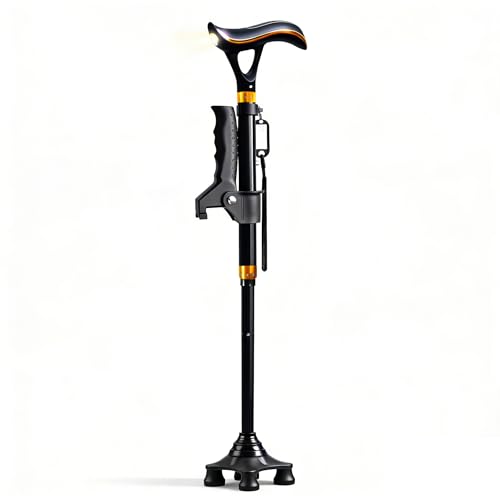
Foldable Walking Cane for Seniors with Dual Handle, LED Light & Alarm
SAFETY FIRST BUILT-IN EMERGENCY ALARM: Feel secure wherever you go. The loud emergency alarm helps call for attention…
As an affiliate, we earn on qualifying purchases.
As an affiliate, we earn on qualifying purchases.
Latest Innovations: From Adjustable to Smart Canes
Modern canes are advancing rapidly, offering features that enhance safety, convenience, and personalization. Adjustable canes with easy-to-use mechanisms allow you to customize height quickly, accommodating changes in your posture or terrain. Collapsible models provide portability, fitting into bags or luggage without fuss. Ergonomic handles equipped with shock absorption reduce hand fatigue, especially during extended use or on rough surfaces. But the most exciting developments are in smart canes—integrating technology to monitor and improve your mobility. These canes feature sensors that analyze your gait, detect slips, or even identify imbalance, alerting you to potential hazards before a fall occurs. Some models send alerts via smartphone or emergency contacts if a fall is detected, providing peace of mind for users living alone or caring for loved ones. These innovations represent a shift from simple support devices to intelligent tools that actively promote safety and independence, reflecting a future where mobility aids are as smart as they are supportive.
Comparison Table: Which Cane Fits Your Needs?
| Feature | Standard Cane | Adjustable Cane | Smart Cane |
|---|---|---|---|
| Height Adjustment | Fixed, set at purchase | Yes, easily adjustable | Yes, adjustable + tech features |
| Portability | Moderate | High, collapsible | High, with added electronics |
| Handle Comfort | Basic | Ergonomic options available | Ergonomic + shock-absorbing |
| Traction & Stability | Standard rubber tip | Wide or multi-surface tips | Enhanced with sensors & alerts |
| Price Range | Lower cost | Moderate | Higher, due to tech |
How to Make Sure Your Cane Is Safe and Sturdy
Check all parts before use: the handle should be secure, the shaft free of cracks, and the tip intact. Test the cane on a flat surface—if it wobbles or slips, it’s time for a replacement or repair. Regularly replace worn rubber tips, ideally every 6-12 months. Ensuring your cane is sturdy isn’t just about durability; it’s about preventing accidents. A loose handle might detach unexpectedly, causing a fall, while a cracked shaft can give way under pressure. Proper maintenance—tightening screws, inspecting for damage, and replacing worn tips—ensures your cane provides reliable support when you need it most. Think of it as maintaining a safety feature; neglecting these checks could turn a supportive device into a hazard, undermining your confidence and independence during every step.
Personalize Your Cane to Boost Your Confidence
Canes are more than just functional tools; they can reflect your personality and style. Personalizing your cane with colors, patterns, or accessories can turn it into a statement piece that boosts your confidence. A bright, cheerful cane with decorative handles, or one with custom patterns, can make you feel more in control and proud of your mobility aid. These personal touches aren’t just aesthetic—they can also make your cane easier to spot if misplaced and serve as conversation starters, helping you feel more connected and expressive. When your cane aligns with your personality, it transforms from a mere support into an extension of your identity, empowering you to walk with pride and confidence every day.
Frequently Asked Questions
How do I know what height my cane should be?
Stand upright with your arms relaxed at your sides, then measure from the floor to your wrist crease. That’s your ideal cane height. Using a correctly sized cane helps maintain proper posture and balance.
What handle type is best if I have arthritis?
Look for ergonomic, cushioned handles designed to reduce pressure and improve grip. These can make daily use more comfortable, especially if you have joint pain or limited hand strength.
Can I use a cane on uneven terrain?
Yes, but select a cane with a wider base or specialized tips designed for outdoor use. This provides better stability on grass, gravel, or wet surfaces.
Are adjustable canes worth the extra cost?
Absolutely. They adapt to different users and changing needs, making them versatile and a good investment for long-term safety and comfort.
How often should I replace the rubber tip?
Inspect the tip regularly and replace it every 6 to 12 months or sooner if it shows signs of wear or cracking. A fresh tip ensures better grip and safety.