
TL;DR
Open a free Amazon Business account
Business pricing, bulk buying and tax-exempt orders.
Create a free accountAs an affiliate, we earn on qualifying purchases.
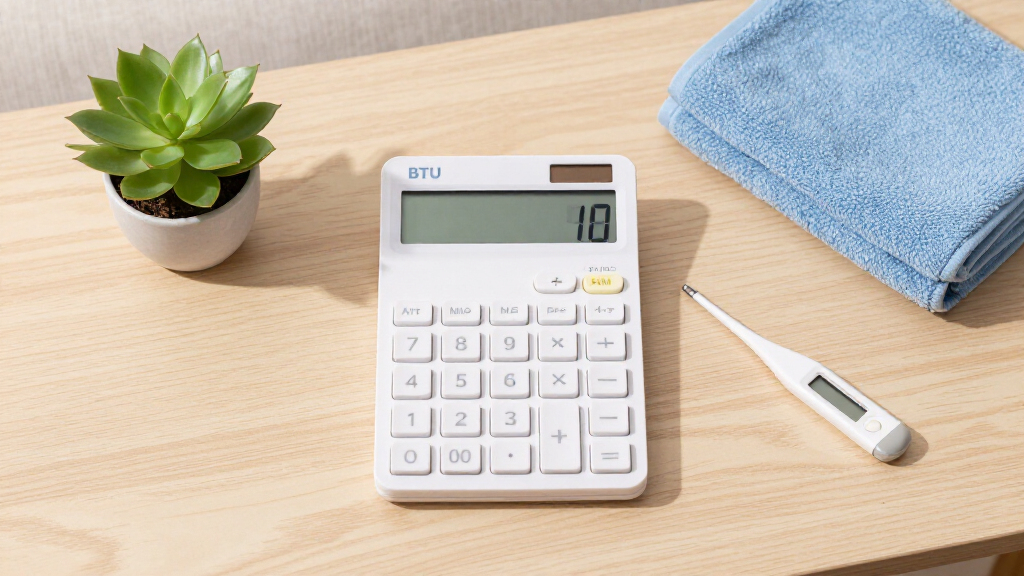
A BTU calculator estimates the cooling power needed for your space, balancing size and efficiency. It’s a helpful tool, but factors like sunlight, insulation, and occupancy make a big difference. Correct sizing ensures comfort and saves energy.
Ever turned on your AC and wondered if it’s working too hard or not enough? Most people guess based on room size alone, but that’s like buying shoes only by foot length. A BTU calculator shows you exactly how much cooling capacity you really need. It’s about balancing comfort, efficiency, and cost.
In this quick guide, you’ll learn what a BTU calculator considers, how to interpret the results, and why factors like sunlight, insulation, and occupancy matter. Get it right, and your AC will keep you cool without wasting energy or money.
Use a BTU calculator to get a tailored cooling capacity based on your room’s specifics.
Square footage is only a starting point; factors like sunlight, insulation, and occupancy matter more.
Oversizing can cause humidity issues and higher energy bills; size down for efficiency.
Always include room features like windows and appliances in your estimate.
For complex spaces or whole-house systems, consult a professional load calculation.
What does a BTU calculator do for your AC size?
A BTU calculator estimates how much cooling power your room needs — measured in BTUs per hour. It combines room size, sunlight, insulation, and other factors. Instead of guesswork, you get a tailored number that helps you pick the perfect unit.
Understanding this number is crucial because it directly impacts your comfort and energy bills. An undersized unit will struggle to cool the space effectively, leading to longer run times and higher energy costs, while an oversized unit can cause rapid cycling, humidity issues, and unnecessary wear. The calculator’s detailed inputs help you find a balance, ensuring your system runs efficiently without sacrificing comfort.

12000 BTU Window Air Conditioner, Energy Saving Window AC Unit with Remote & App Control, Timer Function & Easy Install Kit, for Rooms up to 550 Square Feet, 115V/60Hz, White
- Cooling Capacity: 12000 BTU for rooms up to 550 sq ft
- Easy Operation: LED display, remote, app control
- Multiple Modes: Sleep, Eco, Auto, Fan modes
As an affiliate, we earn on qualifying purchases.
As an affiliate, we earn on qualifying purchases.
How to get an accurate BTU estimate in 3 quick steps
- Measure your room’s length and width. For example, a 12-foot by 15-foot space equals 180 sq ft.
- Note sunlight exposure and insulation quality. A south-facing room with poor insulation needs more cooling capacity to compensate for heat gain, while a shaded, well-insulated space requires less. Recognizing these differences helps prevent over- or under-sizing, which can lead to energy waste or inadequate cooling.
- Input occupancy and appliances. Extra people and cooking add heat—about 600 BTU/h each beyond two occupants, plus appliances like the fridge or TV. These heat sources influence the cooling load, and ignoring them can result in a unit that’s either too small to handle peak heat or unnecessarily large, wasting energy.
The calculator then combines these factors for a precise BTU recommendation. This holistic approach ensures your AC is tailored to your specific environment, maximizing efficiency and comfort.

Rellytech Mini Split AC/Heating System – 19 SEER2 9000 BTU Mini Split AC Unit Inverter Heating and Cooling, 115v Energy Efficient Ductless Air Conditioner Up to 550sq.ft, 24H Timer, Installation Kit
- Cooling & Heating Capacity: 9000 BTU for both cooling and heating
- Coverage Area: Up to 550 sq. ft.
- Energy Efficiency: 19 SEER2 inverter system
As an affiliate, we earn on qualifying purchases.
As an affiliate, we earn on qualifying purchases.
Compare common AC sizes with real room examples
| Room Size | Suggested BTU/h | Example |
|---|---|---|
| 150 sq ft | 5,000 BTU | Small bedroom with single window, shaded |
| 250 sq ft | 6,000 BTU | Living room with some sunlight, good insulation |
| 300 sq ft | 7,000 BTU | Kitchen or sunny family room |
| 400 sq ft | 9,000 BTU | Large bedroom or open-plan area |
Matching your room to these examples helps avoid common pitfalls. An undersized unit will run constantly, struggling to keep up, which can lead to higher energy bills and increased wear. Conversely, an oversized unit will cycle off quickly, failing to dehumidify properly, resulting in a clammy, uncomfortable environment. Proper sizing based on real-world scenarios ensures balanced cooling, energy efficiency, and humidity control, creating a more comfortable living space.

Portable air conditioners with remote control, silent with 3 speeds, cooling fan of 1200 ml Personal Air Cooler Fan with 3 Mist, 7 Night Light, 8H Timer, Small Air Conditioner for Bedroom Office
- Quick Room Cooling: Cools room to 68F in 3 seconds
- Large Water Tank: 1200ML capacity lasts all day
- Multiple Fan Speeds: 4 adjustable wind speeds
As an affiliate, we earn on qualifying purchases.
As an affiliate, we earn on qualifying purchases.
Why bigger isn’t always better for your AC
Many assume a larger AC cools faster, but that’s a mistake. Oversized units reach the set temperature quickly, then shut off, leaving the room humid and uncomfortable. They cycle on and off frequently, wasting energy and increasing wear on components, which shortens the lifespan of your system.
For example, a 12,000 BTU unit in a 300 sq ft room might cool faster initially, but it won’t run long enough to dehumidify effectively. This can lead to a damp, clammy environment despite the temperature being cool. On the other hand, a correctly sized 7,000 BTU unit will operate longer, removing more humidity and maintaining a stable, comfortable temperature while using less energy. This tradeoff highlights the importance of proper sizing—not just for comfort but also for energy savings and system longevity.
Choosing the smallest unit capable of handling your peak heat load minimizes these issues. Proper sizing ensures your system works efficiently, maintains comfort, and reduces long-term costs.

Temprium 8,000 BTU Smart Portable Air Conditioners, WIFI-Enabled
- High-Efficiency Cooling: Cools up to 350 sq. ft. quickly
- Quiet Operation: Operates at 50 dB for peaceful sleep
- Smart Remote Control: Control via app, voice, or remote
As an affiliate, we earn on qualifying purchases.
As an affiliate, we earn on qualifying purchases.
What makes a good BTU calculator? Essential inputs explained
To get reliable results, your calculator should ask for detailed info. These include:
- Room dimensions: length, width, and ceiling height—since higher ceilings increase volume and cooling needs, not just floor area.
- Sunlight exposure: south-facing, shaded, or mixed—because sunlight significantly impacts heat gain and cooling requirements.
- Insulation quality and air leaks—poor insulation or leaks mean more heat enters or escapes, affecting the cooling load.
- Number of people and appliances—additional heat sources like cooking or electronics can increase cooling needs substantially.
- Room use: bedroom, kitchen, living room—different spaces have varying heat gains and comfort priorities, influencing the ideal BTU size.
More detailed inputs allow the calculator to account for the unique thermal dynamics of your space, leading to a more accurate estimate. This precision helps you avoid costly over- or under-sizing, ensuring your AC performs optimally, saving energy and maintaining comfort over time.
Frequently Asked Questions
How do I know if my room needs more or less BTU?
If your room faces the sun, has poor insulation, or is crowded, it needs more BTU. Shaded, well-insulated rooms with fewer occupants require less. Use a BTU calculator to weigh these factors for the best fit.
Can I use a smaller AC if I run it longer?
Running a smaller unit longer can work, but it may struggle with humidity and uneven cooling. Proper sizing ensures efficient operation and better comfort. Overworking a tiny unit can also shorten its lifespan.
What happens if my AC is too big?
An oversized AC cools the room quickly but doesn’t dehumidify effectively. It causes temperature swings, increases energy costs, and wears out faster. Proper sizing balances cooling, humidity, and efficiency.
Is a professional load calculation necessary for my home?
For whole-house systems, a professional calculation accounts for all variables—climate, insulation, windows, and layout. It’s the best way to ensure your equipment matches your home’s unique needs.
Conclusion
Remember, the right-sized AC is about more than just square footage. It’s the perfect mix of room size, sunlight, insulation, and occupancy. Using a detailed BTU calculator saves you from costly mistakes and keeps your space cool and comfortable.
Next time you shop for an AC, think beyond the numbers on the box. Your comfort and wallet will thank you for it — and you’ll enjoy a cooler, calmer space all summer long.
Air Conditioner BTU Calculator
Estimate a right-size cooling range from room area, ceiling height, sun exposure, and occupancy.
Your estimate fits a compact room unit. Compare 6,000 BTU air conditioners sized for smaller rooms.
See compact AC matchesYour estimate lands in the mid-size range. Compare 8,000 BTU window air conditioners for bedrooms or offices.
See mid-size AC matchesYour estimate needs a larger-capacity unit. Compare 12,000 BTU air conditioners and confirm room conditions before buying.
See larger AC matchesEstimate only. Check product specs, local rates, and site conditions before buying or planning around these numbers.
Grilling season Picks
grills
As an affiliate, we earn on qualifying purchases.