

TL;DR
Choosing a wheelchair with the correct weight capacity and fit prevents safety issues and enhances comfort. Regular reassessment ensures it continues to meet your needs, especially as your weight or mobility changes.
Ever wonder what really keeps you safe in your wheelchair? It’s not just about having wheels that roll, but matching your device exactly to your body and weight. A poorly fitted or overloaded wheelchair can cause discomfort, risk tipping, or even break.
In this guide, you’ll discover how to pick a wheelchair that truly fits you—covering weight capacity, sizing tips, and recent innovations making customization easier than ever. Because your independence depends on it.
Always choose a wheelchair with a weight capacity that exceeds your current weight for safety and durability.
Accurate measurements of your hips, thighs, and legs are key to a comfortable, supportive fit.
Modern materials and adjustable features help customize your wheelchair, boosting comfort and independence.
Regularly reassess your fit—your body and needs change over time.
Signs of poor fit include discomfort, pressure sores, and instability—act quickly to fix these issues.
Choose the chair that fits your body, your weight, and your life.
TL;DR: The safest wheelchair is not simply the one with wheels that roll. It is the one rated above your current weight, sized to your hips, thighs, legs, posture, and daily environment, then reassessed as your body or mobility changes.
Overloading a wheelchair can mean instability, frame failure, and higher injury risk.
Correct fit improves comfort, reduces pressure problems, extends device lifespan, and supports independence during transfers, turns, and daily movement.
Typical pounds supported by many standard wheelchair models.
Reinforced capacity for larger users needing extra support.
Add space beside the hips for comfort and pressure relief.
Leave space behind the knees to avoid front-edge pressure.
Knees should rest near a right angle with feet supported.
Check fit at least yearly or after major health changes.
Act quickly on discomfort, sores, instability, or transfer trouble.
Five decisions that determine whether a wheelchair truly supports you.
Weight capacity and fit work together. A chair can be strong enough but uncomfortable, or comfortable at first but unsafe under daily load. The right choice balances capacity, size, support, activity, and future change.
Choose a rating above your current weight.
A margin protects the frame, wheels, brakes, and axles from stress during ramps, turns, transfers, and uneven terrain.
Measure hips, thighs, legs, and seated height.
Width, depth, and height affect skin pressure, posture, propulsion, and how easily you transfer in and out.
Match cushions and back support to your body.
Lumbar support, pressure relief, tilt, and recline features matter most for long sitting times or changing medical needs.
Balance durability with portability.
A higher-capacity model may be sturdier but heavier. An active user may need strength without losing maneuverability.
Treat pain and instability as data.
Pressure sores, hip pain, back ache, tipping, or difficult transfers usually mean fit, support, or capacity needs review.
Reassess when your body or mobility changes.
Weight shifts, surgery, fatigue, posture changes, or new environments can make yesterday’s good fit less safe today.
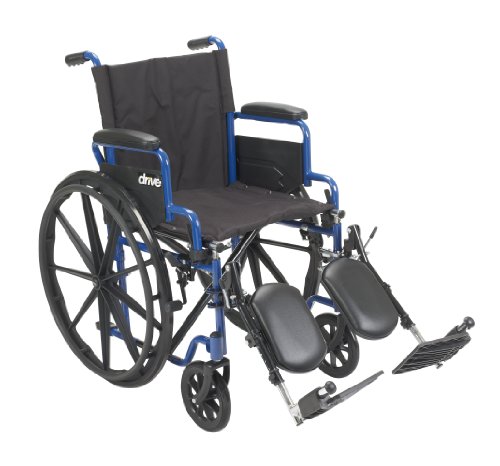
Drive Medical Blue Streak Lightweight Foldable Wheelchair – Enhanced Mobility Support – Durable Construction – Padded Comfort – Swing-Away Leg Rests – Desk Arms – Blue/Black – 20 Inch Seat
Enhanced Mobility Performance: The Drive Medical Foldable Wheelchair offers support for anyone seeking stability and independence, featuring a…
As an affiliate, we earn on qualifying purchases.
As an affiliate, we earn on qualifying purchases.
Wheelchair fit starts with the body, not the catalog.
Accurate measurements prevent pinching, pressure sores, poor posture, and unnecessary fatigue. If possible, confirm measurements with a clinician, ATP, therapist, or wheelchair specialist.
The practical fit formula
Measure hips and thighs for seat width, then add 1-2 inches. Measure from the back to the back of the knees, then subtract 2-3 inches for seat depth. Measure seat height so feet rest flat on footrests and knees sit close to 90 degrees.
Capacity spectrum
Standard, lightweight, and bariatric models overlap, so the best chair depends on weight, activity level, terrain, and support needs.
Seat width
Add 1-2 inches beside the hips so clothing, cushions, and movement do not create pressure or pinching.
Seat depth
Subtract 2-3 inches from back-to-knee measurement so the front edge does not press into the legs.
Seat height
Feet should rest on the footrests, knees should sit near 90 degrees, and transfers should feel controlled.
Support needs
Consider lumbar support, pressure cushions, tilt, recline, and positioning features for longer-term comfort.

BIKEHAND Bike Bicycle Aluminum Seat Tube Seatpost Size – Measurement Sizing Gauge – Quick Measuring Sizer Tool – 25mm to 34.9mm
EASY TO USE: Quick way to measure the seatpost size or frame seat tube inside diameter. Just place…
As an affiliate, we earn on qualifying purchases.
As an affiliate, we earn on qualifying purchases.
Match weight capacity to how the chair will actually be used.
Higher capacity can increase safety and durability, but it can also add weight and reduce portability. The strongest choice is the one that supports the user without making daily use harder than necessary.
| Wheelchair Type | Typical Capacity | Best For | Portability | Fit Risk If Misused |
|---|---|---|---|---|
| Standard Wheelchair | 250-300 lbs | ✓Most users with average weight and moderate support needs. | ~Moderate weight and everyday transport practicality. | ✗Unsafe when user weight exceeds the rated limit. |
| Heavy-Duty / Bariatric | 400-600+ lbs | ✓Larger users needing reinforced frames and wider seating. | ~Often heavier, wider, and less compact for transport. | ✓Best safety margin when correctly sized. |
| Lightweight / Active | 250-350 lbs | ✓Active users who need easier propulsion and transport. | ✓Usually easier to lift, push, and maneuver. | ✗Not appropriate if capacity or support needs are too high. |

Wheelchair Cushions, 18''x16''x 3'' Gel Wheelchair Seat Cushion with Lumbar Pillow, (2-Piece Set) for Relieve Sciatica, Back, Coccyx, Pressure Sore, Pressure Relief, with Anti-Slip Cover, Strap
Ultimate Comfort Experience: The seat cushion has a thicker and larger gel layer, so you won't feel stuffy…
As an affiliate, we earn on qualifying purchases.
As an affiliate, we earn on qualifying purchases.
Modern customization makes fit more precise and independence easier.
Carbon fiber, titanium, adjustable components, modular seating, tilt, recline, and smart pressure monitoring can reduce fatigue while improving comfort and safety.
Light, strong construction can make propulsion and vehicle loading easier.
Durable frames can reduce weight without sacrificing support.
Seat width, depth, recline, and tilt can adapt to body changes.
Pressure alerts can help prevent sores and improve positioning.

DMI Wheelchair Seat Belt and Safety Harness, Easy Install, 45 Inches long and 1.75 Inches Thick, Adjusts to 41 Inches, Black (Pack of 1)
ENSURE SAFETY AND SECURITY by preventing falling and slipping out of wheelchairs for elderly, epileptic or those with…
As an affiliate, we earn on qualifying purchases.
As an affiliate, we earn on qualifying purchases.
How a safe wheelchair decision connects from measurement to independence.
Every choice has a downstream effect. A correct measurement supports fit; fit supports posture; posture supports function; function protects independence.
Measure
Capture hip width, thigh length, seated height, weight, and support needs.
Rate
Select a chair with capacity above current weight and daily load.
Adjust
Fine-tune seat, back, cushion, footrests, tilt, and recline features.
Test
Check transfers, turns, comfort, pressure points, and stability.
Reassess
Repeat after weight, health, posture, surgery, or mobility changes.
Common questions about wheelchair capacity and fit.
How do I know if my chair supports my current weight?
Check the manufacturer’s stated weight capacity. If your weight is close to that limit or above it, consider a higher-capacity model and ask a specialist to confirm the choice.
Can a wheelchair be modified for better fit?
Yes. Many models allow changes to seat width, depth, back support, cushions, footrests, recline, and tilt. Some users need a custom-built chair.
What happens if I exceed the weight capacity?
The chair may become unstable, harder to maneuver, more likely to tip, and more vulnerable to frame or component failure.
What signs mean my wheelchair no longer fits?
Discomfort, pressure sores, hip or back pain, poor posture, difficult transfers, and tipping sensations are signs to reassess quickly.
Why Picking the Right Weight Capacity Matters for Safety and Longevity
Wheelchairs are designed with a maximum weight limit—ignoring it can be dangerous. For instance, a standard model supporting up to 250 lbs may break if you’re 300 lbs. That’s a risk no one wants.
Choosing a wheelchair with an appropriate weight capacity protects against frame failure and reduces injury risk. It also means your wheelchair lasts longer—saving you money and hassle.
For example, a bariatric user weighing 400 lbs benefits from a reinforced, heavy-duty model supporting 600+ lbs. This prevents sudden failures and keeps the user safe during daily activities.
Beyond safety, selecting the right weight capacity also impacts the wheelchair’s performance. A chair rated too low for your weight may become unstable or difficult to maneuver, leading to fatigue or accidents. Conversely, a model designed for higher weights often has reinforced frames and components, which can add weight and reduce portability. Therefore, balancing durability with ease of use is essential. Understanding your daily needs and environment helps you choose a model that offers both safety and practicality, ensuring long-term satisfaction and reducing the need for frequent replacements or repairs.
How to Measure Your Body for the Perfect Wheelchair Fit
- Measure your hips and thighs for seat width—add 1-2 inches for comfort. This extra space prevents pinching and pressure sores, especially during prolonged use.
- Check seat depth—measure from your back to the back of your knees, then subtract 2-3 inches. This ensures your thighs aren’t pressing against the front edge, which can cause discomfort or pressure sores.
- Determine seat height—measure from the floor to your thigh and ensure your feet rest flat on footrests with knees at a 90-degree angle. Proper seat height allows for better posture, ease of transfer, and reduces fatigue.
- Consider your support needs—do you need extra lumbar support or pressure relief cushions? These features can significantly impact comfort, especially for long-term users or those with specific health conditions.
Take these measurements seriously. For example, a user with wider hips might need a 20-inch wide seat instead of a standard 18-inch. Better fit means better comfort and less pressure sores. Remember, improper fit can lead to secondary health issues such as joint pain, pressure ulcers, or poor posture, which may require medical intervention. Investing time in accurate measurements and consulting with a specialist can prevent these problems and enhance your overall mobility and comfort.
Compare Wheelchair Types by Weight Capacity and Use
| Type | Typical Weight Capacity | Best For |
|---|---|---|
| Standard Wheelchair | 250-300 lbs | Most users with average weight |
| Heavy-Duty/Bariatric | 400-600+ lbs | Larger users needing extra support |
| Lightweight/Active | 250-350 lbs | Active users needing portability |
Choosing the right type depends on your weight and activity level. For example, a user who weighs 350 lbs and moves around a lot needs a bariatric, durable model. However, selecting a wheelchair with an excessively high weight capacity for your needs may result in unnecessary weight, reduced maneuverability, or higher costs. Conversely, opting for a lightweight model that doesn’t support your weight can be unsafe, risking structural failure or instability. Carefully evaluate your daily activities, physical condition, and environment to find a balance—ensuring safety without sacrificing ease of use or comfort. Consulting with a healthcare professional or wheelchair specialist can help you determine the best fit based on your specific circumstances, promoting better mobility and longer-lasting equipment.
Why Recent Materials and Customization Options Matter
Modern wheelchairs use lightweight, strong materials like titanium and carbon fiber. This means you get a sturdy chair that’s easier to push or maneuver. Imagine reducing your chair’s weight from 50 lbs to 35 lbs—makes a huge difference for daily independence.
Customization options—like adjustable seat width, recline, and tilt—allow you to fine-tune your fit. For example, a user recovering from surgery might need a tilt-in-space feature for pressure relief and comfort.
Plus, smart wheelchairs now include sensors that monitor pressure points and alert you if adjustments are needed, making safer, more comfortable use possible.
Choosing materials and features thoughtfully can significantly impact your mobility and comfort. Lightweight frames reduce fatigue and make transportation easier, while adjustable components ensure the chair adapts to your changing needs. Smart features can prevent pressure sores and other health issues by providing real-time feedback, helping you maintain optimal positioning and safety. These innovations are making wheelchairs more personalized and effective, directly contributing to improved quality of life for users with diverse needs.
Signs Your Wheelchair Isn’t Fitting or Supporting You Properly
If you notice discomfort, pressure sores, or difficulty transferring, it’s time to reassess. For example, if your hips or back ache after even short rides, your seat might be too narrow or not supportive enough.
Instability during use, or feeling like you’re tipping forward or sideways, indicates poor fit or exceeding weight limits. Regular check-ins prevent secondary issues like joint pain or poor posture.
Remember—your body changes over time. Regularly measuring and consulting with a specialist keeps your wheelchair fitting just right. Ignoring these signs can lead to more serious health problems, such as pressure ulcers, joint pain, or spinal issues, which may require medical treatment or adjustments. Addressing these issues early by reassessing fit and support can prevent costly repairs and improve your overall health and mobility. Don’t wait for discomfort to become severe—proactive maintenance is key to long-term independence and safety.
Frequently Asked Questions
How do I know if my wheelchair supports my current weight?
Check the manufacturer’s specifications for weight capacity. If your weight is close to or exceeds that limit, consider upgrading to a higher-capacity model. Regularly monitoring your weight also helps to ensure continued safety and support.
Can I modify my wheelchair to better fit my body?
Yes, many wheelchairs offer adjustable features like seat width, depth, and recline. Custom cushions and supports can also enhance comfort. For significant modifications, consulting a specialist ensures safety and proper support.
How often should I reassess my wheelchair fit?
At least once a year, or whenever you notice discomfort, pressure issues, or changes in your weight or mobility. Regular check-ins help maintain safety and comfort as your needs evolve.
What are the risks of using a wheelchair that’s too small or too heavy-duty?
A too-small wheelchair can cause pressure sores and poor posture. An overly heavy-duty model for a lighter person can be cumbersome, reducing mobility and increasing fatigue. Proper fit balances safety, comfort, and ease of use.
Are lightweight wheelchairs suitable for everyone?
Not necessarily. Users with higher weight or specific support needs should choose more robust, bariatric models. Lightweight chairs excel for portability and active users but must match your body’s demands.
Conclusion
Getting the right wheelchair isn’t just about choosing a model—it’s about matching the fit and capacity to your body. That small shift in selecting the right weight limit and size can mean the difference between discomfort and freedom.
Keep measuring, stay aware of how your wheelchair feels, and don’t hesitate to seek professional advice. Your independence depends on a perfect fit—and that fit can improve your quality of life every single day.