TL;DR

Get everyday helpers delivered free with Prime
- Fast, free delivery on millions of items
- Prime Video, Amazon Music and more included
- Member-only deals all year
Medicare covers essential mobility equipment like wheelchairs and scooters when prescribed by a doctor and obtained from approved suppliers. You typically pay 20% after deductible, with coverage limited to certain devices and usage in the home. Recent updates aim to simplify approval and expand device options.
Medicare covers wheelchairs, scooters, walkers, and crutches when prescribed and obtained from approved providers.
A doctor’s certification of medical necessity is critical for approval.
Expect to pay around 20% of the device’s cost after your deductible, with coverage limited to once every five years for each device type.
Most devices are meant for home use but can include outdoor models if justified.
Appeals are common; gather detailed documentation if your claim is denied.
What types of mobility equipment does Medicare cover? You’ll be surprised by what’s included and what’s not.
Medicare primarily covers durable medical equipment (DME) that helps you move around safely and comfortably. Think of it as the essential tools that keep you independent. Wheelchairs (manual and power), mobility scooters, walkers, canes, and crutches top the list.
But it doesn’t stop there. Some folks also get coverage for stairlifts or ramps, especially if your home has stairs that pose a barrier. These items might require extra approval or coverage from secondary plans.
For example, you might be prescribed a power wheelchair if your mobility is severely limited. On the other hand, a standard cane usually isn’t covered unless it’s a specialized model, like one with a built-in seat or ergonomic grip. Knowing what’s included helps you avoid surprises and focus on getting what you need.
Popular right now

Vitamix Propel Series 510 Professional-Grade Blender, 3 Programs, Black

Dyson Cyclone V10 Origin Cordless Vacuum

Samsung 85-Inch QN70H Neo QLED 4K Smart TV (2026)
As an affiliate, we earn on qualifying purchases.
How does Medicare decide if your mobility device is covered? The rules that matter.
Medicare covers mobility aids only if they meet certain conditions. First, your healthcare provider must certify the device as medically necessary. That means they must confirm it’s essential for your daily mobility and safety.
Second, the device has to be suitable for your condition and prescribed specifically for you. Third, the supplier must be Medicare-approved, which means they follow strict standards for quality and service.
For example, if your doctor writes a prescription stating you need a powered wheelchair for your limited walking ability, and you buy it from a Medicare-approved provider, chances are good you’ll get coverage. But if the supplier isn’t approved, Medicare won’t pay, and you’ll be responsible for the full cost.
Step-by-step: How to get Medicare to cover your mobility aid without headaches.
- Visit your doctor and explain your mobility challenges. Get a detailed prescription that specifies the device type, why you need it, and how it will help.
- Choose a Medicare-approved supplier. You can check Medicare’s list or ask your doctor for recommendations.
- Ensure the supplier performs a face-to-face exam and submits all required documentation.
- The supplier submits a claim to Medicare, including your prescription and certification details.
- Medicare reviews the claim, typically approves if all criteria are met, and covers 80% of the approved amount after your deductible.
- You pay your share (usually 20%) and any remaining charges if applicable.
For example, imagine needing a new power scooter. Following these steps can smooth out the process and reduce delays or denials.
What costs should you expect? Breaking down Medicare’s payment rules.
Medicare typically covers 80% of the approved cost after you pay your annual deductible. For 2023, the Part B deductible is $226. That means if your device costs $1,500, Medicare pays $1,124, and you’re responsible for $376.
Remember, the device must be durable—expected to last at least three years—to qualify. You’ll usually pay a 20% coinsurance, but costs can vary depending on your supplementary coverage or Medicaid assistance.
For example, a high-end power wheelchair costing $5,000 might leave you with a $1,000 bill after Medicare’s share if you haven’t met your deductible yet.
Some providers offer payment plans or discounts for those who qualify, making expensive devices more manageable.
How often can you get a new mobility device? The five-year rule explained.
Medicare generally covers a new device once every five years. That means if you had a wheelchair in 2019, you’d need a change in your medical condition or a malfunction to qualify for a new one in 2024.
This limit exists because Medicare considers these devices durable, built to last years. However, if your condition worsens or the device breaks prematurely, exceptions can be made.
For example, if your power scooter breaks after two years and can’t be repaired, you can request a replacement sooner. Always check with your provider and document your need clearly to avoid delays.
Where can you use your mobility device? Inside your home and outside too.
Most mobility aids are intended for use primarily in your home environment. Medicare’s coverage reflects this, focusing on devices that help you stay independent where you live.
However, some powered wheelchairs and scooters are designed for outdoor use, like shopping trips or visiting friends. These are usually covered if your doctor certifies they’re necessary for outside mobility.
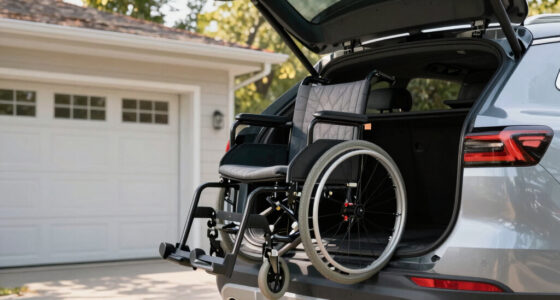
For example, a lightweight scooter that fits into your car trunk is portable enough to take on errands, and Medicare often covers these if deemed appropriate for your needs.
Always confirm with your provider whether your device qualifies for outdoor use under Medicare guidelines.
What happens if Medicare denies your claim? Steps to turn it around.
If Medicare refuses coverage, don’t panic. You have the right to appeal. First, review the denial notice carefully to understand why your claim was rejected.
Common reasons include missing documentation, incorrect coding, or the device not meeting medical necessity criteria. Gather additional evidence, like more detailed doctor notes or photos, and submit an appeal within the specified time frame.
For example, if your powered wheelchair claim was denied because of missing certification, get your doctor to resend the paperwork and clarify the need. Many appeals succeed when you provide clear, complete information.
Are there new or advanced mobility devices Medicare is starting to cover?
Medicare’s coverage policies are evolving, especially for newer tech. Recent updates aim to include more sophisticated power wheelchairs with advanced features like better terrain handling or customizable controls.
For example, some high-tech wheelchairs with smart navigation or enhanced comfort are now considered for coverage, but approval depends on strict medical necessity and supplier standards.
Stay informed by checking Medicare’s latest updates, as coverage can expand as new devices prove their safety and effectiveness.