
TL;DR

Get everyday helpers delivered free with Prime
- Fast, free delivery on millions of items
- Prime Video, Amazon Music and more included
- Member-only deals all year
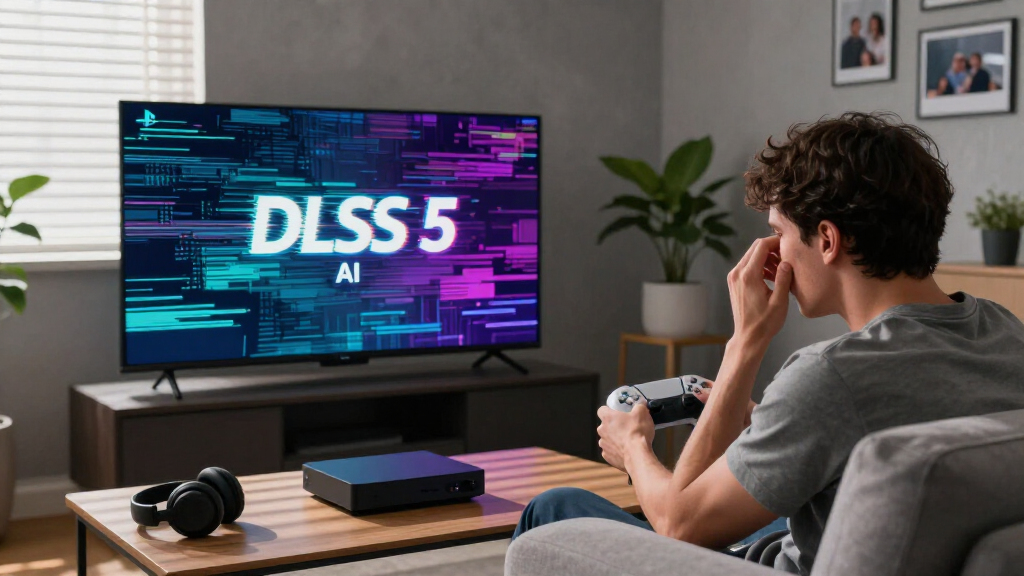
A recent leak reveals that a DLSS 5 AI filter, when applied to a major PlayStation 5 game, produces highly distorted and unappealing visuals. The development has sparked debate over AI filter quality and its use in gaming.
A recent leak has exposed a heavily distorted version of a major PlayStation 5 game with an applied DLSS 5 AI filter, revealing significant visual degradation. The leak, which includes screenshots and gameplay footage, has caused concern among gamers and industry observers about the quality and implementation of AI-based upscaling technology in high-profile titles.
The leak originated from an anonymous source and shows a popular PS5 game with DLSS 5, NVIDIA’s latest AI-powered upscaling technology, applied during development or modding. The visuals in the leaked footage are characterized by severe blurring, pixelation, and artifacting, with some commentators describing the output as ‘dogsh*t,’ according to initial social media reactions.
While NVIDIA has not officially announced or endorsed this particular application of DLSS 5 in commercial titles, the leak has reignited discussions about the reliability and visual fidelity of AI upscaling in gaming. Experts note that DLSS 5 is designed to enhance frame rates and resolution, but the leaked footage suggests that improper implementation or bugs could lead to degraded image quality rather than improvements.
Game developers and NVIDIA representatives have not yet issued official statements regarding the leak or the quality issues observed. It remains unclear whether this is a bug, a testing artifact, or an indication of broader problems with the technology’s deployment in high-profile titles.
Potential Impact on AI Upscaling Adoption
This incident underscores the importance of rigorous testing and quality assurance when integrating AI-based upscaling tools like DLSS 5 into commercial games. If such filters produce poor visual results, it could undermine consumer confidence and slow adoption of AI enhancements in gaming. The leak also raises questions about the transparency and oversight in the development process, especially for flagship titles that rely heavily on visual fidelity.
For gamers, this could mean a temporary setback or a call for clearer communication from developers and hardware manufacturers regarding the capabilities and limitations of AI upscaling technologies. The incident may also influence future development priorities, emphasizing stability and visual quality over experimental features.
NVIDIA DLSS 5 AI upscaling technology
As an affiliate, we earn on qualifying purchases.
As an affiliate, we earn on qualifying purchases.
Background on DLSS and AI in Gaming
NVIDIA’s Deep Learning Super Sampling (DLSS) technology has been a key feature in modern gaming, promising to improve resolution and frame rates through AI-driven upscaling. DLSS 5, the latest iteration, aims to deliver even better performance and image quality, with support for high-resolution displays and demanding titles.
Over the past few years, AI upscaling has become increasingly common in AAA titles, with developers integrating NVIDIA’s tools to enhance visual fidelity without sacrificing performance. However, the technology is still evolving, and issues related to artifacts, blurring, and inconsistencies have been reported in early implementations or experimental builds.
The recent leak is not the first time AI-based filters have faced scrutiny; previous updates and experimental features have occasionally produced mixed results, leading to ongoing debates about the maturity of the technology and its readiness for widespread deployment.
PlayStation 5 gaming monitor 4K HDR
As an affiliate, we earn on qualifying purchases.
As an affiliate, we earn on qualifying purchases.
Extent and Cause of the Visual Degradation
It is not yet clear whether the poor visual quality is due to a bug, a misconfiguration, or an intentional test artifact. The leak appears to show an experimental or early build, but official details are lacking. The impact on actual game releases remains uncertain, and NVIDIA has not confirmed if this is representative of the final product.
gaming graphics card with AI upscaling
As an affiliate, we earn on qualifying purchases.
As an affiliate, we earn on qualifying purchases.
Official Response and Future Testing Plans
NVIDIA and game developers are expected to review the leaked footage and conduct further testing to determine the cause of the visual issues. An official statement from NVIDIA or the affected game studio is anticipated, clarifying whether this is a bug or a preview of ongoing development. In the meantime, industry observers will monitor for updates, especially regarding the stability and quality of DLSS 5 in upcoming releases.
high-performance gaming PC with DLSS support
As an affiliate, we earn on qualifying purchases.
As an affiliate, we earn on qualifying purchases.
Key Questions
Is DLSS 5 currently available in commercial games?
No, DLSS 5 has not yet been officially released in commercial titles. The leak shows an experimental or testing build, not a final product.
Could this visual issue affect future DLSS updates?
Yes, if the cause is identified as a bug or implementation error, it could lead to revisions and improvements before official deployment.
Does this mean DLSS 5 is unreliable?
Not necessarily. The leak suggests there may be issues with specific builds or configurations, but NVIDIA’s technology generally performs well in supported titles when properly implemented.
Will this affect the performance of PS5 games?
Since DLSS is an NVIDIA technology primarily used on PC, its direct impact on PS5 games is limited. However, if similar AI techniques are adopted or referenced, it could influence future console development or cross-platform features.
What should gamers do if they encounter similar issues?
Gamers are advised to follow official updates from developers and NVIDIA, and avoid using experimental or unsupported builds until stability and quality are confirmed.
Source: rss
Halloween Picks
halloween
As an affiliate, we earn on qualifying purchases.