
TL;DR

Get everyday helpers delivered free with Prime
- Fast, free delivery on millions of items
- Prime Video, Amazon Music and more included
- Member-only deals all year
Research and clinical experience suggest familiar, personalized music can help some people with dementia feel more engaged and may improve depressive symptoms. A 2025 Cochrane review found little evidence of lasting effects on cognition or agitation, and music does not reverse or stop dementia.
Personalized music may help people with dementia feel more engaged and improve depressive symptoms, according to research reviewed by Being Patient, but it has not been shown to reverse or stop the disease. The report describes a small study in which a 20-minute playlist session was followed by greater observed engagement, and a 2025 Cochrane review that found likely benefits for depressive symptoms but little evidence of lasting changes to cognition or agitation.
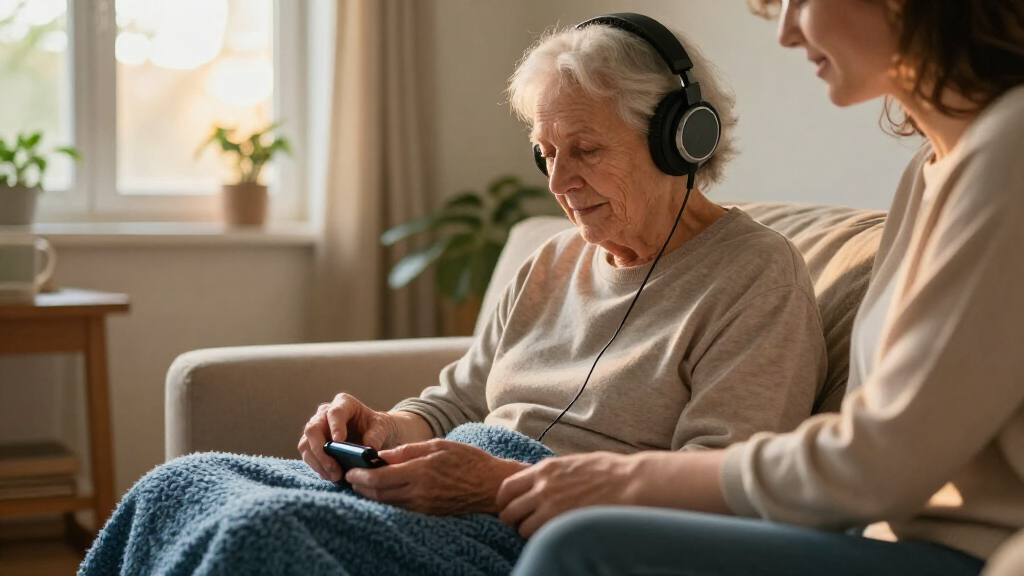
In the study cited by Being Patient, researchers at George Mason University worked with 51 people with dementia attending adult day health centers. Participants listened to personalized playlists through headphones for 20 minutes. After the session, researchers observed increases in joy, eye contact, eye movement, engagement and talkativeness, and a decrease in sleeping. The findings describe changes observed after a session; they do not establish that music changes the course of dementia.
A 2025 update to the Cochrane review pooled 30 studies involving 1,720 participants, most of whom were in care homes. The review found that music-based therapy probably improves depressive symptoms and may improve overall behavior. It found little evidence of longer-term effects on cognition or agitation, and reported that benefits may fade in the weeks after sessions stop.
Concetta Tomaino, a music therapist and executive director and co-founder of the Institute for Music and Neurologic Function, told Being Patient that familiar songs can sometimes prompt singing even among people with advanced dementia who appear unable to respond in other ways. The report says researchers do not have a complete explanation for this response. Tomaino’s account reflects clinical experience, not proof that every person with dementia will respond similarly.
Music’s Role in Daily Dementia Care
The findings matter to families and care workers because music is a potentially accessible way to support connection and comfort, including when a person has difficulty communicating. The study’s authors described personalized playlists as an affordable intervention, and the report says familiar music may be used during disruptions to routine, such as travel to an appointment or time in a waiting room.
That possible benefit should be kept distinct from disease treatment. The evidence described in the report points mainly to mood and engagement during or around music sessions, not prevention of dementia or durable improvement in memory. Music can be one part of supportive care, but the reported research does not show that it replaces other care or works consistently for everyone.
comfortable over-ear headphones for seniors with dementia
As an affiliate, we earn on qualifying purchases.
As an affiliate, we earn on qualifying purchases.
Why Familiar Songs Can Persist
Music engages multiple brain systems involved in hearing, movement, memory and emotion. Tomaino told Being Patient that songs people have formed attachments to may be embedded in deeper brain networks that can remain more functional as dementia advances. This is a proposed explanation for why a person might respond emotionally or sing along even when they cannot identify a familiar face or place. It is not a complete scientific account of music’s effects.
The report traces Tomaino’s interest to a nursing-home placement during her music therapy training in the 1970s. She recalled residents with advanced dementia singing familiar lyrics after she sang to them. She later worked for 35 years alongside neurologist Oliver Sacks and has spent decades studying music and neurological function. Her observations helped raise questions about preserved musical responses, while controlled studies and reviews offer a more limited measure of what music-based interventions can do.
Caregivers cited in the report also use familiar playlists to help with unsettled moments and changes in routine. The report discusses quiet music before bed as a possible aid for sleep, but the supplied evidence does not give specific study results establishing that effect. The clearest research findings presented concern observed engagement after listening and review-level evidence on depressive symptoms and behavior.
““They not only came to life in the moment, but were able to sing the words.””
— Concetta Tomaino, executive director and co-founder of the Institute for Music and Neurologic Function
easy-to-use MP3 player with physical buttons for seniors
As an affiliate, we earn on qualifying purchases.
As an affiliate, we earn on qualifying purchases.
Limits of the Music Evidence
How long benefits last and who is most likely to respond remain uncertain. The Cochrane review found that some effects may fade within weeks after sessions end, and the source report does not identify a single playlist approach that works for all participants. The 51-person study measured responses after a 20-minute session, so it does not establish lasting effects or show that music caused changes beyond that setting.
The report says music does not reverse or stop dementia. It also notes little evidence that music therapy changes cognition or agitation over the longer term. While it discusses music as a possible source of comfort during transitions and before sleep, the supplied material does not provide detailed trial evidence for each of those uses. The brain mechanisms behind preserved musical responses are also not fully understood.
simple portable music player with speaker for elderly
As an affiliate, we earn on qualifying purchases.
As an affiliate, we earn on qualifying purchases.
Training and Further Study
Dr. Emily Ihara said the George Mason team is developing online training for direct care workers in long-term care communities, following the playlist study. The report does not specify when that training will be available or provide further details about its contents.
For the evidence base, the next steps are clearer results from larger and longer studies that test who benefits, which approaches work best, and whether observed changes continue after sessions stop. Until then, the findings support music as a possible element of person-centered care, with effects that should be understood as supportive rather than as treatment for dementia.
headphone splitter for caregiver and senior listening together
As an affiliate, we earn on qualifying purchases.
As an affiliate, we earn on qualifying purchases.
Key Questions
Can music treat or reverse dementia?
No. The report says music cannot reverse or stop dementia. Research cited suggests possible benefits for mood and engagement, not a cure or a way to halt the disease.
What benefits have studies reported?
A study of 51 people found increased observed joy, eye contact, eye movement, engagement and talkativeness after a 20-minute personalized playlist session. The 2025 Cochrane review found music therapy probably improves depressive symptoms and may improve overall behavior.
Does music improve memory or reduce agitation over time?
The review found little evidence that music therapy changes cognition or agitation over the longer term. It also reported that some effects may fade in the weeks after sessions stop.
Why might familiar songs prompt a response?
Music engages brain systems linked to hearing, movement, memory and emotion. Tomaino suggested that musical memories may be held in deeper brain networks that can remain functional as dementia progresses, but the report says the explanation is not complete.
Is there one playlist or approach that works for everyone?
The source does not identify a single approach that works for everyone. The study used personalized playlists, and the report describes music as a possible support whose effects can vary and may not last after sessions end.
Source: rss
Fall Picks
fall essentials
As an affiliate, we earn on qualifying purchases.