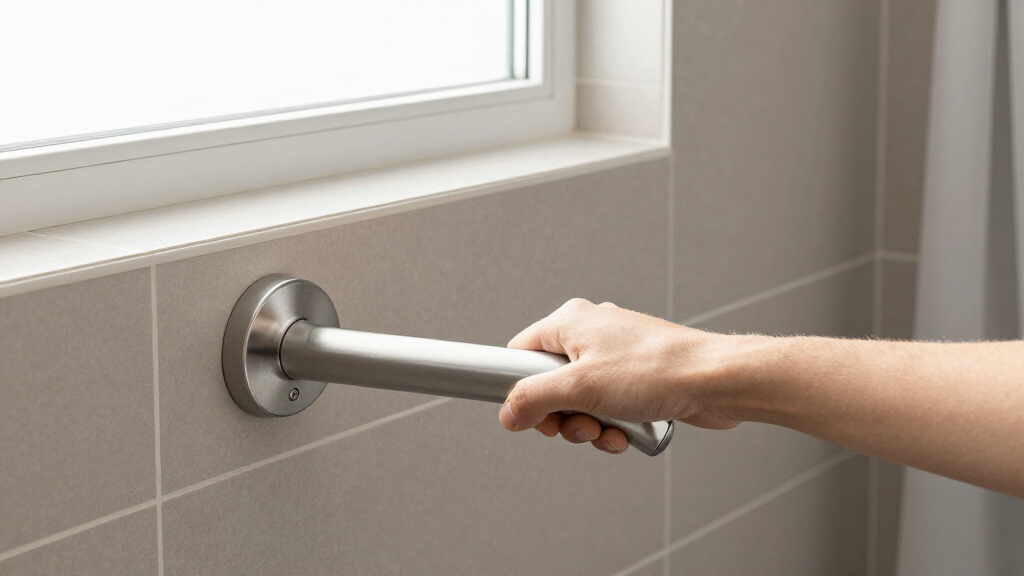

TL;DR

Get everyday helpers delivered free — and shop member deals
- Fast, free delivery on millions of items
- Access to Prime Big Deal Days deals on October 6–7
- Prime Video, Amazon Music and more included
Suction grab bars are great for temporary support on smooth surfaces, but they aren’t for weight-bearing. Focus on surface compatibility, safety features, and your specific use case. Regular checks are key to safe, effective support.
Suction grab bars are best suited for balance support on smooth, flat surfaces and are not for supporting full body weight.
Always check the surface compatibility—avoid textured, porous, or grout-lined areas for secure attachment.
Use the suction indicator to verify the seal before each use—don’t rely on them if the indicator shows red or if the seal feels loose.
Regularly re-seat and inspect the bar—humidity, heat, and surface dirt weaken suction over time.
For daily weight support, opt for permanently mounted grab bars anchored into studs or with wall anchors.
How to Choose Suction Grab Bars
Suction grab bars can add confidence without drilling—but only when the surface, safety features, and use case align. Treat them as temporary balance aids, inspect them often, and never depend on them to hold your full body weight.
Steady yourself. Do not pull yourself up.
Advertised capacities are usually measured under ideal conditions. Real bathrooms add humidity, soap film, grout, heat, and imperfect surfaces.
Who benefits—and where the boundary sits
These tool-free handles suit renters, travelers, older adults, and people recovering from an injury who need a light touch for orientation or balance. If the user must pull, lift, or transfer body weight, move directly to mechanically secured support.
Temporary balance assistance
A stabilizing handhold while entering a shower or moving carefully on a wet floor—without loading the bar heavily.
Renters and travelers
Portable support when drilling is prohibited or impractical, provided a smooth, uninterrupted surface is available.
Transfers and full-body pulls
Standing from a toilet, lifting from a tub, or catching a fall requires a properly anchored permanent grab bar.
Match the cups to the surface
The cups—not simply the advertised bar length—determine whether a model fits. Both cups need smooth, flat, non-porous contact with no grout line, seam, crack, or texture beneath them.
| Surface | Compatibility | What to verify | Primary risk |
|---|---|---|---|
| Glass or shower enclosure | ✓ Strong candidate | Flat, clean, undamaged panel | Soap film weakening the seal |
| Glazed ceramic tile | ✓ Strong candidate | Each cup fits inside one tile | Cup crossing a grout line |
| Fiberglass or acrylic | ✓ Often suitable | Rigid, smooth, non-curved area | Flexing or molded texture |
| Matte or textured tile | ✗ Avoid | Texture prevents an airtight seal | Sudden suction loss |
| Natural stone or porous material | ✗ Avoid | Micropores admit air beneath cups | Unpredictable detachment |
| Drywall, wallpaper, damaged tile | ✗ Never use | Choose another support system | Surface or bar failure |
Measure before ordering
Confirm one uninterrupted flat zone large enough for the full cup-to-cup footprint. A 12-inch bar may require more than 12 inches once the suction cups are included.
Prioritize feedback over marketing claims
A visible suction-status indicator gives useful information in the actual bathroom. A large laboratory weight rating cannot tell you whether today’s seal has weakened.
Build a repeatable safety routine
Heat, humidity, temperature changes, surface dirt, and soap residue gradually weaken suction. Installation is not a one-time event; the seal needs ongoing verification.
Clean
Remove soap film and residue. Follow the manufacturer’s cleaning guidance.
Dry
Make sure both the surface and suction cups are completely dry.
Lock
Press each cup flat, then engage the locking levers or vacuum pump.
Tug-test
Pull gently before use. Any shift, lift, or movement means re-seat it.
Recheck
Verify the indicator and seal every time, then re-seat regularly.
Read the indicator, inspect both cups, and perform a gentle tug-test.
Release, clean, dry, and re-seat more often in hot or humid bathrooms.
Stop using the bar if it feels loose, shows a warning, or repeatedly loses suction.
Temporary balance or dependable load support?
The correct decision depends less on convenience than on what happens if the device fails. Daily mobility support and body-weight loading call for permanent anchoring.
The need is light and temporary
Use it as a portable orientation or balance aid on a verified smooth surface.
- The user does not pull or lift against the bar
- The surface is smooth, flat, and non-porous
- The seal will be checked before every use
- Travel, renting, or short-term recovery makes drilling impractical
Failure cannot be tolerated
Use a bar correctly anchored into studs or installed with an approved mounting system.
- The user transfers, pulls, lifts, or leans heavily
- Support is needed every day
- Balance or mobility limitations are significant
- An ADA-compliant installation is required
Clamp-on tub rail
No drilling, but mechanically grips a compatible tub wall.
Tension pole
Floor-to-ceiling support with positioned grab handles.
Screw-mounted bar
The preferred long-term option when properly anchored.
Five links determine reliability
A premium product cannot compensate for the wrong surface or unsafe use. Safety comes from the complete chain remaining intact.
Surface
Smooth, flat, non-porous, and uninterrupted.
Product fit
Cups fully contact the available installation zone.
Seal status
Indicator and tug-test confirm attachment.
Maintenance
Cleaning and regular re-seating protect suction.
Safe use
Balance assistance only—never full-body loading.
The bottom line
A suction grab bar can make a smooth-surface bathroom feel more manageable, but confidence must not become overreliance. Match the cups carefully, prioritize a seal indicator, test before every use, and switch to permanent support whenever the user needs dependable weight-bearing assistance.
What Suction Grab Bars Are and Who They Help
Suction grab bars are temporary, tool-free handles that attach to smooth surfaces via suction cups. They’re perfect for renters or travelers who can’t drill into walls but still want support. Common users include older adults, those recovering from injury, or anyone with balance challenges.
Picture a caregiver helping an elderly parent navigate a shower with a suction bar that sticks securely on smooth tile—no tools, no damage. These bars are lightweight, portable, and easy to reposition, making them a versatile support option.
But remember — they’re designed for balance assistance, not for supporting full body weight. Always use them as a balance aid, not a weight-bearing device.
As an affiliate, we earn on qualifying purchases.
The Critical Safety Limit: What They Can and Can’t Do
Suction grab bars are meant for balance support, not for pulling or lifting your entire body. Most claim a weight capacity of 200-300 lbs, but that’s under ideal lab conditions on perfect surfaces. In real bathrooms, they often fail if the surface isn’t flat or if the seal weakens over time.
For example, if you try to hang your full weight on a suction bar in a textured shower, it might slip. Occupational therapists warn against relying on suction bars for actual weight support—permanently mounted, sturdy bars are safer for that.
Always check the manufacturer’s safety warnings. Use suction bars only to steady yourself, never as a lifting aid or for pulling yourself up.
Understanding these safety limits is crucial because overestimating what they can handle increases the risk of falls. If a user leans heavily or relies on the bar for support beyond its capacity, the risk of sudden failure rises sharply. This can lead to dangerous falls, especially in wet environments where grip and seal are compromised. Recognizing the limitations helps prevent accidents and ensures safety is maintained.
temporary suction grab bars for bathroom
As an affiliate, we earn on qualifying purchases.
As an affiliate, we earn on qualifying purchases.
Matching Suction Grab Bars to Your Surfaces: The #1 Purchase Tip
The most critical factor when choosing a suction grab bar is surface compatibility. They work best on smooth, flat, non-porous surfaces like glazed ceramic tile, glass, or fiberglass. Avoid textured tiles, grout lines, natural stone, or painted drywall.
Before buying, measure the flat area where you plan to install the bar. A 12-inch bar needs about 12 inches of uninterrupted flat space. For example, a large 5-inch suction cup won’t stick well if it spans grout lines or textured tile, which can cause leaks and slips.
Check your bathroom surface with a simple test: press the suction cup firmly, engage the locking lever, then tug gently. If it stays put, you’re good to go. If it slips, look for a different spot or a different support.
Why this matters: Proper surface selection directly impacts safety and reliability. An improper surface can cause the suction to fail unexpectedly, risking falls. The implications are significant — a seemingly secure install might suddenly detach if the surface isn’t suitable, leading to potential injuries. Therefore, understanding the importance of surface compatibility isn’t just about product choice; it’s about preventing accidents. When surfaces are incompatible, the suction seal can break unexpectedly, especially in humid or dirty conditions, which are common in bathrooms. This can cause sudden slips, making proper surface assessment a non-negotiable step for effective safety support.
non-permanent bathroom support handles
As an affiliate, we earn on qualifying purchases.
As an affiliate, we earn on qualifying purchases.
Compare Key Features: Which Suction Grab Bar Fits Your Needs?
| Feature | Why It Matters | Options to Consider |
|---|---|---|
| Cup Diameter | Larger cups hold more securely, especially on uneven surfaces. | 3-4 inches for tight spaces; 4-5 inches for maximum grip. |
| Suction Indicator | Shows if the seal is secure, preventing accidental slips. | Color-changing indicators (green to red) are highly recommended. |
| Bar Length | Longer bars provide more support but require larger, flat areas. | 12 to 24 inches; match to available space. |
| Grip Texture | Textured or contoured grips are easier for arthritic hands. | Rubberized, knurled, or ergonomic designs. |
| Material | Sturdy materials last longer and resist moisture. | ABS plastic is common; stainless steel options are durable but heavier. |
As an affiliate, we earn on qualifying purchases.
Installing and Maintaining Your Suction Bar Like a Pro
Proper installation starts with a clean, dry surface. Wipe with alcohol or vinegar to remove soap residue. Press the cup firmly against the surface, then flip the locking lever or engage the vacuum pump. Always tug gently to test the seal—if it moves, re-seat it.
Check the suction indicator before each use. If it turns red or the seal weakens, re-seat the bar or replace it. Keep the surface free of soap scum and avoid extreme temperature swings, which can weaken the suction.
Remember, suction degrades over time. Re-press and check the seal weekly, especially in humid environments. Removing the bar involves releasing the vacuum—usually a gentle lift of the cup’s edge—then cleaning the surface before reinstallation.
Why this matters: Regular maintenance ensures the suction remains reliable, preventing unexpected slips. Neglecting these steps can compromise safety, especially in humid environments where seals are more prone to failure. Consistent checks and proper removal prolong the life and safety of your support system.
When to Switch to Permanent Support Bars
Suction grab bars are ideal for temporary needs, travel, or renters. But if you require full weight support or regular use, permanent bars anchored into wall studs are the safer choice. They withstand 250 lbs or more and meet ADA standards.
Imagine a homeowner installing a sturdy, drilled-in bar that can support a full body pull—something suction cups simply can’t match. For daily safety, especially for those with significant mobility issues, this is the better long-term investment.
Why this matters: Permanent bars provide consistent, reliable support, especially when used daily or for weight-bearing. Relying solely on suction cups in such cases can be risky because their hold can weaken over time or due to surface imperfections. Making the switch ensures peace of mind and reduces fall risk in critical moments. Long-term safety depends on secure, stable fixtures; choosing permanent support reduces the chance of sudden failure, especially in environments prone to moisture and temperature fluctuations that weaken suction seals. The tradeoff involves installation effort and permanence, but for consistent, weight-bearing support, the benefits outweigh the inconvenience.
Consider your needs carefully. Use suction bars as a supplement, not a replacement, for permanent fixtures when safety is non-negotiable.
Frequently Asked Questions
Are suction grab bars actually safe?
They are safe for providing balance support when used correctly on suitable surfaces. Never rely on them for supporting your full weight or pulling yourself up; always test the seal before each use.How much weight can a suction grab bar hold?
Most claim 200–300 lbs, but in real bathrooms, they often can’t support that much under everyday conditions. They are primarily for balance, not weight-bearing support.Will it stick to my textured or porous tile?
No, textured or porous surfaces prevent a secure seal. For best results, stick to smooth, glazed surfaces and always perform a tug test after installing.How often should I check the suction?
Before every use, especially in humid environments. Re-seat and inspect weekly to ensure the seal remains strong and the indicator shows green.Can I use suction grab bars in the shower?
Yes, on compatible smooth surfaces. Keep in mind that soap, water, and temperature changes can weaken the seal, so regular checks are essential.Conclusion
Remember: suction grab bars are a handy, portable support option, but they’re not a one-size-fits-all solution. Use them with caution, always check their security, and know when a permanent solution is safer. Your safety depends on understanding their limits and applying good maintenance habits. Think of these bars as your quick, temporary safety net — not your final safety anchor.Fall Picks
fall essentials
As an affiliate, we earn on qualifying purchases.