
TL;DR

Get everyday helpers delivered free — and shop member deals
- Fast, free delivery on millions of items
- Access to Prime Big Deal Days deals on October 6–7
- Prime Video, Amazon Music and more included
Accessible faucet handles are vital for ease of use, especially for those with limited grip or dexterity. Lever and touchless options meet ADA standards, and retrofit adapters can upgrade existing fixtures cost-effectively. The right handle improves safety and independence in daily routines.
Imagine trying to turn a traditional round knob with stiff joints or limited grip strength. Frustrating, right? Now picture effortlessly activating a lever handle or waving your hand under a sensor. These simple changes can transform your bathroom into a space where independence isn’t just a goal — it’s a reality.
Choosing the right faucet handle isn’t just about style. It’s about making daily routines smoother and safer for everyone, especially those with arthritis, limited grip, or reduced dexterity. This guide will walk you through the best options, practical tips, and how to upgrade existing fixtures without breaking the bank.
Lever handles are the most straightforward, ADA-compliant option for accessible use, requiring just a push or pull.
Retrofit adapters offer a budget-friendly way to upgrade existing faucets without full replacement.
Avoid knobs and cross handles for primary control in accessible spaces—they don’t meet no-twisting requirements.
Safety features like anti-scald valves are essential, especially for users with reduced sensation or cognitive challenges.
Touchless faucets provide a hygienic, hands-free experience, ideal for severe dexterity limitations but come with higher initial costs.
Choosing Accessible Faucet Handles
The right control can turn a frustrating daily task into an effortless one. Lever, touchless, and retrofit solutions reduce gripping, twisting, and force—supporting safer, more independent routines for people with arthritis, limited dexterity, tremors, or one-handed use.
Not every handle asks the same thing of the hand
Push, pull, tap, or wave controls reduce strain. Designs that demand a full grip and wrist rotation create barriers for arthritic hands and reduced dexterity.
Lever handles
Operate with a palm, wrist, forearm, or elbow. Long levers improve reach, while single-lever mixers simplify flow and temperature control.
High accessibility · Push or pullTouchless sensors
Remove handle operation entirely. Excellent for severe dexterity limitations and hygiene, but require power and occasional sensor maintenance.
Very high accessibility · Wave to useTouch-activated
A tap anywhere on the spout toggles water flow. A conventional handle still presets temperature, balancing accessibility with familiar control.
Good accessibility · Light touchRound knobs
Require a full grip plus wrist rotation. Wet hands, joint pain, weakness, or tremors make small polished knobs particularly difficult.
Low accessibility · Grip and twistCross handles
Visually distinctive but mechanically demanding. Their grasp-and-rotate motion generally fails the no-twisting criterion for accessible spaces.
Low accessibility · Grasp and rotateFoot or knee controls
Useful in accessible kitchens and clinical settings when hand use is limited. Installation and positioning require more careful planning.
Situational · Hands remain freeCompare the everyday experience
Accessibility depends on the motion, force, reach, and feedback required—not simply the fixture’s appearance.
| Handle type | Accessibility | No twisting | Power needed | Best fit |
|---|---|---|---|---|
| Lever | ✓ High | ✓ Push / pull | ✓ No | Most users; aging in place |
| Touchless sensor | ✓ Very high | ✓ Hands-free | ~ Battery / wired | Severe dexterity limitations |
| Touch-activated | ✓ High | ✓ Tap to toggle | ~ Usually battery | Light-touch operation |
| Round knob | ✗ Low | ✗ Full rotation | ✓ No | Not recommended for access |
| Cross handle | ✗ Low | ✗ Grasp / rotate | ✓ No | Traditional décor only |
✓ ACCESSIBLE ADVANTAGE ✗ ACCESSIBILITY BARRIER ~ CONDITIONAL OR MAINTENANCE TRADEOFF
What “ADA-friendly” really means
The 2010 ADA Standards and ICC/ANSI A117.1 focus on how operable parts work. The criteria strongly favor levers, sensors, and other low-force controls.
Relative ease-of-operation score
Editorial assessment based on required grip, motion, force, and independence. Higher is easier.
Upgrade the handle without replacing the faucet
Lever-conversion adapters can clamp onto compatible knob stems, providing a low-cost accessibility improvement with minimal tools.
Identify the stem
Check the faucet brand, stem shape, diameter, and mounting hardware.
Confirm fit
Choose a fixed or adjustable adapter rated for the existing fixture.
Install the lever
Secure it firmly while preserving comfortable clearance and reach.
Test operation
Try it with a palm, wrist, or forearm and verify temperature control.
Easy operation must include safer temperature control
Reduced sensation, slower reactions, or cognitive challenges can increase burn risk. Accessible controls work best alongside anti-scald protection.
Anti-scald or pressure-balancing valve
Helps limit sudden temperature spikes when water pressure changes elsewhere in the home.
Thermostatic limit stop
Restricts maximum hot-water output even if the user moves the control fully toward hot.
Clear visual and tactile cues
High-contrast hot/cold markings and tactile indicators support users with low vision or reduced sensation.
Small control changes create broader benefits
A well-chosen handle connects physical usability to safety, confidence, and greater independence in daily routines.
Best all-around choice: lever
Simple, familiar, stylish, power-free, and easy to operate with multiple parts of the hand or arm.
Best for severe limitations: touchless
Maximum hands-free access, with higher purchase cost and ongoing battery or sensor maintenance.
Accessible faucet FAQs
The shortest route from uncertainty to a practical decision.
What is easiest for someone with arthritis?
Lever handles and touchless sensors. Both avoid tight grasping and wrist rotation while requiring minimal effort.
Can an existing faucet be upgraded?
Often, yes. Compatible lever adapters or replacement handles can improve access without replacing the entire fixture.
Does every home faucet need to meet ADA rules?
No. Federal ADA requirements generally cover public and commercial spaces, but the same principles make homes easier to use.
Your Best Bet for Accessibility: Lever Handles
Need a handle that anyone can operate easily? Lever handles are the gold standard for accessibility. They require a simple push or pull—no twisting or gripping needed. Think about how you open a door with a lever—smooth and natural.
For example, a caregiver assisting an elderly parent can open the tap with just a wrist or forearm movement. And many modern faucets come with long, ergonomic levers that make reaching and turning effortless. Plus, they come in a variety of finishes—matte black, brushed gold—that blend seamlessly into stylish bathrooms.
According to ADA standards, handles must be operable with one hand, with no tight grasping or twisting, and require less than 5 pounds of force. Lever handles meet these criteria comfortably, making them the top choice for accessible design.
ADA compliant lever faucet handles
As an affiliate, we earn on qualifying purchases.
As an affiliate, we earn on qualifying purchases.
Why Traditional Knobs and Cross Handles Fall Short
Knob and cross handles look charming, but they’re often the least accessible. They demand a firm grip and wrist rotation—challenging for arthritic hands or those with limited dexterity. When a knob is stiff or requires a twisting motion, it not only increases effort but also introduces a risk of slips or drops, which can lead to spills or injury.
The tradeoff here is between aesthetic appeal and functionality. While knobs may match a vintage or classic decor, their limited accessibility can exclude users with mobility challenges. For spaces designed for universal access, prioritizing lever or sensor controls means better safety, independence, and compliance with accessibility standards. This shift also reflects a broader understanding that usability should be central in design, rather than an afterthought.
In essence, choosing handles that require minimal effort and no twisting enhances overall safety and ensures that the fixture remains usable across a wider range of users, reducing frustration and potential accidents.
As an affiliate, we earn on qualifying purchases.
Compare Common Faucet Handle Types in a Simple Table
| Handle Type | Accessibility Level | Ease of Use | Ideal For |
|---|---|---|---|
| Lever handles | High | Push or pull, minimal effort | Everyone, especially users with limited grip |
| Cross handles | Low | Requires grasping & twisting | Traditional aesthetic, not for accessibility |
| Knob handles | Low | Full grip & wrist rotation needed | Not recommended for accessibility |
| Touchless sensors | Very high | Wave or hand movement | Severe dexterity issues, modern tech lovers |
faucet retrofit adapters for accessibility
As an affiliate, we earn on qualifying purchases.
As an affiliate, we earn on qualifying purchases.
Retrofit Your Existing Faucet with Easy-to-Use Handles
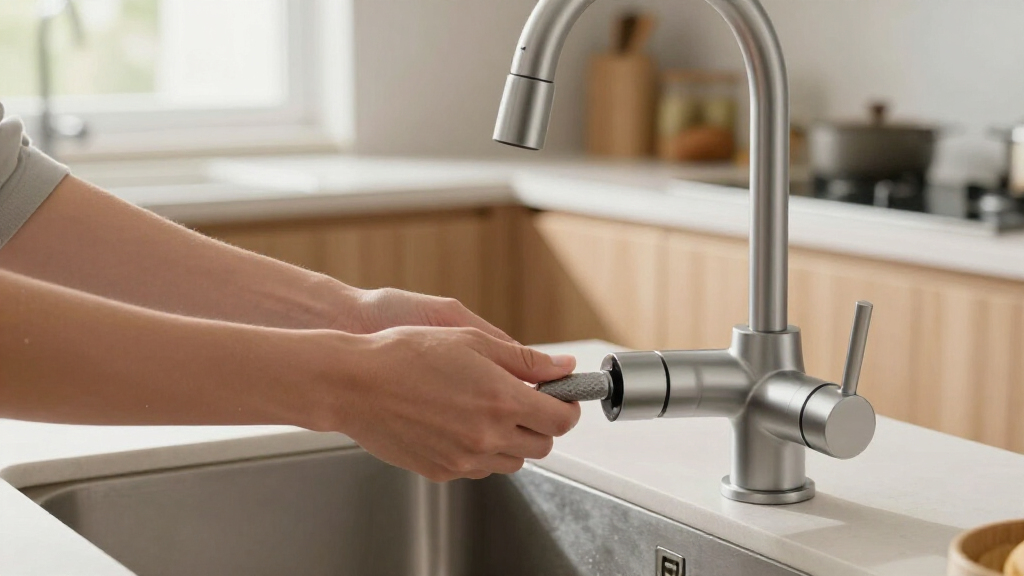
Want to upgrade your current faucet without a full replacement? Lever adapters are an affordable, straightforward solution. They clamp onto the existing stem, turning a knob into a lever with minimal tools and cost—often under $30.
For example, a homeowner with arthritis installs a lever adapter on their existing kitchen faucet. The old, stiff knob now becomes a smooth lever, making daily tasks like washing dishes or filling a glass much easier.
When choosing retrofit options, check compatibility with your faucet’s stem type. Many brands offer adjustable adapters that work with common sizes, making upgrades simple and budget-friendly.
accessible bathroom faucet handles
As an affiliate, we earn on qualifying purchases.
As an affiliate, we earn on qualifying purchases.
Safety First: Controlling Water Temperature and Preventing Scalds
Accessible handles are only part of the story. Safety matters too. For users with reduced sensation or cognitive challenges, setting the water heater to about 120°F (49°C) helps prevent scalding. Also, consider faucets with anti-scald valves or thermostatic controls.
Imagine a person with diminished sensation turning the tap to find hot water—an accident waiting to happen. Anti-scald devices act as a safety net, maintaining water temperature within a safe range, even if the handle is turned all the way up.
Choosing fixtures with integrated safety features or installing anti-scald valves can significantly reduce the risk of burns. These devices work by automatically shutting off or limiting hot water flow once a safe temperature is reached, providing peace of mind for caregivers and users alike. The implication is clear: safety features are an essential complement to accessible handles, forming a comprehensive approach to bathroom safety that minimizes hazards and supports independence.
Smart and Stylish: Touchless and App-Controlled Faucets
Touchless faucets use infrared sensors to activate water flow—no handle needed. They’re excellent for people with severe dexterity limitations or those who want a hygienic, spill-free experience. Plus, many now come in chic finishes that match contemporary decor.
Picture waving your hand under the spout to wash your face or fill a pet’s bowl. No twisting, no gripping—just a simple gesture. These models are increasingly affordable, though they still carry a higher price tag compared to traditional handles.
Some advanced models even connect to smart home systems, allowing voice commands or app control—perfect for tech-savvy users or those with limited mobility. The key is understanding that these options often involve a tradeoff: higher initial costs and maintenance requirements but substantial gains in hygiene, convenience, and accessibility. This makes them particularly suitable for environments prioritizing ease of use and modern aesthetics.
Cost and Practical Tips for Buying Accessible Faucets
Budget matters. Basic lever handles start around $50, while high-tech touchless models can cost $200 or more. Retrofit adapters are the most economical upgrade, often under $30.
Here are quick tips:
- Check compatibility with your existing faucet before buying adapters.
- Prioritize handles with textured, matte finishes for wet hands.
- Look for models with safety features like anti-scald controls.
- Consider long-term maintenance—sensor faucets need batteries and occasional cleaning.
- Involve users with limited grip in the selection process to ensure comfort and ease of use.
Frequently Asked Questions
What is the easiest faucet handle for someone with arthritis?
Lever handles and touchless sensors are the easiest options. They require minimal effort—push, pull, or wave—and avoid twisting or gripping, making daily tasks much smoother.Can I upgrade my existing faucet to be more accessible?
Yes. Lever adapters and replacement handles are affordable and simple to install. They convert traditional knobs into easy-to-use levers, often for under $30.Are sensor faucets reliable during power outages?
Battery-powered sensor faucets typically continue working during outages. Hardwired models may not, so it’s wise to choose battery-operated versions for reliable accessibility.What finishes are best for grip and maintenance?
Matte or textured finishes are easier to grip and maintain, especially when wet. Polished chrome can be slippery and shows spots more easily.How can I prevent scalding in an accessible bathroom?
Set your water heater to around 120°F (49°C). Use anti-scald valves or thermostatic controls on your faucet to keep water within a safe temperature range, reducing burn risks.Conclusion
Choosing the right faucet handle can dramatically improve daily life for many. It’s about making spaces that adapt to your needs, not the other way around. When you select a lever or sensor faucet, you’re investing in safety, independence, and peace of mind.
Remember, accessible design isn’t about compromise—it’s about smart choices that look good and work well. Your bathroom should be a place where everyone feels confident and in control. So, why not start with the handle?
Evergreen bestsellers Picks
bestsellers
As an affiliate, we earn on qualifying purchases.