
TL;DR

Get everyday helpers delivered free with Prime
- Fast, free delivery on millions of items
- Prime Video, Amazon Music and more included
- Member-only deals all year
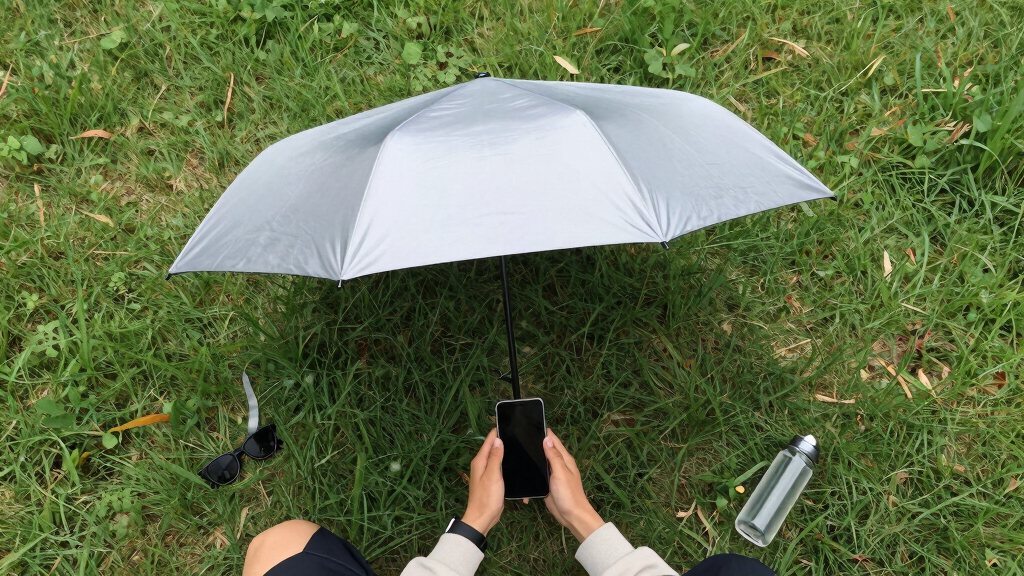
A prototype autonomous flying umbrella has been developed that can follow users and provide protection from rain and sunlight. The device uses AI and drone technology, and its creators say it could revolutionize personal weather shields. The project is in early testing, with details still emerging.
An autonomous flying umbrella capable of following users and shielding them from rain and sunlight has been demonstrated by a tech startup, marking a significant step in wearable weather protection technology. The device uses AI and drone technology to track and follow the user, providing hands-free weather shielding. This development could have implications for personal comfort and outdoor activities, especially in unpredictable weather conditions.
The prototype, developed by AeroShield Technologies, features a lightweight drone-like frame equipped with sensors and AI-powered tracking systems. During initial demonstrations, the umbrella successfully followed a user across various terrains and weather conditions, adjusting its position to provide continuous coverage. The device can detect rain and sunlight intensity, activating and positioning itself accordingly. AeroShield’s CEO, Jane Mitchell, stated that the goal is to create a device that offers both convenience and safety for pedestrians, cyclists, and outdoor workers.
According to AeroShield, the umbrella uses a combination of GPS, computer vision, and obstacle avoidance sensors to navigate and maintain optimal positioning relative to the user. The system is designed to operate autonomously, requiring minimal user input. The prototype is still in testing phases, and commercial availability is not yet announced. Experts say such a device could reduce the need for carrying traditional umbrellas or sunshades, especially in sudden weather changes.
Potential Impact on Personal Weather Protection
This innovation could transform how individuals manage weather exposure during outdoor activities. By providing a hands-free, mobile shield that automatically follows and adjusts to weather conditions, the device may improve comfort, safety, and convenience. It could also influence outdoor work, sports, and commuting, reducing reliance on conventional umbrellas or sun protection gear. However, questions about safety, battery life, and real-world usability remain as the technology advances toward commercial deployment.
As an affiliate, we earn on qualifying purchases.
Emerging Technologies in Personal Weather Devices
Recent years have seen increased interest in wearable and autonomous weather protection devices, driven by advances in drone technology, AI, and sensor systems. Previous concepts included smart umbrellas and weather-adaptive clothing, but none combined autonomous mobility with active weather shielding at this scale. AeroShield’s project builds on these trends, aiming to create a device that can actively follow and protect users in dynamic environments. The development follows broader efforts to integrate AI and robotics into daily life, especially for health and safety applications.
“Our autonomous umbrella is designed to provide effortless weather protection, adapting to users’ movements and changing conditions. It’s a step toward smarter, more responsive outdoor gear.”
— Jane Mitchell, CEO of AeroShield Technologies
As an affiliate, we earn on qualifying purchases.
Unanswered Questions About Safety and Practical Use
It is not yet clear how the device performs in complex environments, such as crowded urban areas or adverse weather. Safety concerns regarding the drone-like device flying near pedestrians and obstacles are still being evaluated. Battery life, noise levels, and user control options are also under development, and no commercial launch date has been announced. Further testing will determine whether the technology can be reliably scaled for everyday use.
As an affiliate, we earn on qualifying purchases.
Next Steps for Development and Testing
AeroShield plans to conduct extensive field testing over the next year, including trials in different weather conditions and environments. They aim to refine obstacle avoidance, battery efficiency, and user interface features. The company also intends to collaborate with safety regulators to ensure compliance with drone operation standards. If successful, a commercial version could be introduced within the next two to three years, pending regulatory approval and further development.
As an affiliate, we earn on qualifying purchases.
Key Questions
How does the autonomous umbrella follow the user?
The device uses GPS, computer vision, and obstacle sensors to track the user’s position and navigate accordingly, maintaining a safe distance while providing coverage.
Can the umbrella protect from both rain and sun simultaneously?
Yes, the prototype can detect rain and sunlight intensity, activating its protective functions as needed, though real-world performance details are still being tested.
Is this technology safe to operate around pedestrians?
Safety features are being developed, including obstacle avoidance and controlled navigation, but full safety assessments are ongoing before wider deployment.
When might this device become commercially available?
If testing proceeds successfully, AeroShield aims to launch a commercial version within two to three years, subject to regulatory approvals.
What are the limitations of the current prototype?
Current limitations include battery life, noise levels, and performance in crowded or complex environments, which are being addressed in ongoing testing.
Source: hn
Halloween Picks
halloween
As an affiliate, we earn on qualifying purchases.