
TL;DR

Get everyday helpers delivered free with Prime
- Fast, free delivery on millions of items
- Prime Video, Amazon Music and more included
- Member-only deals all year
Threshold ramps bridge the gap between different floor levels, boosting safety and independence. This guide covers types, materials, safety tips, and recent innovations to help you choose the best ramp for your needs.
Measure your thresholds carefully—height, width, and slope matter for safety and comfort.
Choose materials suited to your climate and usage—aluminum for outdoors, rubber for slip resistance indoors.
Prioritize safety features like non-slip surfaces and secure placement to prevent accidents.
Recent ramps are more versatile—modular, foldable, and eco-friendly options make adaptations easier.
Follow ADA guidelines as a helpful benchmark, but customize your choice based on your home’s unique needs.
What Exactly Is a Home Threshold Ramp and Why Should You Care?
Home threshold ramps are small, wedge-shaped platforms designed to bridge the gap between different floor levels or high thresholds. They transform a tricky step into a gentle slope, making it safer and easier to enter your home or room. For example, imagine a mom with a wheelchair trying to get through her front door. A simple ramp can eliminate the need for assistance and boost her independence.
These ramps aren’t just for wheelchairs. Walkers, strollers, or even people with balance issues benefit from smoother transitions. They reduce trip hazards, prevent falls, and make everyday life more manageable. Think of them as tiny but mighty tools that turn barriers into bridges, opening up your space for everyone.
Choosing the right ramp can significantly impact safety and mobility. A poorly chosen ramp—say, one that is too steep—can cause accidents or discomfort, especially for those with limited mobility or in adverse weather conditions. Conversely, a well-designed ramp that adheres to safety standards ensures ease of use, reduces the risk of falls, and promotes independence. Recognizing their importance helps prioritize safety in your home environment, making everyday transitions less hazardous and more accessible.
As an affiliate, we earn on qualifying purchases.
Picking the Right Threshold Ramp: Types and Which Fits Your Home Best
Choosing the right ramp depends on your specific needs—consider the height, location, and how often you’ll use it. Here’s a quick rundown of common types:
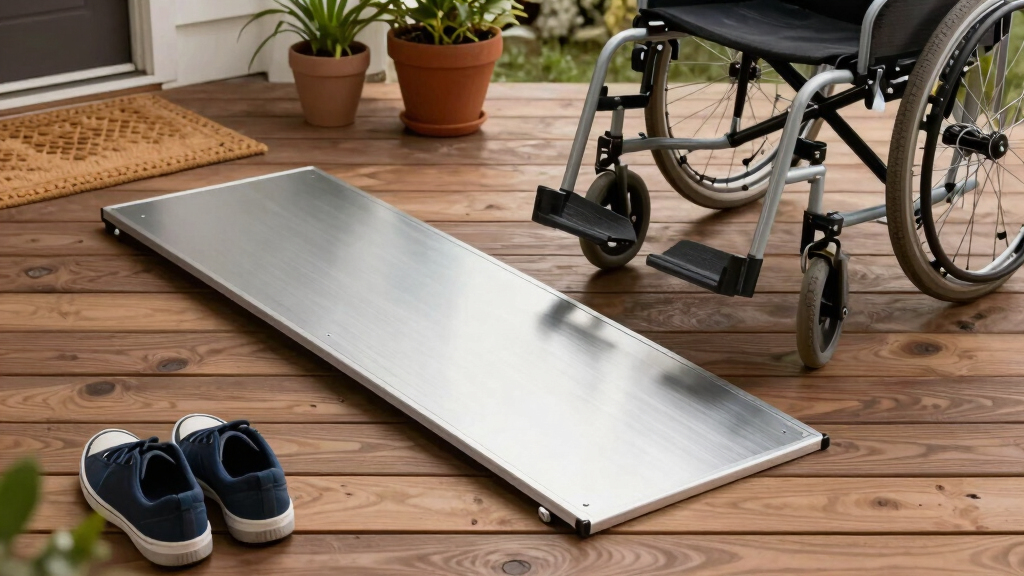
- Portable Ramps: Lightweight, made of aluminum or plastic, easy to move. Perfect for temporary needs or outdoor use.
- Fixed Ramps: Sturdy, permanently installed, often made of wood, concrete, or metal. Ideal for long-term solutions at main entry points.
- Threshold Ramps: Small, wedge-shaped, designed specifically for door thresholds, typically from 1/2 to 4 inches high.
For instance, if you often visit friends or switch homes, portable ramps are a flexible choice. For a permanent upgrade at your front door, a fixed ramp might be better.
Understanding the tradeoffs is crucial: portable ramps offer flexibility but may not be as stable or durable as fixed ones. Fixed ramps provide stability and longevity but require installation and might be less convenient for travel or seasonal needs. Matching the type to your lifestyle and home layout ensures safety, convenience, and cost-effectiveness over time.
portable threshold ramp for wheelchair
As an affiliate, we earn on qualifying purchases.
As an affiliate, we earn on qualifying purchases.
Materials Matter: Which Threshold Ramp Material Keeps You Safe & Lasts Long
Material choice influences durability, safety, and appearance. Here’s what to consider:
| Material | Pros | Cons |
|---|---|---|
| Aluminum | Lightweight, weather-resistant, durable. Great for outdoor use. | Can be slippery if not textured. |
| Rubber/Plastic | Non-slip surfaces, flexible, easy to clean. | Less sturdy for high weight loads. |
| Wood | Customizable, blends with home decor. | Requires maintenance, not as weatherproof. |
Material choice impacts safety and longevity. For example, aluminum ramps are excellent for outdoor environments because they resist corrosion and withstand weather extremes, ensuring consistent safety over time. Rubber or textured plastic ramps provide superior slip resistance, especially in wet conditions, reducing fall risk. Wood ramps, while aesthetically pleasing and customizable, may require ongoing maintenance to prevent rot or warping, which could compromise safety. Balancing these factors based on your climate, usage frequency, and aesthetic preferences is essential for selecting a durable, safe, and suitable ramp that minimizes the need for repairs and enhances safety.
As an affiliate, we earn on qualifying purchases.
Safety First: Key Features That Make Your Threshold Ramp Secure
Safety isn’t an afterthought—it’s the foundation. Look for these features:
- Non-slip surfaces: Textured or rubberized tops prevent slipping, especially in wet conditions.
- Proper weight capacity: Check that the ramp supports at least your weight, plus any mobility aids.
- Secure placement: Ramps should stay in place—look for models with lip edges or anti-slip pads.
Choosing a ramp with these features directly impacts user safety. Non-slip surfaces are crucial because even a slight wetness can turn a smooth surface into a hazard. Proper weight capacity ensures the ramp won’t crack or collapse under stress, preventing accidents. Secure placement—such as lips or anti-slip pads—keeps the ramp stable during use, reducing wobbling or sliding that can cause falls. These safety features collectively create a reliable, stable environment that minimizes risk, especially for vulnerable users like the elderly or those with mobility challenges. Investing in safety features means fewer accidents, less liability, and peace of mind for everyone in your household.
As an affiliate, we earn on qualifying purchases.
How to Measure and Install Your Threshold Ramp in 4 Easy Steps
- Measure the height: Use a tape measure to find the difference between the two floor levels. For example, a 2-inch step needs a ramp that’s at least 24 inches long.
- Measure the width: Ensure the ramp fits comfortably within the doorway or threshold area.
- Select the slope: Keep it at or below 1:12 for safety. For a 2-inch height, a 24-inch ramp works perfectly.
- Install or position: For portable ramps, simply place them securely on the ground. Fixed ramps may require professional installation for stability and safety.
Accurate measurement is crucial because a poorly fitted ramp can create safety hazards. An overly steep slope can cause difficulty ascending or descending, especially for wheelchairs or walkers. Conversely, a ramp that is too long might be cumbersome and unnecessary, increasing cost and storage issues. Proper installation—whether temporary or permanent—ensures stability, preventing wobbling or shifting that could lead to accidents. Taking the time to measure carefully and follow installation guidelines guarantees a safe, functional transition that enhances mobility and confidence for users.
Latest Innovations Making Threshold Ramps Safer & More Convenient
Recent developments focus on portability, durability, and eco-friendliness. Some highlights include:
- Modular and adjustable designs: Ramps that can be customized in length and height, perfect for different doorways.
- Foldable and telescoping models: Easier to transport and store, ideal for travel or seasonal use.
- Advanced materials: High-strength composites with anti-slip coatings, ensuring safety without adding weight.
- Sustainable options: Ramps made from recycled plastics and sustainable wood, aligning with eco-conscious living.
These innovations are transforming how ramps integrate into daily life. Modular and adjustable options provide versatility, allowing users to adapt ramps to changing needs without purchasing new ones. Foldable and telescoping models significantly enhance portability, making ramps accessible for travel and seasonal adjustments. The use of advanced, high-strength materials ensures durability while maintaining lightweight profiles, reducing the effort needed to set up or move. Eco-friendly materials address environmental concerns, offering sustainable choices that do not compromise safety or quality. These innovations collectively make threshold ramps more adaptable, safer, and environmentally responsible, broadening their appeal and functionality for diverse users and settings.
Top Tips for Choosing and Using Your Threshold Ramp Wisely
- Always measure twice: Confirm height, width, and slope before buying.
- Prioritize safety features: Non-slip surfaces and secure edges are non-negotiable.
- Think about storage: Foldable or portable ramps make seasonal or travel use easier.
- Follow guidelines: Stick to ADA recommendations for slope and width, especially if your home is for multiple users.
- Inspect regularly: Check for wear, cracks, or loose fittings to prevent accidents.
Regular maintenance and proper usage extend the lifespan of your ramp and keep it safe for daily use. Small steps like cleaning the surface to remove debris or inspecting for damage after severe weather can prevent slips or structural failures. Proper storage—especially for foldable or portable models—ensures the ramp remains in good condition and ready when needed. By following these tips, you can maximize safety, durability, and functionality, ensuring your investment continues to serve your mobility needs effectively.
What You Need to Know About Regulations and Standards
While home ramps aren’t always regulated, ADA guidelines set standards for public and commercial spaces. These include a maximum slope of 1:12, a minimum width of 36 inches, and safety features like handrails if the ramp is longer than 6 feet. For private homes, these standards are flexible but serve as a good benchmark for safety.
Understanding these standards helps you make informed decisions that prioritize safety while complying with local building codes. For example, exceeding the recommended slope can make the ramp difficult to navigate and increase fall risk. Conversely, adhering to or exceeding these standards can provide peace of mind, knowing your home environment is as safe as possible. Consulting with an accessibility professional or local building authority ensures your installation meets safety, legal, and ergonomic requirements, which is especially important if you plan to rent or sell your property in the future.
Frequently Asked Questions
How do I measure my threshold to pick the right ramp?
Use a tape measure to find the height of the step and the width of the doorway. Match these measurements to ramp length and width specifications, keeping slope recommendations in mind for safety.Are threshold ramps suitable for outdoor use?
Yes, especially those made of weather-resistant materials like aluminum or treated rubber. These materials withstand rain, snow, and sun, maintaining safety and durability.Can I install a threshold ramp myself?
Many portable and wedge-shaped ramps are designed for easy DIY setup. However, fixed or custom ramps may need professional help to ensure stability and safety.What is the maximum height a threshold ramp can handle?
Most ramps are designed for thresholds up to 4 inches high. For higher elevations, specialized ramps with a longer slope or custom design may be necessary.How do I keep my ramp safe over time?
Regularly inspect for cracks, loose fittings, or worn surfaces. Clean the surface to prevent slipping, especially after rain or snow. Proper maintenance ensures long-term safety.Conclusion
A well-chosen threshold ramp is a simple step toward greater independence and safety. Think of it as a bridge that welcomes everyone into your home with dignity. Remember, the right ramp isn’t just about height or material—it’s about creating a space where mobility is seamless and barriers are gone.Halloween Picks
halloween
As an affiliate, we earn on qualifying purchases.