
TL;DR

Get everyday helpers delivered free with Prime
- Fast, free delivery on millions of items
- Prime Video, Amazon Music and more included
- Member-only deals all year
Choose a therapy ball by first deciding whether you need a large stability ball for supported movement or a small ball for localized pressure or hand exercises. For a large ball, use the maker’s size guide, then check that you can sit with feet flat and knees near hip level; also confirm the weight limit, surface grip, inflation instructions, and space for safe use.
A ball that feels steady under your hands can invite movement; one that rolls away can make a simple exercise feel like a balancing act. The difference often comes down to choosing the right kind of ball and setting it up for the person using it.
This guide focuses on large stability balls for supported movement and balance, plus the smaller massage or mobility balls that serve a different purpose. You’ll learn how to choose based on your goal, body size, grip, firmness, and available support, with practical checks you can make before using the ball at home.
A therapy ball is a tool, not a treatment by itself. If you have persistent pain, a recent surgery, significant balance concerns, or a health condition that affects movement, ask a qualified clinician which exercises and level of support suit you.
Choose a large stability ball for supported movement and a small ball for localized pressure or hand exercises; their uses differ.
Use the maker’s height chart as a starting point, then check that your feet are flat and your knees are near hip level when seated.
Follow the maker’s inflation instructions; a ball that is too firm or too soft can affect comfort and control.
Check the stated weight limit, materials, intended use, and condition before using a ball.
If balance or health concerns affect movement, set up sturdy support and ask a qualified clinician for individualized guidance.
Mobility guide / At a glance
How to Choose a Therapy Ball for Mobility
Start with the movement you want to support. Large stability balls help with supported sitting and exercise; small balls serve localized pressure or hand exercises. Match the ball to your body, comfort, space, and available support.
Choose the ball type that matches your goal
“Therapy ball” can describe different products. Size and intended use tell you more than the name alone.
Large stability ball
Supports seated movement, gentle exercise, and balance practice. It moves beneath you, so allow room and keep support nearby as needed.
Small massage ball
Fits under a foot or against a selected area for focused pressure. Its compact size is easier to position and control.
Soft hand ball
A hand-sized, softer ball may suit squeezing or grasping practice. Check the product’s purpose and feel before choosing.
A small massage ball cannot provide broad sitting support, and a large stability ball is not designed to target one small spot. Choose for the activity you expect to do most.
Use the chart, then check your seated posture
A maker’s height guide gives you a starting diameter. The seated fit test shows whether the ball works for your body and intended movement.
Seated fit / visual guide
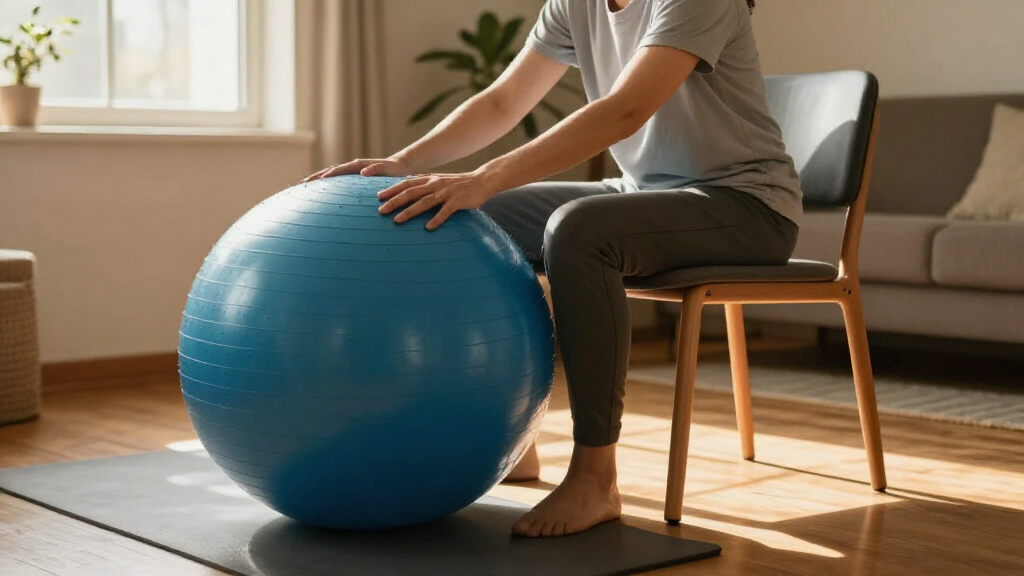
Aim for feet flat on the floor and knees roughly level with, or slightly below, the hips.
- 1Read the maker’s size guide. Start with the suggested ball diameter for your height.
- 2Inflate as directed. Set up beside sturdy support before sitting if you need it.
- 3Check your position. Keep feet flat, knees near hip level, and avoid reaching or sliding.
- 4Consider the movement. The fit for seated support may differ from a floor exercise.
- 5Notice what feels controlled. Leg length can affect fit even for people of the same height.
Match firmness and surface to the movement
Inflation and texture affect how the ball feels under you. Use the manufacturer’s guidance and choose a comfortable, controllable setup.
Too firm or overinflated
A rigid ball may feel quick to move and harder to control. Don’t inflate it until it feels “extra sturdy.”
Too soft or underinflated
Shape, height, balance, and positioning can change. Follow the maker’s inflation instructions.
Inflate for the intended movement, following product directions.
A textured or nonslip finish may help your hands stay in place. See how the surface feels against your skin and clothing; texture is a product feature, not proof of better results.
Check the product details and your surroundings
Clear specifications make it easier to judge whether a ball suits its intended use. A product claim does not replace a safe setup or regular inspection.
Verify the details
Check the stated weight limit, materials, intended use, and inflation instructions. Confirm the rating applies to the activity you plan to do. Burst-resistant construction may reduce sudden deflation risk, but does not make use risk-free.
Inspect and clear
Look for cuts, cracks, rough patches, or other damage. Use a clear, nonslip floor away from sharp edges, pet claws, and rough surfaces. Follow the maker’s cleaning and storage directions.
Broad support, localized pressure, or hand practice?
Use the height guide and seated posture test for a large ball.
Confirm inflation, rating, materials, and intended use.
Clear the floor and keep a sturdy surface within reach.
Support comes before balance practice
If you are new to using a large ball or your balance is limited, place it beside a wall or fixed counter and choose movements you can control. Have another person nearby if needed. A ball is a tool, not a treatment by itself, and sitting on one is not automatically better for posture or suitable for prolonged use.
Choose the ball type that matches your goal
For mobility work, choose a large stability ball when you want a surface for supported movement or exercise, and a small ball when you want localized pressure or hand exercises. “Therapy ball” can mean either, so check the product’s size and intended use before you buy.
A large stability ball can support seated movement or gentle exercises, but it moves under you and needs room. Small massage balls fit in your palm or under a foot and focus pressure on one area. A soft hand-sized ball may work for squeezing or grasping practice. These tools are not interchangeable: a small massage ball cannot provide the broad support of a large ball, and a stability ball is not designed to target one small spot.
For example, if you want to sit and practice controlled weight shifts with a sturdy counter nearby, a large stability ball may fit that goal. If your aim is to roll a ball under your foot while seated, a small ball is easier to position and control. Think of the difference like choosing a chair versus a tennis ball: both can support movement, but in very different ways.
Before shopping, write down what you want the ball to help you do, where you’ll use it, and what support you’ll have. If someone plans to use it for several activities, focus on the main one first; the broadest-looking product may not be the most comfortable or practical choice.
Popular right now

De'Longhi 15-Bar Pump Espresso Machine with Milk Frother & Temperature Control

Roborock F25 GT Set Cordless Wet Dry Vacuum Cleaner and Mop with 2 Brushes

Dyson Ball Animal 3 Corded Upright Vacuum
As an affiliate, we earn on qualifying purchases.
Check large-ball size with a seated fit test
To size a large therapy ball, start with the manufacturer’s height chart, then check the seated fit: your feet should rest flat and your knees should sit roughly level with, or slightly below, your hips. A comfortable position matters more than a chart alone because leg length and the exercise you plan to do can change what feels controlled.
How to choose a size in practice:
- Read the maker’s size guide and pick its suggested diameter for your height.
- Inflate the ball according to its instructions, then sit down only if you can do so safely, with a sturdy support close by.
- Check that your feet stay flat, your knees are near hip level, and you can keep your position without reaching or sliding.
- Think about the planned movement. A ball used for seated support may need a different fit from one used for floor exercises.
Suppose two people are the same height, but one has longer legs. The chart gives them the same starting point, yet one may find a particular ball leaves their knees too high. In that case, the posture check gives useful information to discuss with the manufacturer or a qualified professional.
A ball that is too large can raise your hips and make it harder to place your feet securely. One that is too small can lower your seat and affect the position you want. Treat size as a fit question, not a guess based on color or the biggest ball that fits in your room.
Match firmness and surface to the movement you want
A therapy ball should feel stable enough for its intended exercise without being so firm that it becomes difficult to control or position. Follow the maker’s inflation instructions, because both too much and too little air can change how the ball behaves beneath you.
Overinflation can make a large ball feel rigid and quick to move; underinflation can affect its shape, balance, and height. A textured or nonslip surface may make the ball easier to grip during seated movement, while a smooth surface may feel more comfortable against bare skin or clothing. Texture changes sensation and grip; it does not prove that a ball works better.
Imagine using a ball beside a table for gentle seated movement. If your hands keep sliding off a smooth surface, a slightly textured finish might feel easier to manage. If the texture catches on your clothing or feels scratchy against your skin, that same feature may get in the way. Comfort is part of control.
Check how the ball feels with the clothes and footwear you expect to wear, and look for the maker’s guidance on inflation. Don’t pump it up until it feels “extra sturdy.” A snug, properly inflated ball should suit its intended movement while still allowing you to stay comfortable and controlled.
Use weight limits and construction as buying checks
Before choosing a large therapy ball, check its stated weight limit, materials, and intended use in the manufacturer’s product information. A burst-resistant design may reduce the chance of sudden deflation, but it does not make the ball risk-free or replace careful setup and inspection.
Weight ratings are product specifications, not a guarantee that every exercise or movement will feel stable. Follow the manufacturer’s directions about use and inflation, and check whether the stated limit applies to the way you plan to use the ball. If the label or product page is unclear, ask the seller or maker before relying on it.
For example, someone may want a ball for supported seated movement and notice that one option has a clear weight rating and specific use instructions while another has little product information. Clear details make it easier to judge whether the ball suits the intended activity. You still need a clear floor, a comfortable fit, and support within reach.
Inspect the ball for cuts, rough patches, cracks, or other damage before use, especially after storage or moving it. Keep it away from sharp furniture edges, pet claws, and rough surfaces that could wear the material. If you spot damage, follow the maker’s guidance and stop using it until you know it is safe to use.
Set up support before trying balance movements
If balance is limited or you are new to using a large ball, set it up beside a sturdy support and choose movements you can control. A wall, fixed counter, or another stable surface can give you a place to steady yourself; a ball itself is not a stable support to grab when you feel unsteady.
Clear enough space for the ball to roll without bumping into furniture. Use a clean, nonslip surface, and keep sharp objects out of the area. If another person’s help would make getting on or off the ball safer, arrange that support before starting. These small setup steps can make the difference between a calm practice area and a cluttered one where you have to reach or twist unexpectedly.
For instance, picture someone who wants to try a gentle seated weight shift in a living room. A clear patch of floor beside a fixed counter gives them a nearby support and room to stop. The same movement in a narrow gap between a coffee table and wall may leave little room to reposition if the ball rolls.
Start only with movements that feel controlled, and stop if you feel unsafe, symptoms worsen, or the ball moves in a way you cannot manage. A qualified clinician can suggest individualized guidance when balance problems, pain, recent surgery, or a health condition affects how you move. You deserve equipment and support that let you work at your own pace.
Keep the ball ready with simple care habits
Keep a therapy ball in good condition by using it on a clear, nonslip surface, following the maker’s cleaning and storage instructions, and inspecting it regularly for damage. Care matters because dust, sharp objects, and rough storage can affect the surface you rely on for grip and control.
After use, check for cuts, peeling, or changes in shape, and make sure the ball is stored away from sharp edges and objects that could press into it. Clean it only as directed; a product’s material may not suit every household cleaner. If you use a small massage ball, check its instructions too, since its material and texture may call for different care from a large inflatable ball.
For example, if the ball lives in a busy living room, a basket or clear storage spot away from the edge of a workbench can help keep it from collecting dust or rubbing against sharp tools. Before a session, check that the floor is clear and that the ball still has the inflation and shape the manufacturer recommends.
These checks need not become a long routine. A brief look before use and a safe place to put the ball afterward can help you notice wear early and keep your practice space ready. If you find damage or cannot confirm the ball is in usable condition, pause and follow the manufacturer’s advice.
Frequently Asked Questions
What’s the difference between a therapy ball, stability ball, and massage ball?
The names vary, so check the product’s size and intended use. A large stability ball supports sitting or exercise, while a small massage ball applies localized pressure or may support hand exercises.
What size stability ball should I buy?
Start with the manufacturer’s height guide, then check the seated fit if you can do so safely: feet flat, knees near hip level, and a comfortable, controlled position. Leg length and intended exercise can affect which size works best for you.
Can a therapy ball help with mobility or stiffness?
A ball may provide a surface for gentle movement or localized pressure, depending on the type of ball and exercise. It cannot guarantee improved mobility or replace individualized guidance when symptoms persist.
Is it safe to sit on an exercise ball instead of a chair?
A large exercise ball moves under you and can challenge balance, so it will not suit everyone as a chair. It is not automatically better for posture, and prolonged sitting may cause discomfort or fatigue.
How firm should a therapy ball be?
Inflate it according to the product instructions. It should feel suitable for the intended movement and be comfortable to control; too much or too little inflation can affect positioning and stability.
How can I use a ball if I have balance concerns?
Set up near a sturdy support, clear the floor, and avoid movements that feel uncontrolled. If balance is significantly limited, ask a qualified clinician for guidance tailored to your abilities and goals.
Conclusion
Choose a therapy ball by matching the tool to the movement you want, then check fit, inflation, grip, weight rating, and the space and support around you. A height chart can point you toward a size, but a stable, comfortable position tells you more.
Start with a setup you can control, keep the floor clear, and let the ball serve your movement rather than dictate it. The best first step may be as simple as a flat foot, a steady counter, and room to move.