TL;DR

Get everyday helpers delivered free with Prime
- Fast, free delivery on millions of items
- Prime Video, Amazon Music and more included
- Member-only deals all year
You can build strength at home with minimal equipment, tailored to your abilities. Focus on safety, consistency, and adaptive tools to stay empowered and injury-free.
Imagine a workout routine that adapts to your needs, fits into your daily life, and requires nothing more than a sturdy chair or a water bottle. That’s the power of accessible strength training at home. It’s not just for athletes or fit young adults — it’s for everyone, especially if you face mobility challenges or chronic conditions.
In this guide, you’ll learn how to design a safe, effective routine that respects your body’s limits and builds your confidence. Whether you’re new to exercise, recovering from an injury, or managing a disability, you’ll find practical tips, inspiring examples, and the latest innovations making home workouts more inclusive than ever.
Start with seated or supported exercises if mobility is limited. Focus on gentle, controlled movements.
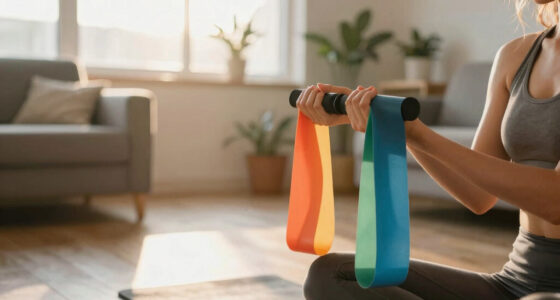
Minimal equipment like resistance bands, water bottles, and sturdy chairs can deliver powerful results.
Safety means listening to your body, warming up, and avoiding bouncing or rapid movements that increase injury risk.
Clear visual and audio cues help maintain correct form and motivation—consider recordings or apps for guidance.
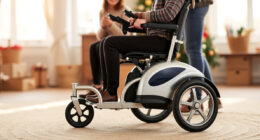
Recent tech innovations, including adaptive equipment and virtual classes, make inclusive home strength training more accessible than ever.
Accessible Strength Training at Home
Turn familiar spaces, supportive equipment, and customized movement into a practical strength routine. The goal is not gym performance—it is greater control, confidence, function, and independence.
Fit each movement to your balance, comfort, goals, and available support.
Brief, repeatable activity periods can be easier to sustain than one long workout.
Track control, repetitions, range, confidence, and easier daily tasks.
Flexible routines and gradual progress matter more than heavy resistance.
Build a routine you can repeat
Begin with two sessions each week. Choose a manageable version of each movement, leave time for recovery, and change only one challenge at a time.
Prepare
Clear the floor, check the chair and band anchor, place support within reach, and choose suitable footwear.
Select
Choose push, pull, leg or hip, and core movements that match your current ability.
Practice
Move with control, use a comfortable range, exhale during effort, and rest when needed.
Progress
Add repetitions, resistance, range, time, or independence only when the current level feels steady.
Change the exercise—not the goal
Adaptation preserves the purpose of a movement while making it safer, more controllable, and more appropriate for your energy, mobility, grip, balance, or sensory needs.
Add stable support
Use a countertop, rail, wall, or sturdy chair. Move to seated exercise when standing is unsafe or unnecessarily tiring.
Raise the surface
Replace floor push-ups or bridges with wall, chair, countertop, or bed-based versions.
Secure the load
Use cuffs, straps, grip aids, or Velcro-style attachments when holding a band or weight is difficult.
Adjust the range
Shorten the movement or use an isometric hold. Expand the range gradually when it is comfortable and appropriate.
Divide the session
Break a routine into several short periods and allow extra rest for pain, fatigue, medication effects, or autonomic symptoms.
Make cues accessible
Use demonstrations, written steps, captions, audio cues, high-contrast markers, or tactile reference points.
Useful tools can be simple
Body weight is not automatically the most accessible option. Bands, light loads, stable supports, and adaptive attachments may offer better control and more precise progression.
| Item | Best uses | Advantages | Watch for |
|---|---|---|---|
| Resistance bands | Rows, presses, shoulders, and legs | ✓Portable, affordable, adjustable | ~Inspect for damage and secure anchors |
| Filled bottles or backpacks | Light lifting, carrying, and grip work | ✓Available and customizable | ~Resistance is less precise |
| Wrist or ankle weights | Adding load to arm or leg movement | ✓Simple and hands-free | ✗Overuse may irritate joints |
| Stable chair or bench | Sit-to-stands, support, and seated work | ✓Supports balance and positioning | ~Must not slide or tip |
| Cuffs or lifting straps | Band or weight use with limited grip | ✓Improves security and control | ~Fit should be comfortable and secure |
Six ways to progress
Greater challenge does not have to mean heavier weight. Choose one lever and increase it gradually.
Use body weight, bands, supportive equipment, or household objects.
Choose seated, supported, or modified-range versions when useful.
Short, frequent activity can improve fatigue management.
Measure progress through control, function, range, and repetitions.
Prioritize safety, flexibility, recovery, and consistency.
Effort is expected. Warning signs are different.
Normal muscular effort, warmth, and temporary fatigue are not the same as sharp pain, chest pain, faintness, severe breathlessness, or sudden neurological symptoms.
Before you begin
- Clear clutter and remove slipping or tripping hazards.
- Use a stable chair, secure band anchor, and non-slip surface.
- Keep support and an accessible way to contact help nearby.
- Start with a comfortable range and manageable resistance.
- Exhale during effort and inhale during the easier phase.
Do not push through serious or unfamiliar symptoms
Stop exercising for sharp pain, chest pain, faintness, severe dizziness, severe breathlessness, or sudden neurological changes.
Individual guidance may be appropriate after recent surgery or with unstable medical conditions, significant osteoporosis, uncontrolled cardiovascular disease, progressive neurological symptoms, or complex joint problems.
Every adaptation supports a functional outcome
The most useful routine connects a manageable movement to progressive practice and then to a real task that matters in daily life.
Strength is a tool for autonomy.
A successful home program respects individual choices and changing needs. It does not assume that every disabled person requires supervision or shares the same limitations. Start where you are, use the support that helps, and progress toward the daily activities that matter to you.
How to Start Strength Training at Home When Mobility Is Limited
Starting strength training with limited mobility isn’t just possible — it can be transformative. The key is to focus on exercises that respect your range of motion and strength level. This approach matters because it helps prevent injury, builds confidence, and ensures sustainable progress. When you adapt exercises to your abilities, you reduce the risk of overexertion or falls, which can be serious setbacks. Moreover, customizing routines promotes consistency, leading to better long-term health benefits. Recognizing your limits also allows you to identify which movements are most beneficial and safe, avoiding unnecessary strain while still challenging your muscles appropriately.
For example, if standing is difficult, seated exercises become your best friend. Think about seated leg lifts, arm raises with light weights or resistance bands, and gentle torso twists. These movements help build muscle without risking balance issues or falls.
Here’s a simple step-by-step to get started:
- Assess your mobility and identify comfortable positions (sitting, lying, or supported standing).
- Select exercises that target major muscle groups—arms, legs, core.
- Start with light resistance or bodyweight — focus on controlled, slow movements.
- Set small, achievable goals—like 5 minutes a day—and gradually increase.
- Listen to your body; avoid pain and pause if you feel discomfort.
Real-world example: A person with arthritis found seated resistance band arm curls not only eased joint pain but also strengthened their upper body for daily tasks.
resistance bands for strength training at home
As an affiliate, we earn on qualifying purchases.
As an affiliate, we earn on qualifying purchases.
What Equipment Do You Really Need? Minimal Tools for Major Gains
When it comes to accessible strength training at home, less is often more. You don’t need fancy machines or heavy weights. Instead, focus on simple, versatile tools that adapt to your needs. These tools matter because they offer safe, adjustable resistance that can be tailored to your current strength level, helping you progress gradually without risking injury. Additionally, they are affordable, space-efficient, and versatile, making it easier to incorporate strength exercises into daily routines. Choosing the right equipment can also empower you to modify exercises as your strength improves or as your mobility changes, ensuring ongoing engagement and progress. The tradeoff is that minimal tools require more creativity and consistency but often lead to better long-term adherence because they are accessible and less intimidating.
Popular options include:
- Resistance bands: lightweight, adjustable, and easy to store.
- Light dumbbells or canned goods: perfect for adding resistance without strain.
- Water bottles or filled jugs: great substitutes for weights, especially for upper-body exercises.
- A sturdy chair or countertop: for seated or supported exercises.
For example, a person recovering from a knee injury might use resistance bands for gentle leg presses while seated, avoiding strain on the joint. These tools are cheap, accessible, and can be stored in a small corner of your home.
And yes, your own body weight counts too! Push-ups against a wall or countertop, squats with support, or core work on the floor all pack a punch without any equipment. These options allow you to progress at your own pace, building confidence and strength gradually.
As an affiliate, we earn on qualifying purchases.
Staying Safe and Avoiding Injuries — The Do’s and Don’ts
Safety is the foundation of any successful workout, especially when exercising at home and managing health limitations. The biggest mistake is pushing too hard or ignoring pain. This can lead to injuries such as strains, sprains, or even fractures, especially if bones are fragile or joints are compromised. Understanding how to exercise safely helps you avoid setbacks that could diminish your confidence or require medical attention. When you prioritize safety, you promote consistency, which is crucial for long-term health benefits. It also helps you develop a mindful approach to movement, recognizing signs of fatigue or discomfort early. The implications of unsafe practices include longer recovery times, reduced motivation, and potential worsening of existing conditions. Therefore, integrating safety measures into your routine ensures that your fitness journey is sustainable and beneficial.
Here’s how to keep your sessions safe:
- Warm up for 5 minutes with gentle movements — arm circles, ankle rolls, or light stretching.
- Use proper form: slow, controlled movements beat rushed reps, reducing strain and improving effectiveness.
- Start with low resistance and increase gradually, allowing your muscles and joints to adapt.
- Listen to your body: if something hurts, stop or modify. Ignoring pain can exacerbate injuries or cause new ones.
- Cool down with stretching or deep breathing to prevent stiffness and dizziness, promoting recovery and flexibility.
For example, a person with osteoporosis avoids rapid or bouncing movements, reducing fracture risk. Incorporating slow, controlled exercises and respecting your body’s signals minimizes injury risk and supports ongoing progress. Remember, the goal is to build strength safely over time, not to push through pain or fatigue. Developing this cautious approach ensures your workouts remain a positive, sustainable part of your life.
Remember: progress is a marathon, not a sprint.
household object resistance training kit
As an affiliate, we earn on qualifying purchases.
As an affiliate, we earn on qualifying purchases.
How to Use Visual and Audio Cues to Keep Your Workout on Track
Clear instructions are your best tool for staying motivated and performing exercises correctly. Visual cues, like diagrams or mirror feedback, help maintain proper form. Audio cues—like a timer or spoken instructions—keep you on schedule and focused. This combination matters because it reduces the likelihood of improper technique, which can lead to injuries or ineffective workouts. Proper cues also reinforce correct movement patterns, making exercises more efficient and safer. When you use visual and audio cues effectively, you create a structured environment that supports consistency, especially when exercising alone. This consistency fosters better form, reduces the risk of injury, and boosts confidence as you see and hear your progress. The implications are that well-designed cues improve adherence, help you learn new exercises faster, and make your workouts more engaging and safe.
For example, a gym video tailored for beginners might show a demonstration of seated shoulder presses, with a timer counting down each set. This keeps you engaged and ensures consistent pacing.
If you’re working alone, consider recording your own instructions or using apps with voice guidance. Brightly colored resistance bands, or high-contrast markings on equipment, also serve as visual reminders. These sensory cues act as constant, subtle prompts that help you stay aligned, motivated, and safe during each session.
Consistency in cues minimizes the risk of improper technique and helps build confidence, making your workouts more effective and enjoyable.
seated strength training equipment
As an affiliate, we earn on qualifying purchases.
As an affiliate, we earn on qualifying purchases.
Motivation and Routine: Making Strength Training Stick
Staying motivated is half the battle, especially when exercising alone. The secret? Make it simple, meaningful, and integrated into your day. When workouts are routine, they become a natural part of your life rather than an extra task, increasing the likelihood of consistency. Small goals, like completing three exercises three times a week, help break down the process into manageable steps, reducing overwhelm. Tracking your progress with a journal or sticker chart provides visual evidence of your efforts, reinforcing positive habits. Celebrating small wins—like completing a week of workouts—can boost confidence and motivation. For example, someone might pair their workout with their morning coffee routine — a consistent time makes it easier to stick with it. Joining virtual groups or having a buddy can boost accountability and make workouts feel less lonely. These social or routine elements help reinforce commitment, making it more likely you’ll maintain your exercise habit over time. Remember, even five minutes of movement is better than none. Small, regular steps build momentum and confidence over time, creating a sustainable and rewarding practice.
Latest Tech and Programs Making Home Workouts More Inclusive
Technology is transforming accessible strength training, making it easier and more engaging. Adaptive equipment, virtual classes, and digital feedback are game-changers because they tailor workouts to individual needs, providing real-time corrections and encouragement. These innovations matter because they help overcome barriers such as lack of motivation, limited access to gyms, or difficulty following generic routines. For example, adjustable ergonomic resistance bands now cater to different strength levels and mobility needs, allowing for personalized progression. Virtual classes specifically designed for people with disabilities or chronic conditions offer tailored guidance and real-time feedback, making safe exercise more accessible. Platforms like inclusive fitness apps provide routines that adapt to your ability, with videos demonstrating modifications that suit your current level. Some apps even use AI to adjust difficulty based on your progress, ensuring ongoing challenge without overexertion. These technological advances expand opportunities for everyone to engage in effective strength routines from their own homes, supporting long-term health and independence regardless of physical limitations.
Quick Guide: Modifying Exercises When Pain or Discomfort Occurs
If an exercise causes pain or discomfort, it’s time to modify—don’t push through pain. This is important because ignoring pain can worsen injuries or cause new ones, especially when muscles or joints are already compromised. The goal is to stay active while avoiding activities that could lead to setbacks. Here’s a simple approach:
- Stop the movement immediately to prevent further injury.
- Identify whether the pain is sharp, dull, or a burning sensation. Sharp pain often indicates tissue damage, while dull or burning may suggest overuse or strain.
- Adjust the range of motion—smaller movements are often safer and can still activate muscles effectively.
- Reduce resistance or support yourself with a chair or wall to lessen load and strain.
- Switch to a different exercise targeting the same muscle group but less strain, like swapping a full squat for a seated leg press.
For example, if seated leg lifts cause knee pain, try ankle pumps or gentle thigh squeezes instead. Always consult a professional if pain persists or worsens, as continued activity despite pain can cause long-term damage. Learning to modify exercises safely helps you stay consistent and avoid discouragement, ensuring that you can continue building strength without setbacks.
Simple Daily Exercises You Can Do Anywhere
Consistency matters more than complexity. Here are some easy, accessible exercises you can do daily, anywhere:
- Seated leg extensions: lift one leg at a time, holding for a few seconds to strengthen your quadriceps and improve knee stability.
- Wall push-ups: stand a foot away from the wall, push against it slowly to engage chest, shoulder, and arm muscles safely.
- Standing or seated arm curls with water bottles: target biceps while supporting joint health.
- Deep breathing with arm raises—lift arms overhead as you inhale, lower as you exhale—enhancing posture and lung capacity.
- Neck stretches: gently tilt your head side to side, holding a few seconds each to reduce tension and improve mobility.
Imagine doing these during your coffee break or while watching TV. Small movements add up — turning daily routines into opportunities for strength and mobility. Incorporating these exercises regularly can help maintain muscle function, improve circulation, and foster a sense of well-being, making it easier to stay active and independent.
Frequently Asked Questions
How can I start strength training if I have very limited mobility?
Begin with seated or lying exercises that target major muscle groups, using resistance bands or household objects. Focus on slow, controlled movements, and consult a healthcare provider for personalized guidance.
What if I experience pain during exercises?
If an exercise causes pain, stop immediately. Modify the movement—reduce range, resistance, or switch to an easier variation. Always listen to your body and seek professional advice if pain persists.
Are online programs suitable for people with disabilities?
Yes, many platforms now offer adaptive routines tailored for various abilities. Look for programs with clear instructions, modifications, and options for virtual coaching or community support.
How often should I do strength training at home?
The CDC recommends strength exercises at least twice a week, with rest days in between. Start slow, then gradually increase duration and intensity as your body adapts.
Can strength training help manage health conditions like arthritis?
Yes, when done carefully, strength training can improve joint stability, reduce pain, and enhance daily function. Always tailor exercises to your condition and consult your healthcare provider.
Conclusion
Accessible strength training at home isn’t just about building muscle — it’s about reclaiming independence and confidence. With simple tools, thoughtful modifications, and a focus on safety, anyone can create a routine that fits their life and abilities.
Picture yourself moving comfortably in your own space, feeling stronger day by day. Your journey toward better health and independence begins with that first gentle push — and it’s worth every step.
Columbus Day / Indigenous Peoples' Day Picks
long weekend sales
As an affiliate, we earn on qualifying purchases.