
TL;DR

Get everyday helpers delivered free with Prime
- Fast, free delivery on millions of items
- Prime Video, Amazon Music and more included
- Member-only deals all year
A Sixty and Me guide describes five low-equipment functional exercises intended to help women over 60 practice movements used in everyday life. It also advises starting gradually, using support for balance exercises and seeking professional guidance when health conditions or symptoms raise concerns.
Sixty and Me has published a beginner’s guide to functional fitness for women over 60, outlining five exercises that can be done at home with little or no equipment. The guide focuses on practicing movements used in daily tasks, such as standing from a chair, reaching and stepping sideways, while advising readers to start gradually and use support for balance work.
The guide defines functional fitness as building strength and ability for everyday activities. Its examples include squatting to pick something up, pushing an object and reaching overhead. The article says these movements may become more difficult with age and argues that practicing them can help people continue daily activities.
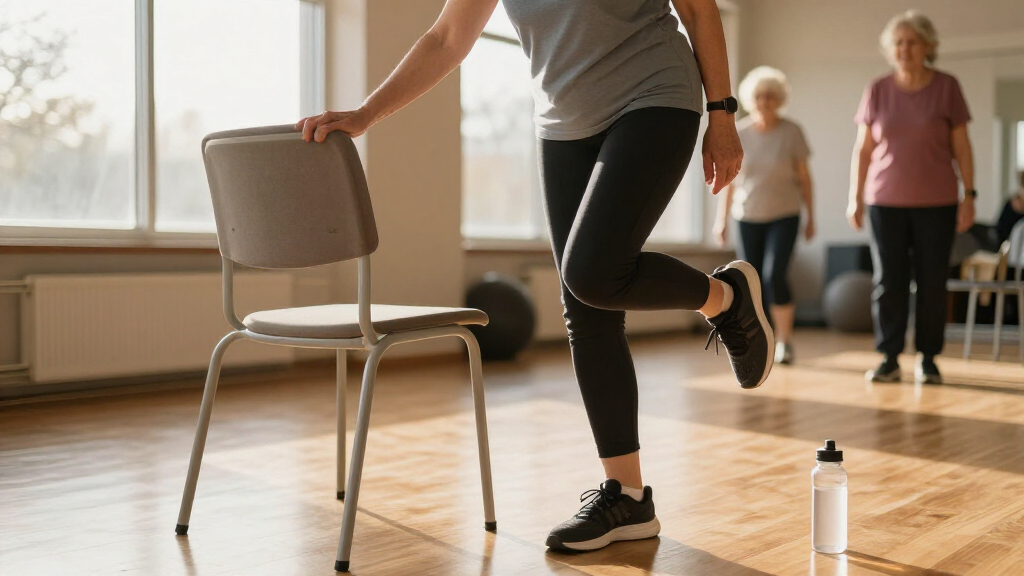
The five suggested exercises are sit-to-stands, wall push-ups, supported heel raises, supported side steps and supported balance practice. For sit-to-stands, readers sit near the front of a chair, lean forward and push through their legs to stand, then lower themselves back down. The guide suggests five to 12 repetitions. It gives the same repetition range for wall push-ups and heel raises, and recommends using a counter or chair for support during side steps and balance practice.
For starting out, the article proposes adding 10 to 15 minutes of exercise on two or three days in a week, then increasing duration or repetitions as the movements become easier. It says resistance bands are another possible progression. Readers are advised to consult a health professional if they have a health-related limitation, pain, dizziness or other concerns, and to stop an activity if something feels wrong.
Practicing Everyday Movements at Home
The guide’s practical focus is on maintaining the ability to perform routine tasks and activities, rather than on exercise for its own sake. Chair rises, for example, rehearse standing up, while side steps and supported balance practice work movements that may not receive as much attention during ordinary walking.
That matters to readers looking for an accessible starting point: the listed exercises need little equipment and can be adapted with a sturdy support nearby. The source reports that a 2025 meta-analysis found functional task training helped improve balance, mobility and walking ability among adults aged 60 and older. The article does not provide the study’s size, specific measures or effect estimates, so its finding should be understood at the level reported rather than as a guarantee for any individual.
The guide also connects strength and balance practice with independence in daily living. Its recommendations are general, however; the article does not establish that these five exercises are suitable for every reader or that they prevent falls on their own.
fitness resistance bands for seniors
As an affiliate, we earn on qualifying purchases.
As an affiliate, we earn on qualifying purchases.
Activity Guidance for Older Adults
The article cites guidance from the U.S. Centers for Disease Control and Prevention for adults aged 65 and older: muscle-strengthening activities at least twice a week, alongside activity that supports cardiovascular and pulmonary health and balance. It also cites the World Health Organization, which recommends muscle-strengthening activities on two days a week for people 65 and older.
According to the article, WHO guidance also suggests balance and fall-prevention activities on three or more days a week for older adults with mobility difficulties, with activity increased gradually as needed. These are broader public-health recommendations, not a personalized exercise prescription. Sixty and Me’s guide translates the general idea into five basic movements and encourages readers to include enjoyable activities in a realistic plan.
““Functional fitness helps you build the strength and ability to perform daily activities.””
— Sixty and Me guide
balance support for elderly exercises
As an affiliate, we earn on qualifying purchases.
As an affiliate, we earn on qualifying purchases.
Individual Suitability and Study Details
The source material does not give the publication date of the guide, the full citation for the 2025 meta-analysis, or details such as the number of studies and participants included. It also does not report how large the improvements in balance, mobility or walking ability were, or whether the specific five exercises in the guide were tested in that research.
It is also unclear which exercises are appropriate for an individual reader’s health, mobility and fall risk. The article offers basic instructions and safety cautions, but it does not describe individualized modifications or assess a person’s ability to exercise. Readers with pain, dizziness, health conditions or concerns are directed to consult a qualified health professional.
chair exercise equipment for women over 60
As an affiliate, we earn on qualifying purchases.
As an affiliate, we earn on qualifying purchases.
Start Small and Build Gradually
The guide recommends beginning with a realistic weekly plan: try 10 to 15 minutes of functional exercises on two or three days, then adjust as the routine feels manageable. It suggests adding repetitions, extending the session or using a resistance band over time, rather than starting with a demanding schedule.
It also suggests incorporating movement into daily life, such as walking regularly, using stairs when appropriate and practicing balance beside a wall or sturdy surface. Anyone with symptoms or health-related limitations should seek professional guidance before progressing. The source does not announce a formal program or follow-up milestone; readers are left to choose activities that fit their circumstances and monitor how they feel.
As an affiliate, we earn on qualifying purchases.
Key Questions
What does functional fitness mean?
Functional fitness involves practicing strength, balance and movement patterns used in everyday tasks, such as standing from a chair, reaching or stepping sideways.
Which exercises does the guide suggest?
The guide lists sit-to-stands, wall push-ups, supported heel raises, supported side steps and supported balance practice. It advises having a stable surface nearby for balance work.
How often should a beginner start?
Sixty and Me suggests starting with 10 to 15 minutes on two or three days during the week, then gradually increasing activity as it becomes manageable. This is general guidance, not a personalized prescription.
When should someone seek medical guidance?
The guide advises consulting a health care professional when a health condition limits activity or when pain, dizziness or other concerns arise. It says to stop an activity if something does not feel right.
Source: rss
Columbus Day / Indigenous Peoples' Day Picks
long weekend sales
As an affiliate, we earn on qualifying purchases.