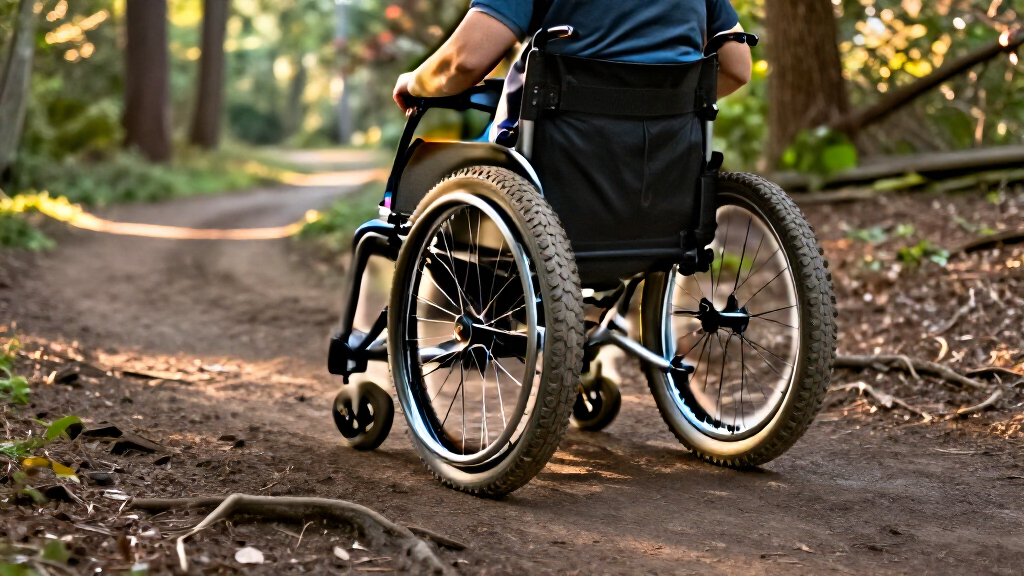
The best all-terrain wheelchairs balance outdoor traction with the weight, range, and transport needs of the person using them. My best overall pick is the Foldable All-Terrain Electric Wheelchair with 16-Inch Front Wheel, which pairs a large front wheel with a foldable electric design. The M16-1 and WEYRAL stand out for shoppers seeking large front wheels and a wider seat, while the TerraWheels is a dedicated option for beach and outdoor use. The main tradeoff is between powered assistance and simpler manual chairs, which are often easier to transport but demand more effort from the user or caregiver. Read on for the full breakdown, plus guidance on choosing for your terrain, fit, and travel routine.

Get everyday helpers delivered free with Prime
- Fast, free delivery on millions of items
- Prime Video, Amazon Music and more included
- Member-only deals all year
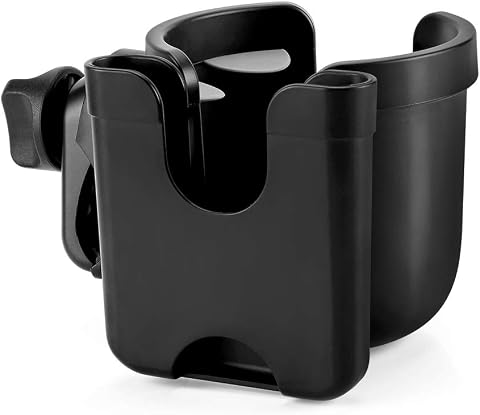
Complete the kit


Key Takeaways
- Large front wheels are a defining feature of several powered picks, including the Foldable All-Terrain Electric Wheelchair, M16-1, and WEYRAL; they suit outdoor routes better than small-wheel transport designs, but do not by themselves guarantee performance on every surface.
- The roundup splits into powered chairs and manual or caregiver-pushed options. Electric models can reduce pushing effort, while the WHLICKS, sports wheelchair, and Helavo 2-in-1 prioritize simpler transport or a different style of mobility support.
- Seat width and user capacity need to be checked separately. The M16-1 and WEYRAL list 20-inch seats, while the 330 lb-capacity electric chair highlights a different fit specification; neither number alone describes overall comfort or fit.
- Portability is not the same as outdoor capability. Folding frames appear across the list, but shoppers should also check folded dimensions, component weight, and whether the chair can be loaded into their vehicle.
- Terrain-specific needs change the shortlist. TerraWheels is explicitly positioned for beach and outdoor use, while the Helavo combines walker and transport-chair functions and the sports chair adds an anti-tipper.


| all-terrain wheelchair | Weight capacity |
|---|---|
| Foldable All-Terrain Electric | 350 lbs |
| Foldable Electric Wheelchair f | 330 lbs |
| Lightweight Wide Wheelchair fo | 300 lbs |
| M16-1 All-Terrain Electric Whe | 330 lb |
| WHLICKS Lightweight Foldable T | — |
| WEYRAL Foldable Electric Wheel | 330 lbs |
| TerraWheels All-Terrain Wheelc | 300 lbs |
| Portable All-Terrain Ultra-Lig | 220 lbs |
| Helavo 2-in-1 Walker and Trans | — |
More Details on Our Top Picks
Foldable All-Terrain Electric Wheelchair with 16-Inch Front Wheel
For buyers who want powered travel with a manual fallback, this chair combines dual 250W motors, a claimed range of up to 25 miles, and electric and manual modes. Its 16-inch front wheel and stated 12° slope capability make it a more terrain-focused choice than the WHLICKS transport chair, which has smaller 12-inch rear wheels and no stated self-propelling drive. The 350 lb capacity also exceeds the M16-1’s 330 lb rating. Folding, removable armrests, and a removable seat help with storage and transfers, though the chair is still an electric model to plan around. Charging takes 6–8 hours, and terrain and range claims are manufacturer-provided rather than independently verified. I would choose it for a blend of power, capacity, and mode flexibility, while buyers prioritizing verified outdoor performance should seek a hands-on assessment.
Pros:- Electric and manual modes offer a fallback when powered driving is not suitable
- 350 lb stated capacity is higher than the M16-1’s 330 lb rating
- Folds for storage and travel, with removable seat and armrests
- Electronic braking plus two manual brake levers
Cons:- A 6–8-hour charge can limit quick turnarounds between outings
- Range and terrain claims are not independently verified
Best for: Buyers seeking a foldable powered chair with manual mode, a higher stated capacity, and occasional outdoor use on slopes
Not ideal for: People who need independently verified performance on sand, mud, or rough trails, or who cannot accommodate a 6–8-hour charging window
- Front wheel size:16 inches
- Motors:Dual 250W
- Battery:20Ah 24V lithium-iron
- Stated range:Up to 25 miles
- Maximum slope:12°
- Weight capacity:350 lbs
- Operating modes:Electric and manual
- Charging time:6–8 hours
Our verdict“Choose this model if you want a foldable electric chair with manual mode and a 350 lb stated capacity, and can accept unverified terrain claims.”
Foldable Electric Wheelchair for Adults, 330 lb Capacity, 500W Motor, 25-Mile Range
Fast folding is this chair’s clearest advantage: the maker says it folds in about three seconds, a useful detail for caregivers loading it into a vehicle. It pairs dual 250W motors with 16-inch rear tires, electromagnetic braking, anti-tipping support, and puncture-resistant tires. Compared with the first product, which has a 350 lb capacity and electric/manual modes, this model is rated for 330 lbs and its listed feature set centers on powered use. Its stated 25-mile range and 12° incline capability suggest flexibility for mixed indoor and outdoor routes, but range changes with terrain and use. The 3.7 mph top speed is measured, so it is not a fast option for covering ground. The aerospace-grade alloy frame is another selling point, though the provided data does not give the chair’s weight.
Pros:- About three-second fold is convenient for frequent vehicle loading
- Puncture-resistant 16-inch rear tires suit varied indoor and outdoor surfaces
- Electromagnetic braking and anti-tipping support are included
- Dual 250W motors and a stated range of up to 25 miles
Cons:- 330 lb capacity is lower than the first product’s 350 lb rating
- Maximum speed is 3.7 mph
- Stated range can vary with terrain and use
Best for: Caregivers and users who regularly load a powered wheelchair into a car and value a very quick folding process
Not ideal for: Buyers needing more than 330 lb capacity, a stated manual operating mode, or a higher top speed
- Motor:Dual 250W motors (500W total)
- Maximum range:25 miles
- Maximum speed:3.7 mph
- Rear tire size:16 inches
- Weight capacity:330 lbs
- Battery:Dual 12V 20Ah batteries
- Fold time:About 3 seconds
- Incline capability:Up to 12°
Our verdict“Pick this chair if quick folding for car transport matters more than a higher capacity or a manual mode.”
Lightweight Wide Wheelchair for Adults with Foldable Aluminum Frame
This manual chair puts fit and caregiver control ahead of motorized range. Its 24-inch quick-release rear wheels, dual user and caregiver brakes, and rear anti-tippers support self-propelling and assisted use on suitable outdoor paths. Compared with the electric first product, it avoids batteries and charging, but it requires the user or a companion to supply the pushing effort. The two seat widths, 17.7 and 20 inches, give buyers more fit choice than the single 20-inch seat listed for the M16-1. At 34 or 37 lbs depending on width, it is manageable for a folding chair but not as light as the 23.1 lb WHLICKS transport model. Product weight information conflicts: the title says 25 lbs while the description and specifications give higher figures, so I would confirm the actual configuration weight before purchase.
Pros:- 24-inch quick-release rear wheels support manual propulsion and easier transport breakdown
- Two seat width choices help accommodate different users
- User and caregiver braking plus rear anti-tippers add control
- Folding backrest, flip-back armrests, and swing-away footrests aid storage and transfers
Cons:- Requires user or caregiver effort; it has no electric drive
- Listed weight is inconsistent, with title, description, and specifications giving different figures
- At 34–37 lbs per specifications, it is heavier than the WHLICKS transport chair
Best for: Users who can self-propel or have a caregiver available and want a manual chair with quick-release wheels and multiple seat widths
Not ideal for: People who need powered assistance on long routes, or buyers who require a confirmed chair weight before planning transfers
- Frame material:Aluminum alloy
- Weight capacity:300 lbs
- Net weight:34 lbs (17.7-inch seat); 37 lbs (20-inch seat)
- Seat widths:17.7 inches or 20 inches
- Seat depth:15.75 inches
- Front wheel diameter:8 inches
- Rear wheel diameter:24 inches
- Folded dimensions:39.3 × 12.6 × 29.5 inches
Our verdict“Choose this manual model if wheel fit and caregiver braking matter more than powered assistance or a consistently stated weight.”
M16-1 All-Terrain Electric Wheelchair with 16-Inch Front Wheels and 20-Inch Seat
Rear caregiver controls set the M16-1 apart for outings where another person may need to help manage the chair. It also has front-wheel drive, rear-wheel suspension, a 20-inch seat, and electric and manual modes. The first electric pick is rated to 350 lbs and claims up to 25 miles; this one is rated to 330 lbs and claims at least 20 miles, while adding caregiver controls, a USB LED light, storage bags, and a cup holder. Its 12Ah battery is smaller than the first product’s 20Ah battery, and charging still takes 6–8 hours. A stated 3.9 mph top speed is slightly higher than the second product’s 3.7 mph, though that difference may matter less than fit and handling needs. Terrain and maneuverability statements come from the manufacturer, so buyers should confirm suitability for their routes.
Pros:- Rear caregiver controls support assistance during outings
- Rear-wheel suspension is intended to soften uneven surfaces
- Electric and manual modes provide operating flexibility
- Includes storage bags, cup holder, and USB LED light
Cons:- 330 lb capacity is below the first product’s 350 lb rating
- Claimed range of at least 20 miles is lower than the 25-mile claims of the first two electric models
- Terrain and maneuverability claims are manufacturer-provided and may vary in use
Best for: Users with a caregiver who want a 20-inch-seat electric chair with rear caregiver controls for shared outdoor outings
Not ideal for: Buyers who need the highest stated capacity or range in this group, or who want independently verified rough-terrain performance
- Drive:Front-wheel drive
- Front wheel size:16 inches
- Seat width:20 inches
- Weight capacity:330 lb
- Motors:2 × 250 W
- Battery:24 V, 12 Ah detachable lithium battery
- Maximum speed:3.9 mph
- Claimed range:At least 20 miles
Our verdict“Choose the M16-1 if caregiver controls and a 20-inch seat fit your needs better than maximum capacity or claimed range.”
WHLICKS Lightweight Foldable Transport Wheelchair with 12-Inch Rear Wheels and Removable Cushions
At 23.1 lbs, this is the easiest pick here to lift and stow, and its washable seat and back cushions are practical for frequent trips. The 12-inch rear wheels and swiveling shock-absorbing front wheels are larger and more comfort-focused than many compact transport-chair setups, but this remains a chair intended to be pushed by a companion. Unlike the 24-inch-wheel manual chair, it does not offer specified self-propelling capability; against the powered first product, it gives up independent motorized travel and stated slope capacity. In exchange, the aluminum frame folds to listed dimensions of 20 × 11 × 26 inches. Those dimensions can still be awkward for small storage spaces, and its outdoor suitability is not the same as a powered chair designed around larger wheels and a stated incline rating.
Pros:- 23.1 lb product weight makes lifting easier than the 34–37 lb manual wheelchair
- Removable, machine-washable seat and back cushions simplify cleanup
- Adjustable handles and footrests allow some fit tuning
- Dual-action brakes and an anti-fold safety lock are included
Cons:- Transport design does not specify self-propelling capability
- Folded dimensions may still be bulky for limited storage space
- Less suited to independent rough-terrain travel than the powered options
Best for: Caregivers who need a lighter folding chair for appointments, travel, and smoother outdoor paths, with cushions that can be washed
Not ideal for: Users who need to propel themselves, travel over rough terrain independently, or store a very compact folded chair
- Frame material:Aluminum
- Product weight:23.1 lbs
- Maximum weight capacity:300 lbs
- Folded dimensions:20 × 11 × 26 inches
- Rear wheel diameter:12 inches
- Handle height:32.68–34.65 inches, 3 levels
- Cushions:Removable and machine-washable seat and back cushions
- Warranty:3 years on frame; 1 year of free parts replacement
Our verdict“Pick the WHLICKS if low lifting weight and washable cushions matter more than self-propulsion or powered all-terrain travel.”
WEYRAL Foldable Electric Wheelchair with 16-Inch Front Wheels and 20-Inch Seat
The WEYRAL combines large 16-inch front wheels with powered mobility, a 20-inch seat, and rear controls for a caregiver. That mix suits users who need help covering outdoor ground but still want a chair that folds for transport. Its 20+ mile stated range gives it a longer-distance profile than the Helavo 2-in-1 Walker and Transport Chair, which relies on the user or a companion to push it. The tradeoff is a modest 3.7 mph top speed and a 6–8-hour charging time, so it is better for planned outings than quick charging between trips. Electromagnetic and manual brakes add control options, though the product details do not specify its folded dimensions or total weight.
Pros:- 16-inch front wheels are designed for varied outdoor terrain
- Rear caregiver controls provide an alternative to user operation
- 20-inch seat and 330 lb capacity accommodate a wider range of users
- Folding design and detachable battery support transport and storage
Cons:- Maximum speed is limited to 3.7 mph
- Charging takes 6–8 hours
- Total chair weight and folded dimensions are not provided
Best for: Users who need powered outdoor mobility, a wider seat, and the option for a caregiver to operate the chair from behind
Not ideal for: Buyers who need a faster chair, short charging breaks, or confirmed folded-size and weight details before arranging transport
- Front wheel size:16 inches
- Seat width:20 inches
- Weight capacity:330 lbs
- Motor power:2 × 250W
- Battery:24V 12Ah detachable lithium
- Maximum speed:3.7 mph
- Driving range:20+ miles
- Charging time:6–8 hours
- Brakes:Electromagnetic brake and two manual brake levers
Our verdict“Choose the WEYRAL for powered outdoor trips when caregiver controls and a 20-inch seat matter more than speed or quick charging.”
TerraWheels All-Terrain Wheelchair for Beach and Outdoor Use, Blue
The TerraWheels is the clearest match here for outings on sand, gravel, and grass: its heavy-duty rubber wheels, reclining seat, and UV- and seawater-resistant fabric are aimed at outdoor settings where an everyday chair may be out of place. Unlike the motorized WEYRAL, it is a manual folding chair, so it avoids batteries and charging but depends on someone to push it. Its 22-inch-wide seat is also roomier than the 16.5-inch seat on the Portable All-Terrain Ultra-Lightweight Sports Wheelchair. The tradeoffs are practical: the product data gives no chair weight, and beach use calls for fresh-water rinsing to clear salt, sand, or chlorine. Rear swivel wheels aid maneuvering, but the listing does not specify wheel dimensions or a powered assist.
Pros:- Designed for sand, gravel, grass, and other uneven outdoor surfaces
- 22-inch seat and reclining back support longer outings
- UV- and seawater-resistant fabric suits beach and poolside use
- Tool-free folding design supports transport and storage
Cons:- Chair weight is not specified, making lifting and transport planning harder
- Needs fresh-water rinsing after exposure to sand, salt, chlorine, or dirt
- Manual operation requires a companion to push the chair
Best for: Families planning beach, poolside, or park outings who want a reclining manual chair with weather-resistant fabric
Not ideal for: People who need independent powered movement, or caregivers who require a known chair weight before lifting it into a vehicle
- Frame:Aluminum and stainless steel
- Wheel material:Heavy-duty rubber
- Weight capacity:300 lbs
- Seat dimensions:22 in. wide × 20 in. deep
- Seat:Reclining
- Brakes:Rear-wheel brake system
- Safety belt:Adjustable
- Fabric:UV- and seawater-resistant
- Assembly:Tool-free folding design
Our verdict“Pick the TerraWheels for beach-focused outings and a roomy reclining seat, provided a companion can push it and handle post-trip rinsing.”
Portable All-Terrain Ultra-Lightweight Sports Wheelchair, Foldable Aluminum Manual Wheelchair with Anti-Tipper, 220 lb Capacity
At a stated 30 pounds, this folding aluminum chair is the most transport-oriented manual option in this group. Quick-release 24-inch wheels can make packing and storage easier, while anti-rollover wheels and double-sided handbrakes add control on outings. Compared with the wider TerraWheels, though, its 16.5-inch seat is notably narrower and shallower, and its 220 lb capacity is the lowest among these four products. The “all-terrain” claim also deserves restraint: the supplied details identify indoor and outdoor use but do not give wheel tread or specific terrain performance. I’d favor it for users who prioritize a lighter, compact-folding chair for mixed everyday trips, not for buyers seeking a beach-oriented build or generous seating.
Pros:- 30 lb aluminum frame is relatively portable for a manual wheelchair
- Quick-release 24-inch wheels simplify storage and packing
- Anti-rollover wheels and double-sided handbrakes add control features
- Folds to a stated width of 13.4 inches
Cons:- 16.5-inch seat width and depth limit fit for some users
- 220 lb capacity is lower than the WEYRAL and TerraWheels
- Provided specifications do not establish performance on demanding terrain
Best for: Users under the stated capacity limit who need a lighter manual chair for car transport and occasional outdoor use
Not ideal for: People needing a seat wider than 16.5 inches, a capacity above 220 lbs, or documented performance on sand and rough terrain
- Frame material:Aluminum alloy
- Seat dimensions:16.5 in. wide × 16.5 in. deep
- Large wheel size:24 inches
- Small wheel size:4 inches
- Folding width:13.4 inches
- Expanded dimensions:23.6 × 32.6 × 27 inches
- Wheelchair weight:30 lbs
- Weight capacity:220 lbs
- Backrest height:9.8 inches
Our verdict“Choose this model when lower carry weight and a narrow folded profile matter more than seat width, capacity, or beach-specific features.”
Helavo 2-in-1 Walker and Transport Chair with All-Terrain Wheels
The Helavo serves a different need from the WEYRAL and TerraWheels: it is a rollator that converts into a transport chair, rather than a dedicated wheelchair. Its 8-inch front and 10-inch rear EVA wheels are described for grass, gravel, pavement, and indoor surfaces, giving walking users a way to cover varied ground and rest when needed. At 22 pounds, it is lighter than the WEYRAL’s powered setup, but it is not necessarily easy for every caregiver to lift; its folded width also remains 27.6 inches. The 18.3-inch seat is between the narrow sports chair and the wider TerraWheels. Buyers should choose it for walking-and-rest flexibility, not for users who need a full-time wheelchair or the larger wheels designed for rougher beach terrain.
Pros:- Converts between a rollator walker and a transport chair
- 8-inch front and 10-inch rear EVA wheels are specified for varied surfaces
- Adjustable handles help accommodate different user heights
- Folding frame and padded, water-resistant seat support outing use
Cons:- At 22 lbs, it may be heavy for some users or caregivers to lift
- Folded width remains 27.6 inches
- Not a substitute for a dedicated wheelchair when continuous seated mobility is needed
Best for: People who can walk with a rollator but want a seat and occasional transport-chair option for longer outings
Not ideal for: Users who need a dedicated wheelchair for continuous mobility, or caregivers needing a compact folded width for tight storage
- Front wheel size:8 inches
- Rear wheel size:10 inches
- Wheel material:EVA
- Seat dimensions:18.3 in. wide × 14.4 in. deep
- Seat height:20.7 inches
- Handle height:31.5–36.4 inches
- Weight:22 lbs
- Assembled dimensions:29.5 × 27.6 inches
- Folded dimensions:20.1 × 27.6 inches
Our verdict“Choose the Helavo when a walking aid with a transport-chair backup is more useful than a dedicated all-terrain wheelchair.”
How We Picked
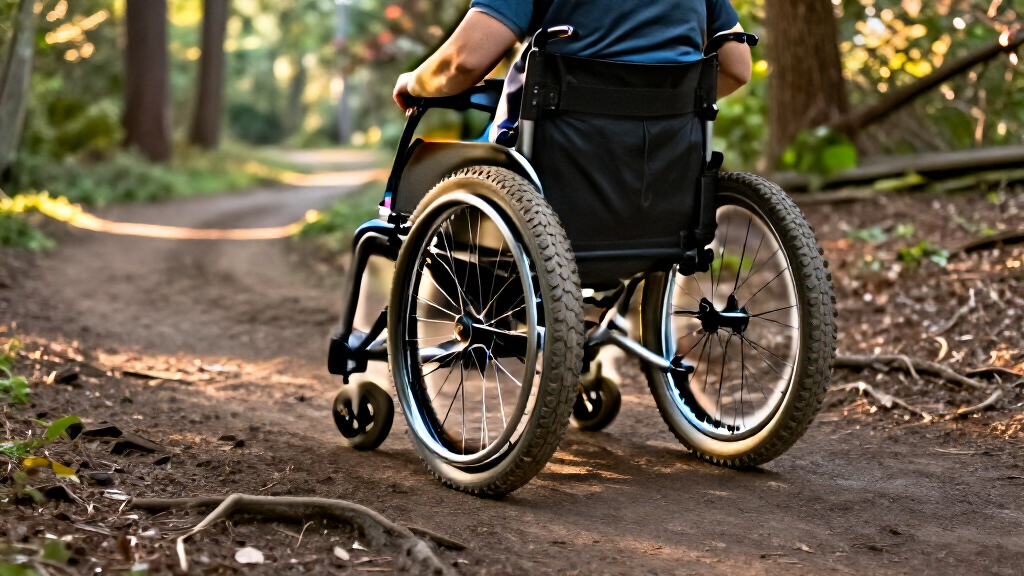
I ranked these options by how clearly their design matches outdoor mobility needs, then weighed practical factors that affect daily use: wheel size and stated terrain focus, powered versus manual operation, seating dimensions and capacity where listed, foldability, and added functions. A large wheel or outdoor label can be useful, but neither tells the whole story; the user’s route, ability to self-propel, and transport setup matter just as much.
The top position goes to a foldable electric model with a 16-inch front wheel because it combines powered assistance, a clear all-terrain design cue, and a format intended for transport. The M16-1 and WEYRAL are strong alternatives for buyers who prioritize a 20-inch seat, while the named 330 lb-capacity, 500W, 25-mile-range chair offers more explicit capacity and range details. Manual, beach-focused, and convertible options rank for narrower needs rather than as universal substitutes. I treat product names and stated specifications as starting points; shoppers should confirm exact dimensions, terrain limits, and compatibility with their own needs before buying.
Factors to Consider When Choosing Best All-terrain Wheelchairs
Choosing an outdoor wheelchair is less about finding the biggest wheels and more about matching the chair to the places it will actually go. I’d start with route conditions and user support needs, then check fit and transport constraints before comparing extra features.
Match the wheels to your actual routes
Outdoor paths vary widely: compacted gravel, grass, sand, uneven pavement, and steep trails place different demands on a chair. A wheel described as all-terrain does not mean it can handle every surface or slope, so look for the manufacturer’s stated limits and ask about the surfaces you use most. Small wheels may be manageable on smooth paths but can catch more easily on loose ground or cracks. Very large wheels can improve passage over some obstacles while making storage and turning harder. Think about the narrowest gate, doorway, or path on your regular route as well as the roughest one. If beach use is central, confirm the chair is designed for sand rather than assuming general outdoor labeling covers it.
Choose powered assistance based on who does the pushing
An electric chair can reduce the physical effort required from both a rider and a caregiver, but powered mobility brings its own requirements. Check the stated range against your typical outing, then allow for hills, soft surfaces, temperature, and battery age, all of which can affect real-world distance. Ask how the battery charges, whether it can be removed, and what happens if it runs low away from home. Manual chairs avoid battery planning, though self-propelling across rough ground may be tiring and caregiver pushing can become strenuous. A transport chair is generally designed for someone else to push, so confirm that arrangement suits the rider. Match the drive type to the person who will control and maintain the chair, not just the terrain.
Check fit beyond the seat-width number
Seat width is only one part of a usable fit. Compare seat depth, back height, armrest position, foot support, and the rider’s posture needs with guidance from a clinician or seating specialist when appropriate. A wider seat can help some users, but excess space may reduce stability and make positioning harder. Capacity ratings also do not describe comfort, pressure management, or how the chair handles the rider’s weight on uneven ground. Check whether cushions are included, removable, or compatible with the support the user needs. If the chair will be shared or used for long outings, fit should take priority over a feature list.
Plan the full loading and storage routine
“Foldable” does not tell you whether one person can lift the chair into a car. Look for the folded measurements, total weight, heaviest removable component, and whether the battery must come off before transport. Measure the vehicle’s opening and cargo space, then account for other equipment that travels with the rider. A chair that folds quickly may still be awkward to lift, while a heavier powered model may need a ramp or powered lift. Also check whether folding changes or removes the footrests, cushions, or other parts you rely on. Test the whole loading plan on paper before treating portability claims as a match.
Compare stability, braking, and caregiver control
Uneven ground makes stability and control especially relevant, even on a chair with large wheels. Check the braking system, anti-tipper design, turning behavior, and any guidance about slopes or outdoor operation. An anti-tipper can add reassurance in some situations, but it is not a substitute for following the chair’s limits or receiving safe-use instruction. For caregiver-pushed models, handle position and brake access affect how confidently an attendant can manage stops and inclines. If the rider will operate the chair independently, confirm the controls are reachable and understandable. A mobility professional can help assess whether a particular setup suits the user’s balance, strength, and routes.
Pay for the feature that solves your biggest problem
A higher-feature chair is worthwhile when it addresses a specific limitation, such as caregiver effort, long outings, a need for a wider seat, or regular travel over loose surfaces. Extra functions can add weight, maintenance, and setup steps, so avoid paying for capabilities the user will rarely use. A simple manual option may be a better fit for short, assisted trips, while a powered model may make longer independent outings more practical. Ask about replacement parts, battery support, service access, and warranty coverage before deciding. If possible, arrange a demonstration on a surface similar to the one the user encounters most. The best choice is the one that works reliably within the person’s real routine, not the one with the longest feature list.
Frequently Asked Questions
Can an all-terrain wheelchair be used on sand?
Some chairs are designed with beach use in mind, but the phrase “all-terrain” alone does not confirm that a model will work on soft sand. Sand depth, moisture, and slope can change how easily wheels roll, and a chair suitable for packed paths may bog down on loose beach sand. Check the maker’s specific guidance for beach use and ask whether the chair is intended for dry or firm sand. Consider access routes too, since a chair may perform differently on a boardwalk than at the water’s edge. If beach access is a regular need, prioritize a purpose-described beach model and confirm its limits before purchase.
How do I know whether a powered wheelchair’s range is enough?
Start with the distance of your usual outing, including the trip back, rather than relying on the maximum range figure alone. Hills, soft ground, frequent starts, rider weight, and battery condition can reduce practical range. Leave a reserve so the battery is not routinely drained to its limit, and check whether the battery can be charged or replaced conveniently. Ask the manufacturer how range was measured and whether the stated figure assumes smooth, level ground. If outings vary, a model with a longer stated range may provide useful flexibility, but real route conditions matter more than a headline number.
Should I choose a manual or electric all-terrain wheelchair?
Choose based on who will propel the chair and how demanding the route is. Electric models can reduce pushing effort and may support more independent travel, but they require battery management, charging access, and a plan for transport. Manual chairs avoid battery dependence and may be simpler for short trips, though rough ground can make self-propelling difficult and caregiver pushing tiring. A transport chair is generally intended for caregiver operation rather than independent propulsion. If the rider’s strength or control needs are uncertain, consult a clinician or mobility specialist before choosing a drive type.
Does a 20-inch seat mean a wheelchair will fit me?
No. Seat width is one measurement, and the best fit also depends on seat depth, posture, arm placement, foot support, and the user’s body shape. A chair can have an adequate width but still feel uncomfortable or fail to support the rider well over longer outings. Capacity ratings should also be checked, but they do not replace a seating assessment. Compare the manufacturer’s full dimensions with the rider’s measurements and seek professional advice if the chair will be used regularly or for extended periods. A trial or fitting can reveal issues that a single seat-width figure cannot.
What should I verify before buying a foldable outdoor wheelchair for a car?
Check the folded length, width, and height against the vehicle’s cargo opening and available storage space. Find out the chair’s total weight and whether heavy parts, such as the battery, can be removed before lifting. Consider who will load it and whether a ramp, hoist, or second person is needed. Confirm that folding does not require tools or remove components that are inconvenient to reinstall. If possible, test the loading process with the actual vehicle; a chair can be compact when folded yet still be too heavy or awkward for your routine.
Conclusion
My best overall choice is the Foldable All-Terrain Electric Wheelchair with 16-Inch Front Wheel for shoppers seeking powered assistance in a foldable outdoor-focused design. For best value by stated specifications, compare the 330 lb-capacity, 500W, 25-mile-range electric chair, while confirming that its wheel setup and dimensions suit your routes and fit. The best premium-style alternative for buyers prioritizing a 20-inch seat is the M16-1 or WEYRAL; verify their full feature and service details before choosing between them. For beginners or caregiver-led short trips, the WHLICKS transport wheelchair may be simpler than moving straight to a powered chair, though it is not a substitute for independent propulsion. For specific needs, consider TerraWheels for beach-focused use, the sports wheelchair for a lightweight manual design with an anti-tipper, or Helavo if a walker-and-transport-chair combination fits the user’s routine. Match the final choice to the rider’s fit, terrain, and transport plan.
Columbus Day / Indigenous Peoples' Day Picks
long weekend sales
As an affiliate, we earn on qualifying purchases.