Choosing a vibrating fire alarm alert system depends on how you need a warning delivered: a bed shaker, a bright strobe, or an interconnected siren-and-light alarm. My first pick for a direct vibration alert is the Sonic Alert HomeAware II Basic Starter Kit, which pairs a bed shaker with visual, audio, and text alerts but relies on existing alarms to detect smoke or carbon monoxide. For a hardwired visual alert, the First Alert SLED177 adds a bright synchronized strobe, though it does not provide the bed-shaking feature described for the Sonic Alert. The Digiteck interlinkable system is the simpler battery-powered option, combining a siren and LED strobe without the HomeAware kit’s vibration and notification features.

Get everyday helpers delivered free with Prime
- Fast, free delivery on millions of items
- Prime Video, Amazon Music and more included
- Member-only deals all year
Those differences matter more than a single feature list: one product listens for another alarm, one adds a strobe to compatible wired alarms, and one is itself an interlinkable alarm with sound and light. I rank them by how directly they address waking or alerting someone who may not hear a conventional alarm, then by installation requirements, compatibility, and the clarity of their stated alert methods. I also call out a key limitation: only the HomeAware kit explicitly includes a bed shaker, while the other two options should not be mistaken for vibration alert systems.
Key Takeaways
For bed-shaking alerts: Sonic Alert HomeAware II is the only listed pick with an included bed shaker; it listens for existing alarm sounds rather than detecting smoke or carbon monoxide itself.
For a hardwired visual signal: First Alert SLED177 provides a 177-candela strobe and can synchronize with compatible First Alert and BRK alarm installations.
For battery-powered sound and light: Digiteck combines a 98 dB siren, LED strobe, and interlinkable operation, but its description does not specify a bed shaker.
Compatibility is not interchangeable: SLED177 is for supported First Alert and BRK alarms, while HomeAware must be placed near and tested with the existing alarm it listens to.
Check the alert chain before buying: Decide whether you need a smoke/CO detector, an auxiliary alert device, or a system that can wake you with vibration; these products fill different roles.
| Sonic Alert HomeAware II Basic Starter Kit |  | Best for direct vibration alerts | Model: HA360MBK | Power: Corded electric with rechargeable battery backup | Vibration sensor: Acoustic | VIEW LATEST PRICE | See Our Full Breakdown |
| First Alert SLED177 Hardwired LED Strobe Light for Hearing-Impaired Residents |  | Best hardwired visual alert | Model: SLED177 | Light source and output: LED; 177 candela | Power: 120 V AC hardwired | VIEW LATEST PRICE | See Our Full Breakdown |
| Digiteck Battery-Powered Interlinkable Fire Alarm System with LED Strobe and Siren |  | Best battery-powered alarm with light and sound | Power source: Battery powered | Voltage: 9 volts | Sensor technology: Photoelectric | VIEW LATEST PRICE | See Our Full Breakdown |
| vibrating fire alarm alert system | Model | Power | Dimensions | Mounting |
|---|---|---|---|---|
| Sonic Alert HomeAware II Basic | HA360MBK | Corded electric with rechargeable battery backup | 5 × 6 × 6.5 inches | — |
| First Alert SLED177 Hardwired | SLED177 | 120 V AC hardwired | — | Ceiling or wall |
| Digiteck Battery-Powered Inter | — | — | 2.95 × 2.36 × 6.3 inches | Wall mount |
More Details on Our Top Picks
Sonic Alert HomeAware II Basic Starter Kit
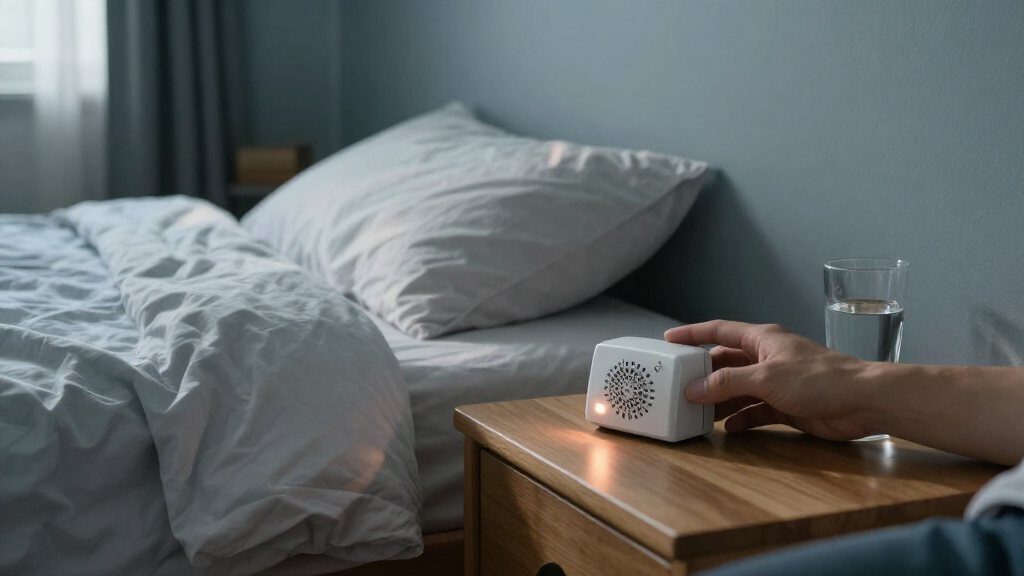
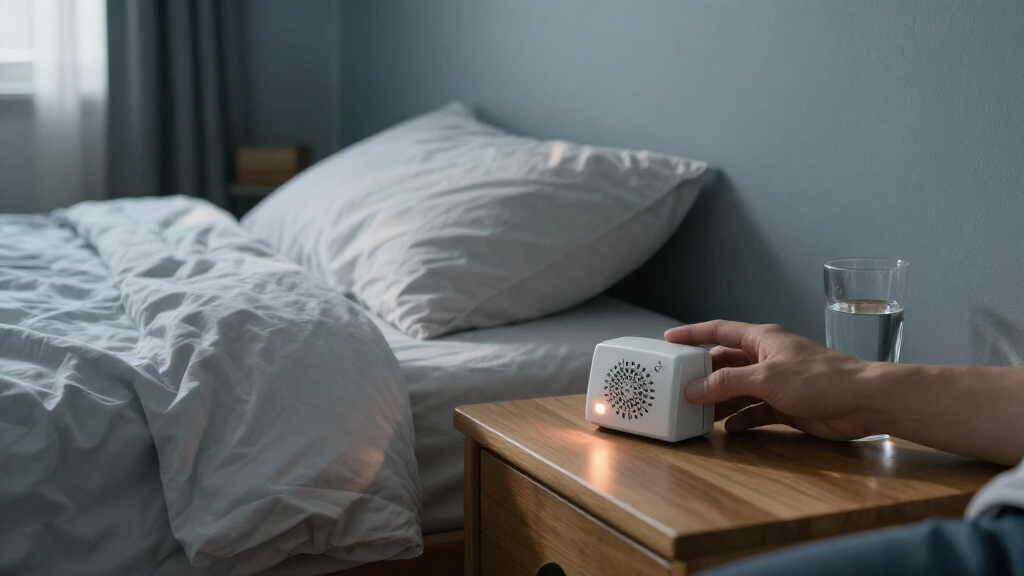
HomeAware II ranks first because it is the only product here that explicitly includes a bed shaker. It can also alert with a flashing strobe, audio tones, and scrolling text, giving buyers several ways to notice an alarm beyond sound alone. That combination makes it the most directly aligned option for someone who needs a warning strong enough to reach them while sleeping, rather than a visual-only device mounted elsewhere in the home.
Its approach differs from both other picks. Unlike the First Alert SLED177, HomeAware is not simply a strobe added to a wired alarm network; it supplies a bed shaker and text display. Unlike the Digiteck, it is not described as a smoke alarm or interlinkable detector. Instead, its acoustic sensor listens for sound patterns from existing smoke and carbon monoxide alarms. This setup can make it useful in a home where alarms are already installed, but it also creates a dependency: the alert device must be placed in the same room as the source alarm, and the acoustic response needs regular testing.
The kit also supports cellphone call and text alerts through its app and incoming landline calls when connected. Those communication features widen its role, but they do not replace a detector. It does not detect smoke or carbon monoxide directly, so it should supplement functioning alarms rather than stand in for them. Compared with Digiteck’s self-contained photoelectric alarm description, HomeAware offers more accessible alert modes but requires a separate alarm source and a correctly positioned listening unit.
Its corded power and rechargeable battery backup offer a useful mix for ordinary operation and outages, although the product still needs a suitable location and setup. I would choose it when vibration is a priority and the buyer can keep it close to a working alarm. I would skip it if the goal is to buy a standalone smoke or CO detector, or if there is no reliable way to test the acoustic link in the intended room.
Pros:- Includes a bed shaker alongside strobe, audio tones, and scrolling text.
- Listens for existing smoke and carbon monoxide alarm sound patterns.
- Can display cellphone call and text alerts through the HomeAware app.
- Rechargeable battery backup is included for power outages.
Cons:- Does not detect smoke or carbon monoxide directly.
- Must be placed in the same room as the existing alarm and tested regularly.
- The acoustic link depends on the source alarm being audible to the sensor.
Best for: Deaf or hard-of-hearing residents, heavy sleepers, and households that want a bed shaker plus strobe, tones, and text alerts from existing smoke or carbon monoxide alarms.
Not ideal for: Buyers seeking a standalone smoke or carbon monoxide detector, or anyone who cannot position and regularly test the unit near the alarm it listens to.
- Model:HA360MBK
- Power:Corded electric with rechargeable battery backup
- Vibration sensor:Acoustic
- Alert methods:Strobe, bed shaker, audio tones, scrolling text display
- Connectivity:Bluetooth app support; landline phone connection
- Dimensions:5 × 6 × 6.5 inches
- Weight:1.8 pounds
- Enclosure material:Plastic
Our verdict“I recommend HomeAware II for buyers who need a bed shaker and multiple alert channels, provided they keep it near a tested, working alarm.”
First Alert SLED177 Hardwired LED Strobe Light for Hearing-Impaired Residents
The SLED177 is my pick for a dedicated, hardwired strobe when the home already uses compatible First Alert or BRK alarms and the buyer wants a visual warning that can synchronize across units. Its stated 177-candela output is the product’s main differentiator. The smart strobe feature also distinguishes smoke or heat alerts from carbon monoxide alerts, offering more information than a light that flashes without identifying the alarm category.
This is a narrower product than HomeAware II. The Sonic Alert kit gives a bed shaker and several alert formats, while the First Alert is specifically a visual accessory with no bed shaker listed. For someone who may sleep through sound, a bright strobe may be useful, but buyers who need physical vibration should not treat it as a substitute for the HomeAware kit. Compared with Digiteck, SLED177 is designed to integrate with supported alarms rather than supplying its own photoelectric sensing and siren in the product description.
The strongest case for this model is an established compatible alarm system. It can interconnect with supported First Alert and BRK smoke, carbon monoxide, combination, and heat alarms, and up to 18 interconnected devices are specified. Synchronized flashing can help make a warning visible across multiple rooms when installed as part of a compatible setup. But that usefulness comes with a firm boundary: it is hardwired for 120 V AC and works only with supported alarm models. Buyers need to confirm compatibility and installation requirements before choosing it.
I would place it second because its visual signaling and integration details are more specific than Digiteck’s, but it does not meet the bed-vibration need as directly as HomeAware. It suits households prioritizing a visual alert within a compatible wired system. I would pass if you need a portable or battery-powered accessory, a bed shaker, or a product that works with alarms outside the stated First Alert and BRK compatibility list.
Pros:- 177-candela LED strobe provides a dedicated visual alert.
- Can synchronize flashing across multiple compatible units.
- Smart strobe distinguishes smoke or heat alerts from carbon monoxide alerts.
- Interconnects with specified First Alert and BRK alarm types.
Cons:- Requires 120 V AC hardwired installation.
- Compatibility is limited to supported First Alert and BRK alarms.
- No bed shaker or other vibration alert is specified.
Best for: Residents with hearing impairments who have, or plan to install, compatible First Alert or BRK alarms and want a synchronized hardwired strobe.
Not ideal for: Buyers who need a bed shaker, battery-powered installation, or compatibility with alarm brands beyond the supported First Alert and BRK models.
- Model:SLED177
- Light source and output:LED; 177 candela
- Power:120 V AC hardwired
- Mounting:Ceiling or wall
- Features:Smart strobe, interconnectivity, synchronized flashing
- Compatible devices:Supported First Alert and BRK smoke, CO, combination smoke/CO, and heat alarms
- Maximum interconnected devices:18
- Standards:UL standards; Americans with Disabilities Act requirements
Our verdict“I would choose the SLED177 for a compatible hardwired alarm network where a synchronized visual alert matters more than bed-shaking vibration.”
Digiteck Battery-Powered Interlinkable Fire Alarm System with LED Strobe and Siren
Digiteck is the simplest alarm-style option in this lineup: it combines a photoelectric sensor, a 98 dB siren, and an LED strobe in a battery-powered, wall-mounted unit. Its interlinkable design distinguishes it from the two alert accessories. Rather than listening for another alarm like HomeAware or adding a strobe to a compatible hardwired network like the SLED177, this model is described as a fire alarm system with its own sensor and sound-and-light outputs.
That self-contained role may appeal to buyers who want an alarm with a visual signal and do not want to begin with a 120 V hardwired accessory. Against the First Alert SLED177, the Digiteck is battery powered and described for indoor or outdoor use, while First Alert offers a specified bright strobe, synchronized operation, and compatibility with named alarm families. Against HomeAware II, Digiteck provides a photoelectric sensor and siren, but its description does not include a bed shaker, text display, app alerts, or an explicit connection to existing smoke and carbon monoxide alarms.
That distinction matters for buyers searching specifically for vibration alerts. The product title and supplied details do not identify a vibrating pad or bed shaker, so I would not buy it on the assumption that it can wake someone through vibration. Its strobe adds a visual warning, and the siren adds an audible one, but those alert methods are not the same as tactile signaling. The battery power also means buyers need to maintain the batteries; the supplied specifications say 9 volts but do not provide a battery-life figure.
I rank it third for this particular roundup, not because its alarm features are irrelevant, but because it is the least direct match for the word “vibrating.” It makes more sense for someone seeking an interlinkable battery-powered alarm with light and sound, especially where hardwiring is not wanted. I would skip it if the essential requirement is a bed shaker, a clearly documented system for waking a deaf or hard-of-hearing sleeper, or a specified compatibility pathway with existing alarms.
Pros:- Combines a photoelectric sensor, 98 dB siren, and LED strobe.
- Interlinkable operation is specified.
- Battery-powered design avoids a required 120 V hardwired connection.
- Designed for indoor or outdoor use.
Cons:- No bed shaker or vibration alert is specified.
- Requires battery power and ongoing battery maintenance.
- The supplied details do not identify compatible interlinked alarm models.
Best for: Buyers seeking a battery-powered, wall-mounted alarm with a photoelectric sensor, siren, LED strobe, and interlinkable operation.
Not ideal for: Anyone who specifically needs a bed shaker or other tactile alert, or who needs documented compatibility with an existing alarm network.
- Power source:Battery powered
- Voltage:9 volts
- Sensor technology:Photoelectric
- Audible output:98 dB siren
- Mounting:Wall mount
- Use:Designed for indoor and outdoor use
- Dimensions:2.95 × 2.36 × 6.3 inches
- Model number:XX-GMYU-XB47
Our verdict“I would choose Digiteck for a battery-powered alarm with sound and strobe, but not as a substitute for a bed-shaking alert system.”
How We Picked
I compared these three products by the problem the roundup is meant to solve: making a fire alarm warning accessible when sound alone may not be enough. That means I gave the most weight to explicit vibration capability, followed by the presence and type of visual alert, how the product connects to the alarm source, and what installation or compatibility limits a buyer must accept. I did not treat a loud siren or a flashing light as equivalent to a bed shaker.
The product descriptions identify three distinct approaches. Sonic Alert HomeAware II is an auxiliary alert system with an acoustic sensor, strobe, bed shaker, tones, and scrolling text. First Alert SLED177 is a hardwired strobe designed to work with supported First Alert and BRK alarms. Digiteck is a battery-powered, interlinkable alarm with a photoelectric sensor, siren, and LED strobe. Those differences shape the ranking: HomeAware comes first for the roundup’s vibration focus, SLED177 next for a dedicated accessible visual alert within a compatible wired setup, and Digiteck third as a more conventional alarm with supplemental light rather than a described vibration feature.
I also weighed the practical cost of each system in effort and dependencies, not money. HomeAware needs an existing smoke or carbon monoxide alarm nearby and regular testing of the acoustic link. SLED177 needs 120 V AC hardwired installation and compatible alarm models. Digiteck avoids that hardwired requirement but depends on batteries. I have not inferred certifications, detection functions, or compatibility beyond the supplied product details; buyers should check the alarm’s installation instructions and local fire-safety requirements before relying on any setup.
| vibrating fire alarm alert system | Model | Mounting |
|---|---|---|
| Sonic Alert HomeAware II Basic | HA360MBK | — |
| First Alert SLED177 Hardwired | SLED177 | Ceiling or wall |
| Digiteck Battery-Powered Inter | — | Wall mount |
Factors to Consider When Choosing Vibrating Fire Alarm Alert Systems
I would start with the alert you need to receive, then check what the device depends on. These three products do not offer the same kind of protection: one listens for existing alarms and can shake a bed, one adds a wired strobe to compatible alarms, and one is described as a battery-powered alarm with a siren and light.
Decide whether vibration is a must-have
For a buyer who specifically needs a tactile warning during sleep, the key question is whether a bed shaker is included. Of these three, HomeAware II explicitly includes one. Neither the First Alert SLED177 nor the Digiteck product details specify a shaker or vibration alert, even though both offer visual signaling. A strobe can add another way to notice an alarm, but it is not a tactile alert and may not meet the same need.
If vibration is not essential, the comparison changes. SLED177 is geared toward a visual alert integrated into a supported hardwired system. Digiteck combines a sensor with sound and light in a battery-powered package. I would avoid choosing by product title alone; confirm which alert methods are actually included and where they are meant to operate.
Know whether you need a detector or an alert accessory
HomeAware II is an auxiliary alert system, not a smoke or carbon monoxide detector. It listens for sound patterns from existing alarms. That means the underlying alarm remains responsible for detecting a hazard, and the HomeAware unit must be close enough to hear it. The product description calls for regular testing, so include that step in the household’s routine.
The Digiteck description identifies a photoelectric sensor and a siren, making its role more like an alarm unit. The SLED177 is described as a strobe that interconnects with compatible alarms. These jobs are different: an accessory can make an existing warning more accessible, but it does not necessarily detect danger itself. I would keep functioning, appropriate smoke and carbon monoxide alarms in place regardless of which alert accessory you choose.
Match installation to the home
Installation is a major divider. Digiteck runs on battery power, so the listed setup does not require a hardwired 120 V connection, but batteries need attention. HomeAware is corded electric and includes rechargeable backup, while its placement near the source alarm is part of the setup. SLED177 requires hardwired 120 V AC installation and is meant for ceiling or wall mounting.
Before buying a hardwired strobe, check whether the home’s wiring and existing alarm arrangement support the installation. A battery-powered product can be easier to place, but convenience does not remove the need for maintenance or testing. The best fit is the system whose power and mounting requirements can be maintained reliably in the rooms where alerts matter.
Verify compatibility and interconnection
Compatibility is specific, not universal. The SLED177 is identified for supported First Alert and BRK smoke, carbon monoxide, combination smoke/CO, and heat alarms; the description specifies up to 18 interconnected devices. That makes it the clearest option for buyers who already use that ecosystem, but a buyer with another brand should not assume it will work.
HomeAware relies on acoustic sensing rather than a stated wired link to a particular alarm model. It needs to be placed in the same room as the existing alarm and tested with it. Digiteck is described as interlinkable, but the supplied information does not name compatible models or explain the interconnection method. I would verify those details with the manufacturer or product documentation before planning a multi-unit system.
Choose the right alert for sleep and daily use
A visual signal may be enough for some people when awake, but it may not be noticed from another room or while asleep. HomeAware’s bed shaker is the clearest sleep-oriented feature in this group, with tones and scrolling text as additional channels. The SLED177 focuses on flashing light, while Digiteck pairs light with a 98 dB siren. Their usefulness depends on the person, room layout, and how the equipment is installed.
Think through where the user sleeps, whether an alert can be seen or felt from that location, and whether household members need different signals. For a sleeping person who needs tactile notification, choose a product that explicitly includes a bed shaker and follow its instructions for placement and testing. For a household-wide visual indication, a synchronized compatible strobe may be the better fit.
Plan for testing and backup power
Any system that depends on another alarm or a power source needs a testing plan. With HomeAware, test that the unit recognizes the existing alarm’s sound pattern and that its strobe and bed shaker respond. The Digiteck requires battery upkeep, while the First Alert strobe depends on its hardwired supply and compatible interconnected alarms. Do not assume that one successful test covers every alert path; check the instructions for each component.
HomeAware lists a rechargeable battery backup, which can help during a power outage, but that does not make it a standalone detector. For every option, keep the primary smoke and carbon monoxide alarms functional, follow manufacturer testing guidance, and replace or service equipment according to its instructions and applicable local rules.
Frequently Asked Questions
Which of these products includes a bed shaker?
Sonic Alert HomeAware II is the only one of the three that explicitly includes a bed shaker. The First Alert SLED177 provides a hardwired visual strobe, and Digiteck lists a siren and LED strobe, but neither supplied description identifies a tactile vibration alert. If a bed shaker is essential, confirm the exact kit contents and setup before purchase.
Does the HomeAware II detect smoke or carbon monoxide?
No. HomeAware II listens for sound patterns from existing smoke and carbon monoxide alarms; it does not detect either hazard directly. It should be used alongside working detectors, placed in the same room as the alarm it listens to, and tested regularly so the user can confirm the auxiliary alerts respond.
Can I use the First Alert SLED177 with any smoke alarm?
The supplied information lists compatibility with supported First Alert and BRK smoke, carbon monoxide, combination smoke/CO, and heat alarms. It does not establish compatibility with every alarm brand or model. Check the specific alarm model and installation instructions before buying or wiring the strobe, particularly if you plan to synchronize several units.
Is the Digiteck system a vibrating alarm?
The listed Digiteck features are a photoelectric sensor, a 98 dB siren, an LED strobe, battery power, and interlinkable operation. No bed shaker or vibration output is specified, so I would treat it as a sound-and-light alarm rather than a vibrating alert system. Buyers who need tactile notification should look for a product that explicitly includes a shaker.
Which option is best for someone who may not hear an alarm while sleeping?
Among these three, HomeAware II is the most directly suited to that need because it includes a bed shaker along with a strobe, tones, and scrolling text. It still depends on an existing alarm and acoustic sensing, so the unit must be placed and tested as directed. A buyer should confirm that the shaker and other alert methods fit the intended sleeping arrangement.
Conclusion
For a buyer who needs vibration at night, I recommend Sonic Alert HomeAware II because it is the only listed option with a bed shaker and it adds visual, audio, and text alerts. Choose it only as an auxiliary system alongside functioning smoke and carbon monoxide alarms, since it does not detect hazards directly and must be positioned near the alarm it listens to.
For a compatible First Alert or BRK setup where a synchronized visual warning is the priority, I would choose the SLED177. It offers a specified 177-candela strobe and alarm-type distinction, but it needs hardwired 120 V AC installation and does not provide a listed bed shaker. For someone who wants a battery-powered alarm with a photoelectric sensor, siren, and strobe, Digiteck is the more relevant fit; just do not mistake its light-and-sound alerts for tactile vibration. My main recommendation is to match the product to the alert method the resident can reliably notice, then verify compatibility, placement, power, and testing requirements before relying on it.
Halloween Picks

Pumpkin Halloween Fog Machine with 12-Color LED Lights, Bluetooth Speaker, and Remote

MGparty 14.5 ft Halloween Inflatable Walk-In Pumpkin House with LED Lights

Gemmy Bluey Family Halloween Inflatable Scene, 5.5 ft Lighted Yard Decoration
As an affiliate, we earn on qualifying purchases.