Personal sound amplifiers for hearing loss can make nearby speech and everyday sounds easier to hear, but they are not a substitute for a hearing evaluation or prescription hearing aids. I’d put the Williams Sound PockeTalker Ultra Duo first for its pocket-style design and included listening options, while the iRoger Rechargeable Personal Sound Amplifier stands out for rechargeable convenience and the SuperEar Plus SE7500 for a straightforward handheld format. The main choice is between a microphone you can point toward a speaker, a wearable behind-the-ear design, or a pocket amplifier with a wired listening accessory. Fit, background-noise handling, controls, and charging needs can matter more than maximum amplification claims. Read on for how the 13 options differ and which type may suit your listening habits.

Get everyday helpers delivered free with Prime
- Fast, free delivery on millions of items
- Prime Video, Amazon Music and more included
- Member-only deals all year
Complete the kit


Key Takeaways
- Pocket amplifiers lead this roundup: Williams Sound’s PockeTalker models and the SuperEar options keep the microphone and controls separate from the listening accessory, which can help users direct the microphone toward a conversation.
- The Ultra Duo is the most flexible featured pick: it comes with both headphones and an earbud, giving buyers more ways to listen than options bundled with only one style.
- Rechargeable designs reduce battery errands, not every ownership hassle: iRoger and Vimaydo emphasize recharging, while buyers still need to check charging routines, fit, and control simplicity.
- Product names and amplification figures do not settle the choice: the Reizen 120 dB model’s advertised maximum is not a reliable guide to comfortable speech clarity or real-world suitability.
- Specialized formats involve sharper tradeoffs: Blue Deer’s bone-conduction Bluetooth approach and Joanbro’s removable microphones may suit particular preferences, but add fit or setup questions absent from simpler pocket designs.
| iRoger Rechargeable Personal Sound Amplifier with Directional Microphone |  | Best for Simple Controls and Long Use | Brand: IROGER | Model: IR8 | Maximum sound gain: 65 dB | VIEW LATEST PRICE | See Our Full Breakdown |
| Williams Sound PockeTalker Ultra Duo Sound Amplifier with Headphones and Earbud |  | Best for Flexible Listening Setups | Brand: Williams Sound | Model: PKT D1 EH | Acoustic gain: 20–40 dB | VIEW LATEST PRICE | See Our Full Breakdown |
| Reizen Loud Ear Personal Hearing Amplifier |  | Best for Basic Long-Distance Pickup | Brand: Reizen | Model: LHSHC-R-AMP | Sensitivity: 110 dB ±3 dB per mW | VIEW LATEST PRICE | See Our Full Breakdown |
| SuperEar Plus SE7500 Personal Sound Amplifier |  | Best Complete Battery-Powered Kit | Model: SE7500 | Sound gain: Up to 50+ dB | Battery type: 2 AAA batteries | VIEW LATEST PRICE | See Our Full Breakdown |
| Reizen Loud Ear 120 dB Personal Hearing Amplifier |  | Best for Buyers Prioritizing Stated Maximum Gain | Brand: Reizen | Model: Loud Ear | Model number: 907654 & HED021 | VIEW LATEST PRICE | See Our Full Breakdown |
| Vimaydo Rechargeable Behind-the-Ear Hearing Amplifier |  | Best for Simple Rechargeable Wear | Type: Behind-the-ear hearing amplifier | Sound gain: Up to 45 dB | Battery life: Up to 40 hours per charge | VIEW LATEST PRICE | See Our Full Breakdown |
| Bell + Howell Silver Sonic XL Personal Sound Amplifier |  | Best for Listening Across a Room | Maximum amplification: 50 dB | Sound range: Up to 90 feet | Frequency settings: HI/LOW switch | VIEW LATEST PRICE | See Our Full Breakdown |
| SuperEar SE5000 Personal Sound Amplifier with Headphones and Earbuds |  | Best for Flexible Listening Accessories | Amplification: Up to 50+ dB | Battery life: Up to 30 hours | Battery type: 1 AAA battery | VIEW LATEST PRICE | See Our Full Breakdown |
| IROGER Rechargeable Hearing Amplifier with Headphones | 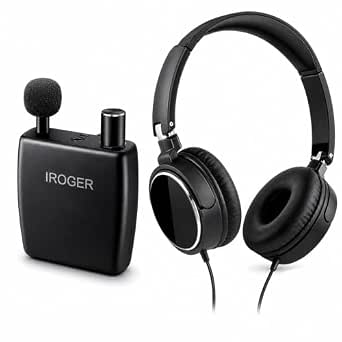 | Best for Long Runtime and Voice Focus | Model: I8-Pro | Sound gain: Up to 65 dB | Charging time: About 1 hour | VIEW LATEST PRICE | See Our Full Breakdown |
| Joanbro Pocket Personal Sound Amplifier with Removable Microphones | 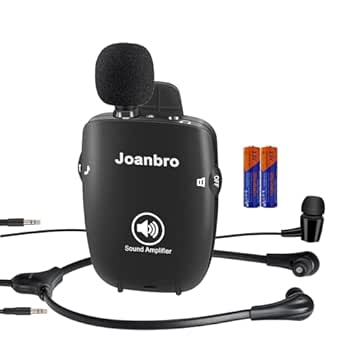 | Best for Situational Sound Customization | Additional acoustic gain: 50 dB | Microphones: 3 removable types | Tone control: Bass, normal, treble | VIEW LATEST PRICE | See Our Full Breakdown |
| Blue Deer BD-F2H Bluetooth Bone Conduction Hearing Amplifier |  | Best Open-Ear Bluetooth Pick | Model: BD-F2H | Design: Open-ear bone conduction | Connectivity: Bluetooth 5.3 | VIEW LATEST PRICE | See Our Full Breakdown |
| Williams Sound Pocketalker 2.0 Personal Hearing Amplifier |  | Best for Simple Conversation Listening | Model: Pocketalker 2.0 (PKT 2.0 EH) | Controls: Button control with separate volume and tone controls | Batteries: 2 AAA alkaline batteries (included) | VIEW LATEST PRICE | See Our Full Breakdown |
| Williams Sound Pocketalker Ultra Personal Sound Amplifier |  | Best for Flexible Microphone Placement | Maximum amplification: Up to 40 dB | Controls: Separate volume and tone controls | Power source: Battery powered | VIEW LATEST PRICE | See Our Full Breakdown |
| personal sound amplifiers for hearing loss | Battery life | Model | Controls |
|---|---|---|---|
| iRoger Rechargeable Personal S | Up to 120 hours | IR8 | Manual one-knob control |
| Williams Sound PockeTalker Ult | Up to 100 hours | PKT D1 EH | External volume and tone controls |
| Reizen Loud Ear Personal Heari | Up to 48 hours | LHSHC-R-AMP | — |
| SuperEar Plus SE7500 Personal | Up to 80 hours | SE7500 | Adjustable volume |
| Reizen Loud Ear 120 dB Persona | Estimated 48 hours | Loud Ear | — |
| Vimaydo Rechargeable Behind-th | Up to 40 hours per charge | — | Button volume control |
| Bell + Howell Silver Sonic XL | Up to 14 hours of continuous use | — | — |
| SuperEar SE5000 Personal Sound | Up to 30 hours | — | — |
| IROGER Rechargeable Hearing Am | Up to 120 hours per charge | I8-Pro | Manual volume control knob |
| Joanbro Pocket Personal Sound | Approximately 40 hours of moderate use | — | — |
| Blue Deer BD-F2H Bluetooth Bon | Up to 8 hours | BD-F2H | — |
| Williams Sound Pocketalker 2.0 | — | Pocketalker 2.0 (PKT 2.0 EH) | Button control with separate volume and tone controls |
| Williams Sound Pocketalker Ult | — | — | Separate volume and tone controls |
More Details on Our Top Picks
iRoger Rechargeable Personal Sound Amplifier with Directional Microphone
The iRoger stands out for buyers who want one-knob operation and a claimed long stretch between charges. Its directional microphone and automatic gain control are intended to focus amplification on voices, which may suit conversations better than the basic built-in-microphone approach of the Reizen Loud Ear Personal Hearing Amplifier. A listed maximum gain of 65 dB gives a useful point of comparison, but the product information is inconsistent: the description says rechargeable while the specifications list AA batteries, and noise control is also listed as none despite the directional-microphone claim. That makes its power and noise-handling details harder to rely on than the more clearly documented Williams Sound PockeTalker Ultra Duo. The stated one-hour charge and up-to-120-hour use are appealing if confirmed, but I would verify the battery type before buying.
Pros:- One-knob manual control keeps everyday adjustments simple
- Directional microphone and automatic gain control are intended to prioritize voices
- Product description claims a one-hour charge and up to 120 hours of use
- Two-year warranty with lifetime repair service is stated
Cons:- Product description says rechargeable, but specifications list AA batteries
- Noise control is listed as none despite the directional noise-canceling microphone description
- Plastic construction and limited fit details may not suit buyers seeking a discreet, wearable design
Best for: Buyers who want uncomplicated one-knob controls and a compact amplifier, and who can confirm the battery configuration with the seller before purchase.
Not ideal for: Anyone who needs dependable, clearly documented rechargeable operation or wants confidence that background noise reduction is included.
- Brand:IROGER
- Model:IR8
- Maximum sound gain:65 dB
- Charging time:1 hour
- Battery life:Up to 120 hours
- Controls:Manual one-knob control
- Microphone:Directional noise-canceling
- Dimensions:6 × 2.5 in
- Warranty:2 years; lifetime repair service
Our verdict“Choose the iRoger for straightforward controls and potentially long use, but only after confirming its battery type and noise-control details.”
Williams Sound PockeTalker Ultra Duo Sound Amplifier with Headphones and Earbud
The PockeTalker Ultra Duo earns its place through listening flexibility: it includes both a folding headphone and a single earbud, plus a removable microphone and TV listening cord. That makes it more adaptable for switching between conversation, television, and small-group listening than the single-earphone Reizen Loud Ear Personal Hearing Amplifier. External volume and tone controls also give the listener more ways to shape the sound than the simpler one-knob iRoger. Its stated 20–40 dB acoustic gain is lower than some listed figures in this group, so buyers focused on maximum amplification may prefer another model. The removable microphone can be positioned with its extension cord, but this remains a one-listener device, and its two AAA batteries are not included. For buyers who value setup options and a five-year warranty over rechargeable convenience, it is a strong fit.
Pros:- Includes a folding headphone, single earbud, TV listening cord, and removable microphone
- External volume and tone controls allow sound adjustments beyond basic volume
- Removable microphone with extension cord offers placement flexibility
- Stated battery life is up to 100 hours, with a five-year warranty
Cons:- Requires two AAA batteries, which are not included
- Designed for one listener rather than shared listening
- Listed acoustic gain of 20–40 dB is lower than the maximum-gain figures provided for some alternatives
Best for: People who alternate between face-to-face conversations and TV listening and want both headphone and earbud options.
Not ideal for: Buyers who want a rechargeable device, need amplification for more than one listener, or prioritize the highest stated gain.
- Brand:Williams Sound
- Model:PKT D1 EH
- Acoustic gain:20–40 dB
- Battery:Two replaceable AAA batteries; not included
- Battery life:Up to 100 hours
- Controls:External volume and tone controls
- Included accessories:Folding headphone, single earbud, TV listening cord, microphone, user guide
- Microphone:Removable, with extension cord
- Warranty:5 years
Our verdict“Pick the PockeTalker Ultra Duo if you want multiple listening accessories and adjustable tone more than rechargeable power or shared audio.”
Reizen Loud Ear Personal Hearing Amplifier
The Reizen Loud Ear is a straightforward option for listeners who want a portable, belt-clipped amplifier with a stated pickup distance of up to 100 feet. Its adjustable volume and included AAA batteries make it ready for use without a separate battery purchase, unlike the Williams Sound PockeTalker Ultra Duo. The tradeoff is a simpler listening setup: it includes one earphone, while the PockeTalker comes with both a headphone and earbud and adds tone control and a TV cord. The Reizen’s 20 Hz–20 kHz frequency range is listed, but that alone does not indicate how clearly it will handle speech in noisy settings. With up to 48 hours of battery life and a 90-day warranty, it is less suited to buyers seeking extended support or refined noise handling. It makes the most sense for basic amplification where portability matters more than accessory choice.
Pros:- Built-in microphone is stated to pick up sound from up to 100 feet away
- Adjustable volume control lets the listener set amplification
- Belt clip supports portable use
- Includes a single earphone and two AAA batteries
Cons:- Single-earphone setup limits listening options
- Battery life is stated as up to 48 hours, shorter than the PockeTalker Ultra Duo’s listed maximum
- Warranty is limited to 90 days
Best for: Listeners who want a simple, portable amplifier for picking up nearby or distant speech and prefer included batteries and a belt clip.
Not ideal for: People who need two-sided listening, dedicated noise reduction, a longer warranty, or accessories for TV use.
- Brand:Reizen
- Model:LHSHC-R-AMP
- Sensitivity:110 dB ±3 dB per mW
- Frequency range:20 Hz–20 kHz
- Battery life:Up to 48 hours
- Power source:2 AAA batteries
- Dimensions:2.5 × 1.75 × 0.75 inches
- Weight:2.4 ounces
- Warranty:90-day manufacturer’s warranty
Our verdict“Choose this Reizen model for a basic belt-clipped amplifier with included batteries, and skip it if you need richer listening options or noise control.”
SuperEar Plus SE7500 Personal Sound Amplifier
The SuperEar Plus SE7500 is the most ready-to-use battery-powered kit in this group: the package includes earbuds, headphones, two AAA batteries, and a carry case with belt clip. That broader accessory set gives it an advantage over the single-earphone Reizen Loud Ear Personal Hearing Amplifier, while its stated 80-hour battery life sits between the Reizen’s 48 hours and the PockeTalker Ultra Duo’s 100 hours. Up to 50+ dB of ambient sound gain and adjustable volume offer a clear route to changing amplification, and automatic shut-off can help limit wasted battery when it is left on. The product is described as a sound amplifier, not a medical hearing aid, and it requires disposable batteries rather than charging. Buyers who want a bundled listening kit may prefer it over the iRoger, whose battery information is inconsistent; those seeking rechargeable use should look elsewhere.
Pros:- Includes earbuds, headphones, two AAA batteries, and a carry case with belt clip
- Up to 50+ dB of ambient sound gain with adjustable volume
- Automatic shut-off may help conserve batteries
- Up to 80 hours of stated battery life
Cons:- Requires disposable AAA batteries rather than rechargeable power
- Product information describes sound amplification, not medical hearing-aid functionality
- Noise reduction or directional microphone performance is not specified
Best for: Buyers who want a portable amplifier package with both earbuds and headphones, batteries included, and a carry case for everyday use.
Not ideal for: Listeners who prefer rechargeable power, need a medical hearing aid, or want documented directional noise reduction.
- Model:SE7500
- Sound gain:Up to 50+ dB
- Battery type:2 AAA batteries
- Battery life:Up to 80 hours
- Controls:Adjustable volume
- Features:Automatic shut-off; redesigned microphone to help minimize carry noise
- Included accessories:Earbuds, headphones, carry case with belt clip, owner’s manual, 2 AAA batteries
- Compatibility:Disposable ear pad covers and SuperEar extension cable
Our verdict“The SE7500 suits buyers who want a complete, portable listening kit, but it is not the choice for rechargeable power or hearing-aid functionality.”
Reizen Loud Ear 120 dB Personal Hearing Amplifier
This Reizen Loud Ear is the pick for buyers drawn to a prominently stated 120 dB maximum gain and long-distance pickup claims. Like the other Reizen in this lineup, it has a built-in microphone, belt clip, and a stated pickup range of up to 100 feet; it also includes both a single earphone and a pair of headphones. That accessory mix is more flexible than the single-earphone setup on the Reizen Loud Ear Personal Hearing Amplifier, though it still trails the Williams Sound PockeTalker Ultra Duo for tone controls and TV-specific accessories. No noise control is listed, and high maximum gain is not the same as clearer speech in a busy room. Its two AAA batteries are included, but the estimated 48-hour runtime and 90-day warranty make it a more basic choice than the PockeTalker’s longer stated warranty.
Pros:- Lists maximum gain of 120 dB and pickup range up to 100 feet
- Includes a single earphone, headphones, two AAA batteries, and a belt clip
- Compact body measures 2.5 × 1.75 × 0.75 inches
- Frequency range is listed as 20 Hz–20 kHz
Cons:- No noise control is listed
- Single in-ear listening option is included alongside headphones, rather than a two-ear in-ear set
- Estimated battery life is 48 hours and the warranty is 90 days
Best for: Listeners who want a compact, belt-clipped amplifier with a high stated maximum gain and both earphone and headphone options in the box.
Not ideal for: People who need background-noise management, rechargeable power, a long warranty, or more precise tone adjustments.
- Brand:Reizen
- Model:Loud Ear
- Model number:907654 & HED021
- Maximum gain:120 dB
- Sound pickup range:Up to 100 feet
- Battery life:Estimated 48 hours
- Power source:2 AAA batteries
- Dimensions and weight:2.5 × 1.75 × 0.75 inches; 1.76 ounces
- Warranty:90-day manufacturer’s warranty
Our verdict“Choose this Reizen if its stated maximum gain and included headphone option match your needs, but look elsewhere for noise control or stronger support coverage.”
Vimaydo Rechargeable Behind-the-Ear Hearing Amplifier
The Vimaydo suits buyers who want a straightforward behind-the-ear amplifier without juggling disposable batteries. Its stated up to 40 hours per charge supports regular use between charges, while button volume control keeps operation simple for TV listening, conversations, and day-to-day activities. Compared with the IROGER I8-Pro, Vimaydo offers a simpler control setup and a behind-the-ear fit rather than an in-ear design; IROGER, by contrast, lists directional sound features and a much longer stated runtime. Vimaydo’s listed 45 dB maximum gain gives a useful reference point, but the product data does not explain how fit or sound can be adjusted for different ears or environments. Charging time is also unspecified, so this is best for buyers who value basic rechargeable convenience over detailed tuning.
Pros:- Rechargeable design avoids routine button-cell or AAA battery replacement
- Up to 40 hours of use per charge is suited to regular daily listening
- Lightweight behind-the-ear format
- Simple button volume control
Cons:- The product details do not specify fit options or sound adjustments
- Charging time is not provided
- No directional microphone or noise-control features are listed
Best for: People seeking a lightweight behind-the-ear amplifier for routine conversations and TV listening who prefer rechargeable power and simple button controls.
Not ideal for: Listeners who need detailed fit or tone adjustments, or who want a confirmed charging schedule before relying on the device throughout the day.
- Type:Behind-the-ear hearing amplifier
- Sound gain:Up to 45 dB
- Battery life:Up to 40 hours per charge
- Controls:Button volume control
- Compatible devices:Television
- Recommended uses:TV watching, phone conversations, outdoor activities, family gatherings, and daily communication
Our verdict“Choose Vimaydo for uncomplicated rechargeable behind-the-ear amplification, but look to the IROGER I8-Pro if directional listening features matter more.”
Bell + Howell Silver Sonic XL Personal Sound Amplifier
The Silver Sonic XL is the clearest fit here for someone who wants to amplify sounds from a distance: its stated range reaches up to 90 feet, and volume can be adjusted to a maximum of 50 dB. A HI/LOW switch adds a basic way to change frequency emphasis, while the flexible ear hook can fit either ear. Compared with the Joanbro pocket amplifier, this is a more direct, wearable setup with fewer microphone choices and no listed tone controls; Joanbro offers more ways to tailor listening, but its removable microphone options and cables add handling. The Silver Sonic XL’s main compromise is that it is designed for one ear and runs on button cell batteries for up to 14 hours. It suits occasional distance listening better than buyers seeking long runtimes or rechargeable convenience.
Pros:- Stated sound pickup range of up to 90 feet
- Adjustable volume up to 50 dB with a HI/LOW frequency switch
- Flexible ear hook fits either the left or right ear
- Includes three soft ear tips
Cons:- Designed for one ear rather than stereo or two-ear listening
- Uses button cell batteries and provides up to 14 hours of continuous use
- Offers fewer microphone and tone options than the Joanbro pocket amplifier
Best for: People who want a compact, single-ear amplifier for lectures, TV audio, or conversation from across a room.
Not ideal for: Buyers who need two-ear listening, rechargeable power, or longer use between battery changes.
- Maximum amplification:50 dB
- Sound range:Up to 90 feet
- Frequency settings:HI/LOW switch
- Fit:Flexible ear hook; fits left or right ear
- Included ear tips:3 soft ear tips
- Batteries:2 button cell batteries included
- Battery life:Up to 14 hours of continuous use
Our verdict“Pick the Silver Sonic XL for simple, single-ear listening at a distance, not for rechargeable all-day use or extensive sound customization.”
SuperEar SE5000 Personal Sound Amplifier with Headphones and Earbuds
The SuperEar SE5000 gives buyers a choice of stereo headphones or earbuds, making it a practical option for people who want to change how they listen without buying separate accessories. Its swivel microphone and adjustable volume support ambient sound amplification for conversations and everyday listening, while the included belt clip helps keep the unit nearby. Compared with Bell + Howell’s Silver Sonic XL, the SE5000 comes with more listening formats and is not limited to a single ear hook; the Silver Sonic XL, however, specifies a 90-foot range and a HI/LOW switch. The key limitation for TV viewers is that SuperEar does not connect directly or wirelessly to a TV: it amplifies sound picked up by its microphone instead. It also uses a AAA battery, though its stated runtime reaches up to 30 hours.
Pros:- Includes stereo headphones and stereo earbuds
- Swivel microphone and adjustable volume support flexible ambient listening
- Belt clip helps carry the amplifier
- Up to 30 hours of battery life
Cons:- Does not connect directly or wirelessly to a TV
- Requires a AAA battery
- The listed amplification is not paired with specific directional or noise-control features
Best for: Listeners who want a portable ambient-sound amplifier with both headphone and earbud options for conversations and general use.
Not ideal for: TV viewers seeking direct audio transmission, or buyers who want a rechargeable device rather than a AAA-powered amplifier.
- Amplification:Up to 50+ dB
- Battery life:Up to 30 hours
- Battery type:1 AAA battery
- Included accessories:Stereo headphones, stereo earbuds, belt clip, and screw
- Microphone:Swivel microphone
- Connectivity:Does not connect directly or wirelessly to a TV
Our verdict“Choose the SE5000 if included headphones and earbuds are your priority; choose the Silver Sonic XL instead for a stated long-distance pickup range.”
IROGER Rechargeable Hearing Amplifier with Headphones
The IROGER I8-Pro stands out for its combination of directional microphone, automatic gain control, and a stated up to 120 hours per charge. Those features target buyers who move between listening environments and want voices to stand out without repeatedly adjusting amplification. Its roughly one-hour charge time is also more clearly specified than Vimaydo’s, whose charging time is not listed. The tradeoff is a conflicting power description: the product is presented as rechargeable, yet its battery information also says it uses AA batteries. That inconsistency makes its power setup less clear than Vimaydo’s. The in-ear fit and manual volume knob may appeal to listeners who prefer a compact unit with direct controls, but buyers should not assume a noise-cancellation system—the listed noise control is none. Its warranty and repair service add support beyond the Silver Sonic XL’s stated feature set.
Pros:- Directional microphone is designed to focus on voices
- Automatic gain control adjusts amplification to the listening environment
- Lists up to 120 hours of use and an approximately one-hour charge time
- Includes a 2-year warranty and lifetime repair service
Cons:- Power information conflicts: it is described as rechargeable but also listed as using AA batteries
- Noise control is listed as none
- In-ear fit may not suit buyers who prefer a behind-the-ear amplifier
Best for: Listeners who want voice-focused amplification, a simple manual knob, and a long stated runtime, and who are willing to confirm the power details before buying.
Not ideal for: People who need clearly documented battery operation, active noise cancellation, or a behind-the-ear fit.
- Model:I8-Pro
- Sound gain:Up to 65 dB
- Charging time:About 1 hour
- Battery life:Up to 120 hours per charge
- Controls:Manual volume control knob
- Microphone:Directional
- Fit:In-ear
- Dimensions and weight:6 x 2.5 inches; 4.8 ounces
- Warranty and repair service:2-year manufacturer’s warranty; lifetime repair service
Our verdict“The I8-Pro is a strong feature match for voice-focused listening and long stated runtime, provided its rechargeable-versus-AA power details are clarified.”
Joanbro Pocket Personal Sound Amplifier with Removable Microphones
Joanbro is the most adaptable pick in this group for changing where sound is captured: it includes three removable microphone types, along with tone adjustment across bass, normal, and treble and nine volume levels. That gives buyers more ways to tailor the setup than the SuperEar SE5000, which offers a swivel microphone and two listening accessories but no listed tone control. Joanbro also includes headphones, earbuds, a belt clip, and 2 m and 6 m extension cables, supporting different everyday listening arrangements. The tradeoff is extra equipment to manage: wired microphone options can leave cables in the way, and the unit runs on two AAA batteries rather than a rechargeable battery. Its noise control is listed as active noise cancellation, but buyers wanting a simple, untethered wearable may find the pocket format less convenient than Vimaydo’s behind-the-ear design.
Pros:- Three removable microphone types suit different listening situations
- Bass, normal, and treble settings plus nine volume levels offer sound adjustment
- Includes headphones, earbuds, belt clip, and two extension cables
- Pocket-sized design with active noise cancellation listed
Cons:- Wired microphone options and extension cables require cable management
- Uses two AAA alkaline batteries rather than a rechargeable power system
- Pocket format is less hands-free than Vimaydo’s behind-the-ear design
Best for: People who listen in varied settings and want microphone choices, adjustable tone, and included wired accessories for TV or conversation use.
Not ideal for: Buyers who want a cable-free, rechargeable amplifier with a minimal wearable setup.
- Additional acoustic gain:50 dB
- Microphones:3 removable types
- Tone control:Bass, normal, treble
- Volume control:9 levels
- Power source:2 included AAA alkaline batteries
- Battery life:Approximately 40 hours of moderate use
- Extension cables:2 m and 6 m
- Fit and noise control:In-ear; active noise cancellation
Our verdict“Choose Joanbro for the broadest microphone and tone adjustments here, but skip it if cables and disposable batteries are a deal-breaker.”
Blue Deer BD-F2H Bluetooth Bone Conduction Hearing Amplifier
The BD-F2H suits buyers who want amplified sound without placing an earbud or headphone over the ear. Its open-ear bone-conduction design avoids pressure inside the ears, while Bluetooth 5.3 adds call and music streaming that the Pocketalker 2.0 does not offer. Independent left and right volume controls can help tailor the listening balance, and five-level volume memory makes repeated adjustments simpler. At 30 g, it is light enough for everyday wear, with up to eight hours of battery life and IPX5 water resistance for sweat or splashes. The tradeoff is that its battery may need recharging during long days, and IPX5 does not make it suitable for showers or swimming. Choose the Pocketalker 2.0 instead if you mainly want a straightforward, close-microphone setup for conversation.
Pros:- Open-ear bone conduction avoids placing components inside the ear
- Bluetooth 5.3 supports calls and music streaming
- Independent left and right volume controls with five-level memory
- Lightweight 30 g design with up to eight hours of battery life
Cons:- Up to eight hours may not cover extended days without recharging
- IPX5 water resistance does not protect it for swimming or showering
Best for: People who dislike in-ear listening and want one lightweight device for sound amplification, phone calls, and music
Not ideal for: Anyone who needs all-day battery endurance, waterproofing for swimming or showering, or a conventional hearing aid
- Model:BD-F2H
- Design:Open-ear bone conduction
- Connectivity:Bluetooth 5.3
- Weight:30 g (1.06 oz)
- Battery life:Up to 8 hours
- Water resistance:IPX5
- Volume controls:Independent left/right controls with 5-level memory
- Battery:Rechargeable lithium polymer
Our verdict“Choose the BD-F2H if you want open-ear amplification with Bluetooth streaming, but pick a simpler conversation-focused amplifier if streaming is not a priority.”
Williams Sound Pocketalker 2.0 Personal Hearing Amplifier
The Pocketalker 2.0 is the most straightforward choice here for amplifying nearby speech: connect the included headphones or earbuds, adjust the separate volume and tone controls, and place the amplifier close to the conversation. Its background-noise reduction is aimed at making one-on-one and small-group listening easier, rather than serving as a general-purpose streaming headset. Compared with the BD-F2H, it lacks Bluetooth and an open-ear fit, but its simpler setup and included listening accessories may suit someone who wants a dedicated conversation tool. It runs on two included AAA batteries, so there is no rechargeable battery to plug in, though users will need replacements over time. Its intended use is also narrower than the Pocketalker Ultra, which supports microphone placement for television and other listening situations. The five-year warranty is a practical plus for a device meant for regular use.
Pros:- Separate volume and tone controls allow sound adjustment
- Designed to amplify nearby sounds while reducing background noise
- Includes headphones or earbuds and two AAA batteries
- Simple setup and a five-year warranty
Cons:- Requires AAA batteries rather than rechargeable power
- Designed mainly for one-on-one or small-group conversations
- 3.5 mm audio connection does not provide Bluetooth streaming
Best for: People seeking a simple, battery-powered amplifier for one-on-one conversations or small groups, with included headphones or earbuds
Not ideal for: Buyers who want Bluetooth streaming, rechargeable power, or an amplifier intended for a broader range of listening situations
- Model:Pocketalker 2.0 (PKT 2.0 EH)
- Controls:Button control with separate volume and tone controls
- Batteries:2 AAA alkaline batteries (included)
- Compatible connection:Devices with a 3.5 mm audio jack
- Audio sensitivity:104 dB
- Weight:0.09 kg
- Material:ABS/polycarbonate molded plastic
- Warranty:5 years
Our verdict“Choose the Pocketalker 2.0 for uncomplicated nearby conversation amplification; the Pocketalker Ultra is a better fit if you want more flexibility in microphone placement and listening uses.”
Williams Sound Pocketalker Ultra Personal Sound Amplifier
The Pocketalker Ultra stands out for listeners who want control over where sound is picked up. Its microphone can be placed near the person, television, or other desired sound, helping reduce distracting background noise without relying on a fixed listening position. Separate volume and tone controls give more adjustment than a basic amplifier, and the package includes deluxe headphones, a single earbud, and 20 AAA batteries. Compared with the Pocketalker 2.0, this model is described for conversations, small groups, and television listening, making it the more adaptable option for home use. It is still a personal sound amplifier, not a hearing aid, and its stated support for mild to moderate needs may not suit severe hearing impairment. Battery power also means ongoing battery replacement, unlike the rechargeable Blue Deer BD-F2H.
Pros:- Microphone placement can help focus on a desired sound and reduce distractions
- Separate volume and tone controls allow listening adjustments
- Includes deluxe headphones, a single earbud, and 20 AAA batteries
- Designed for conversations, small groups, and television listening
Cons:- It is a personal sound amplifier, not a hearing aid
- May not provide enough support for severe hearing impairment
- Battery-powered design requires AAA batteries
Best for: People with mild to moderate hearing needs who want to move the microphone nearer to conversation, small-group, or television sound
Not ideal for: People with severe hearing impairment or buyers who need a rechargeable device rather than AAA battery power
- Maximum amplification:Up to 40 dB
- Controls:Separate volume and tone controls
- Power source:Battery powered
- Included batteries:20 AAA batteries
- Listening accessories:Deluxe headphones and single earbud
- Microphone extension cord:12 ft
- Dimensions:3.38 x 2.23 in
- Warranty:5 years
Our verdict“Choose the Pocketalker Ultra if adjustable microphone placement and several home listening uses matter more than rechargeable convenience.”

How We Picked
I ranked these personal sound amplifiers by how well their formats address common listening situations: following one speaker nearby, hearing conversation through headphones or an earbud, and managing everyday use without complicated setup. I gave more weight to usable controls, practical listening accessories, microphone placement, and clear distinctions between designs than to headline amplification claims. Since the product list does not establish comparative clinical performance, I do not treat a stated maximum gain or volume figure as proof of better speech understanding.
The ranking favors options with a clear use case and useful flexibility, which puts the Williams Sound PockeTalker Ultra Duo ahead of more specialized or less clearly differentiated formats. Rechargeable models rank well for buyers who want to avoid frequent battery replacement, while compact wearable designs may be preferable when carrying a pocket unit and cable is inconvenient. I also weigh tradeoffs: wired accessories can limit movement, high amplification can make sound uncomfortable, and unusual formats can require more attention to fit and compatibility. These devices are personal sound amplifiers, not a diagnosis or a replacement for professional hearing care.
Factors to Consider When Choosing Personal Sound Amplifiers For Hearing Loss
Before choosing, match the amplifier’s format to where and how you need help hearing. A device that works well for a quiet one-to-one conversation may be a poor fit for a noisy restaurant or a full day away from a charger. I’d start with listening habits and handling needs, then compare accessories and upkeep.
Match the microphone to the listening situation
A personal amplifier can make nearby sound louder, but louder does not always mean clearer. For one-to-one conversation, a microphone that can be placed or pointed toward the speaker may help focus on the person you want to hear. In a group, people move and take turns, so a fixed microphone may capture competing voices as well. Buyers often mistake maximum amplification for noise reduction; check whether the design lets you adjust microphone placement and listening level separately. If most listening happens in changing environments, prioritize easy adjustments over a large advertised gain figure. For television or distant speech, confirm that the product’s microphone setup and included accessories suit that distance rather than assuming every amplifier works the same way.
Choose a format you can wear or handle comfortably
Pocket units keep controls accessible but add a device and often a cable to manage. Behind-the-ear models can reduce what you carry, though their fit and small controls may be harder for some people to manage. Headphones avoid placing an earbud in the ear canal, while an earbud can feel less cumbersome but may not suit every ear. Bone-conduction designs offer a different listening route, yet comfort and fit are personal and should not be assumed from the product name. Consider dexterity, glasses, mobility, and whether you need to put the amplifier on without assistance. If possible, check the seller’s return and fit policies before committing to a style that rests on or in the ear.
Compare listening accessories before buying
Included headphones, earbuds, and microphones shape how an amplifier can be used straight out of the box. A kit with multiple listening options gives more flexibility, while a single accessory may be simpler for someone who already knows what feels comfortable. Check whether microphones are built in, removable, or positioned on a separate cable; those details affect where the device can sit during a conversation. Do not assume a standard headphone jack or Bluetooth label means every accessory will work together: verify the connection type and any compatibility limits. Extra accessories can add choice, but they can also create more pieces to store and maintain. Focus on the listening method you will use most often instead of paying attention to accessory count alone.
Balance battery routine with day-to-day convenience
Rechargeable amplifiers remove the need to keep replacement batteries on hand, but they require a dependable charging routine. Battery-powered models can be useful away from outlets if replacement cells are easy to find and install. Before buying, check how charging is done, whether the cable or charger is included, and whether the device gives a clear low-battery indication. A common mistake is to compare battery type without thinking about who will handle charging or changing cells. For occasional use, a simple battery-powered unit may be less hassle than maintaining another rechargeable device. For frequent use, the convenience of recharging may matter more than avoiding a cable.
Treat volume and hearing claims cautiously
Very high amplification can make unwanted sounds uncomfortable and does not prove that speech will be easier to understand. Start at a low listening level and raise it gradually in a quiet setting. If ordinary sounds become painfully loud, or if you notice sudden or worsening hearing changes, stop using the device and seek advice from a hearing professional. Personal sound amplifiers are intended to make sounds louder; they are not the same as prescription hearing aids fitted to an individual’s hearing profile. Buyers should be wary of choosing based on a maximum decibel figure alone, since that number does not describe comfort, sound quality, or suitability. A hearing evaluation can help distinguish a simple amplification need from a problem that calls for medical attention or a different device.
Check controls, upkeep, and support before purchase
Small switches and dials can be a bigger daily obstacle than a lack of features. Look for controls that are easy to identify by touch and operate without navigating multiple settings. Ask how to clean the listening accessory, whether replacement parts are available, and what the warranty or return terms cover. Removable microphones and multiple cables can increase flexibility but also introduce more parts to keep track of. Buyers sometimes focus on initial setup and overlook the recurring work of cleaning, charging, or replacing accessories. If the amplifier is for someone else, choose a model they can operate independently or one a caregiver can set up with minimal steps.
Frequently Asked Questions
Can a personal sound amplifier replace hearing aids?
No. Personal sound amplifiers make nearby sounds louder, while hearing aids are selected and adjusted to address an individual’s hearing needs. An amplifier may help in a limited listening situation, but it can also raise background noise along with speech. If hearing difficulty is ongoing, a hearing evaluation can identify the cause and help determine suitable options. Sudden hearing loss, pain, or a major change in hearing calls for prompt professional care rather than a consumer amplifier.
Should I choose a pocket amplifier or a behind-the-ear model?
Choose a pocket style if you value accessible controls and the ability to position a separate microphone near the speaker. It may be less convenient if you dislike carrying a unit or managing a cable. A behind-the-ear design keeps the main device closer to the ear and can feel less like carrying a small radio, but fit and small controls may be challenging. Consider your dexterity, clothing, glasses, and usual listening setting before deciding. If you are buying for another person, favor the format they can put on and adjust without help.
Does a higher maximum decibel rating mean I will hear speech more clearly?
No. A maximum output figure indicates a potential loudness limit, not how clearly a particular person will understand speech. More volume can also amplify traffic, room noise, and other sounds that compete with conversation. Comfort, microphone position, and the listening accessory all affect the result. Begin at a low setting and increase gradually rather than selecting a device by its largest number. A hearing professional can help if louder sound still does not make speech clearer.
Is rechargeable better than a model that uses replaceable batteries?
Neither power type is better for every buyer. Rechargeable models can reduce battery purchases and make routine use simpler if charging is easy to remember. Replaceable batteries may suit someone who needs to use an amplifier away from an outlet or prefers carrying spares. Check how long the device runs per charge or battery only when the manufacturer provides usable information, and verify what accessories come in the box. The best fit depends on who will manage power and whether charging or battery changes are easier in daily life.
Which amplifier style is more suitable for watching television or listening across a room?
Do not assume that a personal amplifier will pick up distant television dialogue clearly just because it can make sound louder. Many pocket models work best when their microphone is near the sound source, so placement and cable reach may limit use across a room. Check whether the product supports a compatible external microphone or connection for the television, and confirm what is included. Headphones or an earbud may help keep amplified sound private, but they do not solve a weak or distant microphone signal. If television listening is the main need, compare dedicated TV listening systems as well as personal sound amplifiers.
Conclusion
For the broadest mix of listening options in this lineup, I’d start with the Williams Sound PockeTalker Ultra Duo, my best overall pick. The SuperEar SE5000 is a sensible value-oriented choice for buyers who want a simple personal amplifier with headphones and earbuds, while the iRoger Rechargeable Personal Sound Amplifier is the best fit for someone who prefers rechargeable convenience. New users who want a clear, handheld setup may find the SuperEar Plus SE7500 easier to approach than a wearable or specialized design. For specific needs, consider the Blue Deer BD-F2H if bone conduction and Bluetooth match your preferences, or a Williams Sound PockeTalker model if you want a pocket format with a separate microphone. Pick based on listening situation, comfort, and ease of operation—not maximum volume claims—and seek a hearing evaluation if the difficulty persists.
Halloween Picks
halloween
As an affiliate, we earn on qualifying purchases.