
TL;DR

Get everyday helpers delivered free with Prime
- Fast, free delivery on millions of items
- Prime Video, Amazon Music and more included
- Member-only deals all year
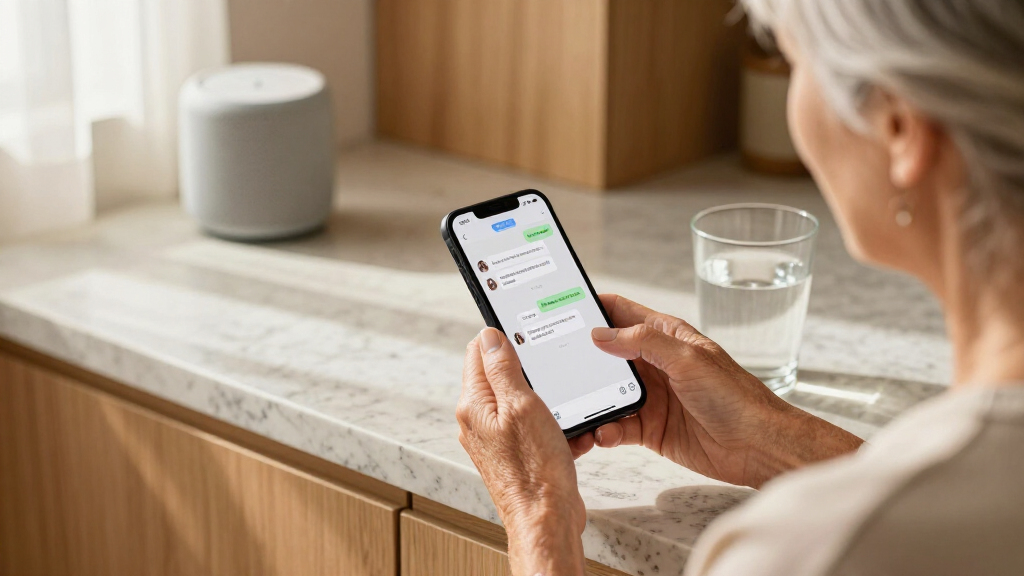
A researcher’s report argues that AI chatbots can help older adults understand health information, but users should approach answers with “informed skepticism.” The report cites surveys showing older adults use AI for health questions and many chatbot users do not verify responses; it also flags inaccurate advice and privacy risks.
A researcher studying technology use among older adults says AI chatbots can help people access and understand health information, but users should check the credibility of answers rather than accept them automatically. The report, published by Medical Xpress, describes this approach as “informed skepticism” and warns that chatbots can give inaccurate medical information while creating privacy risks.
The researcher cites a 2025 survey of 300 adults in which about one in five respondents said they used AI chatbots to ask health questions, including questions about symptoms, diet and fitness. In a separate poll conducted by the researcher and colleagues, half of older adults surveyed reported using AI chatbots or voice assistants, and about 14% said they used them to access health information. The report does not give the poll’s sample size in the supplied material.
Chatbots may offer quick explanations of complex topics and let people ask sensitive questions from home, without waiting for an appointment. The researcher says those features can be appealing to older adults, who may have more health-related questions because of chronic conditions or new diagnoses. But convenience does not establish that an answer is medically reliable or appropriate for an individual.
The report describes several risks: chatbots can misclassify conditions, give incorrect advice in emergencies or respond agreeably with information that is not accurate. It also says that, among the 300 adults who used a health chatbot in the 2025 survey, four in five said they never verified its output. Public chatbot providers may retain prompts for model training, so researchers generally advise users not to include personally identifying information.
Health Answers Need Independent Checks
The report highlights a tension for older adults: AI can make health information easier to reach, but a fast, confident-sounding answer may be difficult to assess. If a person treats a chatbot as a substitute for a clinician, inaccurate guidance could affect decisions about symptoms or care. The researcher’s recommended approach is to use chatbots as a starting point, not a final authority, and check important information against credible published sources or a health professional.
How people use the tools matters, too. The researcher says older participants in their work preferred to begin and finish searches on the same device, while younger adults more often treated AI as one step before consulting another source. That finding suggests verification instructions should be easy to find and follow, rather than assuming users will leave a chatbot to check elsewhere. The report presents this as a research observation, not a rule that applies to every older adult.
Popular right now

Philips 4400 Series Fully Automatic Espresso Machine with LatteGo Milk System

Vitamix 5200 Professional-Grade Blender, 64 oz. Container, Black

KitchenAid Classic Series 4.5-Quart Tilt-Head Stand Mixer, Onyx Black
As an affiliate, we earn on qualifying purchases.
Older Adults and Everyday AI
The report challenges the stereotype that older adults are uniformly reluctant or inexperienced technology users. It describes people aged 60 and older using AI for activities such as entertainment and trip planning, as well as health questions. Examples of tools include mainstream chatbots such as ChatGPT, Claude and Gemini, voice assistants such as Siri and Alexa, and systems made for specific health providers.
The researcher also points to the Aging with AI Act, a bipartisan bill introduced in the U.S. Senate in 2026, as an example of growing attention to the potential benefits and risks of AI for older people. The report says the measure underscores a need for more research; the supplied material does not describe its legislative status beyond its introduction.
““informed skepticism””
— The researcher whose work is described in the Medical Xpress report
Limits of the Available Survey Evidence
The cited survey results offer a snapshot, but the supplied report does not provide enough detail to judge how representative the samples were, how respondents were recruited or how questions were phrased. The researcher’s poll reports use among older adults, but its sample size and methodology are not included in the source material. The findings should not be read as evidence that all older adults use chatbots in the same way.
The report also does not quantify how often health chatbot answers are wrong or assess whether the recommended checking strategies reduce harm. It does not identify which specific chatbot features reliably establish the accuracy of a response. Privacy practices can vary by service, and the supplied material does not give details about each provider’s data-retention settings.
Using Chatbots With More Caution
The report recommends learning how to opt out of AI-generated search results where that option is available, particularly when searching for sensitive health information. It says Google users can add “-ai” to a search query to remove AI content from results. The researcher also advises people to use chatbot information-quality features, check responses against published sources and avoid entering identifying personal details.
For readers, the practical next step is to treat chatbot output as information to verify, especially before acting on health advice. The report does not set out a new clinical guideline or a formal evaluation of chatbot products. Further research into how older adults use these tools, how well verification strategies work and how services handle personal data remains needed.
Key Questions
What does “informed skepticism” mean when using a health chatbot?
It means being open to information a chatbot provides while checking its accuracy and credibility instead of assuming it is correct.
How many older adults in the cited poll used AI for health information?
The researcher’s 2025 poll found that about half of older adults surveyed used AI chatbots or voice assistants, and about 14% of the group accessed health information with them. The source does not provide the poll’s sample size.
What risks does the report identify?
It says chatbots can give inaccurate advice, misclassify conditions or respond agreeably without being correct. The report also flags privacy concerns when users enter personal details.
Should a chatbot replace advice from a health professional?
The report describes chatbots as a source of health information but warns against automatically trusting their answers. It does not recommend replacing professional care with chatbot responses; important or urgent health concerns should be discussed with a qualified health professional.
How can users reduce privacy risks?
Researchers generally recommend not including personally identifying information in prompts to public chatbots. The report also suggests considering non-AI search options for sensitive queries.
Source: rss