
TL;DR

Get everyday helpers delivered free — and shop member deals
- Fast, free delivery on millions of items
- Access to Prime Big Deal Days deals on October 6–7
- Prime Video, Amazon Music and more included
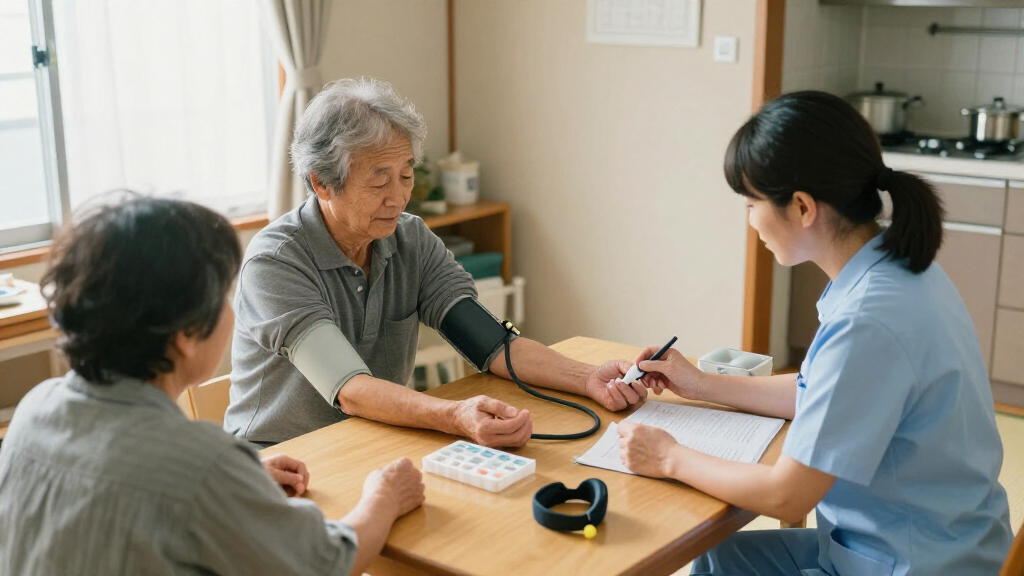
A multicenter study of 506 adults receiving physician-led home care in Tokyo and Ibaraki found that 94.7% had at least two chronic conditions, and 57.1% had four or more. Patients with four or five conditions, particularly those with six or more, were more likely to have an emergency home visit than patients with two or three conditions.
A study of 506 adults receiving physician-led home care in Tokyo and Ibaraki Prefecture found that 94.7% had at least two chronic conditions, while patients with higher condition counts were more likely to need emergency home visits. The University of Tsukuba-led research, published in the Journal of General and Family Medicine, points to the number of chronic conditions as a possible marker for planning care for patients who may be at greater risk of sudden health changes.
Researchers used medical-record information to count each participant’s chronic conditions and examine how those counts related to emergency home visits. The study defined multimorbidity as having two or more chronic conditions. More than half of the participants, 57.1%, had four or more conditions.
In the month covered by the study’s measure, 13.2% of patients had at least one emergency home visit. These were unscheduled visits requested after a sudden change in a patient’s condition. Patients with four or five chronic conditions—and especially those with six or more—were significantly more likely to have such a visit than patients with two or three conditions.
The reported findings show an association, not proof that having more conditions causes an emergency visit. The researchers’ report suggests that counting conditions could help health professionals identify patients who may benefit from more proactive care planning. The supplied study summary does not provide the size of the increased likelihood or details of how other patient characteristics were accounted for.
Condition Counts and Emergency Visits
The findings offer home-care teams a straightforward way to describe the burden of chronic illness in a patient group that may have difficulty attending clinics or hospitals. A count of conditions could help flag patients for closer review, particularly when several illnesses may complicate day-to-day care. The study authors suggest that those patients may benefit from more proactive planning.
However, the results do not establish that a condition count alone can predict which individual will experience a sudden deterioration. Nor do they show that a particular intervention would prevent emergency visits. The figures describe the patients studied and should be read as evidence of an association in this sample, rather than a guarantee about outcomes for all people receiving home care in Japan.
chronic disease management monitor
As an affiliate, we earn on qualifying purchases.
As an affiliate, we earn on qualifying purchases.
How the Japanese Study Was Conducted
As Japan’s population ages, more older adults are receiving home-based medical care, with physicians visiting people who have difficulty getting to clinics or hospitals. The study addresses a gap identified by its researchers: although multiple chronic conditions are common among home-care patients, they said few studies had measured how prevalent multimorbidity is in this group.
The research team, led by investigators at the University of Tsukuba, collected medical-record data from patients receiving physician-led home care through facilities in Tokyo and Ibaraki Prefecture. The paper, by Gen Nakayama and co-authors, was published in the Journal of General and Family Medicine in 2026. Its title is “Multimorbidity Among Patients Receiving Home Care in Japan: Prevalence, Levels, and Association With Emergency Home Visits,” and its DOI is 10.1002/jgf2.70170.
“A simple count of chronic conditions may help health care professionals identify home care patients at increased risk of sudden health deterioration who may benefit from more proactive care planning.”
— The study authors, as summarized in the report
As an affiliate, we earn on qualifying purchases.
Limits of the Reported Findings
The available summary does not give the number of emergency visits in each condition-count group, the exact effect sizes, or the confidence intervals behind the reported statistical association. It also does not explain whether the analysis accounted for factors such as age, specific diagnoses, disability, or the level of support available at home.
The research involved 506 patients at facilities in two prefectures. The supplied material does not establish whether the participants represent home-care patients across Japan, or whether the findings apply in other health systems. The study also does not report whether a higher condition count caused emergency visits, only that the two were associated. More detail is needed to judge how the results might guide decisions for individual patients.
multimorbidity health tracking device
As an affiliate, we earn on qualifying purchases.
As an affiliate, we earn on qualifying purchases.
Further Evidence for Care Planning
The study is now part of the published research record, but the supplied report does not announce a follow-up study, a new care guideline, or a planned change in Japanese home-care practice. The next useful evidence would clarify how strongly emergency-visit risk rises across condition-count groups and whether the relationship remains after accounting for other patient factors.
Further studies could also test whether using multimorbidity counts in routine planning helps care teams respond to patients’ needs. For now, the reported findings support considering chronic-condition burden as one possible planning signal, alongside clinical judgment and a patient’s wider circumstances; they do not establish a specific intervention or treatment recommendation.
As an affiliate, we earn on qualifying purchases.
Key Questions
What did the study find about multimorbidity?
94.7% of 506 home-care patients in the study had at least two chronic conditions, the researchers’ definition of multimorbidity. A total of 57.1% had four or more conditions.
What counted as an emergency home visit?
The report defines these as unscheduled physician visits requested after a sudden change in a patient’s condition. Overall, 13.2% of participants had at least one during the month measured.
Which patients were more likely to have an emergency visit?
Patients with four or five chronic conditions, and especially those with six or more, were significantly more likely to have an emergency home visit than those with two or three conditions. The supplied summary does not provide the size of the difference.
Does the study show that multiple conditions cause emergency visits?
No. It reports an association between higher condition counts and emergency visits. The findings do not prove that multimorbidity causes a visit or that counting conditions by itself can predict an individual patient’s outcome.
Where and when was the research conducted?
The multicenter study covered 506 adults receiving physician-led home care through medical facilities in Tokyo and Ibaraki Prefecture. It was published in the Journal of General and Family Medicine in 2026.
Source: rss
Halloween Picks
halloween
As an affiliate, we earn on qualifying purchases.