TL;DR

Get everyday helpers delivered free — and shop member deals
- Fast, free delivery on millions of items
- Access to Prime Big Deal Days deals on October 6–7
- Prime Video, Amazon Music and more included
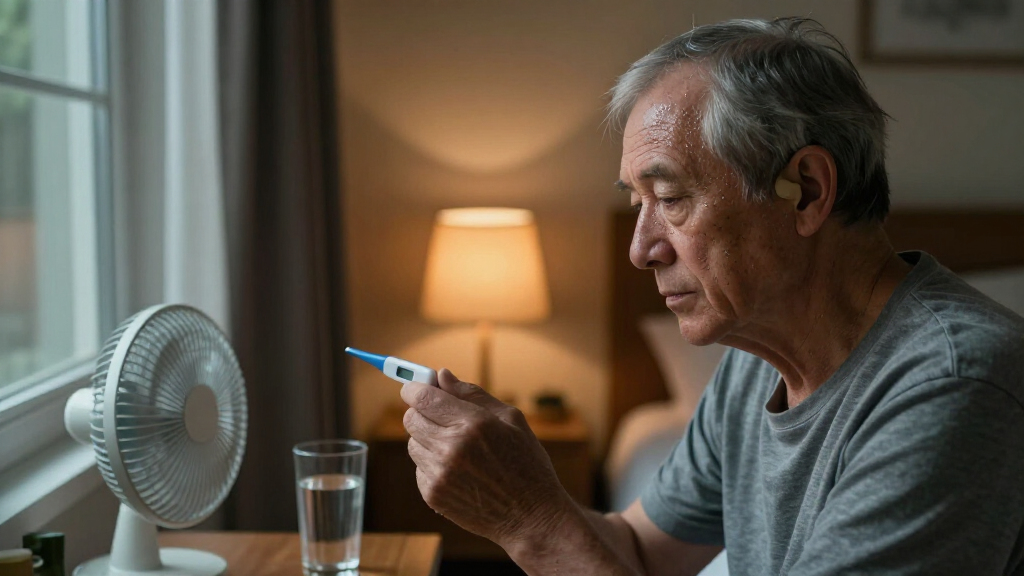
In a controlled University of Ottawa study, 18 adults ages 67 to 84 experienced repeated daytime heat at 34°C, followed by overnight cooling to 26°C. Most measured responses approached baseline overnight, but lower morning systolic blood pressure and elevated kidney stress markers persisted; the study does not show that 26°C guarantees protection for every older adult.
A controlled University of Ottawa trial found that some signs of physiological strain persisted overnight in adults ages 67 to 84 exposed to repeated daytime heat, even when their simulated apartment cooled to 26°C (79°F). The findings matter for older adults living through multiday heat events, when indoor spaces may remain hot after sunset.
The study followed 18 adults, equally divided between women and men, from the Ottawa–Gatineau region. Participants stayed in a studio apartment-style climate chamber for three consecutive days and two nights. During the heat-wave condition, the chamber reached 34°C (93°F) by day and cooled to 26°C overnight. In a separate comparison session, it remained at 26°C throughout the day and night. Researchers said these temperatures reflect indoor conditions recorded during real heat events in Canada and the United States.
On hot days, average peak core temperature was 37.8°C (100.0°F), compared with 37.4°C (99.3°F) in the cooler condition. Participants’ heart rates averaged five beats per minute higher during heat exposure. Blood tests showed higher circulating markers of kidney and gastrointestinal stress, while researchers also recorded lower blood pressure and cardiac autonomic function, alongside small declines on balance and cognitive tests.
Overnight cooling brought most measured responses close to baseline, but recovery was incomplete. Lower morning systolic blood pressure and elevated kidney stress markers were still evident the following mornings. The researchers reported no adverse events during the trial. The results were published in The Lancet Planetary Health.
Why Night Cooling May Fall Short
The findings suggest that an older adult’s condition after a hot day may not be captured by how cool the home becomes overnight or by a single body-temperature reading. Some measures remained altered the next morning, even though participants’ core temperatures did not rise progressively from one heat-wave day to the next. That distinction matters because stable core temperature did not mean full physiological recovery in this trial.
Many Canadian homes lack air conditioning, according to the report, and indoor temperatures can remain high during prolonged heat. The study supports attention to indoor conditions throughout the day and night, while its small, controlled sample cannot establish how common these responses are across all older adults or predict individual outcomes.
From One Hot Day to Three
This trial builds on earlier work by the University of Ottawa research team examining a single day of heat exposure. The report says that earlier research informed Health Canada guidance released in June 2026, which recommends an upper indoor temperature limit of 26°C (79°F) for older adults during extreme heat. The new study examined repeated daytime exposure and overnight recovery in a simulated overheated home.
Glen Kenny, the study’s senior researcher and director of the university’s Human and Environmental Physiology Research Unit, said the trial let researchers follow older adults through a full simulated three-day heat wave. The study was a single-site randomized crossover trial: participants took part in both the hot and cooler comparison conditions. Its controlled setup helps compare responses under the two temperature patterns, but it does not reproduce every feature of real homes or heat events.
“Physiological strain persisted across each day of the heat wave, and some effects did not fully resolve overnight, even when the apartment cooled to 26°C (79°F).”
— Glen Kenny, University of Ottawa professor and research unit director
Limits of the Trial Findings
The trial included 18 participants at one site, so the results do not establish how older adults with different health conditions, living arrangements or cooling access would respond. The report does not provide a population-level estimate of how often lingering effects occur during real-world heat waves, or whether the measured changes lead to specific health outcomes.
The study also does not identify a temperature that protects every individual. Researchers said 26°C is an upper limit intended to reduce risk, not a guarantee. The report does not give enough detail to assess how different cooling schedules, humidity levels or longer heat events might change recovery.
Keeping Homes Cooler Through Heat
The researchers say the results add evidence in support of maintaining indoor temperatures at or below 26°C (79°F) throughout a sustained heat event. For households and public health planners, the next practical question is how older adults can access reliable cooling when homes lack air conditioning or indoor heat persists overnight.
The report does not announce a follow-up trial or a change to Health Canada’s guidance. Further research would be needed to test cooling approaches in larger and more varied groups and to determine how laboratory findings translate to health outcomes during real heat waves.
Key Questions
What did the study find about overnight cooling?
Cooling the simulated apartment to 26°C (79°F) overnight brought most measured responses close to baseline, but lower morning systolic blood pressure and elevated kidney stress markers remained.
How many people took part?
The trial included 18 adults ages 67 to 84 from the Ottawa–Gatineau region, with equal numbers of women and men.
What temperatures did participants experience?
In the heat-wave condition, the chamber was kept at 34°C (93°F) during the day and 26°C (79°F) overnight. The comparison condition stayed at 26°C throughout the day and night.
Does 26°C guarantee protection during a heat wave?
No. The report describes 26°C as an upper indoor temperature limit intended to reduce risk. Kenny said it should not be understood as a temperature that guarantees protection for every older adult.
Did participants’ body temperatures rise each day?
No day-to-day rise in core temperature was observed. Researchers said some other measures, including blood pressure and kidney stress markers, still indicated incomplete recovery.
Source: rss
Fall Picks
fall essentials
As an affiliate, we earn on qualifying purchases.